

Notifications
Clear all
Joining the Renewable Heating Hub forums is completely free and only takes a minute. By registering you’ll be able to ask questions, join discussions, follow topics you’re interested in, bookmark useful threads and receive notifications when someone replies. Non-registered members also do not have access to our AI features. When choosing your username, please note that it cannot be changed later, so we recommend avoiding brand or product names. Before registering, please take a moment to read the Forum Rules & Terms of Use so we can keep the community helpful, respectful and informative for everyone. Thanks for joining!
Solar Photovoltaic (PV)
42
Posts
6
Users
12
Reactions
2,743
Views

31/08/2026 12:29 pm
@transparent I have a question about the electrical connection for my micro-inverter. It's designed to be a plug-in device, but I'd rather make a properly protected permanent connection to the mains than just plug it in.
The outbuilding is fed by a SWA cable from the main CU in the house on a 32A MCB protected by an 80A (30mA) RCD. I very much doubt the RCD in the main CU is bidirectional.
There is a CU in the outbuilding fed by the SWA with individual MCBs for the chest freezer, lights and sockets. These are only protected by the RCD in the main CU that feeds it. If connecting the micro-inverter into this secondary CU, what type of RCD or RCBO should I specify to best protect that 800W micro-inverter?
Would you recommend we also install a SPD in the outbuilding CU as there in no surge protection at the main house CU?
Samsung 12kW gen6 ASHP with 50L volumiser and large radiators. 7.2kWp solar (south facing), Tesla PW3 (13.5kW). Net Zero

Topic starter
31/08/2026 1:08 pm
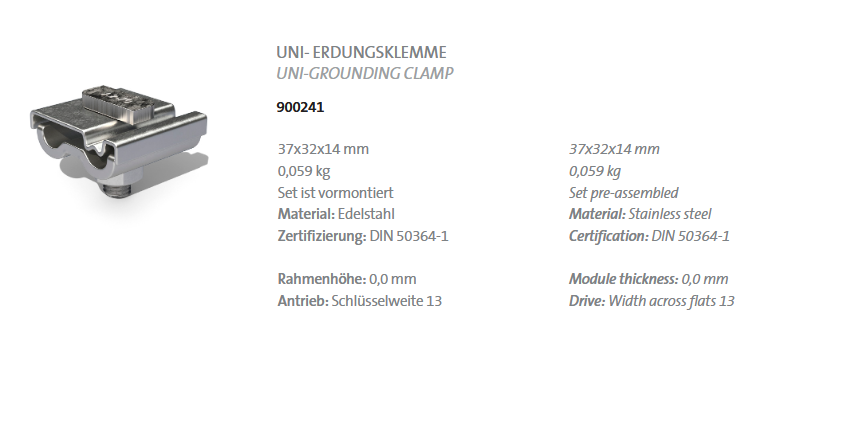
@transparent Hi, so I have already bought the splices, but the hole you refer to is actually a nipple! 🙂 (Bugger, there go the midwifery students again). I would have to drill the section to insert any fixings, so Im guessing its not meant to be fixed. They do supply a much longer rail though so I suppose fixing it isnt going to be the end of the world.
I watched a very interesting youtube video with two sparkies discussing the earthing conundrum. As you say its not mandatory but they did come up with some plausible scenarios where there could be an issue. One of them actually had an arc from his forehead to a scaffold when he bent down to pick up some wet leaves from the gutter! They blamed parasitic coupling (???)
One other point against earthing it is the fact that I cant actually source the correct renusol item, to connect the earthing wire!
House-3 bed partial stone bungalow, 5kW Samsung Gen 6 ASHP (Self install)
6.9 kWp of PV
10kWh DC coupled battery
Blog: https://thegreeningofrosecottage.weebly.com/
Heatpump Stats: http://heatpumpmonitor.org/system/view?id=60
Topic starter
31/08/2026 1:12 pm
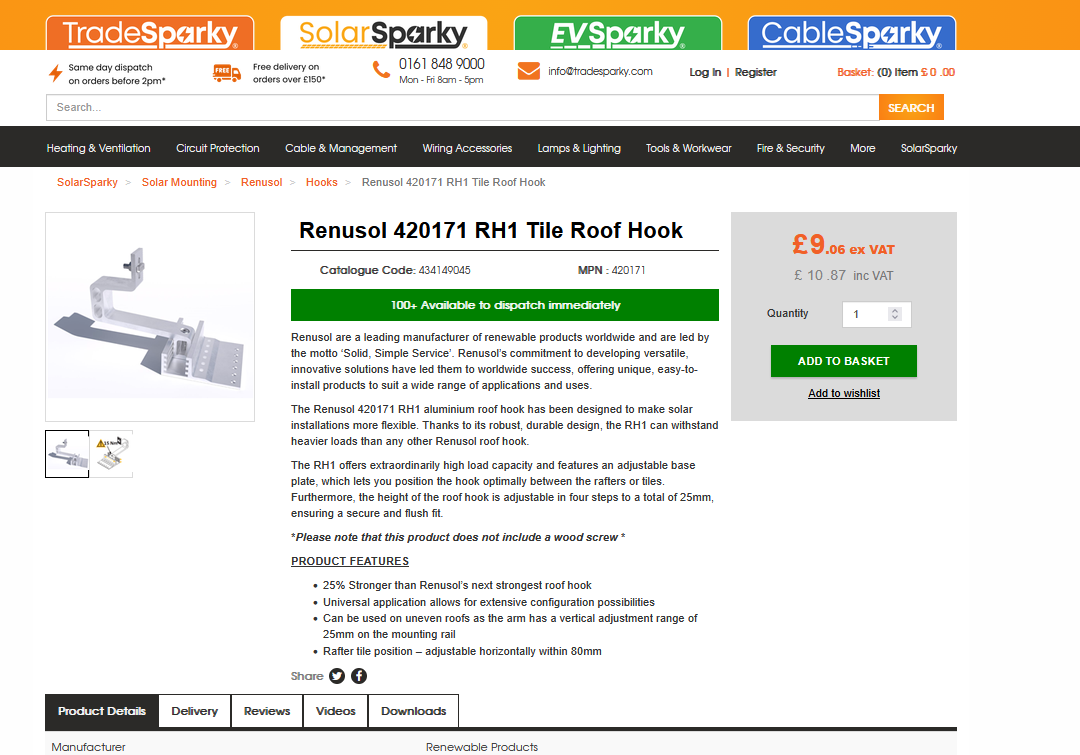
@old_scientist I got them from Tradesparky. In the end after much debate with ChatGTP, I plumbed for these hooks. The height adjustment is quite useful, and one up from bottom is perfect for my tiles.
House-3 bed partial stone bungalow, 5kW Samsung Gen 6 ASHP (Self install)
6.9 kWp of PV
10kWh DC coupled battery
Blog: https://thegreeningofrosecottage.weebly.com/
Heatpump Stats: http://heatpumpmonitor.org/system/view?id=60
1

31/08/2026 2:53 pm
Let's deal with mounting systems first.
You don't have to use a proprietary brand of aluminium rails. The shipping costs can be prohibitively expensive for long items, especially if you only want to put a couple of panels on a shed roof.
Each profile for aluminium extrusions is registered. That too can add to the cost. Once you've bought into a system such as Renusol, then there's only one manufacturer with the licence to produce it.
In contrast, aluminium c-section is ubiquitous, and might be available from a local supplier.
However, even if I do start with a Brand-named rail, the C-section parts of a profile are often the same size. So I might be able to use a cheaper/generic clamp to hold the panels themselves.
Here's an installation using Fastensol rails.
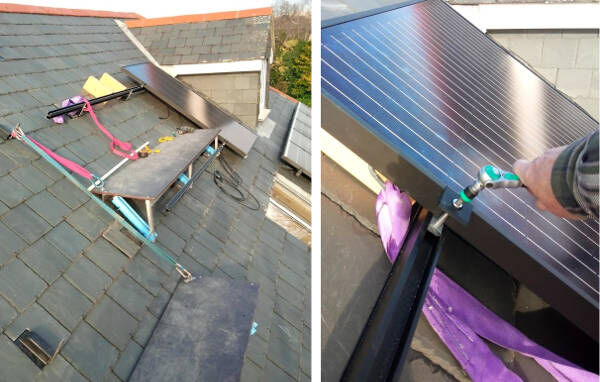
and here's the same panel clamps being used on generic C-section.
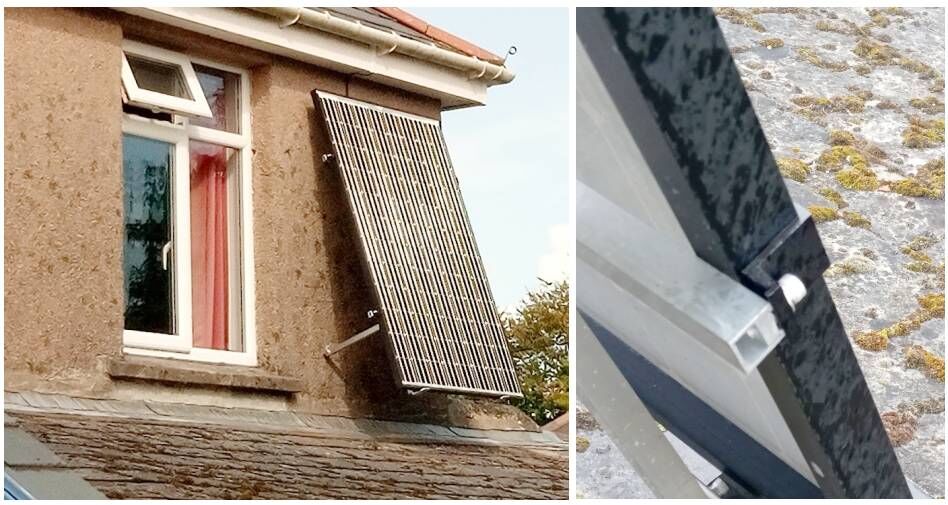
In both cases, the inner dimension of the C-channel is 20mm.
That means I can buy ready-made T-nuts to suit it, selecting whatever thread-size I want.
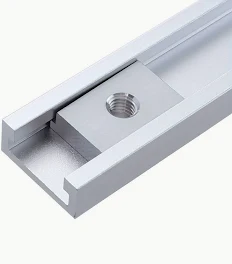
Or I can use aluminium flat bar to make my own captive sliding nuts, and interconnect with other generic mechanical structures, such as 50mm dia scaffolding.
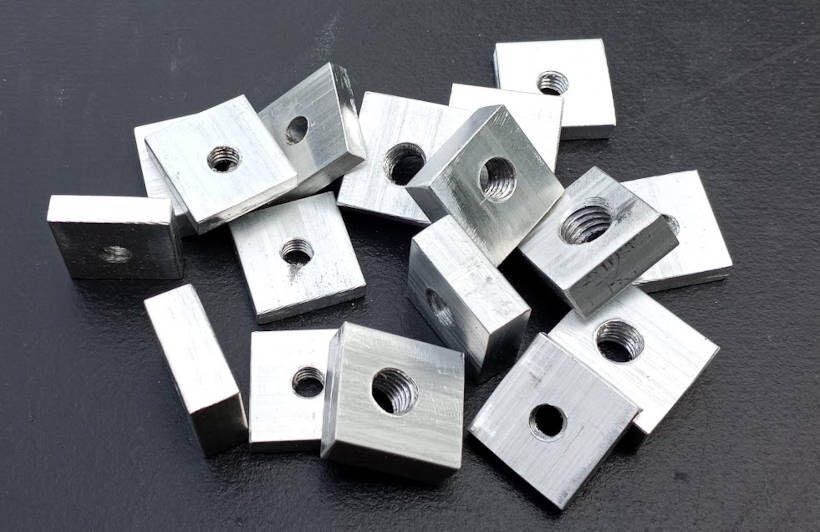
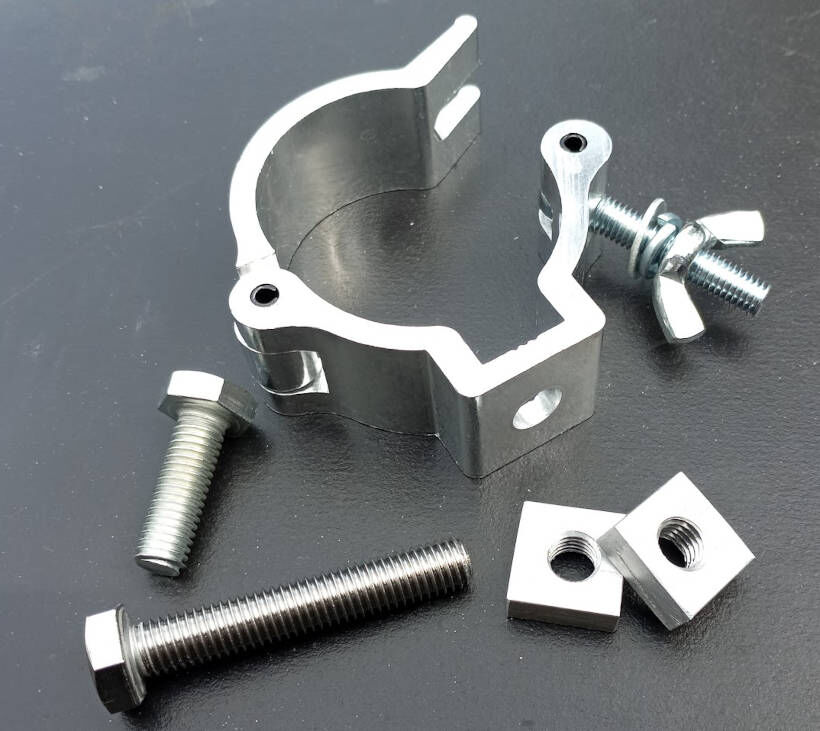
That last photo shows an aluminium half-coupler truss-clamp, usually sold for lighting and exhibition work.
And that's the other benefit of staying generic. You can often find private listings on Ebay where someone has 10 panel-clamps for sale, for example.
As for the 20mm C-channel itself, many of the online metal suppliers have it in stock, even if it's not listed on their main website. Sometimes it's because they've incorrectly identified it, calling it "slide channel" or placed it amongst the U-channels.
C-channel is also readily available from companies who supply component parts for sliding (patio) doors, garage doors or stage lighting. The price can vary a lot, depending on the market they're aiming at.
I once bought 80-metres of C-channel which had been sitting on a stockist's shelf for more than 6-months. They'd simply mis-identified it, meaning that prospective customers were unaware it existed.
This post was modified 1 month ago 3 times by Transparent
Save energy... recycle electrons!
1

31/08/2026 9:00 pm
A couple more points about placing solar panels at low level:
Unlike an installation on a high-roof, panels on a shed or garage are less likely to be subjected to wind-shear.
that means you could allow them to overhang the end of a roof in order to maximise space:
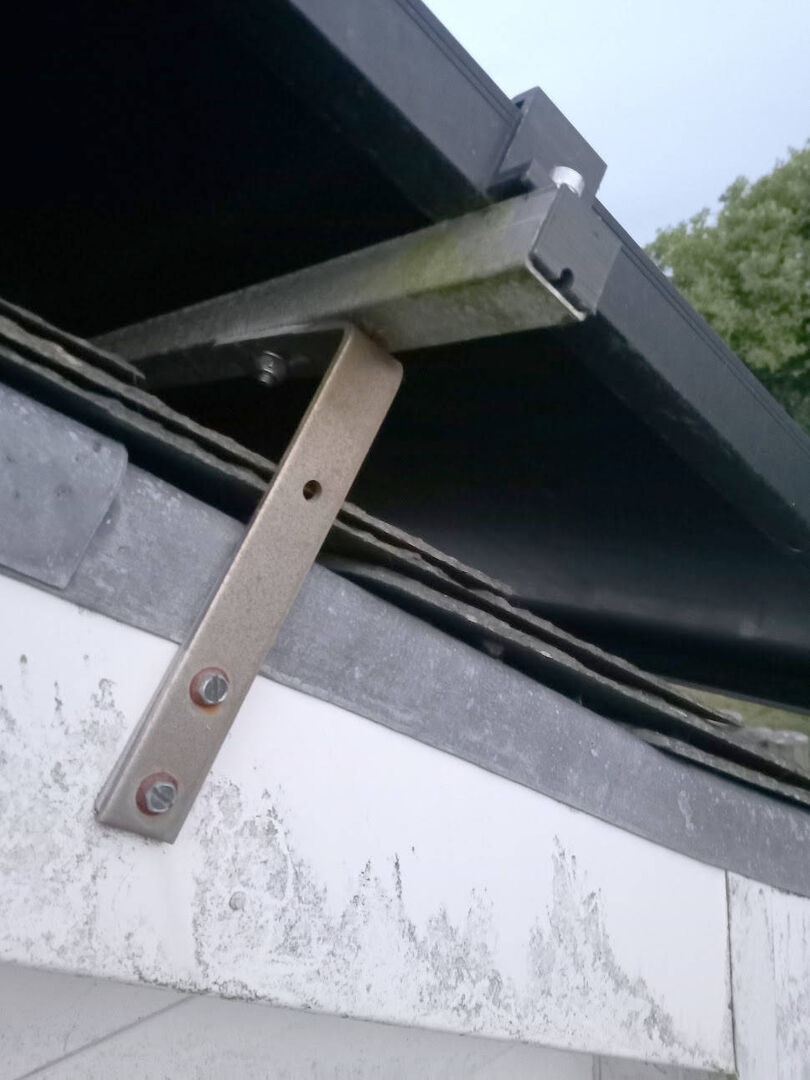
The bracket supporting the C-section rail was bought for a main-roof kit for fixing into a rafter. However, it's been repurposed and provides perfectly adequate support for the panel overhanging the end of the lower roof.
Another opportunity exists to place panels onto low roofs which have a wall behind them (a lean-to roof).
Instead of using roofing brackets throughout, the upper end of a rail can be directly attached to the back wall:
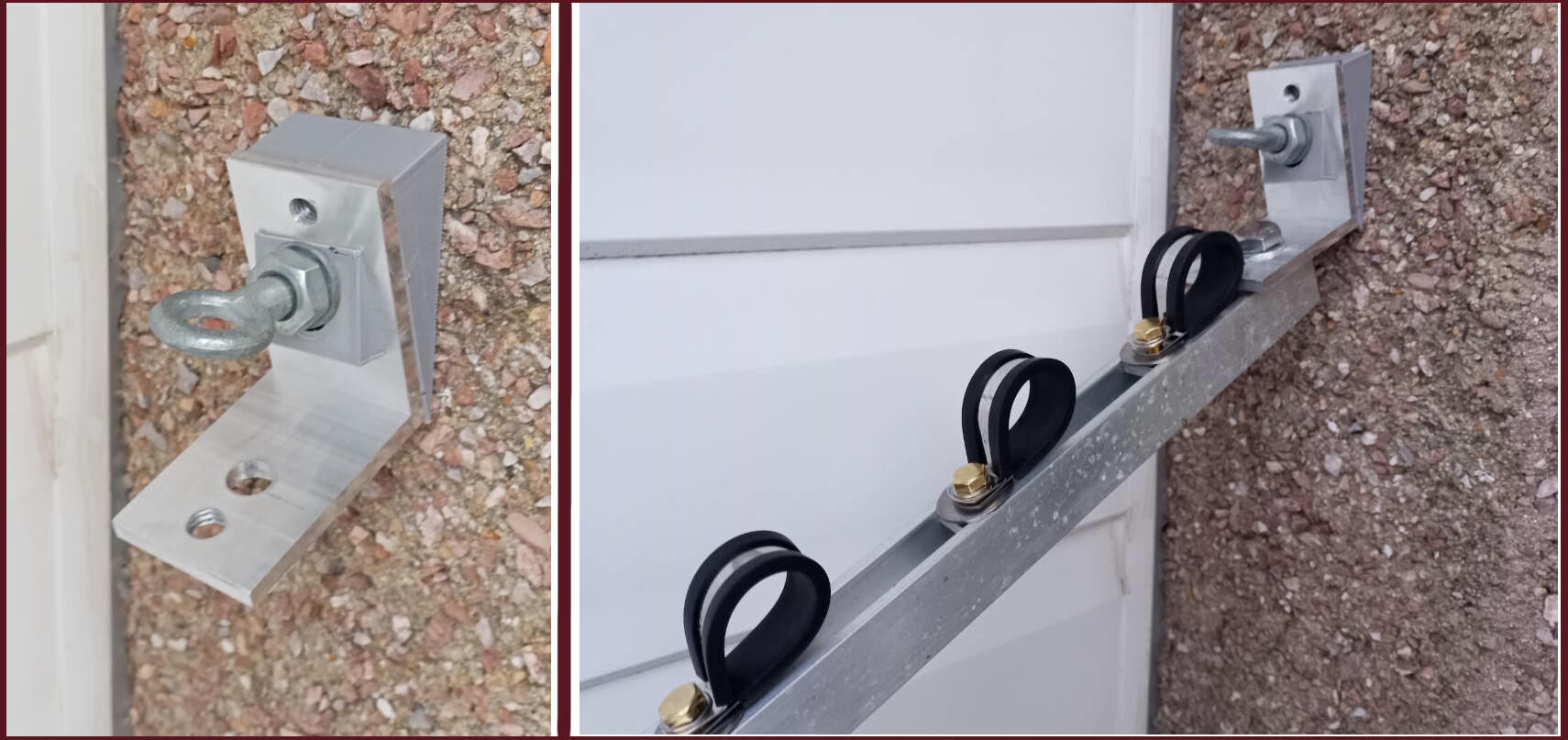
In this case I've used an eye-bolt fixed with a shield anchor (aka sleeve anchor).
The wall bracket is made from 5mm thick aluminium angle, and the entire assembly is angled at 20° using a plastic wedge through which the eye-bolt is screwed.
As you can probably see, there's a lot of scope for ingenuity.
Save energy... recycle electrons!
1
01/09/2026 11:39 am
I'd rather make a properly protected permanent connection to the mains than just plug it in.
That makes sense, and concurs with a lot of online chatter from 'influencers'.
Check the rules on using a dedicated hardwired connection to your balcony-solar micro-inverter. I believe you're allowed to output up to 2kW rather than just 800w. 😊
Have a look at what Indevolt replied to James' question here. They are stating that a hard-wired installation using their storage battery (portable) micro-inverter is permitted to export 3kW. But I'm unsure if that figure remains true if the installation doesn't contain any element of storage. Whatever you find out, please post the answer here and provide a link from the other topic. There's considerable overlap, which would be useful to others.
The outbuilding is fed by a SWA cable from the main CU in the house on a 32A MCB protected by an 80A (30mA) RCD. I very much doubt the RCD in the main CU is bidirectional.
If it's an RCD then it is bi-directional.
The issue over the uni-directional nature of earth-leakage trips applies only to RCBOs.
This is a message we need to convey as widely as possible. Please feel free to repeat whenever appropriate on this Forum!
If connecting the micro-inverter into this secondary CU, what type of RCD or RCBO should I specify to best protect that 800W micro-inverter?
It would be permissible to install (only) an MCB. But that would leave you in a situation where a fault with the micro-inverter causing a path to earth would (should!) trip the RCD in the main house.
Personally I'd fit a bi-directional RCBO for the micro-inverter, and hope that it trips under fault conditions before the RCD in the house.
You need to consider the possibility of the freezer being left without power, whilst you are unaware. My electrical feeds to out-buildings don't have an RCD at the house-end. That allows me to have a dedicated socket for an appliance such as a freezer, which has its own earth-leakage RCBO trip (not shared with anything else).
Would you recommend we also install a SPD in the outbuilding CU as there in no surge protection at the main house CU?
So we're now talking about a pair of SPDs on the 240v AC mains incomer to the house.
Those are certainly desirable, but not to be confused with my earlier comments about having DC-rated SPDs on the wires to the (micro-) inverter from the PV panels.
In both cases, SPDs require a nice fat copper wire to an earth stake. It must be able to divert 40kV to ground at two-thirds the speed of light!
This post was modified 1 month ago 3 times by Transparent
Save energy... recycle electrons!
01/09/2026 11:55 am
@transparent thank you for your reply above.
As always, very clear and concise, I have learnt new stuff (that RCDs are bi-directional) and I now have a clear idea of my options.
If connecting the micro-inverter into this secondary CU, what type of RCD or RCBO should I specify to best protect that 800W micro-inverter?
It would be permissible to install (only) an MCB. But that would leave you in a situation where a fault with the micro-inverter causing a path to earth would (should!) trip the RCD in the main house.
Personally I'd fit a bi-directional RCBO for the micro-inverter, and hope that it trips under fault conditions before the RCD in the house.
You need to consider the possibility of the freezer being left without power, whilst you are unaware. My electrical feeds to out-buildings don't have an RCD at the house-end. That allows me to have a dedicated socket for an appliance such as a freezer, which has its own earth-leakage RCBO trip (not shared with anything else).
Great, that's exactly my thinking. Unfortunately I'm unlikely to change the distribution from the main CU, but certainly something to remember for the future when it's time for that CU to be upgraded or replaced.
Samsung 12kW gen6 ASHP with 50L volumiser and large radiators. 7.2kWp solar (south facing), Tesla PW3 (13.5kW). Net Zero
Topic starter
05/10/2026 1:50 pm
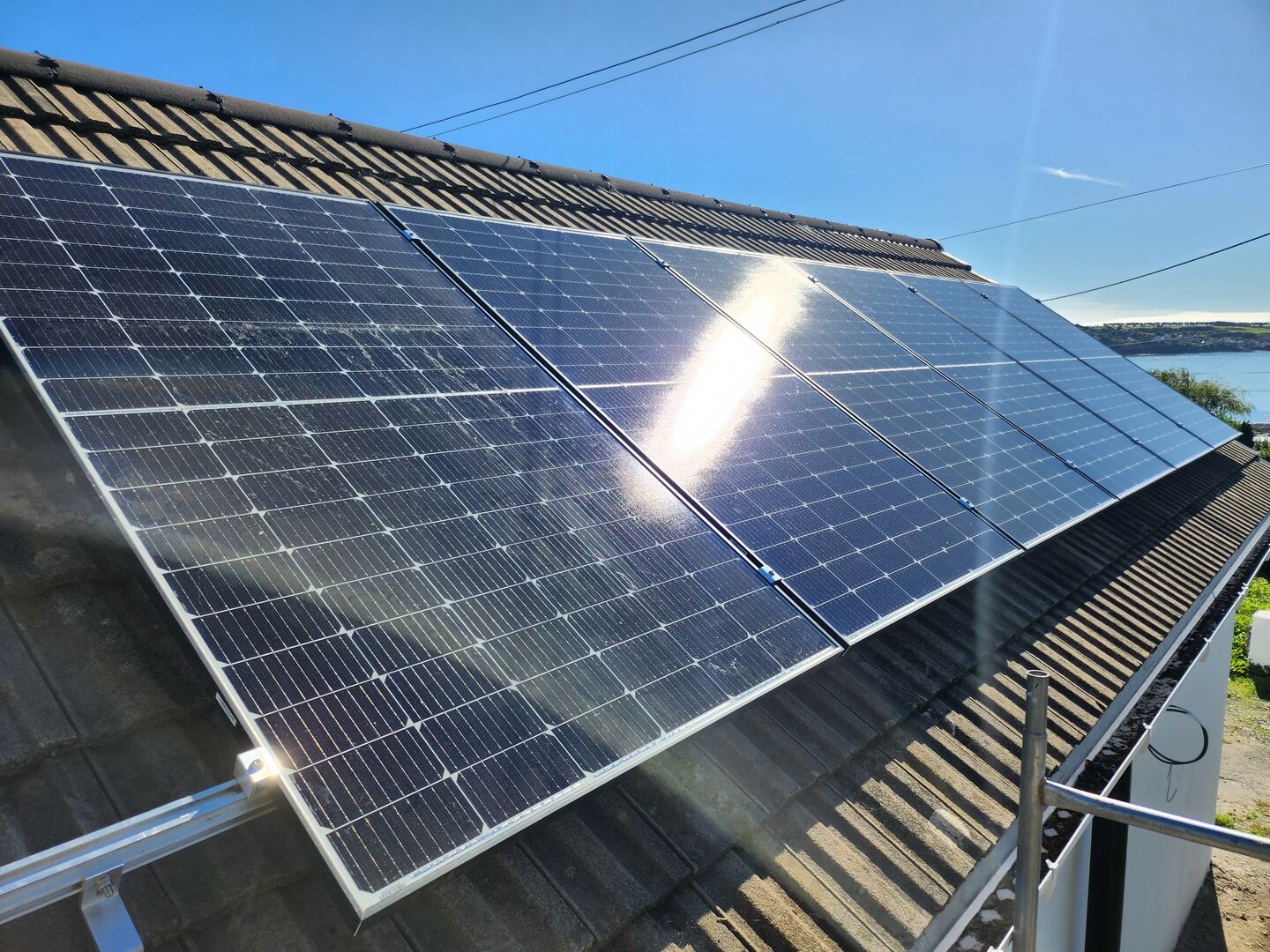
Just an update, panels are now fitted and I've managed to register 5 of the 6 optimisers with the inverter so far. (lack of sun is probably the issue). Will be interesting to see how much difference it makes, getting that late evening sunshine 🙂 Total cost was about £650 for parts.
This post was modified 1 week ago by bontwoody
House-3 bed partial stone bungalow, 5kW Samsung Gen 6 ASHP (Self install)
6.9 kWp of PV
10kWh DC coupled battery
Blog: https://thegreeningofrosecottage.weebly.com/
Heatpump Stats: http://heatpumpmonitor.org/system/view?id=60
2
05/10/2026 2:22 pm
That's £650 well spent. It's greatly less than it would've been if you'd had the work undertaken by a professional installer.
The photo has a vertical pole which looks like it belongs to a scaffold tower. A professional would've probably used a full length of scaffold along the building... which would further have added to the costs.
I hope this topic can be used as a 'benchmark', indicating the likely savings by those who are prepared to consider a DIY approach.
Was it entirely your own handiwork, or did any midwives turn up to lend a hand?
Save energy... recycle electrons!
Topic starter
05/10/2026 2:27 pm
@transparent No it was my baby, entirely delivered by me 🦊boom boom (with a little help from Chatgtp) 😁
House-3 bed partial stone bungalow, 5kW Samsung Gen 6 ASHP (Self install)
6.9 kWp of PV
10kWh DC coupled battery
Blog: https://thegreeningofrosecottage.weebly.com/
Heatpump Stats: http://heatpumpmonitor.org/system/view?id=60
1

06/10/2026 8:55 am
Impressive!
Interesting use of ChatGPT too - wouldn't have thought it would have this sort of specialist technical knowledge.
ASHP: Mitsubishi Ecodan 8.5kW
PV: 5.2kWp
Battery: 8.2kWh
Topic starter
06/10/2026 9:00 am
@scrchngwsl Its actually very good. Its scouring the manuals and any other info sources out there. I used it on lots of issues now. It can get things wrong but often its pretty clear when it does and questioning it usually leads it to check its homework.
House-3 bed partial stone bungalow, 5kW Samsung Gen 6 ASHP (Self install)
6.9 kWp of PV
10kWh DC coupled battery
Blog: https://thegreeningofrosecottage.weebly.com/
Heatpump Stats: http://heatpumpmonitor.org/system/view?id=60
1


SPONSORS

Degrees of Separation

Latest Posts
-

RE: Jokes and fun posts about heat pumps and renewables
Damn, I pressed the button on my new heat pump too soon...
By ian33a , 2 hours ago
-
RE: Safety study for plug in batteries out to tender - looks like Q3 2027 at best before legal
I think it may depend how much of the world is on fire ...
By EtchedPixels , 6 hours ago
-
RE: Air-to-Air Heat Pumps & Air Conditioning: UK Heating and Cooling Q&A
I hope it's not the same people who make the awful TV s...
By EtchedPixels , 6 hours ago
-
RE: Why are ASHP installs so expensive?
ECO4 is classic British idiocy, "save" money by requiri...
By EtchedPixels , 6 hours ago
-
RE: Renewables & Heat Pumps in the News
We need more building inspectors anyway and less self-s...
By EtchedPixels , 7 hours ago
-
RE: Does anyone have experience of a smart water meter?
@majordennisbloodnok That is my thinking precisely, I s...
By Toodles , 14 hours ago
-
RE: Replacing Storage Heaters with a Heat Pump in a Stone Cottage
I found some interesting data about the price of heat p...
By Rob of York , 21 hours ago
-
RE: PV and battery long payback - sense check query
Thanks for all the comments. I finally got to the bott...
By DavidB , 23 hours ago
-
RE: Indevolt Batteries UK Support & Info Thread
People following this thread who are hoping that plug i...
By JamesPa , 1 day ago
-
RE: Passiv Smart Thermostat - Help & Forum Support
By Singlespeed , 1 day ago
-
RE: Help me keep the faith with my air source heat pump installation
just had Vaillant over to service the HP and asked abou...
By AdamK , 1 day ago
-
RE: tepeo ZEB UK Support & Info Thread
OK so ZEB is basically a variant on a storage heater, b...
By JamesPa , 3 days ago
-
RE: Heat Geek installations: share your experiences
@editor I suspect that the Heat Geek online quote is a ...
By AndrewJ , 3 days ago
-
RE: Adding additional Solar Panels to a DC coupled battery system
Ah, yes. Thanks for clarifying.
By Transparent , 3 days ago





SPONSORS
