Notifications
Clear all
Joining the Renewable Heating Hub forums is completely free and only takes a minute. By registering you’ll be able to ask questions, join discussions, follow topics you’re interested in, bookmark useful threads and receive notifications when someone replies. Non-registered members also do not have access to our AI features. When choosing your username, please note that it cannot be changed later, so we recommend avoiding brand or product names. Before registering, please take a moment to read the Forum Rules & Terms of Use so we can keep the community helpful, respectful and informative for everyone. Thanks for joining!
Your Home
36
Posts
12
Users
12
Reactions
1,140
Views

04/11/2026 3:08 pm
Some of that depends on the provider. I'd trust the hardware from folks like A&A or Zen for example for most uses as they tend to use good quality products - eg Zen use Fritzbox stuff. You pretty much can't replace them with most low end internet providers because you immediately get dropped into
"Our line is being unreliable"
"Our diagnostics can't see your equipment"
"I changed it"
"Then its your problem"
and also you now own maintaining the router and doing upgrades in a hurry sometimes whereas the ISP used to manage it.
Having a box between the ISP and your home stuff is a good practice, typically with anything that you don't trust on the ISP side or a separate ethernet so it so it can't get at your house either.
Yes and no.
The key in my opinion is that for many people the ISP-provided router is being asked to do an awful lot. Not only is it supposed to be a router, it's also being called in wifi, DNS, DHCP, firewall and perhaps VOIP duties as well, all of which can at times be quite resource intensive. It's not exactly uncommon for a household to be used to losing the Internet connection every week or two and needing to switch the router off and on again. The more one can reduce the workload on the router the more reliable it will be.
I understand what you mean about some ISPs trying to wash their hands of an issue if the box isn't within their control and for those ISPs there's a lot to be said for leaving it in place doing just routing duties. However, in that case I'd be questioning whether that ISP is the right partner for me in the first place for what is now quite an integral home amenity.
I don't think or suggest there's one right answer for everyone. I do stand by my point, though, that if your home would have trouble living with an Internet connection outage then you probably ought to take as much of a look at the quality and reliability of your router and line as you do with the quality and reliability of the smart kit you're relying on to use that router and line. Doesn't mean it has to be changed, but does mean you should actively assess it.
105 m2 bungalow in South East England
Mitsubishi Ecodan 8.5 kW air source heat pump
18 x 360W solar panels
1 x 6 kW GroWatt battery and SPH5000 inverter
1 x Myenergi Zappi
1 x VW ID3
Raised beds for home-grown veg and chickens for eggs
"Semper in excretia; sumus solum profundum variat"

04/11/2026 11:58 pm
Having a box between the ISP and your home stuff is a good practice, typically with anything that you don't trust on the ISP side or a separate ethernet so it so it can't get at your house either.
absolutely agree.
even if many providers see that extra box as the cause of every fault!
This post was modified 1 week ago by Batpred
8kW Solis S6-EH1P8K-L-PLUS hybrid inverter; G99: 8kW export; 16kWh Seplos Fogstar battery; Ohme Home Pro EV charger; Vaillant Arotherm Pro 7kW; 100Amp head, HA lab on mini PC

05/11/2026 8:59 am
Having a box between the ISP and your home stuff is a good practice, typically with anything that you don't trust on the ISP side or a separate ethernet so it so it can't get at your house either.
absolutely agree.
even if many providers see that extra box as the cause of every fault!
Agree but remember to retain your isp router as they will probably refuse to diagnose unless it's fitted.
4kW peak of solar PV since 2011; EV and a 1930s house which has been partially renovated to improve its efficiency. 7kW Vaillant heat pump.
05/11/2026 11:18 am
Agree but remember to retain your isp router as they will probably refuse to diagnose unless it's fitted.
Yes, in my case, the ISP hub is permanently there, they can upgrade it as often as they need.
Community Fibre is proving a very reliable service, after some initial "bedding in"..
8kW Solis S6-EH1P8K-L-PLUS hybrid inverter; G99: 8kW export; 16kWh Seplos Fogstar battery; Ohme Home Pro EV charger; Vaillant Arotherm Pro 7kW; 100Amp head, HA lab on mini PC


08/11/2026 2:09 pm
Going back to @editor's original question, there's an Ofgem requirement for Resilience being placed onto DNOs within the forthcoming RIIO-ED3 Agreement.
That's due to commence in April'28, and DNO's are curtrently putting together their first proposals.
Ofgem requires DNOs to put forward proposals which will:
- benefit the 'least well-served' customers. Typically those who experience one or more outages each month
- enhance support for vulnerable customers; that's not just those of the Priority Services Register
- provide 'always on' connections in rural community hubs
Those community hubs must provide warm spaces in winter and cool spaces during heat-waves.
They must have the capability to cook meals during a prolonged power outage
They must implement emergency communications.
Three points worth making at this stage:
- Embedding these requirements within the RIIO Agreements means that they are based on financial oversight and rewards That's not a good method to ensure that the community hubs are implemented using optimal technology.
- The DNOs are required to lower their technical boundaries so that community groups have access to the required knowledge. In my experience, it is the community energy organisations and online forums which know a lot more about the subject matter than DNOs!
- The statutory obligations for emergency action rests with Local Government. DNOs can't simply take over those elements which they can most easily handle. They're going to have to work as a (junior) partner within the overall emergency plans and strategies which Councils define and implement.
This post was modified 2 days ago by Transparent
Save energy... recycle electrons!

08/11/2026 2:51 pm
@transparent Very interesting indeed! My daughter co-manages a community centre that is financed through the local council. They already provide a ‘Warm Space’ when required and provide facilities to low-income residents in the area. They are at present looking at replacing their current (gas) heating system and have had to hold a few quotes in abeyance due to major structural work but had been looking at ASHP’s. With the changing climate, I have suggested to her that they could do worse than consider A2A aircon instead. With the DNO being required to provide as you detail, this sounds to me like a good plan! Regards, Toodles.
Toodles, heats his home with cold draughts and cooks food with magnets.
08/11/2026 5:01 pm
Thanks for sending me the address of that site @toodles
I suspect that SSE won't have much interest in that particular community centre because it's not rural. Ofgem want to ensure that DNOs provide 'always on' power and facilities in those locations which are likely to suffer a power outage for 2 or more days. Those in urban areas are less likely to suffer such inconvenience.
However, I do think it's an issue which the Council that owns the Centre should be considering. There's nothing to prevent them from borrowing the concepts and installation strategies which occur in rural areas.
A nationwide attack on energy services will greatly affect water supplies and sewage treatment. That's going to be especially problematic in low-lying urban areas. The emergency messaging will be telling people to avoid using toilets. The sewer system clogs if there's too little water to flush it through, and the pumps also fail of course. They need electricity and can't handle piles of poo.
I will suggest that your daughter's centre falls into that category. The Council could easily install a borehole in that location. Adding UV treatment would provide a plentiful supply of fresh water for residents in the area. That assumes they will in any case install off-grid batteries for the borehole pump (and the kitchen).
Central Government isn't going to solve these issues for us.
Solutions need to be assessed and implemented at Parish Council level.
A good start would be to bring in someone with hands-on knowledge from a rural agricultural community. Hold a public meeting for Parish Councillors and local residents. Learn the basics of off-grid battery technologies, water purification, septic tanks etc.
Save energy... recycle electrons!
08/11/2026 5:28 pm
@transparent Thank you; I have passed on your comments Transparent. Joined-up thinking really would be a good idea for everyone’s security and comfort in the future. Regards, Toodles
Toodles, heats his home with cold draughts and cooks food with magnets.

08/11/2026 6:04 pm
Solutions need to be assessed and implemented at Parish Council level.
As a former chief officer of a Town Council (which in legal terms, is a big parish council) I could easily agree with this.
However parish councils have no responsibility at all for emergency planning. This responsibility lies with County and District Councils or unitaries as the case may be. If the County Council I worked with is anything to go by they assume Parish Councils are essentially useless and to be talked down to (which, in some cases, is sadly true, the sector is very varied). District Council a bit more willing, but dominated by the County in relation to this matter.
This post was modified 4 days ago by JamesPa
4kW peak of solar PV since 2011; EV and a 1930s house which has been partially renovated to improve its efficiency. 7kW Vaillant heat pump.
08/11/2026 7:17 pm
Thanks for that clarification @cathoderay
Let me look at this from the DNO's viewpoint.
They already have the PSR which reflects households where there are long-term vulnerabilities. What they lack is any knowledge of immediate needs. Illustrative examples are
- someone who's just been released back home from hospital
- a family in isolation due to disease (Covid 19 being a prime example)
Those are categories which are more likely to come to the attention of a parish councillor, who will be representing between 150 to 1000 electors.
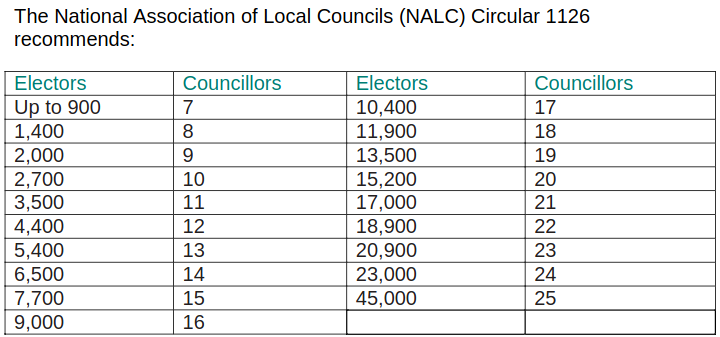
Whatever the rules are for emergency planning, the resilience of a community to survive a power outage of 2+ days is going to be far better if a Parish Council acts as the route to ensure vulnerable households are identified and supported.
Let's not think that recent government warnings about us being prepared are unrealistic. It's just that there are many scenarios which could take out our energy supplies, telecommunications, banking services, transport and food distribution. There is no one single cause which central government can seize upon and advise us to beware of.
Save energy... recycle electrons!

08/11/2026 7:30 pm
Midea 14kW (for now...) ASHP heating both building and DHW
08/11/2026 7:40 pm
I think you're right! 🤨
Save energy... recycle electrons!
Page 3 / 3
Prev
SPONSORS

Degrees of Separation
Latest Posts
-

RE: Plug and play solar. Thoughts?
Impressions so far from the one I've installed are that...
By EtchedPixels , 1 hour ago
-
-
@batpred The Daikin temperature probe protrudes from th...
By Toodles , 5 hours ago
-
RE: Air source heat pump roll call – what heat pump brand and model do you have?
@editor And as an occasional contributor, may I say wel...
By Toodles , 7 hours ago
-
RE: Should Households Who Can Afford It Pay More for Energy to Help Those Who Can't?
They don't have to try. Our entire system is d...
By EtchedPixels , 7 hours ago
-
RE: Why don't people choose heat pumps?
Fair enough. I guess I was thinking of pipes that run ...
By JamesPa , 7 hours ago
-
RE: How Can I Prove Coal Was My Main Heating Source Without Receipts?
Got excepted for the grant now so thanks for the replie...
By Chilli304 , 11 hours ago
-
Daikin Altherma 3 R F+W, room thermostat control, weath...
By JanHarley , 12 hours ago
-
RE: Buffer tank on a 2 x 14kw Ecodan system
Pretty much as I had guessed in my crude scaling from m...
By JamesPa , 15 hours ago
-
RE: Help me keep the faith with my air source heat pump installation
Well you have a vibration generator running at some fre...
By bobflux , 1 day ago
-
RE: Who's your electricity provider and what's your tariff?
@downfield Thats a decent rate, I’m shocked they hadn...
By Papahuhu , 2 days ago
-
RE: Adventures in heat loss calculations
@toodles thanks! So as suspected, around a doubling of ...
By SusannaSaunders , 2 days ago
-
Six books in three years and I think I’ve now covered j...
By Mars , 2 days ago
-
RE: Grant Aerona3 13kw - Buffer Tank - Heating Journey
@heymikey Well done in achieving as nearer a match acro...
By Toodles , 3 days ago


SPONSORS