Joining the Renewable Heating Hub forums is completely free and only takes a minute. By registering you’ll be able to ask questions, join discussions, follow topics you’re interested in, bookmark useful threads and receive notifications when someone replies. Non-registered members also do not have access to our AI features. When choosing your username, please note that it cannot be changed later, so we recommend avoiding brand or product names. Before registering, please take a moment to read the Forum Rules & Terms of Use so we can keep the community helpful, respectful and informative for everyone. Thanks for joining!
Over the years, due to the non barrier PEX underfloor heating installed by the previous owner, the ancient cast iron boiler has turned into rust and sludge which has deposited inside the UFH loops... time to clean the mess.
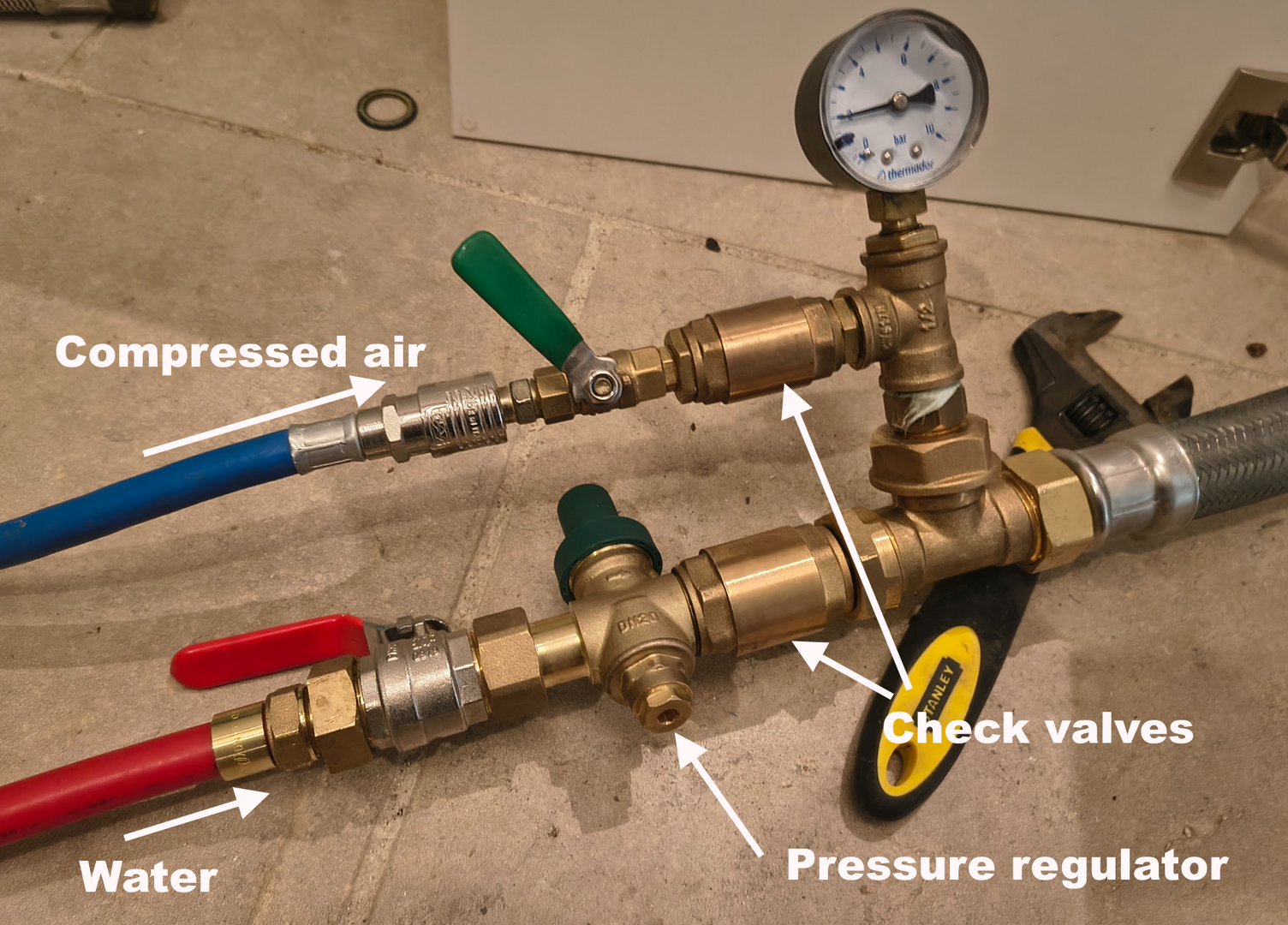
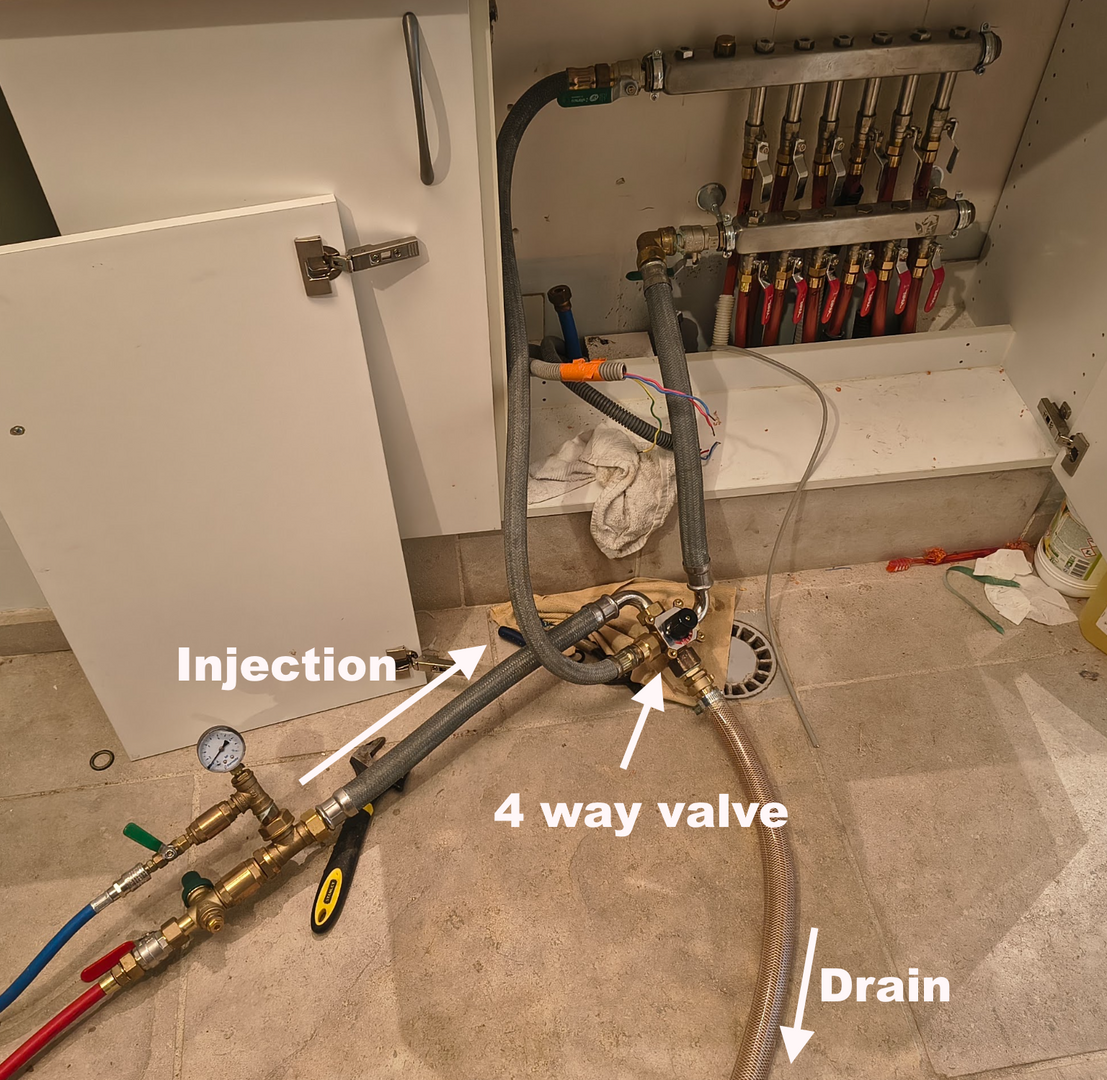
This contraption mixes water with compressed air and injects it:
The water inlet is taken before the house's pressure regulator, so it comes in at 7 bar, which compensates for the pressure drop in the red PEX pipe. With only 3 bar supply it would have been necessary to use 20 or 25mm pipe to get proper flow.
It is followed by a 4-way valve to allow flow in both directions.
Besides the compressor (which I already had) and the flex hoses (which came out of the old heating system) this is not expensive to implement. Probably less than €100.
It worked wonderfully. It pulled a ton of crap from the loops.
Compressed air helps a lot. I rinsed with with water until it came out clear, then turned on the air: brown stuff immediately came out, and kept coming out. I let it run for several hours, reversing flow direction every five minutes, one UFH loop at a time.
Air bubbles create a sort of water hammer effect which works really well for dislodging crap. Also air flows through pipes easier than water, so an air/water mix can flow at surprisingly high speeds through UFH loops, several meters per second at least. I used a feed pressure of 2.5 bar.
Drain pipe must be firmly secured. It did its best to get out of the washing machine U-bend.
Once this is done, it's time for chemicals.
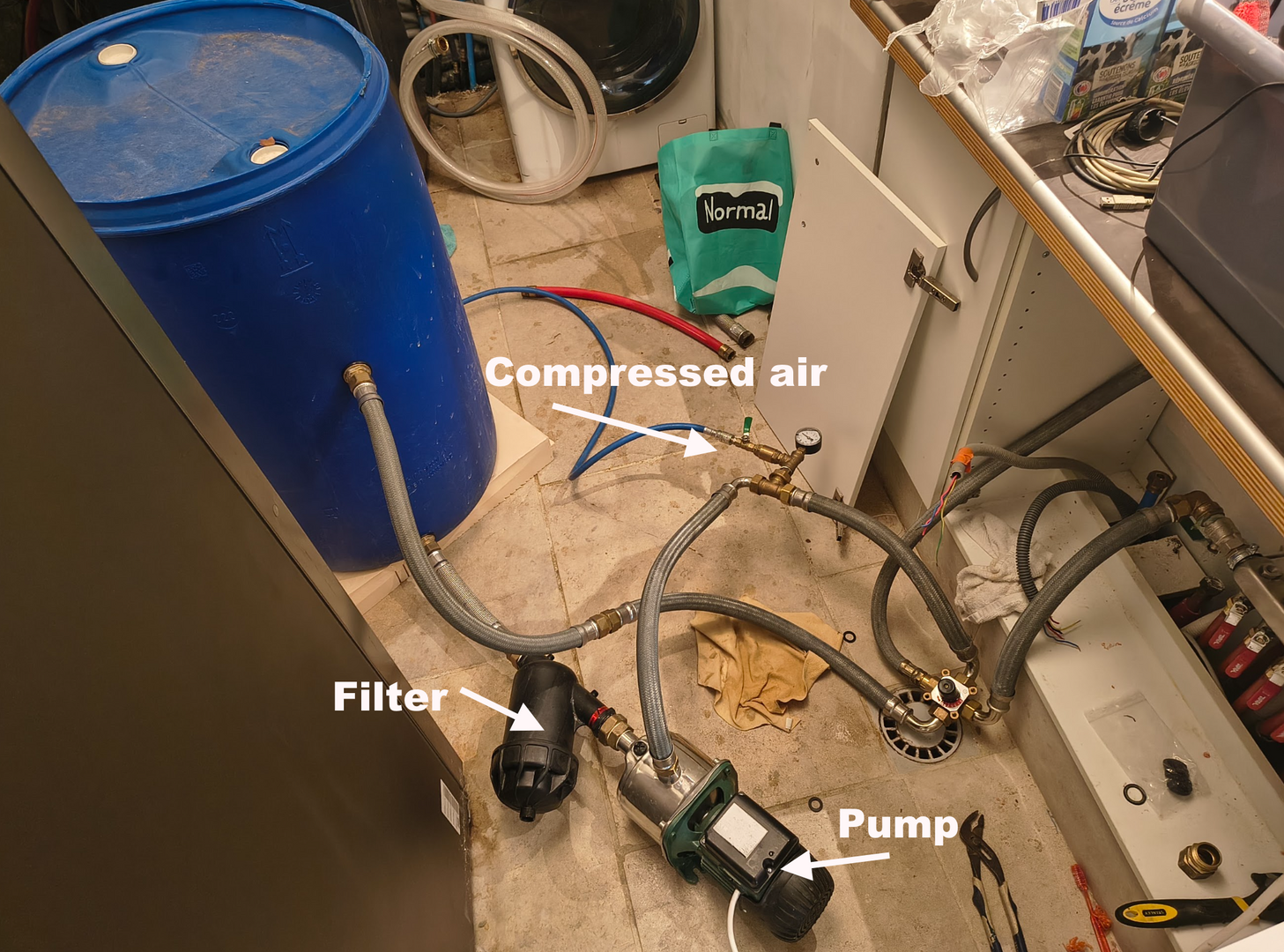
I got a 200l polyethylene bin from a local farmer, and reused the filter and pump from the old groundwater heat pump system. The previous contraption is now partially disassembled, keeping only the air injector.
UFH loops are flushed with compressed air, then the bin is first filled with Sentinel X-800 cleaning agent diluted to spec in 40°C water, then the pump turned on. Again, reverse flow every five minutes and do each UFH loop in turn.
Feed pressure at the pump outlet is 3-4 bar depending on length of UFH loop being cleaned, flow is 2-3 m3/h water plus air, so velocity in the UFH loops should reach 5-10 m/s. The whole thing is shaking and kicking.
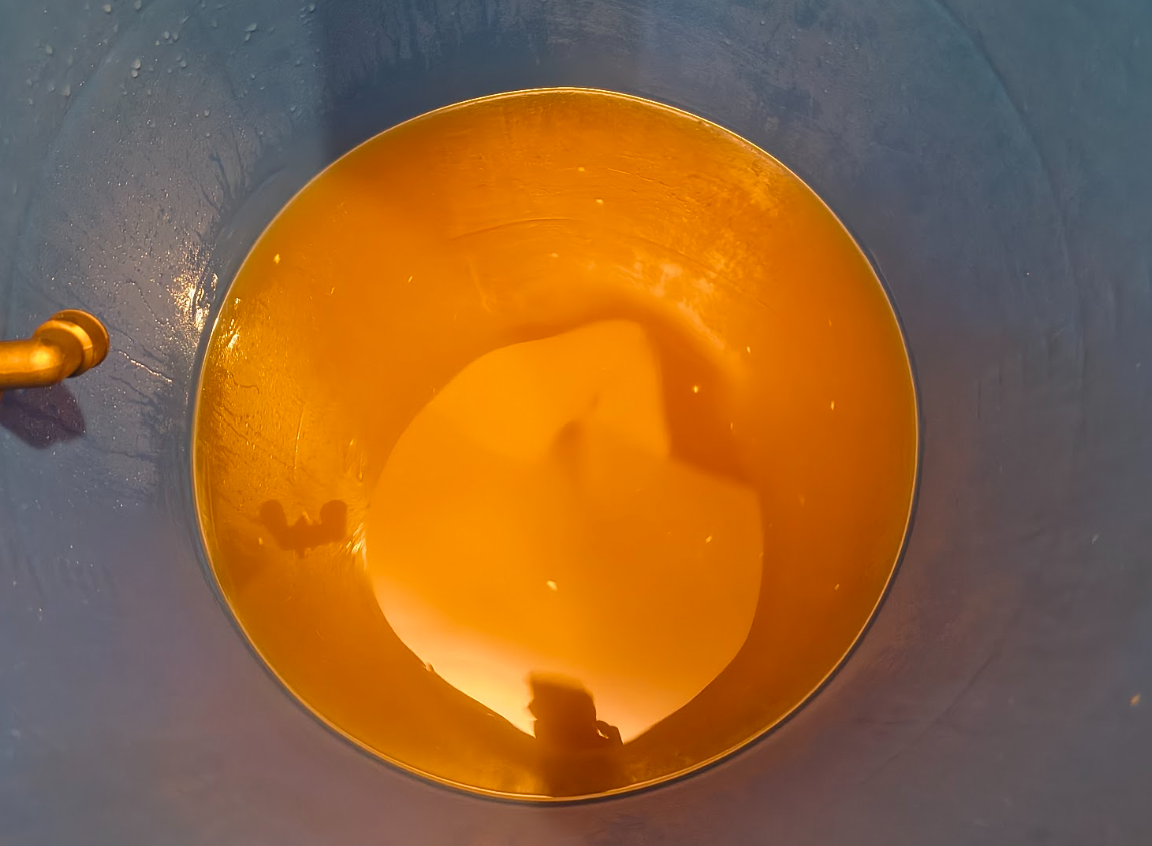
Water came out clear at the previous step, but the cleaning agent still pulled a lot of crap out of the pipes.
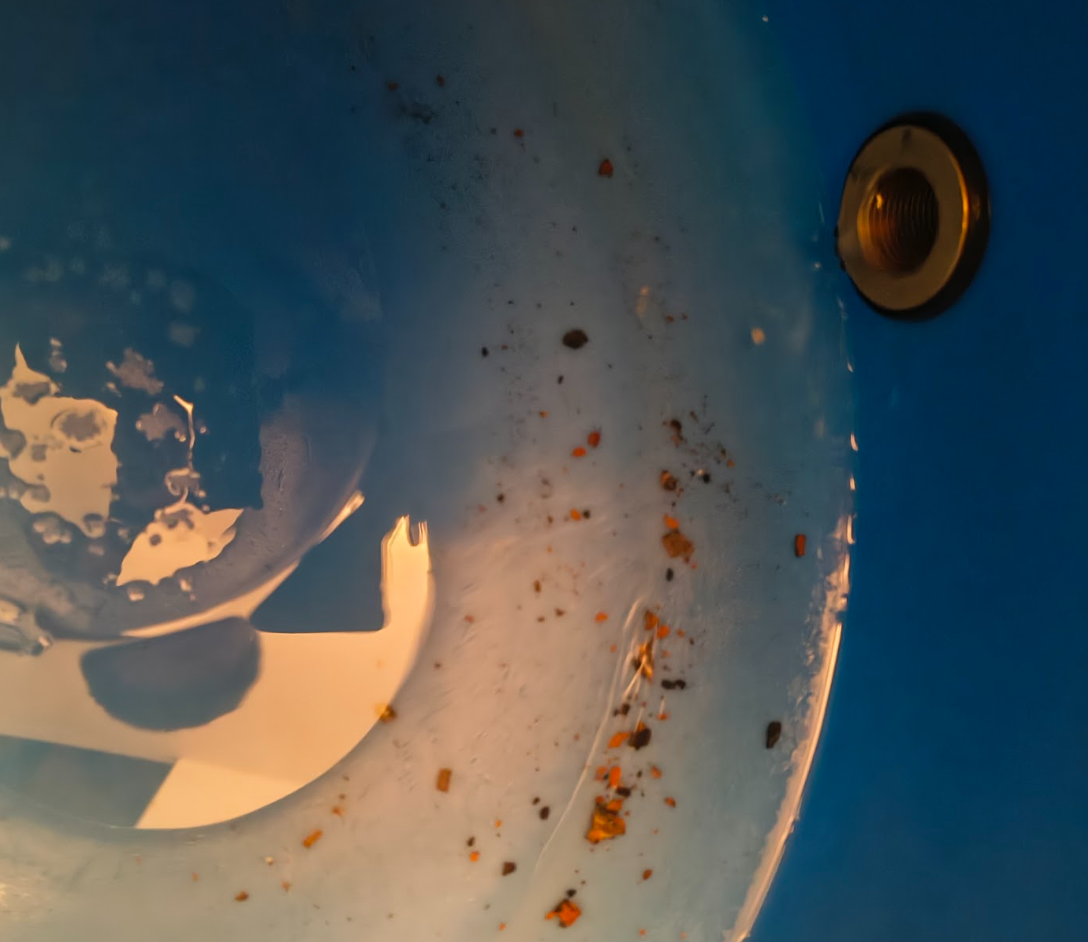
These flakes are quite large (the fitting is 1" for scale), I wonder how that got through the circulator... Well, it died, maybe that has something to do with it...
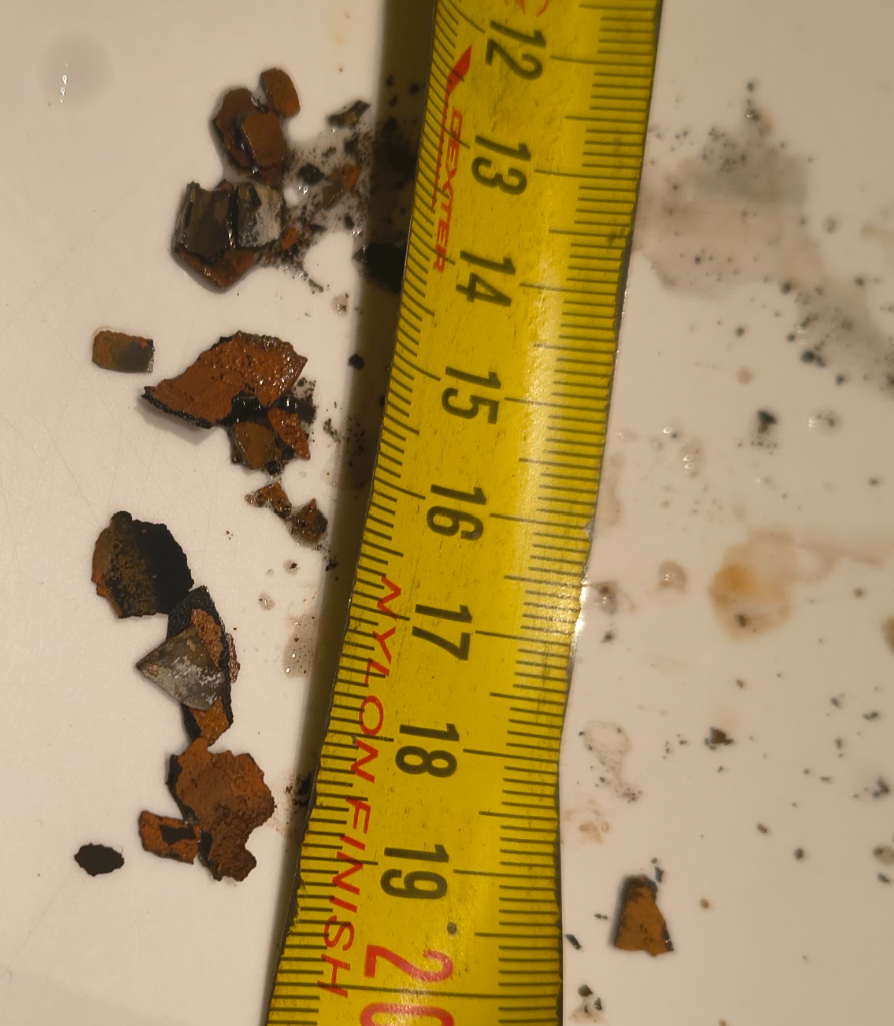
This is what the filter caught:
...I only put the filter in line when I switched from plain water to Sentinel cleaning agent, so who knows how much of this stuff got flushed into the sewer.
Some of these flakes are large enough to match the internal diameter of the UFH pipes, I guess the compressed air helped break them up.
Next, I rinsed with clean water plus air.
The reverse osmosis rig is currently filling the big blue tub with demineralized water, so tomorrow I'll pour some inhibitor in it and use the pump to flush and fill the loops.
Conclusion: I'm very happy with this DIY powerflushing stuff. It makes a mess of course, but I save 5-800€ per manifold, and I have 3 of these manifolds. Not bad for assembling a bunch of fittings, setting a timer to switch valves every five minutes, and mopping the floor afterwards.
Nice contraption- I like this kind of thinking. Last year I built myself a vacuum degasser to get all the air out - you seem to have created the opposite effect😀
Interesting! I toyed with the idea too. But I installed a wood burning boiler with its enormous companion tank along with the heat pump, so I'm going to degas by heating the whole tank to 85°C, I put an air separator right at the boiler outlet to catch the bubbles.
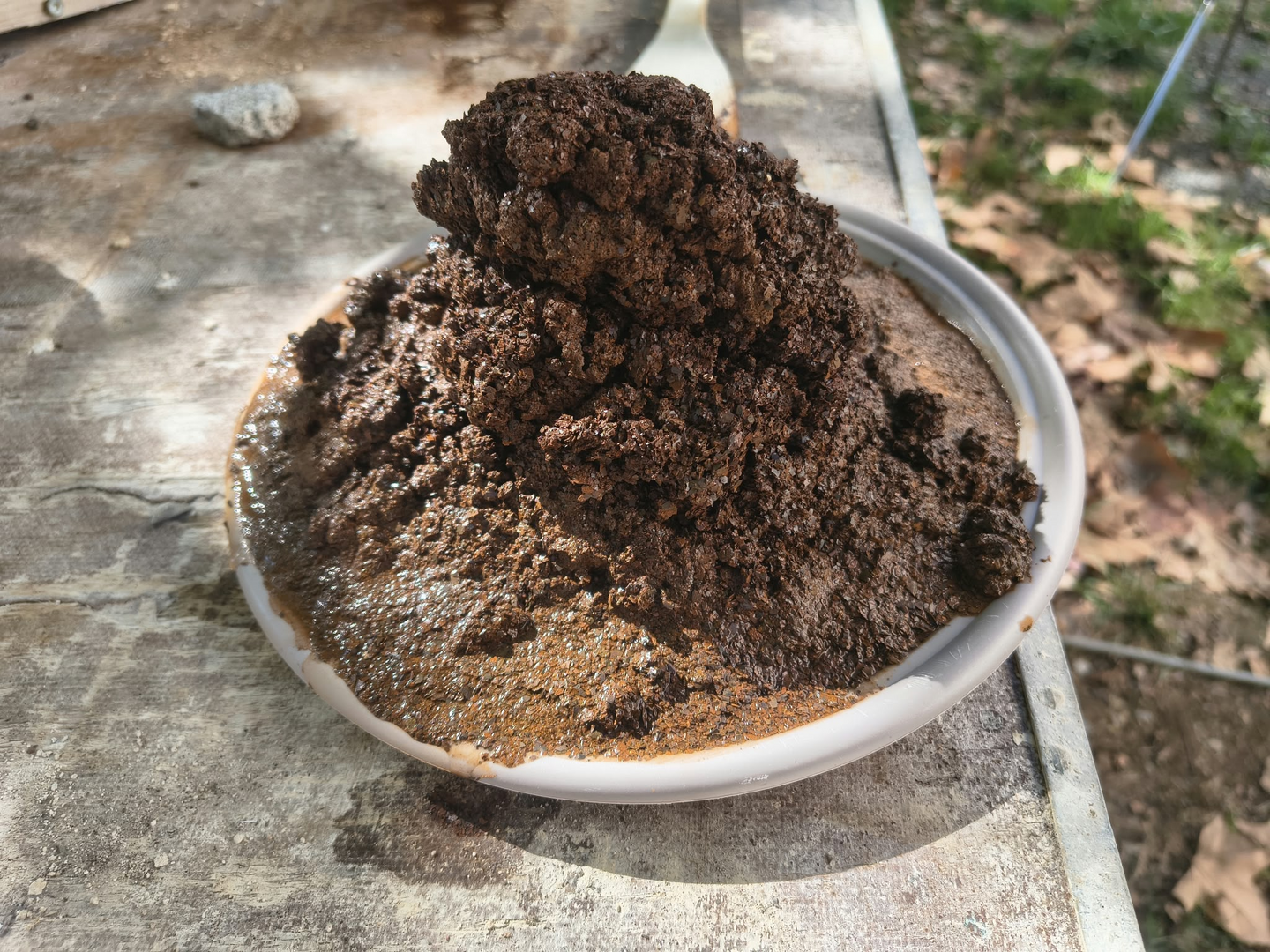
This is half of what came out of the underfloor loops:
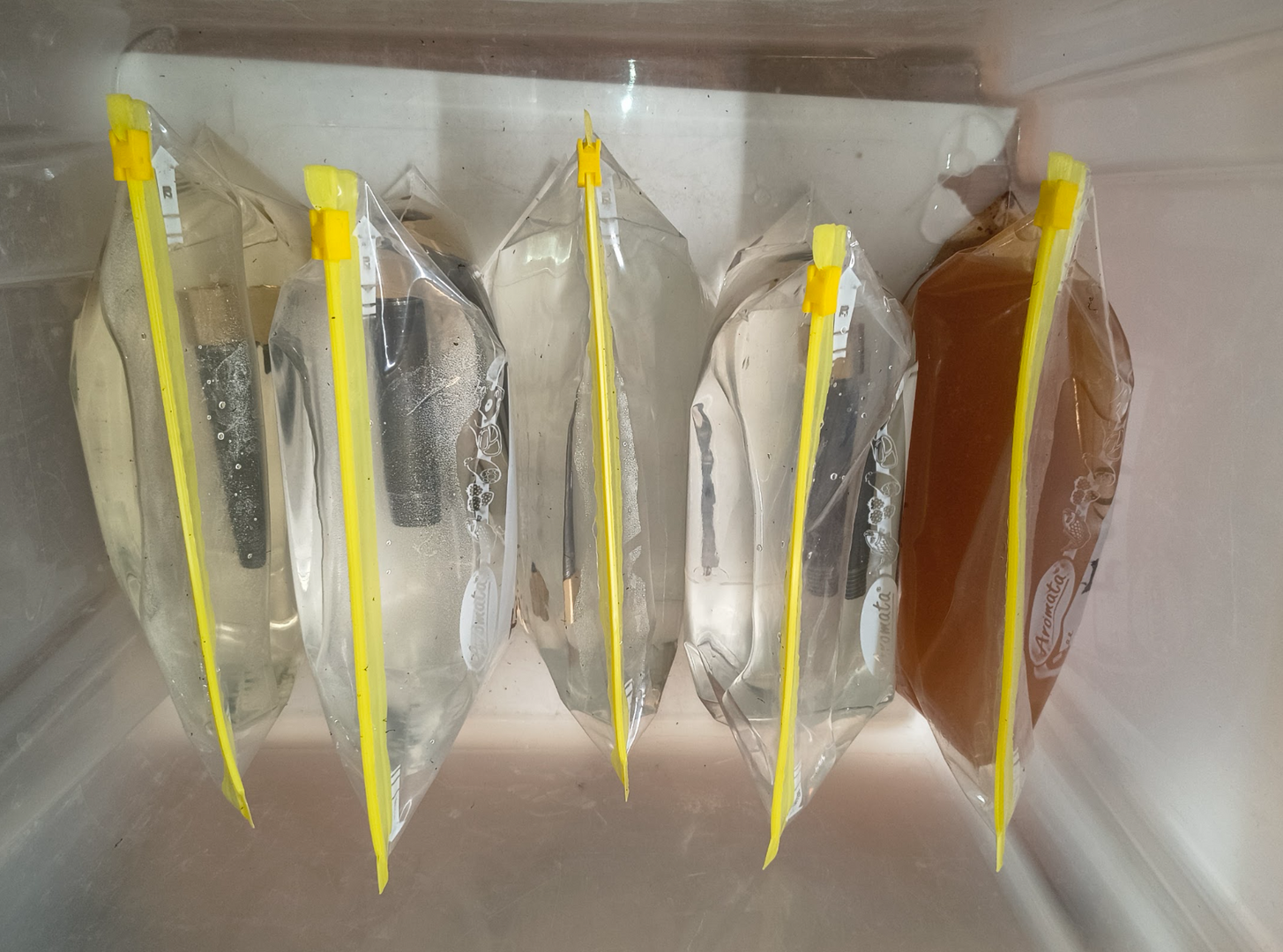
Now since I don't want to renew the experience, I filled with demineralized water + corrosion inhibitor. I got a good price on Trinnity inhibitor. Since I had a bottle of Sentinel X100 I'm running a science experiment...
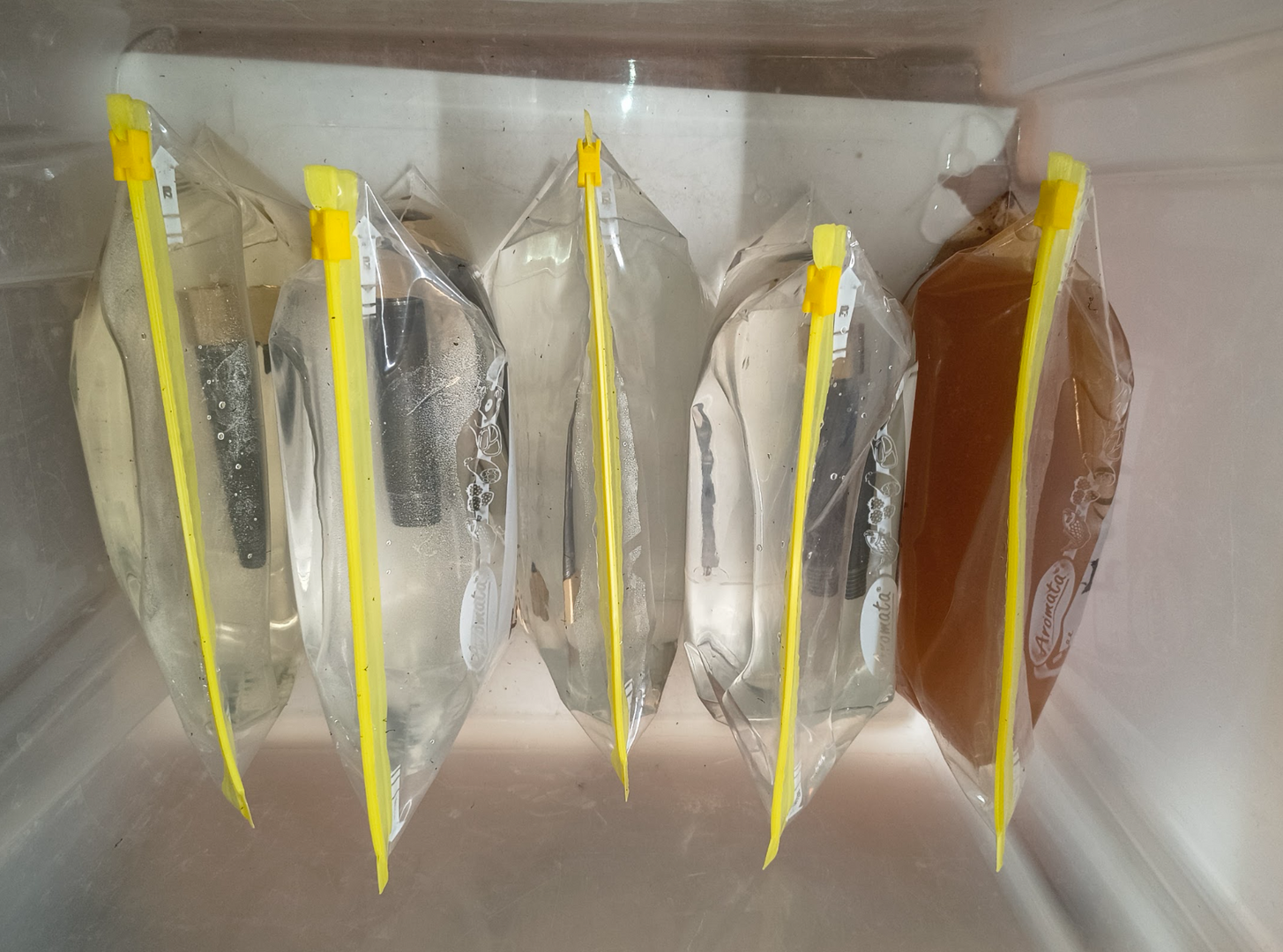
Each bag contains one 1/2" steel nipple screwed on a brass fitting, and is filled with (demineralized or plain water) x (Sentinel or Trinnity) so 4 combinations, plus one with just plain tap water. The latter is quite easy to spot after 15 days, it looks like the inhibitors are doing the job. The bags are LDPE (oxygen permeable) so this should speed up the process of finding out which one wins...
The problem is that while inhibitors inhibit metal corrosion, they also increase water conductivity. If you have no air, low conductivity and the correct pH, you shouldn’t need an inhibitor once the primary metals have passivated. Corrosion usually happens after the inhibitor is installed because of over- or underdosing. By the looks of it, you have had some bacterial buildup going on in the UFH loops. I'd suggest some biocide if you are going down the inhibitor route.
Richard, Rich, Dick, Captain or Pirate... I answer to them all in any sequence! 🏴☠️☠️👍
See my heat pump running live here... 👉 HeatPumpMonitor.org 👈
Buying from 🏴☠️ PirateHeatingSupplies.com 🏴☠️ means you support my family owned, independant business! 🙏❤️👍
What came out of the UFH loops is rust from oxygen seeping through the non barrier UFH loops and corroding the old cast iron boiler. There was no slime or other signs of bacterial growth.
This is half of what came out of the underfloor loops:
This is what bacterial growth in UFH loops looks like. It’s not slimy; it’s solid brown, just like this.
Richard, Rich, Dick, Captain or Pirate... I answer to them all in any sequence! 🏴☠️☠️👍
See my heat pump running live here... 👉 HeatPumpMonitor.org 👈
Buying from 🏴☠️ PirateHeatingSupplies.com 🏴☠️ means you support my family owned, independant business! 🙏❤️👍
Magnet: a small percentage (<5%) of the particles stick weakly to the magnet.
Heating: Brought to orange/yellow hot with a blowtorch for several minutes. No smell, no burning, only change is the brown flakes became black. Did the magnet test again: they now jump vigorously and in large quantity onto the magnet.
Thus the originals were probably Fe2O3 which turned into magnetite with heat and atmospheric oxygen.
the originals were probably Fe²O³ which turned into magnetite with heat and atmospheric oxygen.
This entire exercise is evidence of why we need to pay attention in secondary school science lessons! I've re-learned more science in the last decade of building battery storage and using a 3D printer than I did when struggling with academic exams.
What area of Britain are you in such that demineralised water makes so much of a difference?
Conductivity increases galvanic corrosion between dissimilar metals like steel and brass fittings. Two dissimilar metals act as a battery, current returns through water, and the anode gets corroded. But galvanic corrosion is not really an issue on normal installations where the steel parts are huge (buffer tank, boiler...) because it is spread over the whole area of the steel component. So it corrodes everywhere, but very slowly. It is a problem when the steel part is smaller than the brass/copper part, for example circulators, or a steel fitting between brass/copper fittings.
Inhibitor is supposed to protect against this by passivating surfaces.
Around here, demineralized water + inhibitor has about the same conductivity as raw tap water so I don't mind.
The issue with pure low conductivity water (ie demineralized) is that it's not buffered so it can turn acidic and corrosive easily with a small amount of acid like dissolved CO2 or brazing flux residue... inhibitor also contains a buffer which ensures pH remains civilized (I checked).
The real killer is oxygen ingress via permeable PEX, the bucket in the loft, air getting into the circuit at low pressure points, or frequent water top up/changes, all of which are design issues.
I'm running a little experiment. LDPE freezer bags (oxygen permeable) contain (demineralized or plain water) x (Sentinel or Trinnity inhibitor) so 4 combinations + one plain tap water. Inside the bags there is a steel nipple screwed on a brass fitting. The one without inhibitor is quite easy to spot... looks like the product is doing what it's supposed to...