Joining the Renewable Heating Hub forums is completely free and only takes a minute. By registering you’ll be able to ask questions, join discussions, follow topics you’re interested in, bookmark useful threads and receive notifications when someone replies. Non-registered members also do not have access to our AI features. When choosing your username, please note that it cannot be changed later, so we recommend avoiding brand or product names. Before registering, please take a moment to read the Forum Rules & Terms of Use so we can keep the community helpful, respectful and informative for everyone. Thanks for joining!
The EV will be charged using a dedicated 13amp socket and the vehicle systems used to control charging etc.
If the EV socket is dedicated, then you don't need to be limited to 13A.
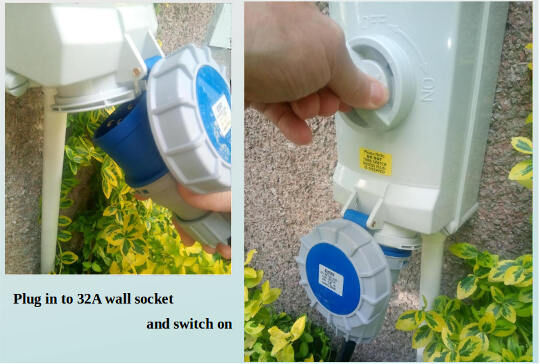
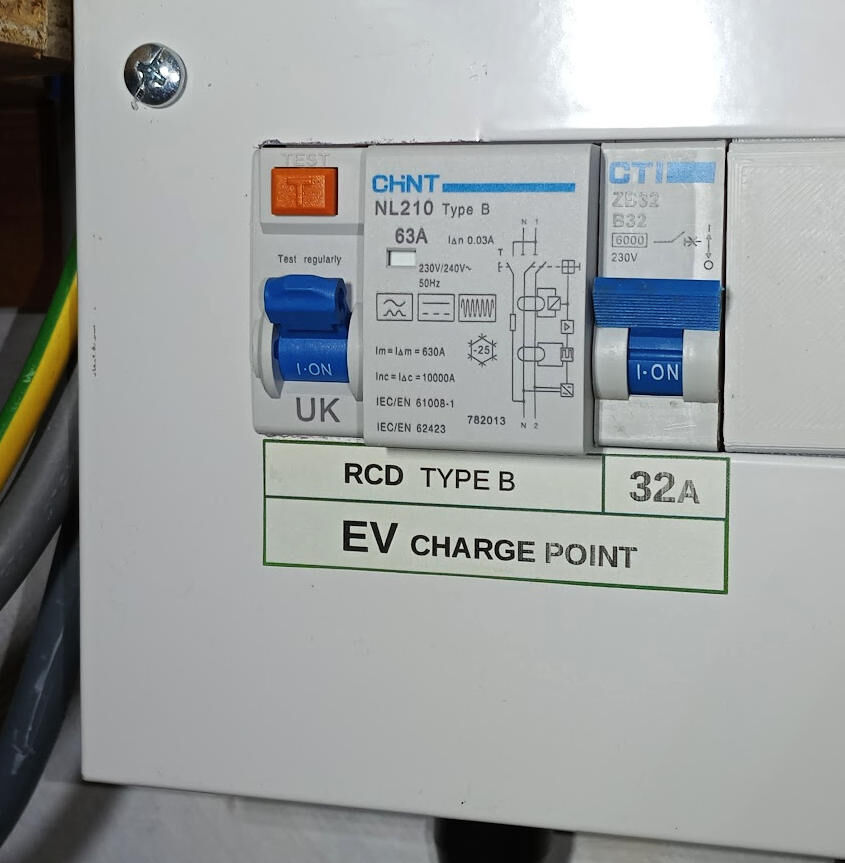
I have a 32A external "Commando" socket supplied direct from the consumer unit via a Type-B RCD.
I can see that from an electrical regs PoV thats true, but is there any minimum functionality in a car charger that is required (other than to supply electricity). I thought that there was some sort of comms protocol but it may not be necessary. I guess that, since yours is labelled EV Charge point its presumably what you use it for and the answer must therefore be 'no' which makes you wonder why we all buy expensive highly functional dedicated chargers (answer - because thats what the market wants to sell)
There's an article here on using a commando socket instead of a wallbox.
From a practicality viewpoint, a commando socket is either on or off; either you're charging at 32A or you're not. Moreover, there's no control over it as such which a wallbox can provide (schedules, integration with tariffs etc.). In both of these cases, @davidb has already said he's OK with accepting these limitations at 16A so switching from a 3-pin socket to a commando socket won't change his basic plan other than allowing quicker charging.
Now, I wonder if you can buy a 32A smart commando socket.... 🤔
105 m2 bungalow in South East England
Mitsubishi Ecodan 8.5 kW air source heat pump
18 x 360W solar panels
1 x 6 kW GroWatt battery and SPH5000 inverter
1 x Myenergi Zappi
1 x VW ID3
Raised beds for home-grown veg and chickens for eggs
"Semper in excretia; sumus solum profundum variat"
There's an article here on using a commando socket instead of a wallbox.
From a practicality viewpoint, a commando socket is either on or off; either you're charging at 32A or you're not. Moreover, there's no control over it as such which a wallbox can provide (schedules, integration with tariffs etc.). In both of these cases, @davidb has already said he's OK with accepting these limitations at 16A so switching from a 3-pin socket to a commando socket won't change his basic plan other than allowing quicker charging.
Now, I wonder if you can buy a 32A smart commando socket.... 🤔
You can get "portable" EV chargers that plug into 16A or 32A commando sockets. They are incredibly useful when the regulatory system has it's head up its arse and you can install a commando socket without hassle but installing an EV charger requires a ton of mess because of conservation zones, listed buildings or other regulatory hassles.
Now, I wonder if you can buy a 32A smart commando socket....
Quite probably not, but you can get a 32A relay and a Shelley device to switch it. I switched my 13A EV socket with a 16A Shelley relay for a while, I dont think the do a 32A one but others do.
You can get "portable" EV chargers that plug into 16A or 32A commando sockets. They are incredibly useful when the regulatory system has it's head up its arse and you can install a commando socket without hassle but installing an EV charger requires a ton of mess because of conservation zones, listed buildings or other regulatory hassles.
Im sure that the government at the time was lobbied by MCS and other such bodies, supported probably by the fossil industry, to put 'rules' around renewable technologies. MCS et al want rules so they can protect their commercial positions, and the fossil industry want rules to make it more difficult to wean ourself off. It seems to be the fate of new technologies that they dont by default get the 'grandfather rights' of the technology they are replacing and of course where there are vested interests they almost inevitably have an influence until someone both 'sees through them' and is actually minded to change things.
The current government is slowly relaxing the unnecessary rules, the May 2025 update to planning regs went quite a long way and the recent moves towards allowing plug in solar is a siginficant stand against vested industry lobbying, albeit that we all hope it will be extended to batteries quickly.
This post was modified 2 months ago 2 times by JamesPa
4kW peak of solar PV since 2011; EV and a 1930s house which has been partially renovated to improve its efficiency. 7kW Vaillant heat pump.
It seems to be the fate of new technologies that they dont by default get the 'grandfather rights' of the technology they are replacing and of course where there are vested interests they almost inevitably have an influence until someone both 'sees through them' and is actually minded to change things.
A really nice way to put it!
Even if it is not much consolation when I look at the more than half a dozen certificates and the like for our install. Not even counting manuals!
The current government is slowly relaxing the unnecessary rules, the May 2025 update to planning regs went quite a long way and the recent moves towards allowing plug in solar is a siginficant stand against vested industry lobbying, albeit that we all hope it will be extended to batteries quickly.
Agree, the pace is not impressive, but it is steadily changing. It seems the principle of affordability is finally being given some importance.
8kW Solis S6-EH1P8K-L-PLUS hybrid inverter; G99: 8kW export; 16kWh Seplos Fogstar battery; Ohme Home Pro EV charger; Vaillant Arotherm Pro 7kW; 100Amp head, HA lab on mini PC
The current government is slowly relaxing the unnecessary rules, the May 2025 update to planning regs went quite a long way and the recent moves towards allowing plug in solar is a siginficant stand against vested industry lobbying, albeit that we all hope it will be extended to batteries quickly.
Agree, the pace is not impressive, but it is steadily changing. It seems the principle of affordability is finally being given some importance.
Having spend 14 years in local government (after 30 years in engineering) I know how slowly things move and also know that, if you try to speed them up unduly, you risk being subjected to a Judicial Review because of some self-interested person(s), further delaying things by a couple of years or more.
Of course there are politicians that advocate eliminating or reducing the extent that government decisions can be challenged through the courts; those same politicians also advocate withdrawing from human rights protection and only appointing civil servants that agree with their ideology. There is a theme here of which you may or may not approve.
4kW peak of solar PV since 2011; EV and a 1930s house which has been partially renovated to improve its efficiency. 7kW Vaillant heat pump.
I was just commenting on the speed, not suggesting shortcutting due process.
Moving slowly seems to make it predictable, a benefit on its own!
8kW Solis S6-EH1P8K-L-PLUS hybrid inverter; G99: 8kW export; 16kWh Seplos Fogstar battery; Ohme Home Pro EV charger; Vaillant Arotherm Pro 7kW; 100Amp head, HA lab on mini PC
A 15-year payback is a reason to re-check the assumptions, not a universal rule. Separate the quote into PV, battery/inverter, scaffolding and compliance costs; model winter PV, round-trip losses, export rates, battery degradation and EV charging separately. Then compare PV-only, battery-only and the combined system using your actual half-hourly demand.
@energystoragetech it's highly improbable that @davidb has the data to perform such calculations. Nor has this discussion explained some of the calculations which you're suggesting, such a modeling Winter PV and battery degradation.
His original post has been based on a quotation from an installer. The calculations and assumptions used for the estimated 15-year pay back period aren't going to be in the quotation.
We are all agreed that 15-years isn't a universal rule.
Thanks for all the comments. I finally got to the bottom of why the payback is so poor. Essentially the software used to provide the quote makes no attempt to estimate savings for having a battery and the savings from time of use tarrifs. The company who quoted acknowledges that those savings will be more significant but don’t offer to estimate. I guess (1j to uncertain and (2) more work for them. Also the benefit of the 8 solar panels is almost certainly overstated for our roof orientation.
I don’t know if I missed it a topic thread on this forum (been away for 4 weeks) but the fairly recent evaluation of installed PV by government (or other) across the uk seemed to suggest a 17 yr payback (from memory). Yes, my quote might achieve that 17 yr figure but thats most definitely not an attractive investment proposition for me given the risks involved.
Currently I am trying to better understand our kW usage - based on 30 min. smart meter data. Sadly our 30min data only started in May so I need to wait for a few winter months to get realistic info to inform a decision on battery size. Interestingly our energy monitor seems to suggest that it is rare to exceed 3.6kW so there may be limited benefit in considering more than a standard capacity inverter. Incidentally, that figure includes when we charge our Nissan leaf using the granny charger.
A significant unknown for us is why we used 4kWhrs a day when we were away. I had left the ASHP and our MVHR unit on absent modes. The smoke and heat alarms were still on but very little else. Given we normally use 10 to 20 max. that’s a significant unknown to be identified. Any suggestions on how to track that down?