
Notifications
Clear all

10/01/2026 6:35 pm
@majordennisbloodnok our swap out install finished around 1pm
11kw Peak Energy ASHP - SunSynk 3.6kW Solar Inverter with 3.5kw panels and GSL 10kWh home battery
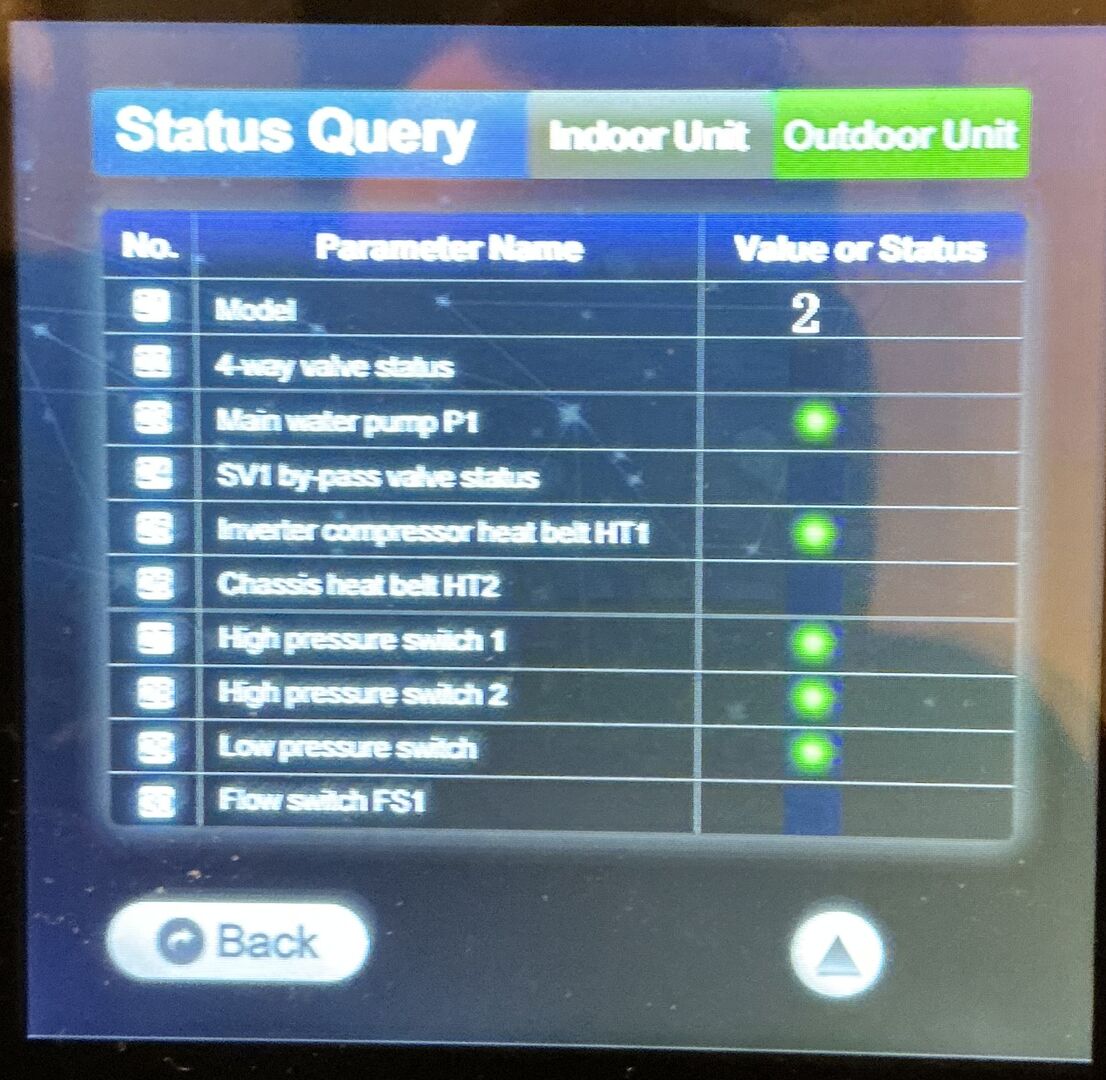
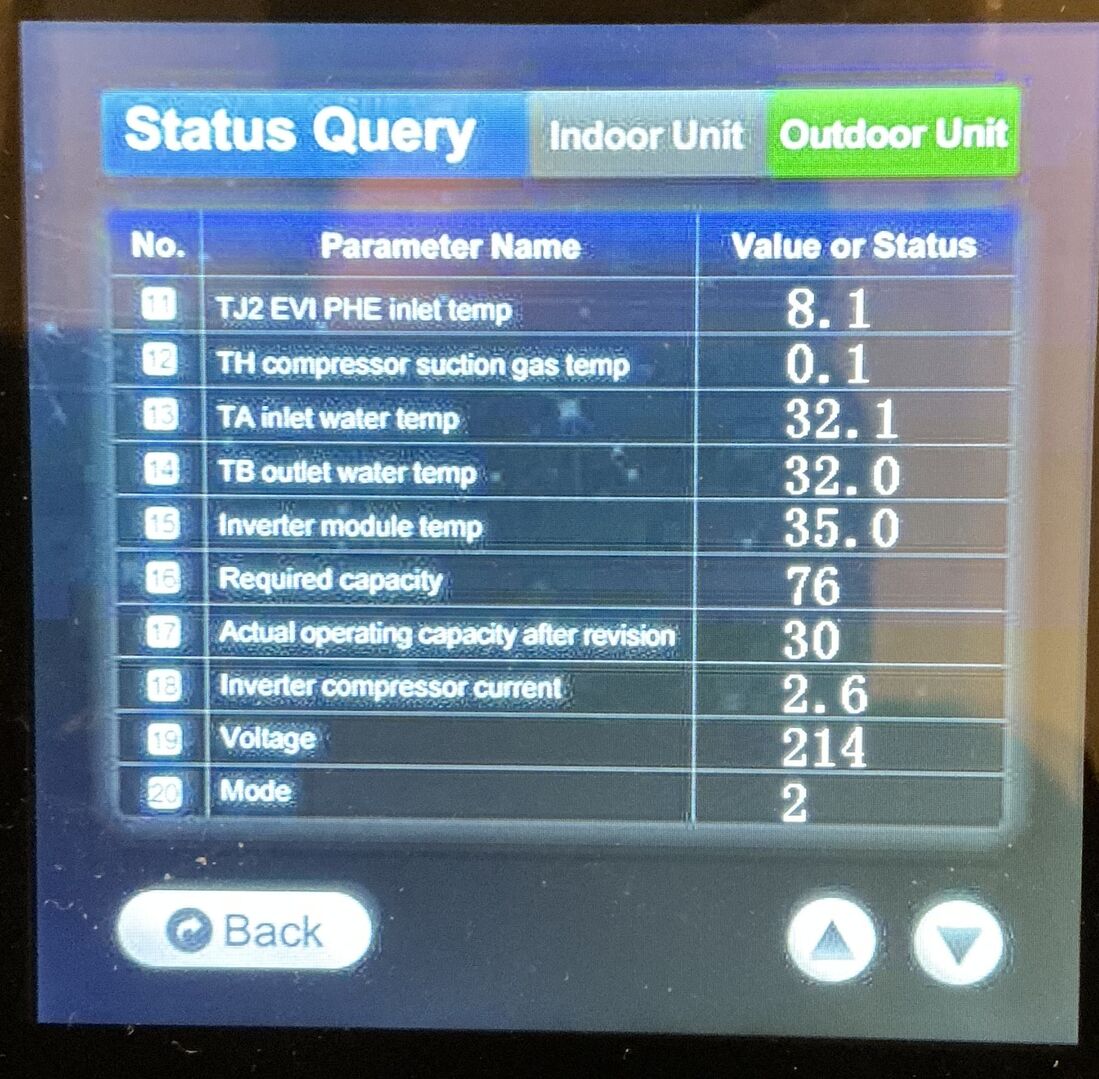
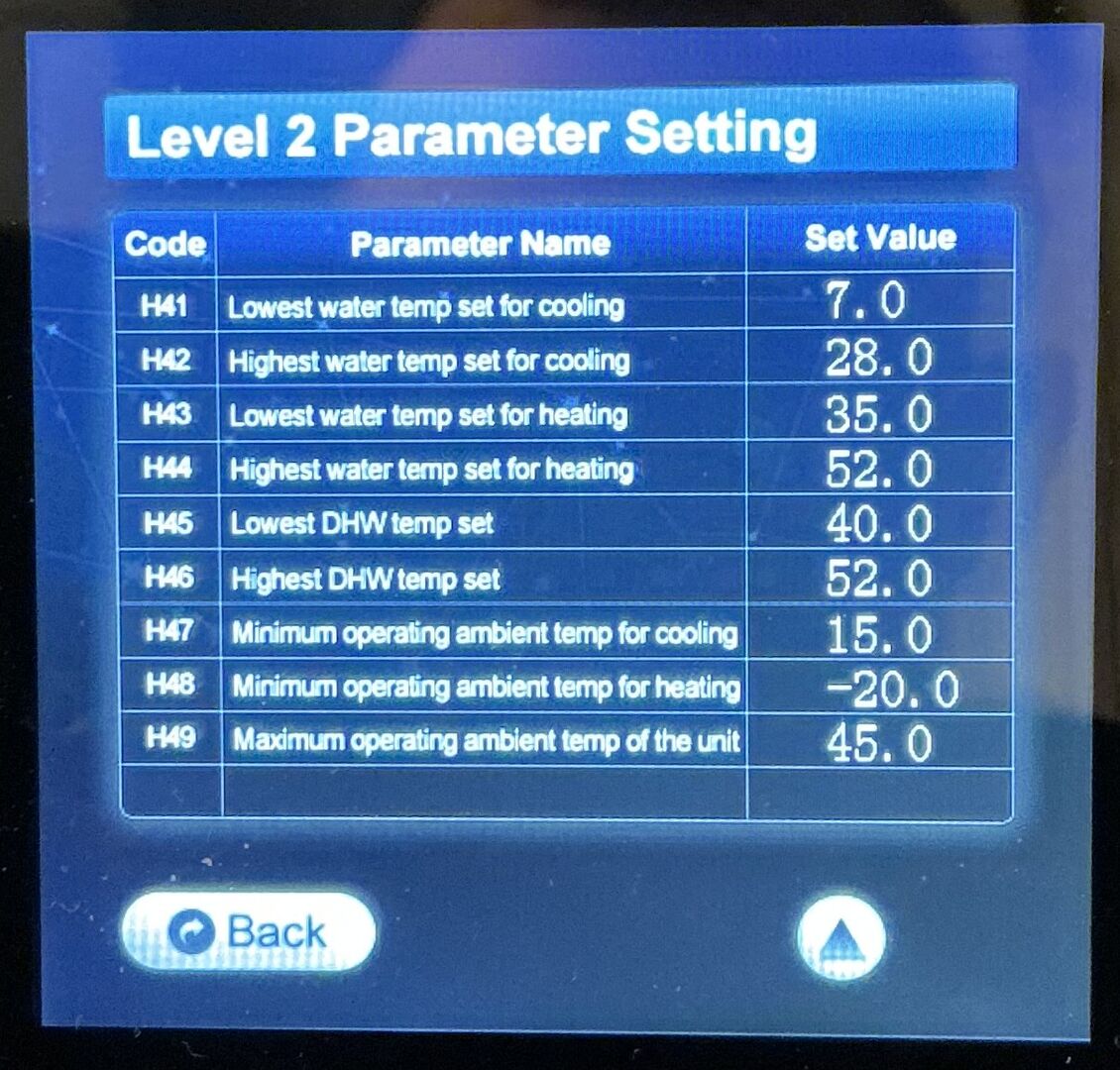
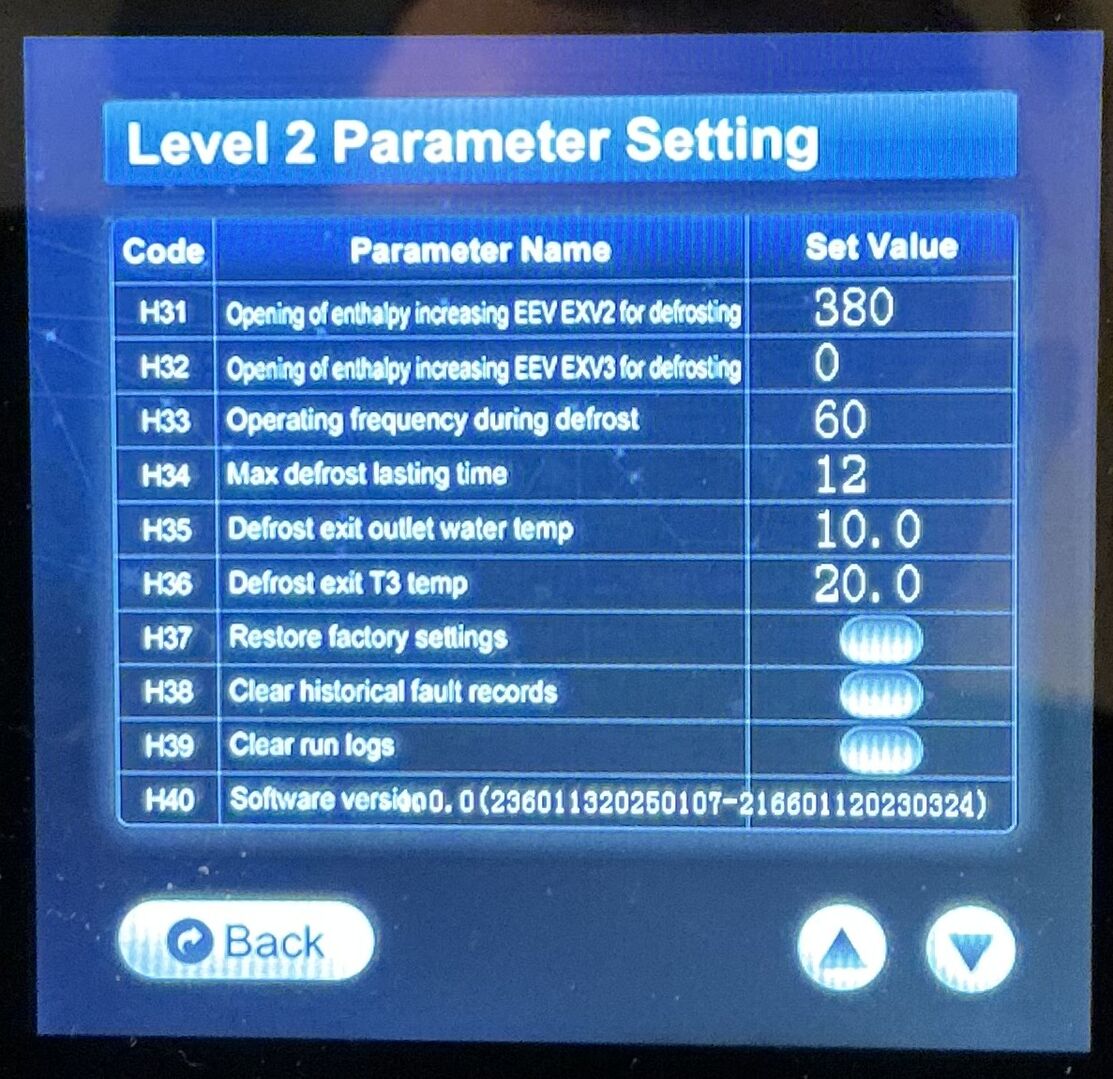

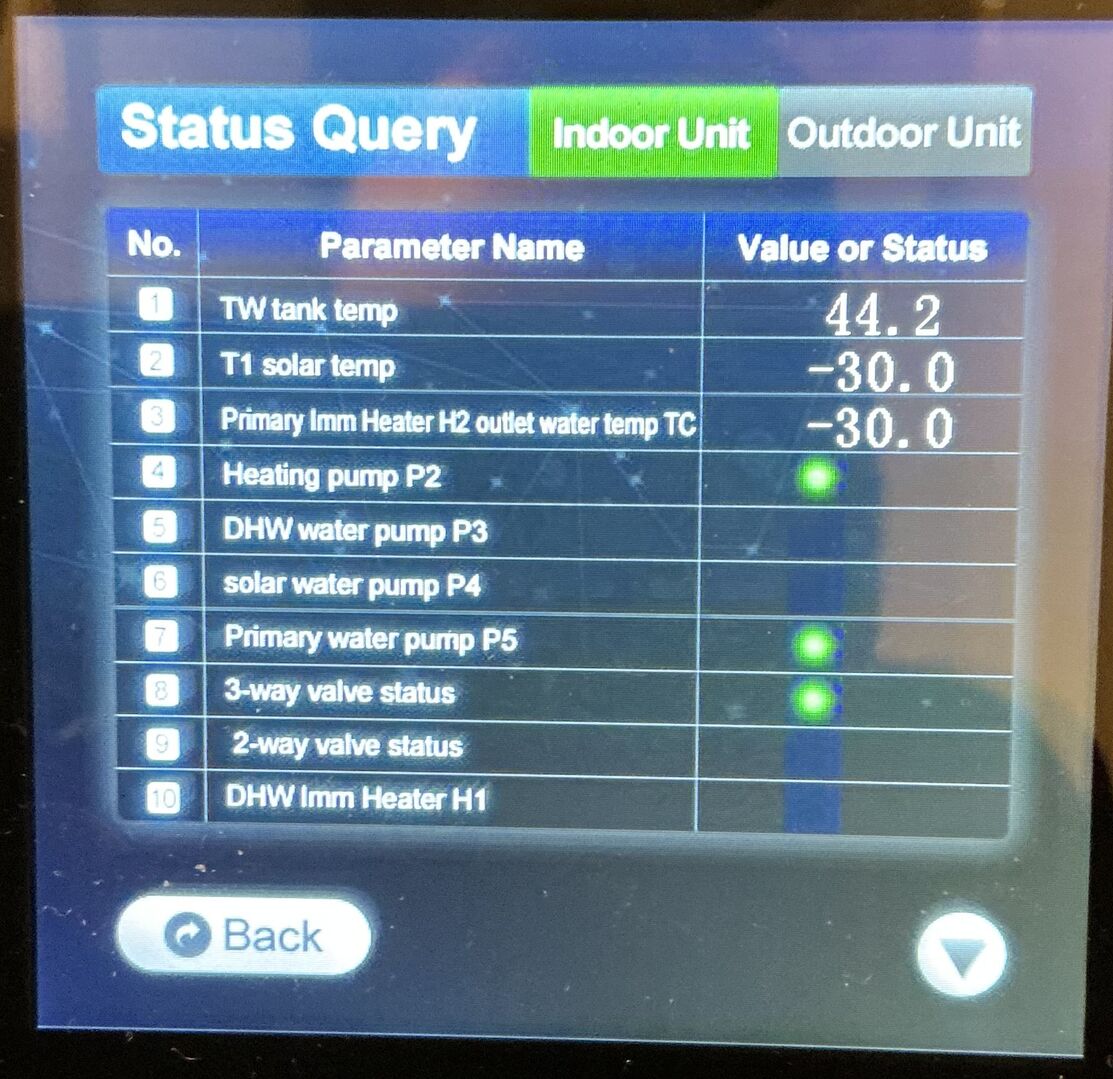
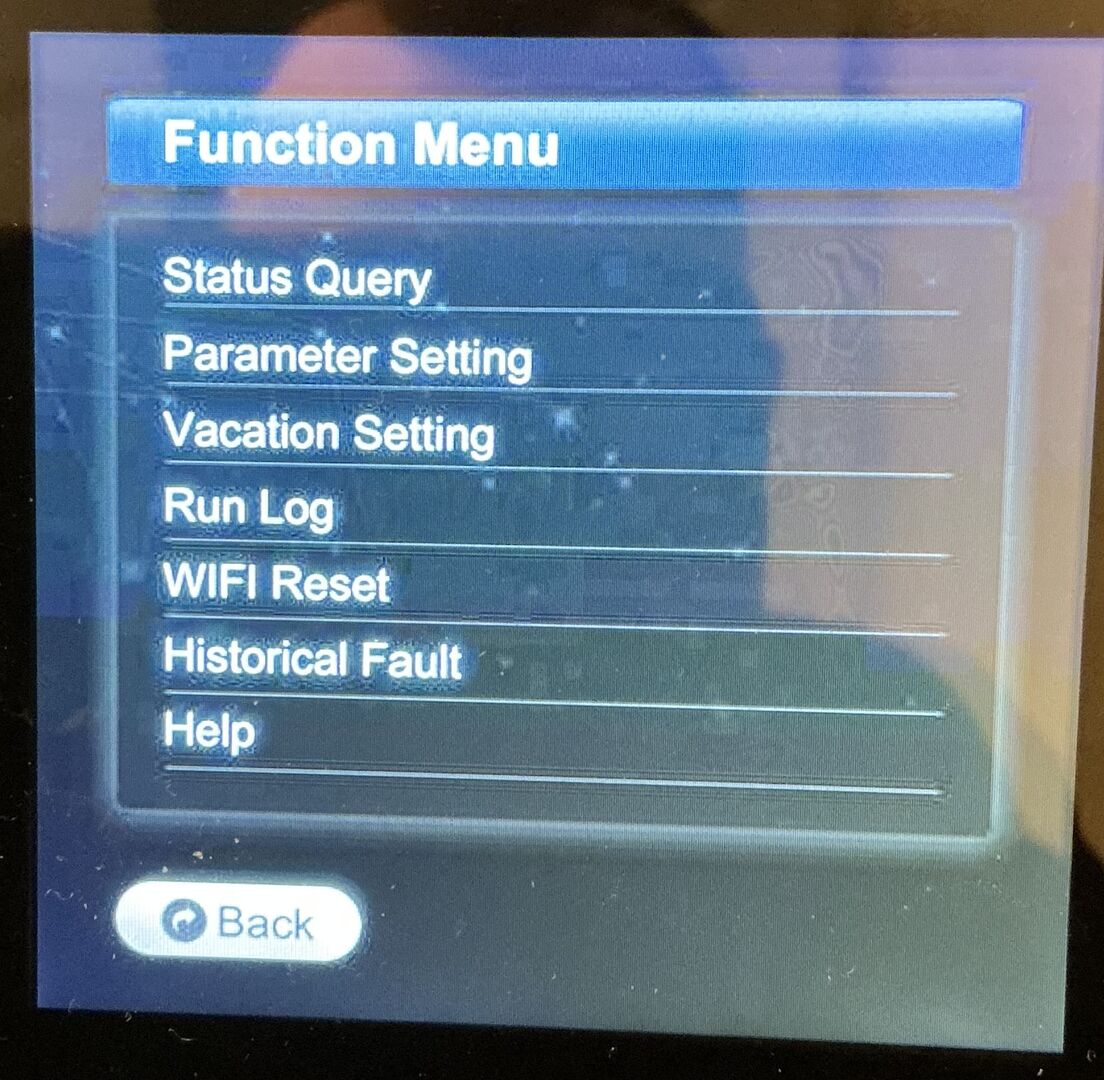
10/01/2026 6:38 pm
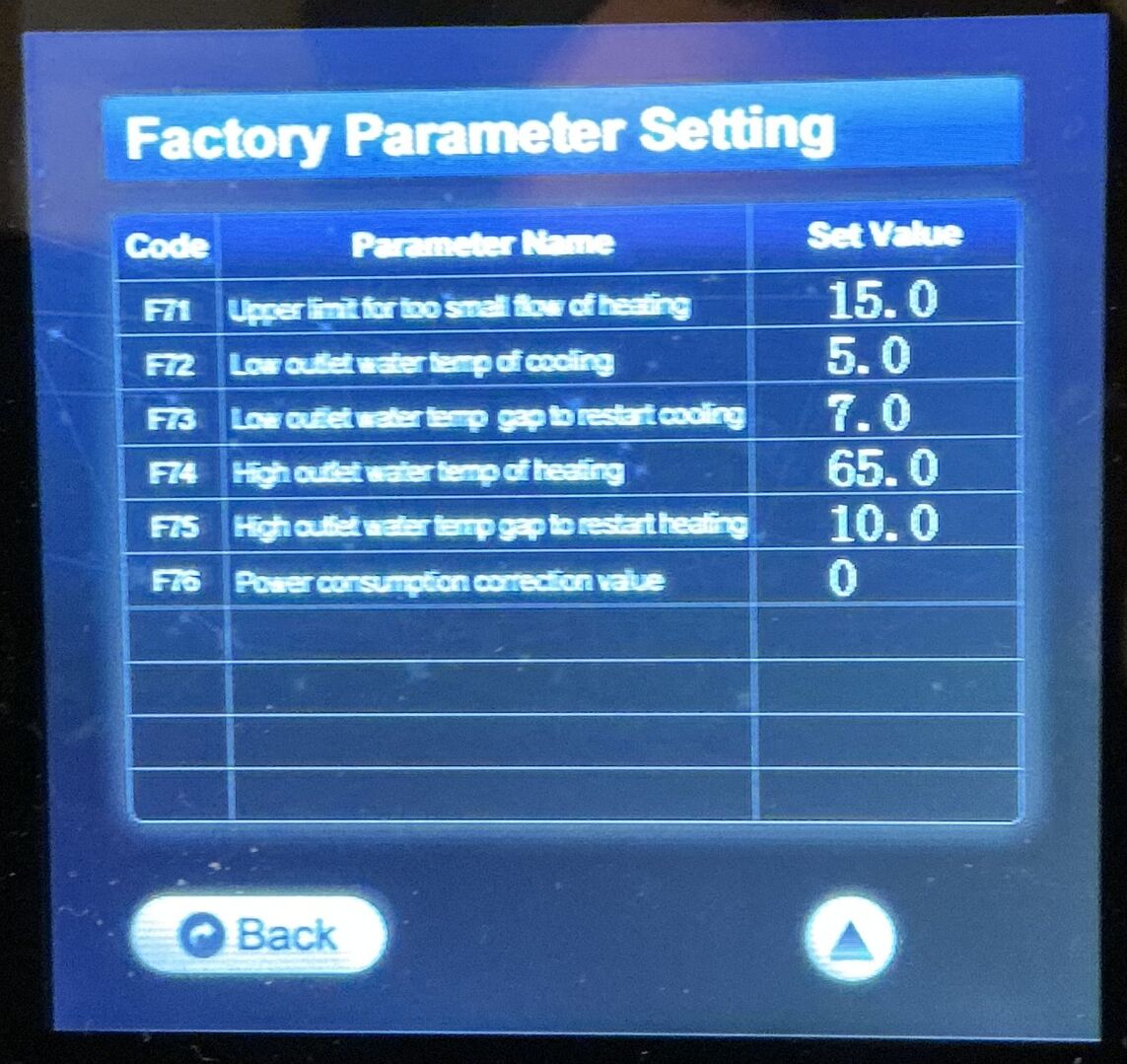
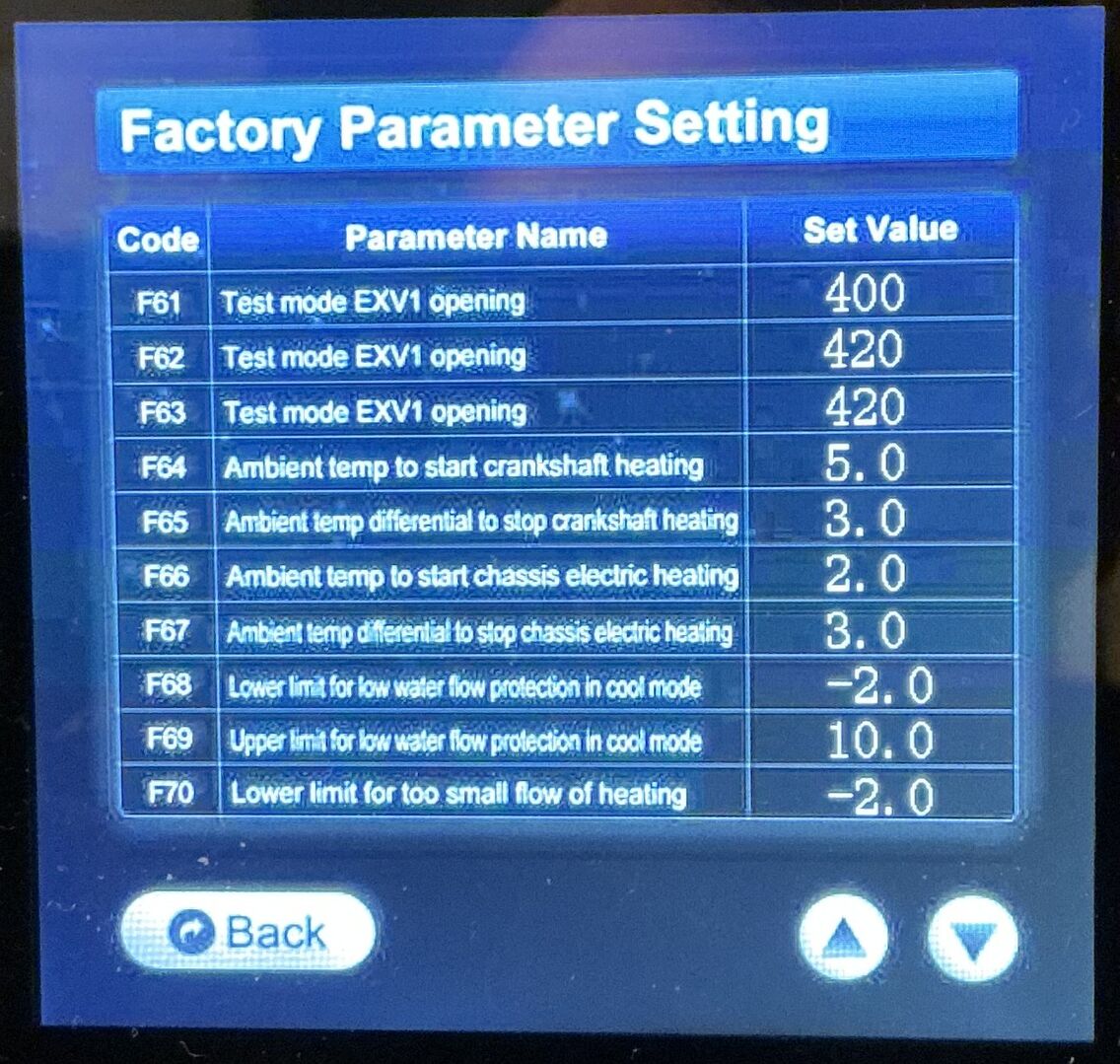
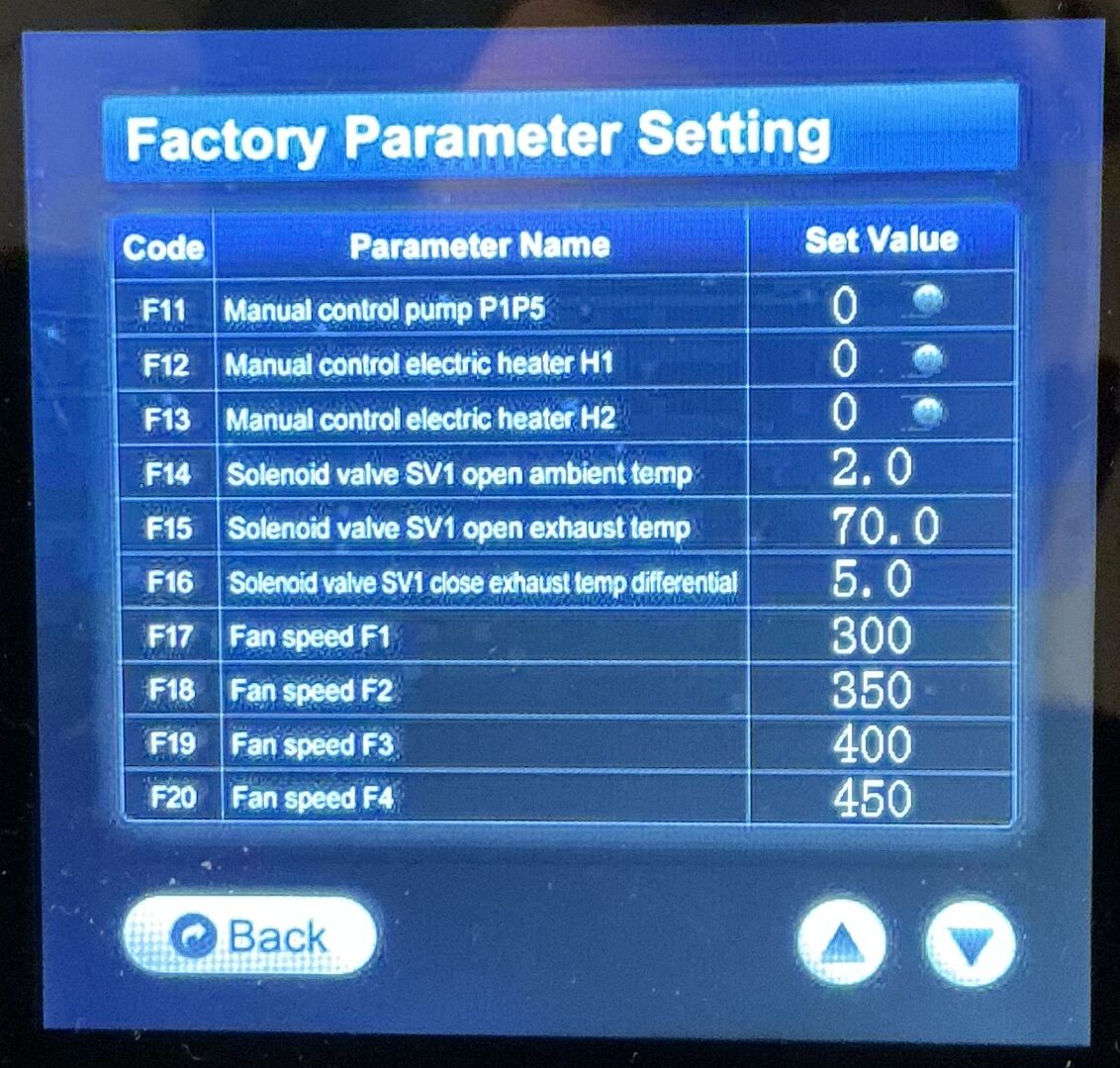
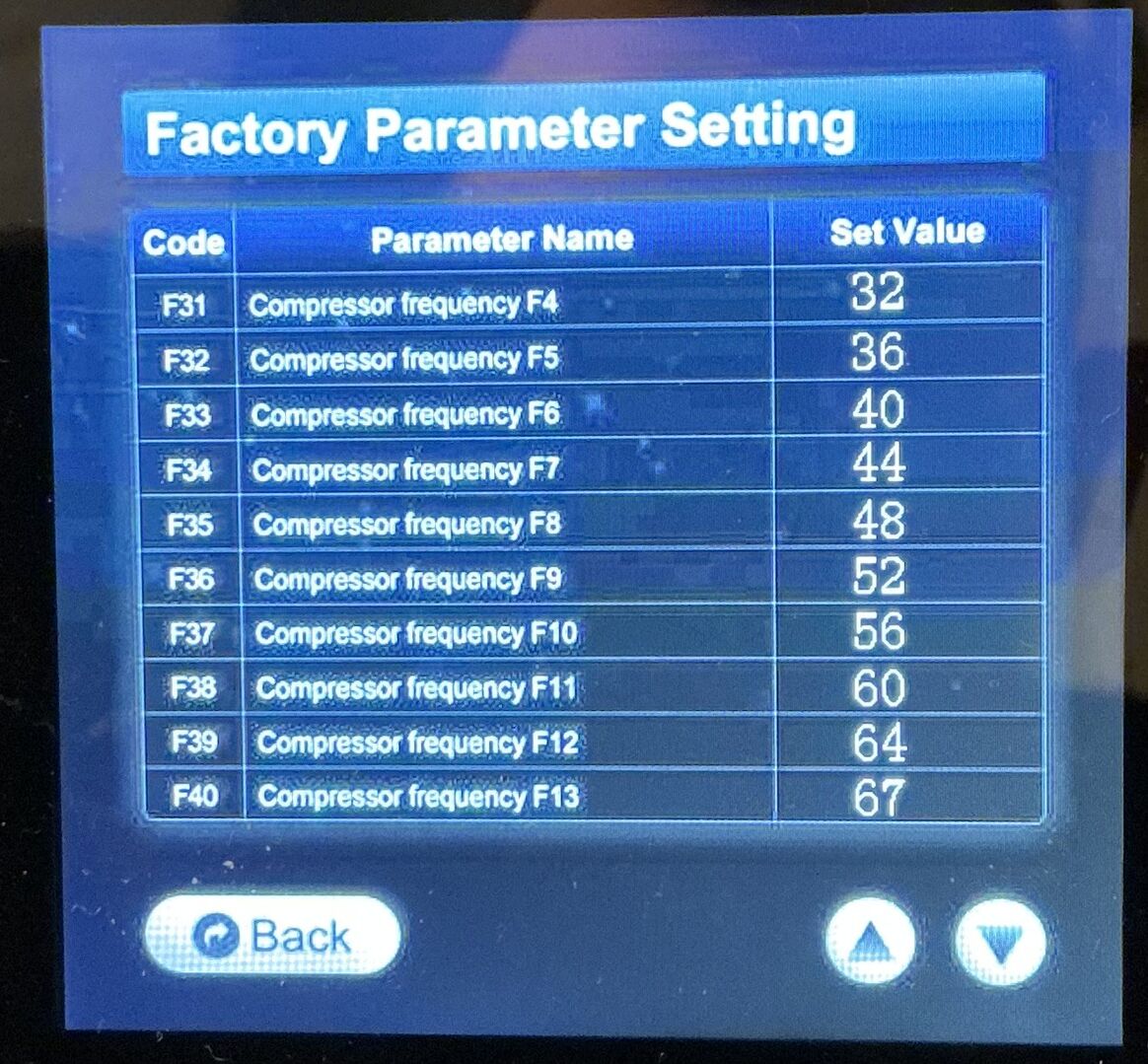
11kw Peak Energy ASHP - SunSynk 3.6kW Solar Inverter with 3.5kw panels and GSL 10kWh home battery

10/01/2026 7:25 pm
Peak Energy Products most recent accounts (to June 2024) make interesting reading. Im not an expert by any means, but their assets are almost entirely 'inventory' and their liabilities include a debt for £300K to their only director which is 'repayable on demand'. Net assets are just £9K. The debt 'repayable on demand' (ie at the convenience of the director) worries me given that if payment is demanded it could easily be enough to bankrupt the company. Unfortunately there is no I&E so we have no idea what the turnover is, but 400K inventory is quite a lot of kit.
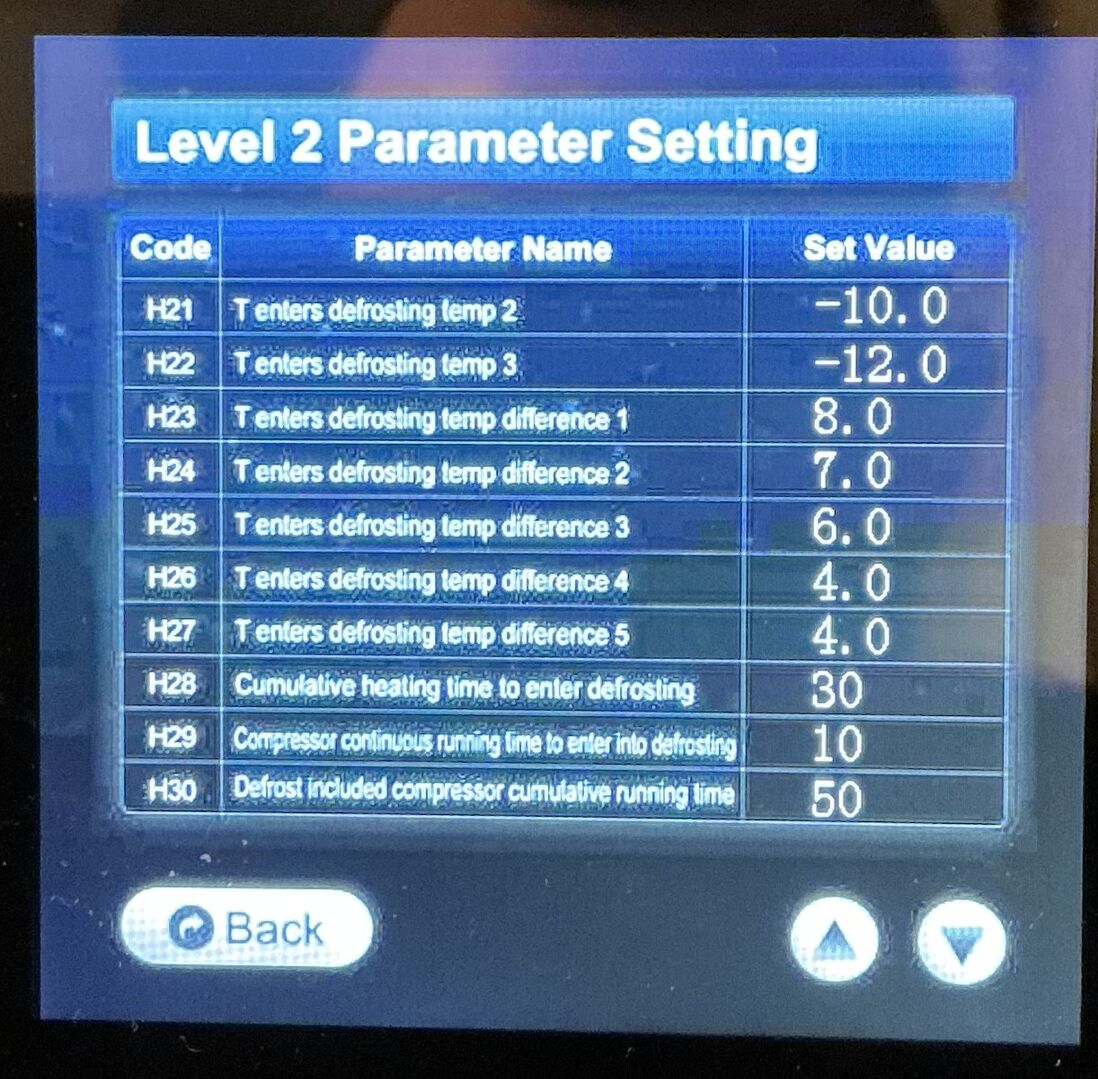
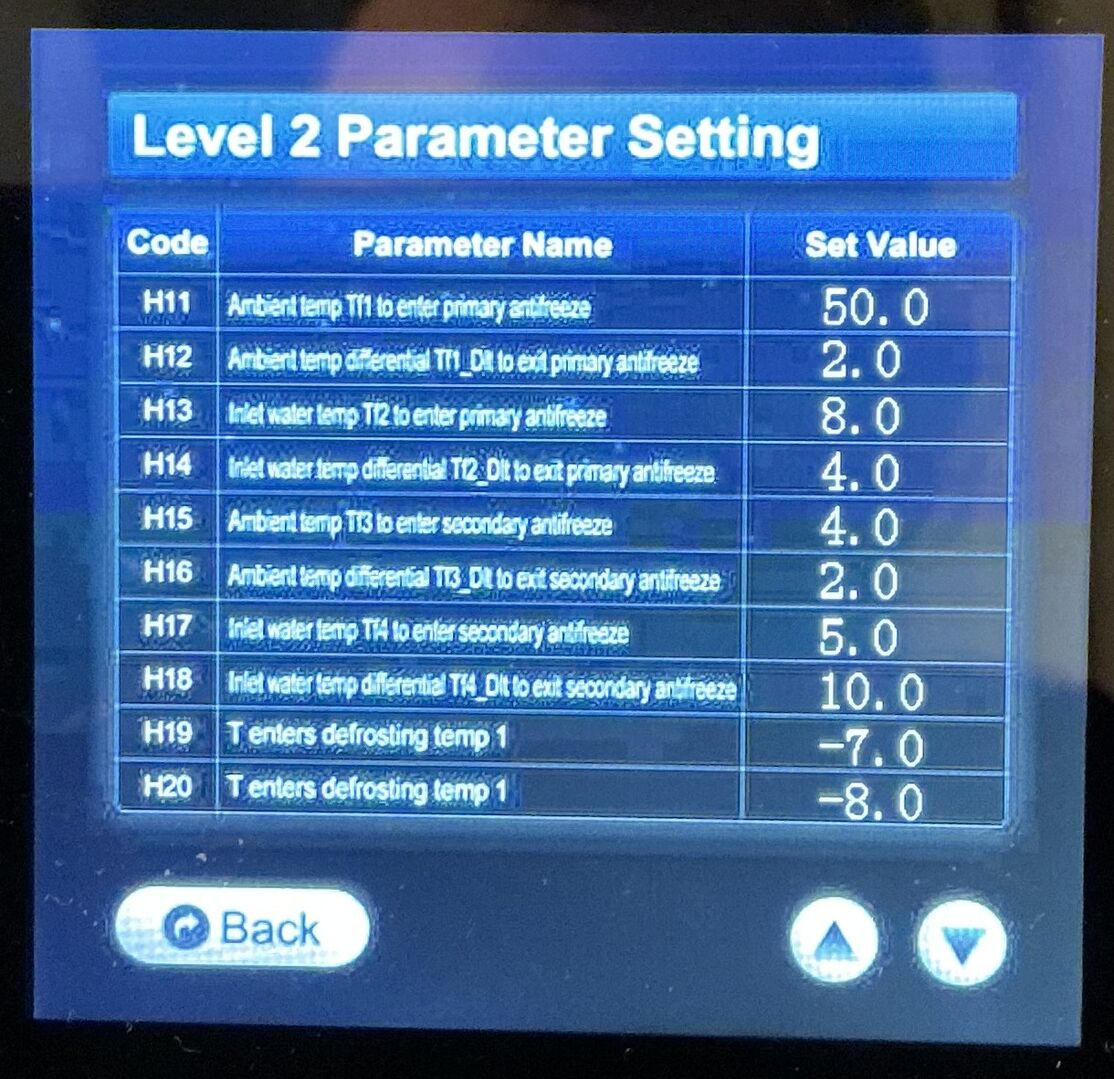
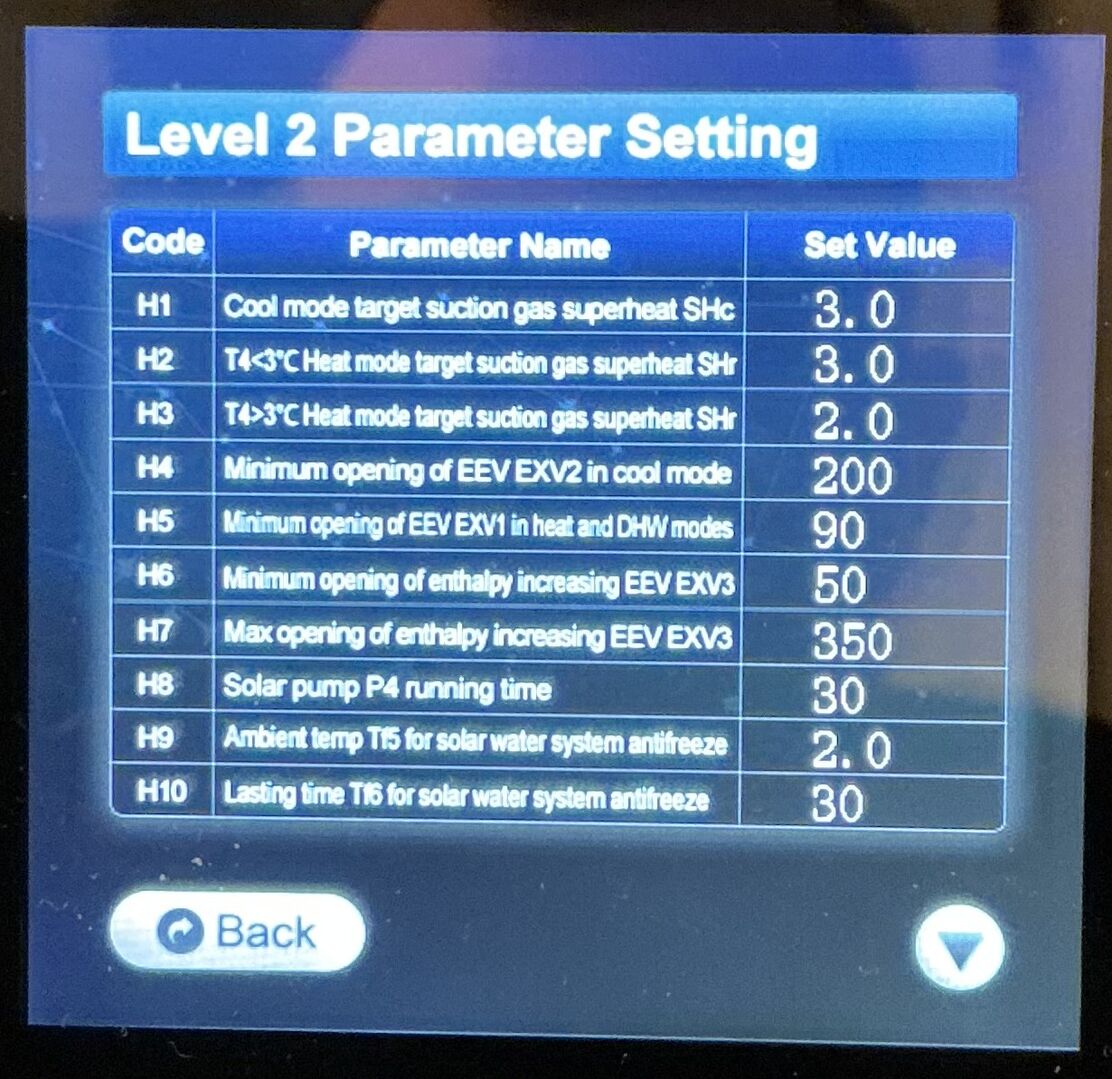
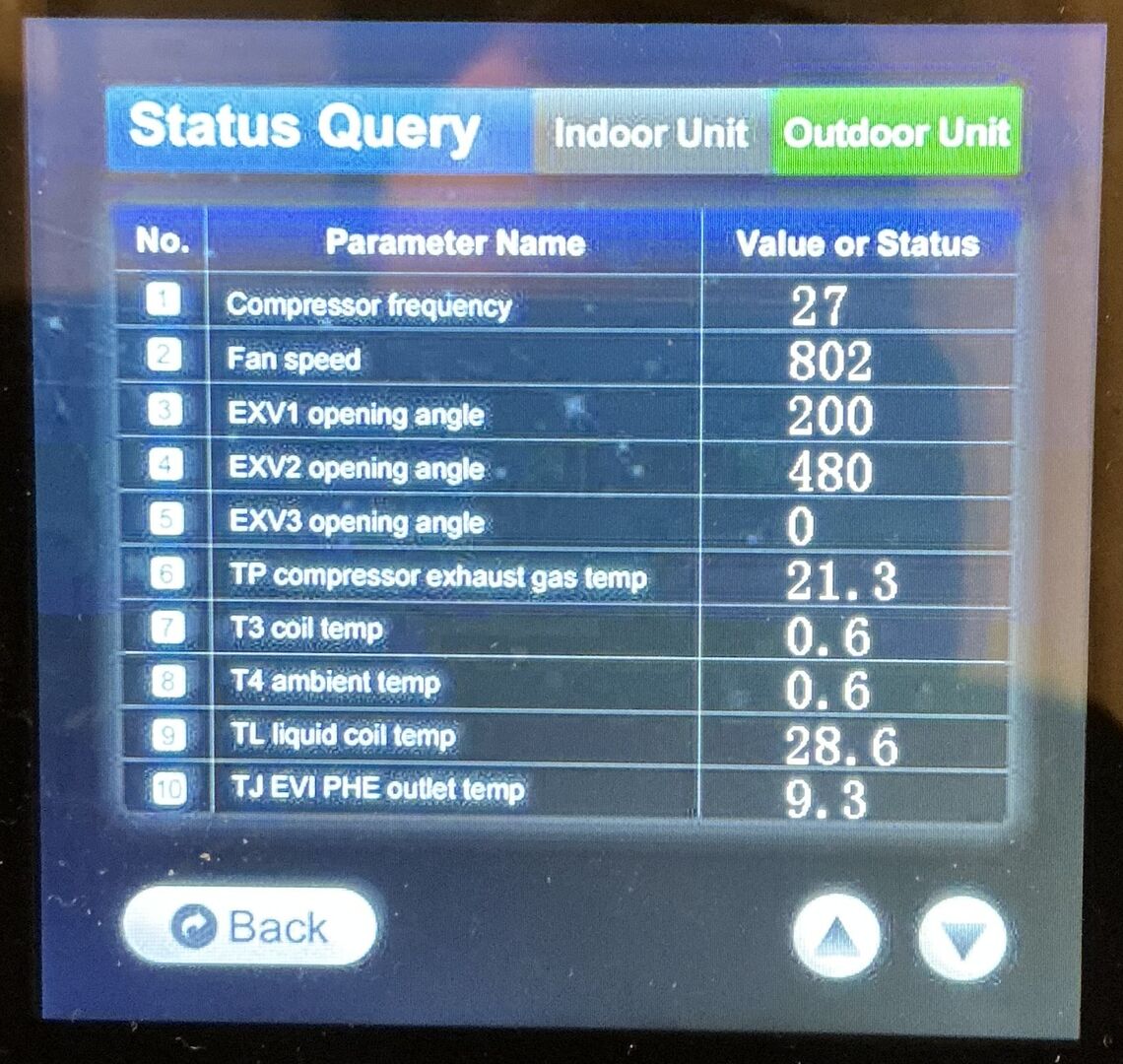
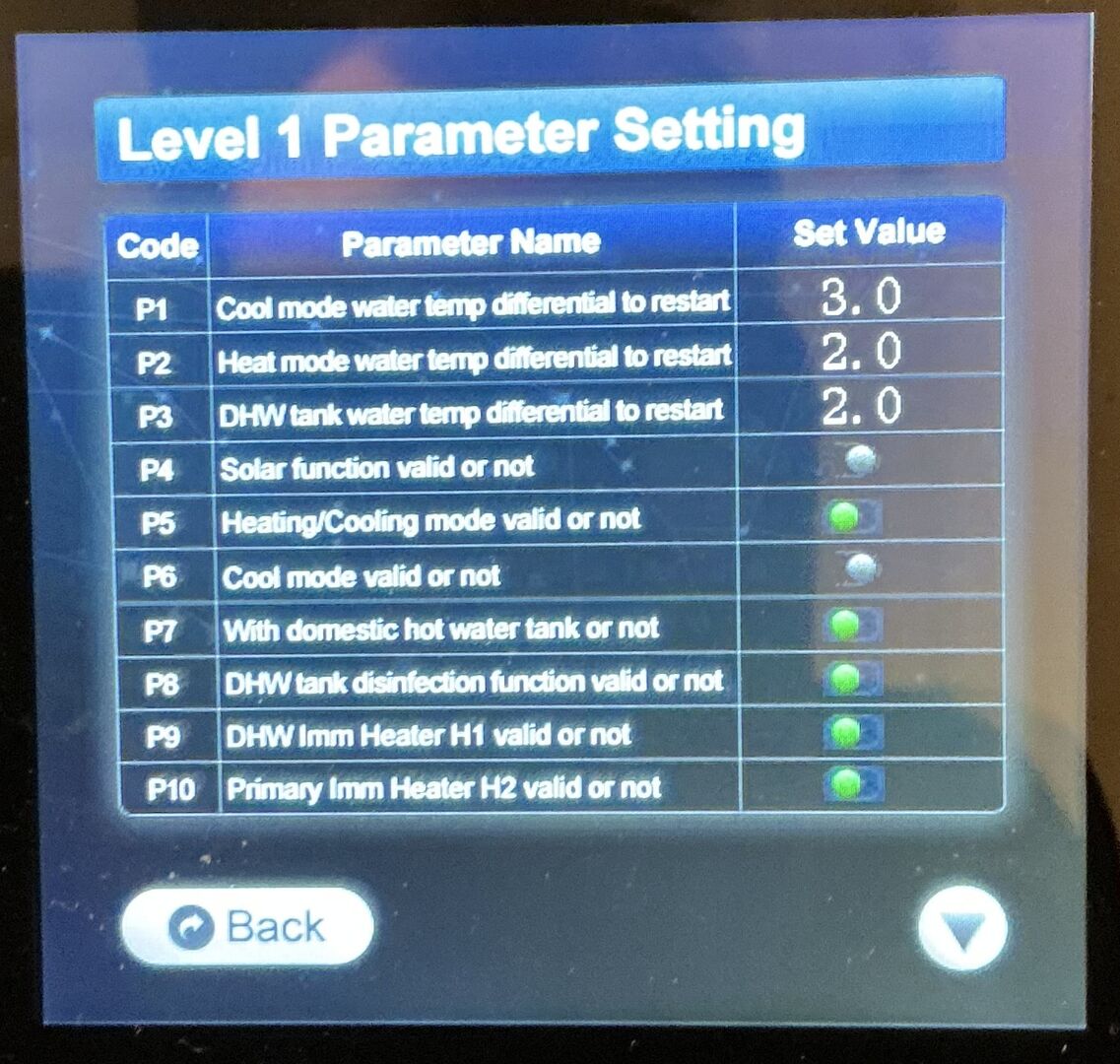
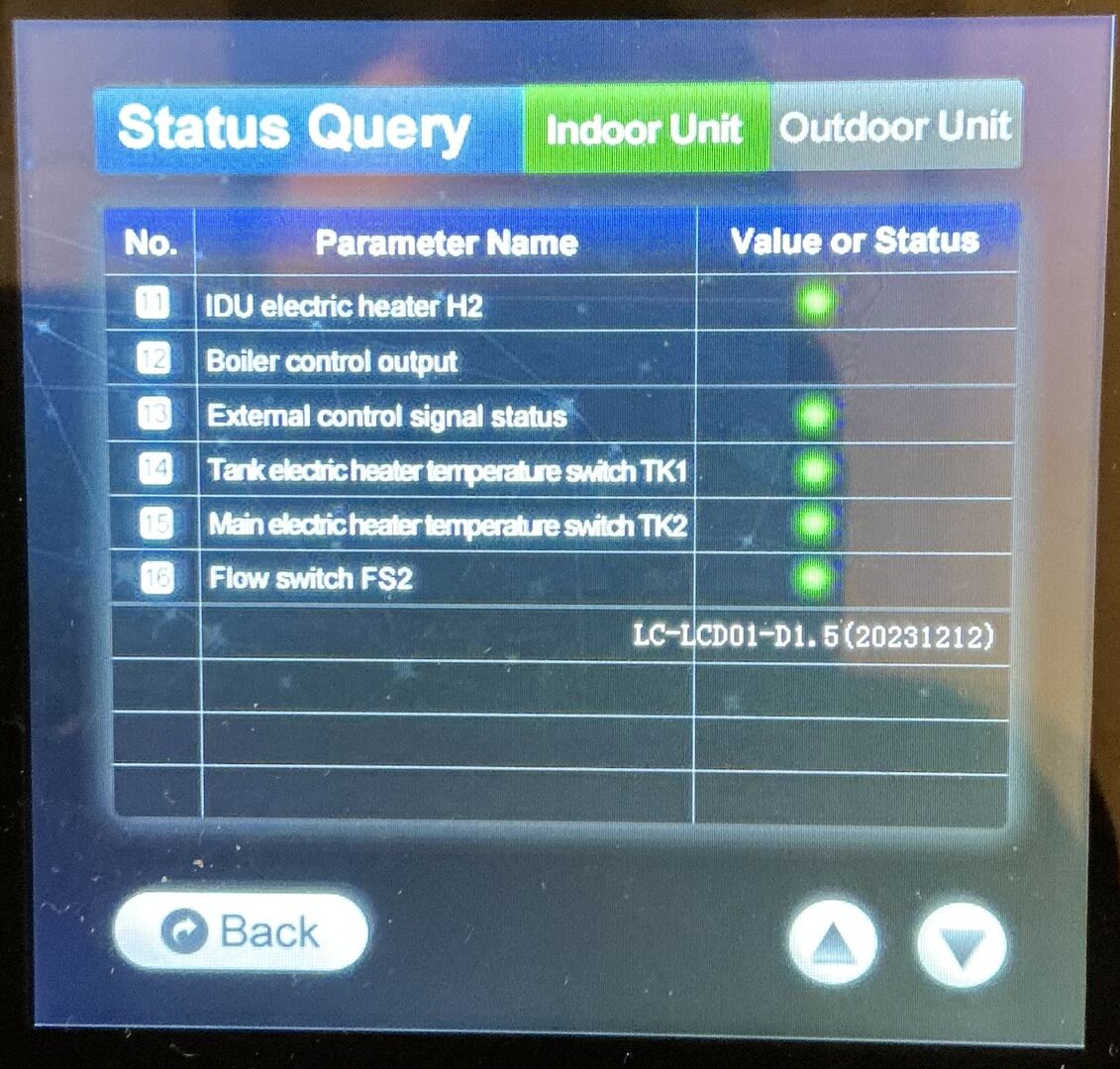
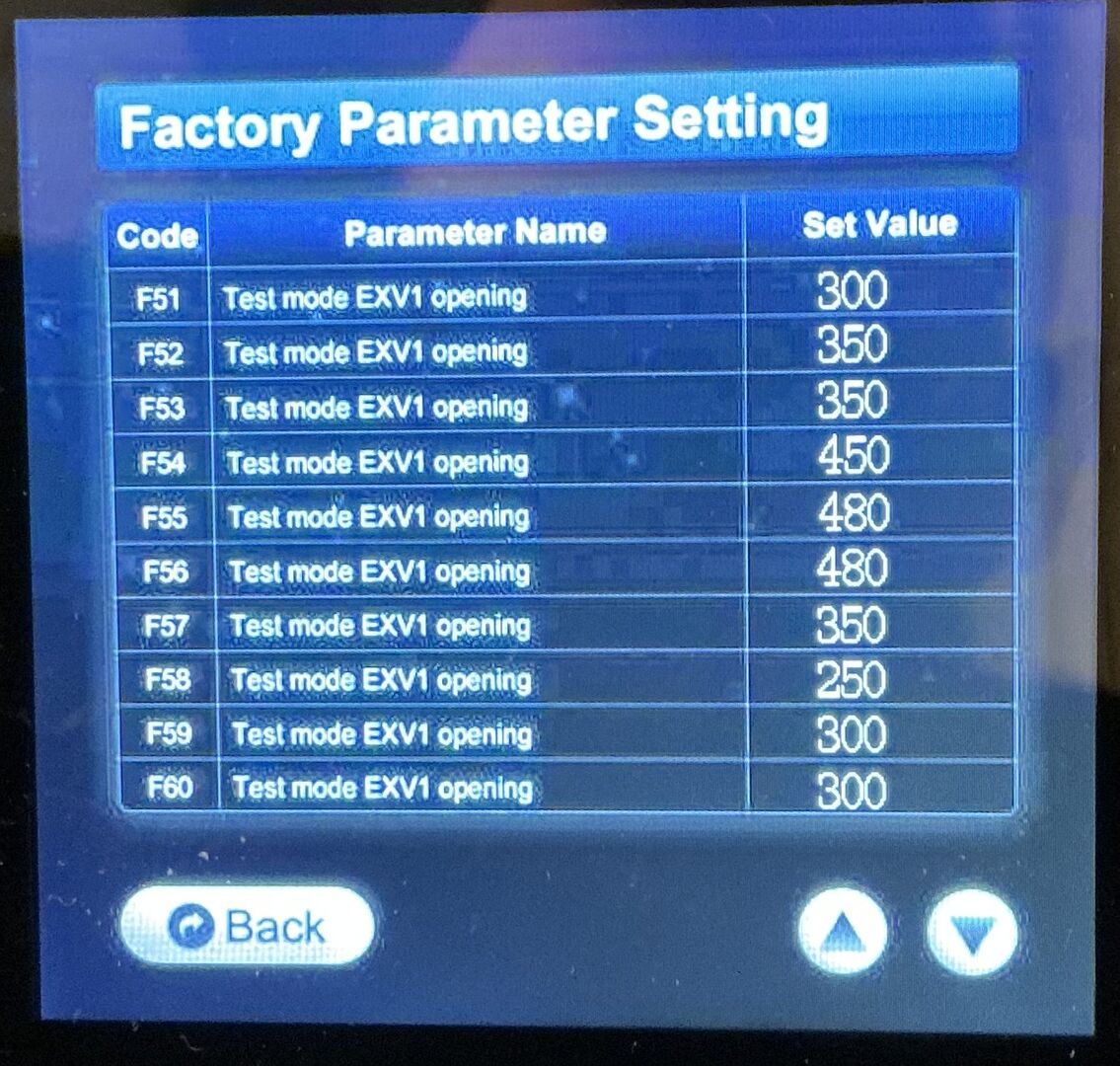
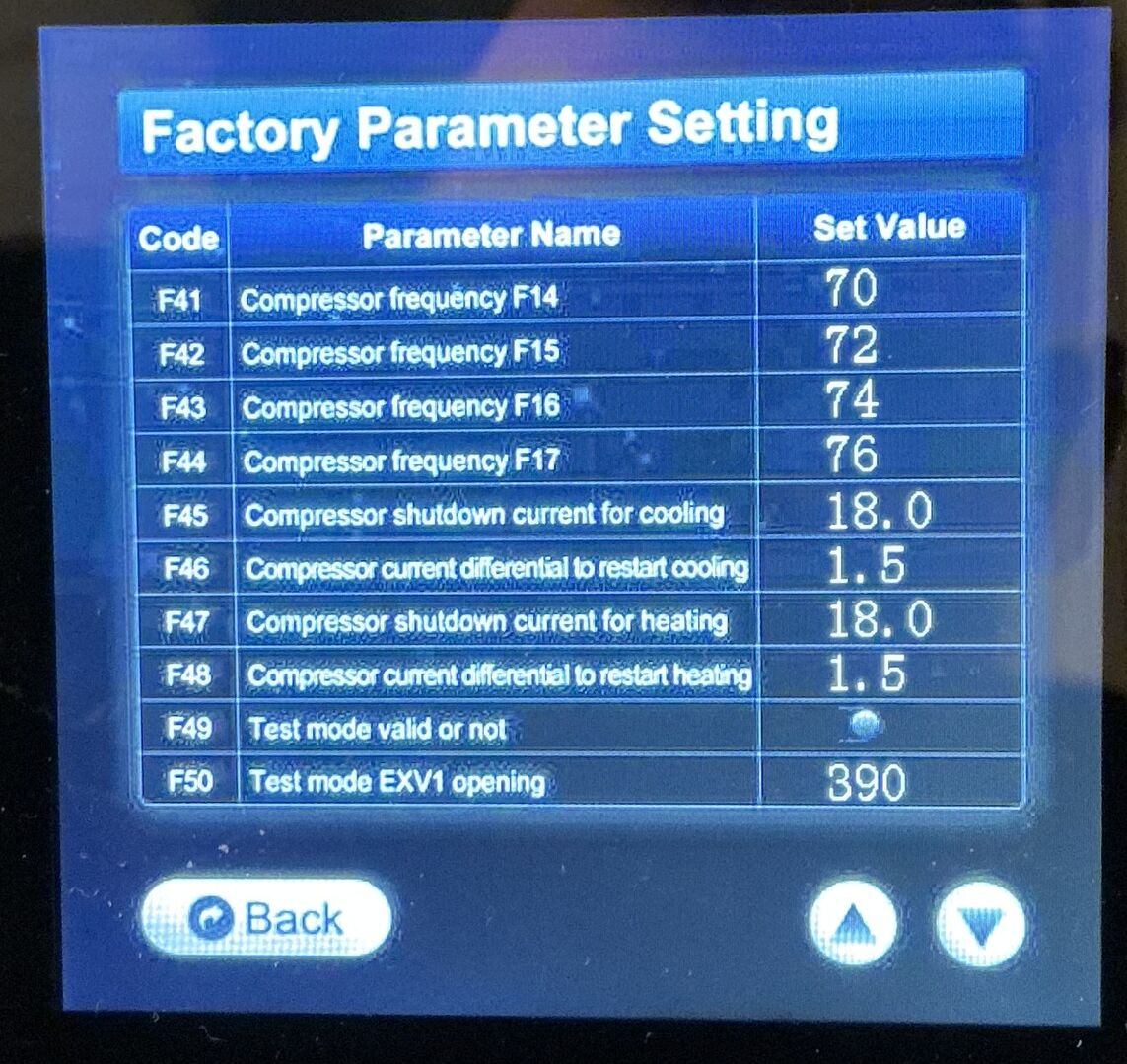
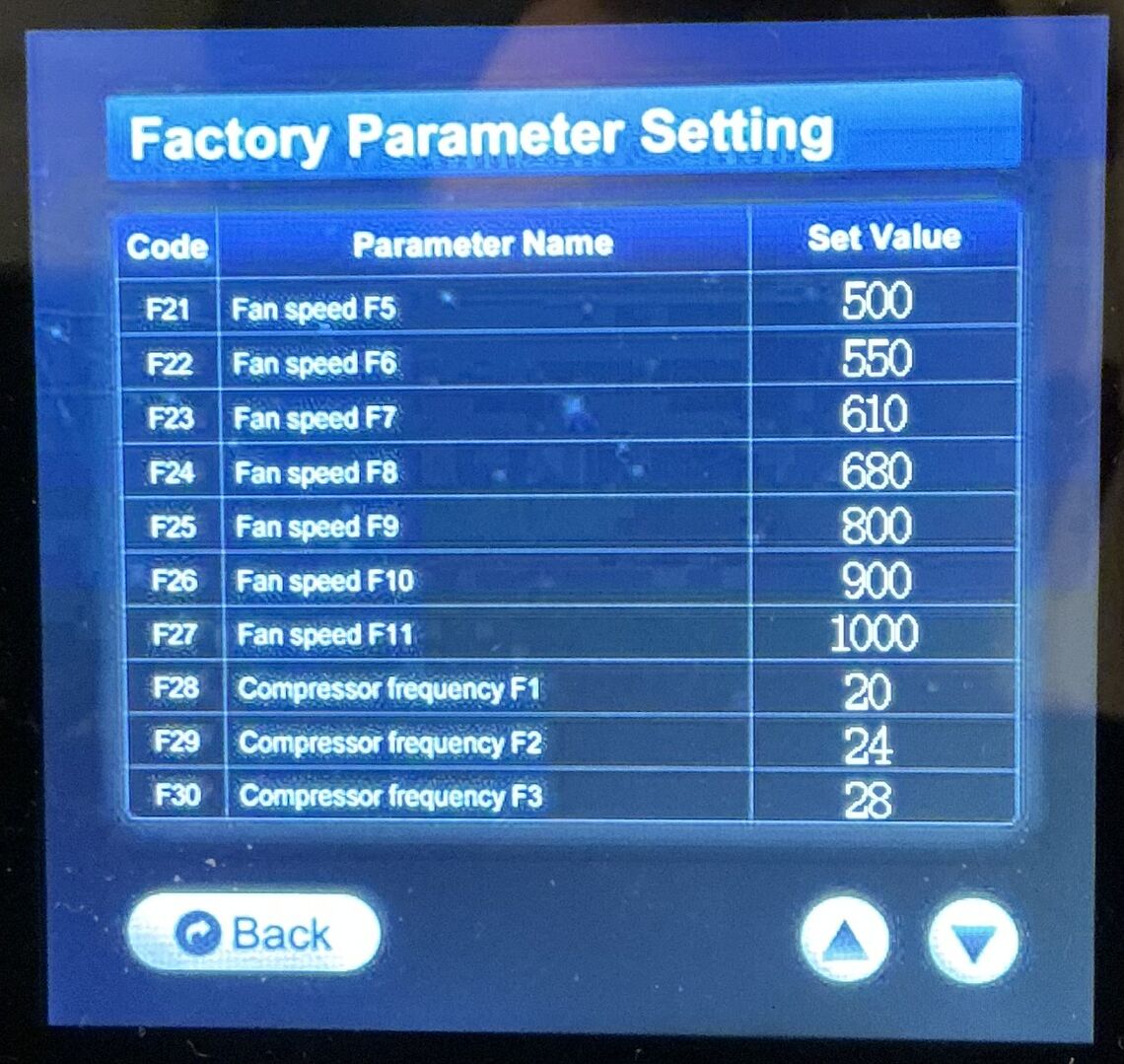
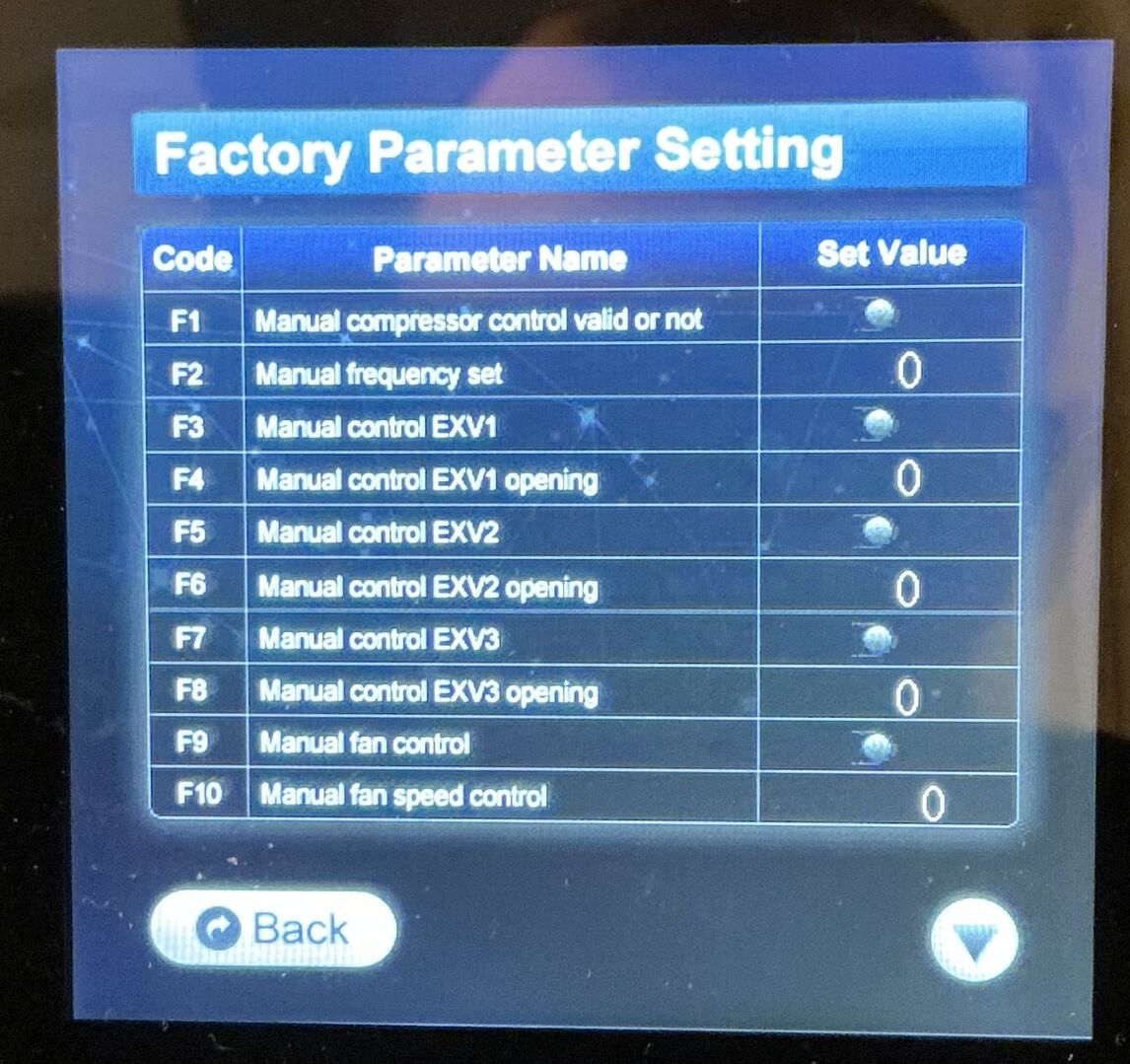
On a more practical note there are some parameters in those menus that look interesting, but its a bit difficult to be precisely sure what they do. An 11kW heat pimp should be big enough for most properties if it really is 11kW; consumption suggests it may not be.
I will take a mpore detailed look at menus and numbers over the next couple of days and see if anything leaps out, meanwhile we now have two owners on this thread so hopefully a bit of self-help will resolve.
This post was modified 2 months ago 2 times by JamesPa
4kW peak of solar PV since 2011; EV and a 1930s house which has been partially renovated to improve its efficiency. 7kW Vaillant heat pump.
10/01/2026 9:54 pm
Thanks @jamespa and thanks @johnd (hope I haven’t hijacked your thread too much).
I’ll hopefully hear back from our installer or the manufacturer early next week and will post if there’s anything useful.
Just wondering now if we are undersized or have a faulty unit causing the issues for us, the symptoms for us do appear to point to an undersized unit.
However with 11kw + 3kw heat coming into the house it should be more than enough to keep us warm, when the initial heat loss calculation by the installer came out at 7kw and the HeatGeek website guesstimate shows 8.5kw heat loss.
Unless the 11kw unit as mentioned above isn’t actually producing 11kw of heat. Or we somehow need more than 14kw of heat input into the house.
Should we consider getting a second opinion from another company to recheck the heat loss calcs, potentially with a HeatGeek certified installer?
11kw Peak Energy ASHP - SunSynk 3.6kW Solar Inverter with 3.5kw panels and GSL 10kWh home battery
10/01/2026 10:46 pm
Should we consider getting a second opinion from another company to recheck the heat loss calcs, potentially with a HeatGeek certified installer?
At this stage I would say no as gross underestimation of the loss is not the most likely cause of the problem.
More likely causes are
(a) the heat pump, though badged 11kW, doesnt actually do 11kW at the design temperature/flow temp - I reproduce the only published capacity table below but Im not sure if its for the relevant model and there doesnt seem to be anything else.
(b) the heat pump is faulty
(c) something in the system is preventing the heat getting to the building. There is a long running thread on this forum where the householder (one of our moderators) was not getting sufficient heat - turned out eventually to be due to throttling at the PHE.
If you could provide a bit more info it might be possible to infer which
The following questions will give an independent handle on house loss:
- What is the floor area, construction and insulation of your house
- How much fuel did you previously burn annually
- Where are you roughly
The following question will give a handle on faults/system problems
- How much energy did you use for your heat pump on the recent cold days?
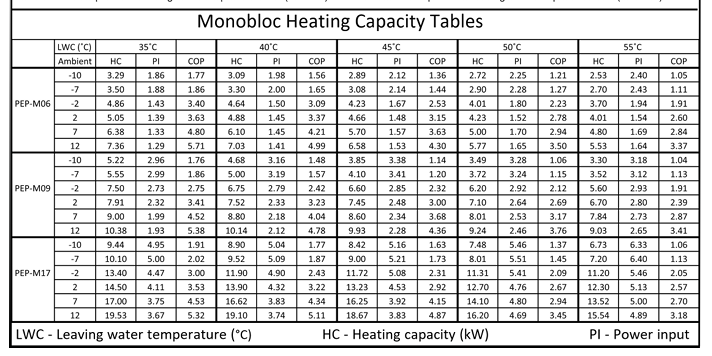
This post was modified 2 months ago 2 times by JamesPa
4kW peak of solar PV since 2011; EV and a 1930s house which has been partially renovated to improve its efficiency. 7kW Vaillant heat pump.
10/01/2026 11:17 pm
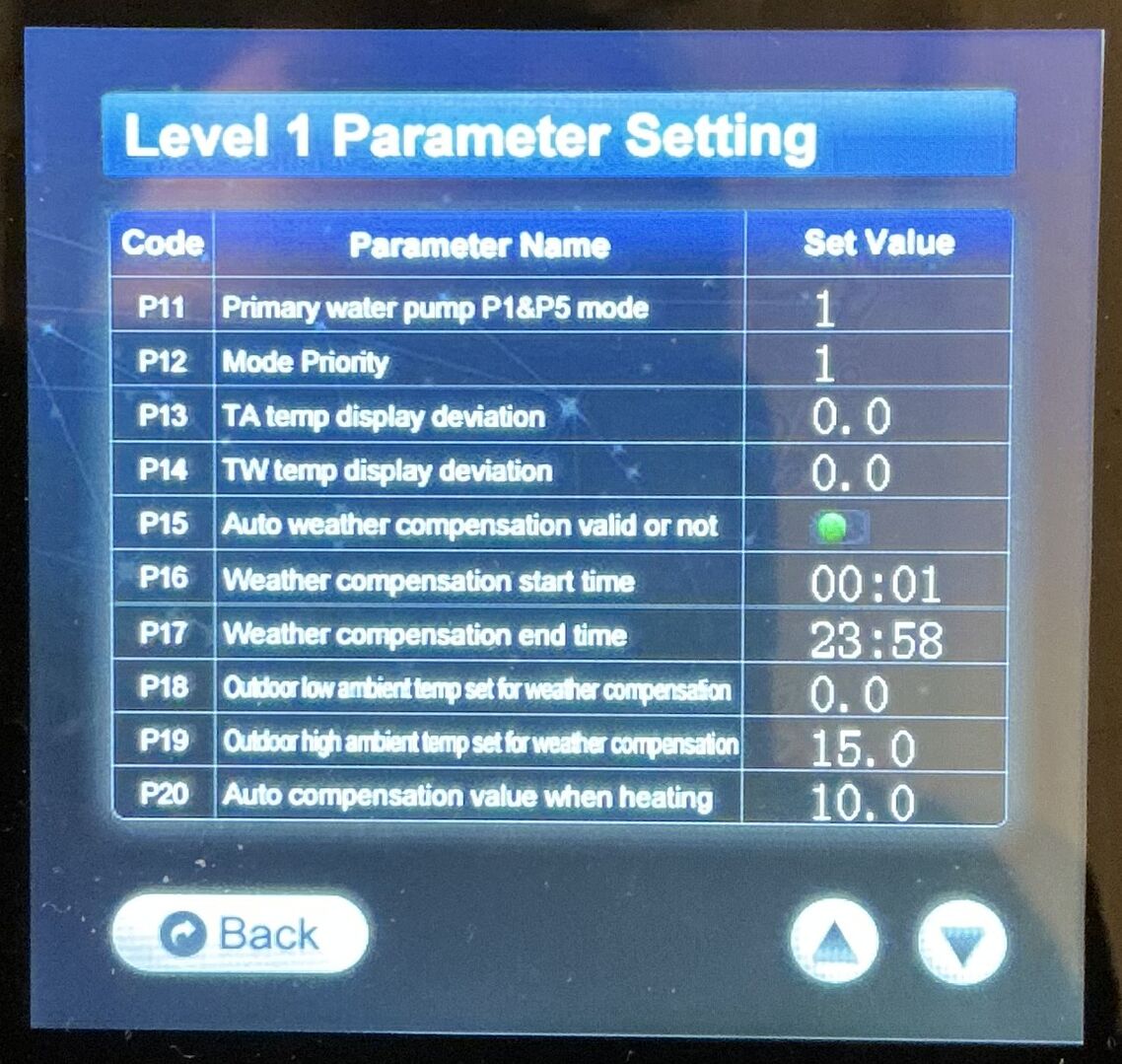
Ive had a look at the screenshots. Lots of the parameters are things you wouldn't want to touch but:
Im guessing H43 and H44 are the two FTs for the WC curve and P18 and P19 the corresponding OATs. What P20 is, or even what the units are, is anyone's guess. I imagine some kind of 'strength of room influence' parameter, but it could be anything! And what is F74 - is it some overall? limit (65 would make sense for an R32 unit which I believe this is).
With P18 set at 0 FT will likely (but not definitely) flatline at lower OATs which isnt what you want. However you would expect it to flatline at 52C if my guess about H43 and H44 is correct.
P15 is interesting. Its turned on. Is it just 'Weather compensation on' or some sort of 'auto adapt'. At first I though the second, but maybe Im over-thinking and its just fixed temp[ operation vs weather compensated operation. It would be interesting to know what the heat pump does if its turned off.
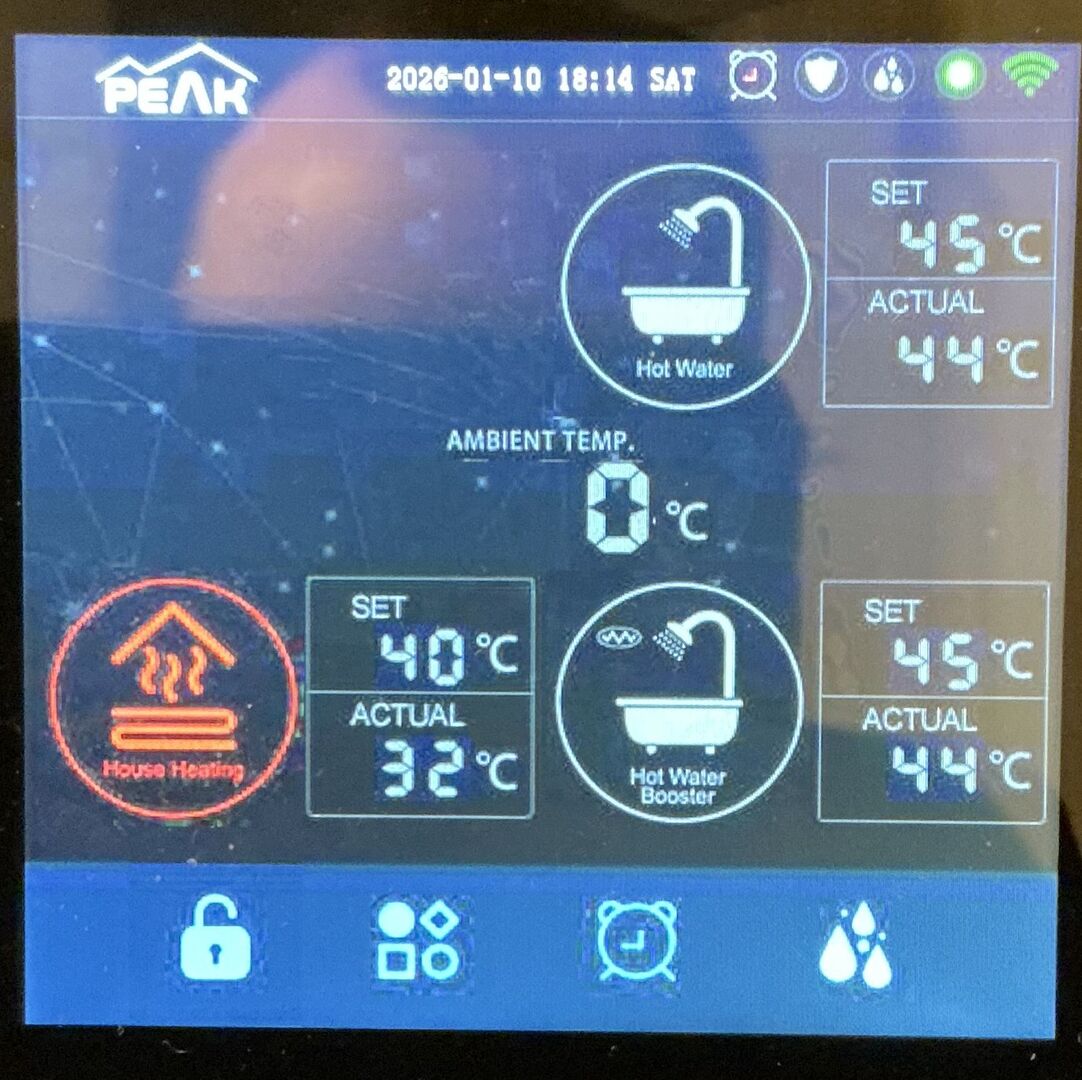
This is also interesting
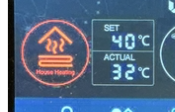
Im presuming you have set the target to 40C to 'disable' and room influence, but why does it think that the house is at 32C? or is this set FT and actual FT, in which case why is the set FT 40 when the OAT is 0?
Maybe you have some insight from observation which might help reverse-engineer the UI!
This post was modified 2 months ago 5 times by JamesPa
4kW peak of solar PV since 2011; EV and a 1930s house which has been partially renovated to improve its efficiency. 7kW Vaillant heat pump.
11/01/2026 3:16 pm
@jamespa after a bit of homework today I have responses for you;
Floor area of 122 m2
Construction, late 1930s, semi detached, brick and cavity wall.
Insulation, all double glazed, all bedroom windows replaced in June. New front door installed at the same time, kitchen external door being replaced next week. Loft insulation topped up to 300mm. Living room and hallway suspended floors insulated, dining room to do.
Kitchen and sun room solid concrete floors, unknown if insulated under.
No cavity wall insulation.
We only moved into this property in July so don’t know previous gas usage. The combi boiler when we moved in was on its last legs and fell over the day after we got the keys! Managed to use it for DHW only until the ASHP was installed in September.
Located in Blackburn Lancashire.
3rd Jan - 63kWh - -6 degrees overnight - max flow temp 34 degrees (without immersion)
4th Jan - 115kWh - immersion switched on
5th Jan - 134kWh
6th Jan - 118kWh
7th Jan - 65kWh - 4 degrees external - immersion switched off - house actually at 18 degrees internal
8th Jan - 85kWh
9th Jan - 69kWh
10th Jan - 108kWh - 1 to 2 degrees external - immersion switched back on
H43/H44 options is just for the available FT shown on the Home Screen FT settings.
P15 is just to turn WC on or off, no difference to FT either way.
P18/P19 is the OAT for the WC to apply
P20 is an amount of WC to apply to the FT between the OAT set in P18/P19.
F74 is a top level limit for FT (I think)
Setting the FT on the Home Screen should work as we set the maximum FT we want at 0 degrees OAT, then the WC should work from that to reduce the FT when above 0 degrees OAT to a minimum FT at 15 degrees OAT.
But no matter the OAT the ASHP will always try to achieve the set FT. Which when set at 40 it will have a send of 42 and a return of 38. (If it can actually get there of course)
The table of heating capacity you found from Peak is a very interesting read, and explains some of the behaviour we have had.
For our model of PEP-M09 (as the middle option I think it’s that one, not actually labelled as that on the side of the external unit) at +2 degrees OAT it only manages to produce 7.52kw and take into account the defrost cycles and it is underspecced for our needs and that’s why it needs the 3kw backup immersion turned on to cope.
I’ll add a pic of the external unit spec sheet on the next post.
11kw Peak Energy ASHP - SunSynk 3.6kW Solar Inverter with 3.5kw panels and GSL 10kWh home battery
11/01/2026 3:18 pm
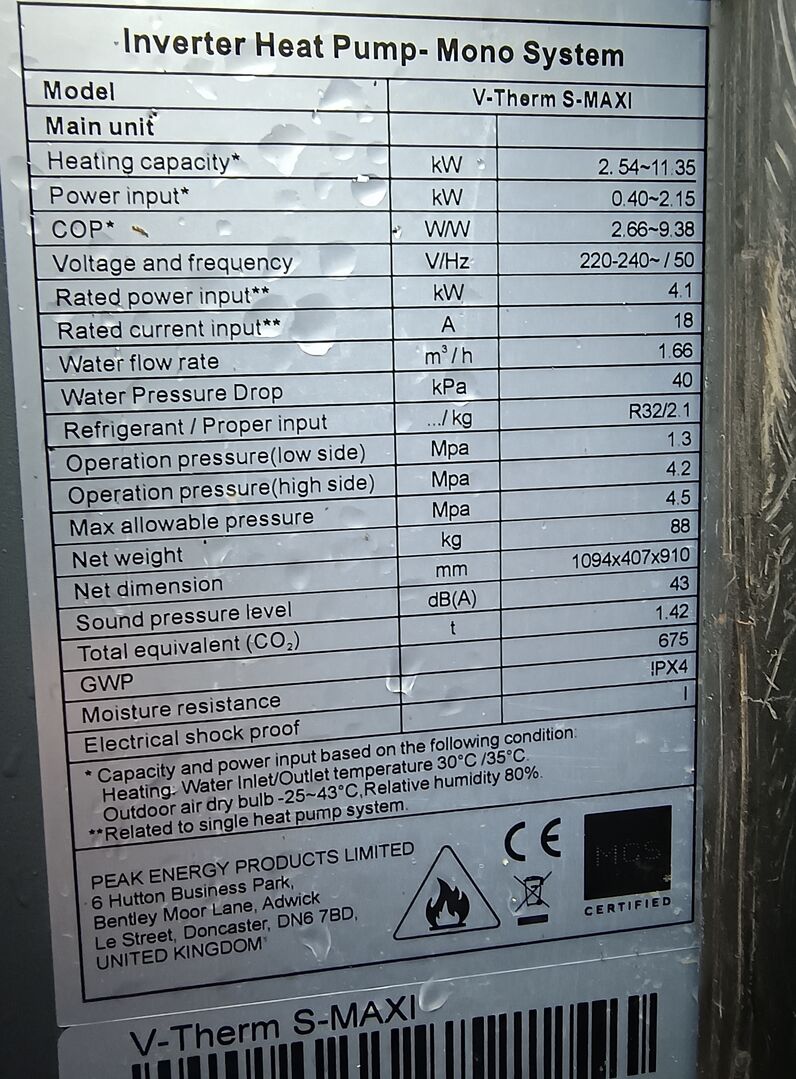
11kw Peak Energy ASHP - SunSynk 3.6kW Solar Inverter with 3.5kw panels and GSL 10kWh home battery
11/01/2026 3:24 pm
@jamespa system design was for 40 degrees FT at -2 degrees OAT.
We’ve 11x triple radiators and 2x towel rails in bathroom and downstairs W/C
11kw Peak Energy ASHP - SunSynk 3.6kW Solar Inverter with 3.5kw panels and GSL 10kWh home battery
11/01/2026 7:44 pm
after a bit of homework today I have responses for you;
Floor area of 122 m2
Construction, late 1930s, semi detached, brick and cavity wall.
Insulation, all double glazed, all bedroom windows replaced in June. New front door installed at the same time, kitchen external door being replaced next week. Loft insulation topped up to 300mm. Living room and hallway suspended floors insulated, dining room to do.
Kitchen and sun room solid concrete floors, unknown if insulated under.
No cavity wall insulation.
Interesting. Judging by my house which is different is several ways (some better, some worse) I would have guessed ~7kW as the actual loss, however your consumption is 1.5-2x mine. That may be because of a lesser COP, or may be because of more loss of course. At - OATs you will of course need more than this and your unit may not be capable accounting for the deficit in recent days.
P20 is an amount of WC to apply to the FT between the OAT set in P18/P19.
Thats an interesting (and very plausible) interpretation, but what is the starting FT in this case?
Setting the FT on the Home Screen should work as we set the maximum FT we want at 0 degrees OAT, then the WC should work from that to reduce the FT when above 0 degrees OAT to a minimum FT at 15 degrees OAT.
But no matter the OAT the ASHP will always try to achieve the set FT. Which when set at 40 it will have a send of 42 and a return of 38. (If it can actually get there of course)
Sorry I dont follow this, are you saying that it doesnt vary the FT?
For our model of PEP-M09 (as the middle option I think it’s that one, not actually labelled as that on the side of the external unit) at +2 degrees OAT it only manages to produce 7.52kw and take into account the defrost cycles and it is underspecced for our needs and that’s why it needs the 3kw backup immersion turned on to cope.
I think thats quite possible based on what you have said. You should be able to tell over the next days as its getting warmer. As it does so the heat pump should reach the expected FT.
I am a little concerned by the fact you seem to be consuming so much more than me. My COP over past days has been 3-3.5, which is unusually low (but then its been unusually cold). Maybe you are operating right at the extreme of its operational curve and so things will get better. If they dont then there may be some further questions to ask.
Sorry thats probably not been very helpful/tends to confirm what you already suspect. Suggest to see what the next week brings!
4kW peak of solar PV since 2011; EV and a 1930s house which has been partially renovated to improve its efficiency. 7kW Vaillant heat pump.
11/01/2026 8:13 pm
@jamespa the compressor does run at max operating frequency in these lower temperatures (2 degrees and below) and doesn’t seem to have any opportunity to reduce to try and achieve a better running efficiency. I would really be surprised if our current COP is even at 2.
The starting FT for the WC is the one set on the Home Screen, as far as we know.
But unless we manually reduce this is line with a higher OAT, the ASHP will just run at max operating frequency to try and achieve this FT and would then hit the thermostat temperature limit and then get switched off. Only to then do the same once it drops below the internal temperature set point.
Or it did when the OAT was warmer than it is currently. In essence running like a gas boiler. When raised with the installer they didn’t see this as an issue, it wasn’t until later when we realised that the WC wasn’t being applied to the set FT that was causing the issue and we started to manually alter the FT to allow the ASHP to back off the compressor frequency and improve the efficiency.
The good news is that it has warmed up throughout today, up to a modest 8 degrees OAT at the moment, and we have been able to switch off the immersion heater and reduce the FT required to achieve our desired internal temperature of 18 degrees. And we have actually achieved this temperature!
This has reduced the electricity consumption down to a mere 74kWh so far for the day.
11kw Peak Energy ASHP - SunSynk 3.6kW Solar Inverter with 3.5kw panels and GSL 10kWh home battery

Latest Posts
-
Issue with a Grant Air Source Heat Pump & Tado Smart Thermostat
Hi all I'm having some trouble with a Grant ASHP and ...
By Renewables345 , 24 minutes ago
-
RE: Underfloor Heating Installation Issues with Heat Pump
We suffered a water leak last year in two rooms and had...
By MartinHook_UK , 35 minutes ago
-
RE: Testing new controls/monitoring for Midea Clone ASHP
Now seems a good time to summarise the costs and effici...
By benson , 43 minutes ago
-

RE: Heat Pump vs New Gas Boiler for Inherited House - Worth the Extra Cost?
*** I now see @jamespa has already posted but will stil...
By cathodeRay , 2 hours ago
-

RE: Tell us about your Solar (PV) setup
@mk4 Charge to 100%, discharge down to 10%.
By bobflux , 2 hours ago
-
RE: Daikin Altherma 3 LT compressor longevity question
This mess is intriguing: I wonder if this represent...
By bobflux , 3 hours ago
-
RE: Connecting Growatt SPH5000 over wired ethernet rather than wireless
The simplest wired option is usually the Growatt Ethern...
By Jonatan , 7 hours ago
-
RE: Peak Energy Products V therm 16kW unit heat pump not reaching flow temperature
ASHPs do have a minimum compressor speed. The minimum h...
By bobflux , 14 hours ago
-

RE: Electricity price predictions
@jamespa And it seems some of the nasty public cloud...
By Batpred , 14 hours ago
-

RE: Jokes and fun posts about heat pumps and renewables
Technology is rapidly advancing. BBC News reported th...
By Transparent , 18 hours ago
-
What matters for flow and pressure drop is internal dia...
By bobflux , 18 hours ago
-

RE: Do Fridges and Freezers have COP ratings?
@editor Thank you all for your replies and submitted in...
By Toodles , 21 hours ago
-
I know and yes. The secondary deltaT wont necessaril...
By JamesPa , 1 day ago
-
RE: Designing heating system with air to water heat pump in France, near Lyon
Just love the way you put it! 🤣
By Batpred , 2 days ago
-
RE: Safety update; RCBOs supplying inverters or storage batteries
Thank you for sharing. So it seems that your Schneid...
By Batpred , 2 days ago
-

RE: Forum updates, announcements & issues
@upnorthandpersonal thanks for the thoughtful, consider...
By Mars , 2 days ago
-
RE: Solar Power Output – Let’s Compare Generation Figures
@mk4 All 21 panels have their own Enphase IQ7a microinv...
By Toodles , 2 days ago
-
RE: Setback savings - fact or fiction?
Great, so you have proven that MELCloud is consistently...
By RobS , 3 days ago
-
RE: Mitsu PUHZ120Y 'Outdoor Temp 'error?
Thanks David & James It almos...
By DavidAlgarve , 3 days ago
-
RE: Surge protection devices SPDs
@trebor12345 - your original Topic about the right type...
By Transparent , 3 days ago
-
RE: Help needed with Samsung AE120RXYDEG
@tomf I’ve been sent this from a service engineer at Sa...
By Mars , 3 days ago
-
RE: Buying large amp bidirectional RCD and RCBO
Yes... I went through this particular headache and ende...
By bobflux , 4 days ago
-
O-oh! Let's take this as an opportunity to 'pass the ...
By Transparent , 4 days ago


