Usually, there is a Henley block in place (after the utility meter) that allow multiple CUs to be connected.
No. That's uncommon.
It goes back to the days when homes had a separate off-peak meter.
We always had it, it is very useful.
We had multiple changes made over the years and never had a visit from the DNO for it. 1) EV charger 2) new kitchen unit 3) replacement of old board 4) rewire of old kitchen unit
Clearly the DP isolator is needed only if there's no henley box or your sparky is not used to work with it.
My suggestion would be to only show an (optional) earth on the new consumer unit to the left.
I have not seen regulations specifically for an off-grid system, I just follow what the DNO requires. But unless the normal earth is always available, a new one will be warranted for any off-grid/UPS use (if you plug it next to the grid input, it may help the rest of the local grid - but how can it be sized?). For an end user, the most important about following regulations is safety of their own installation.
It seems the wiring is simpler with the Solis, and there's no need to touch any MCB or switch around power outages. In my configuration, most circuits also work through grid faults.
Essentially with the Solis S6:
the grid port is used for export (even if it could feed some loads)
the backup port to feed UPS circuits on a CU
the smart port can be used as a lower priority backup or to connect a PV inverter
8kW Solis S6-EH1P8K-L-PLUS hybrid inverter; G99: 8kw export; 16kWh Seplos Fogstar battery; Ohme Home Pro EV charger; 100Amp head, HA lab on mini PC
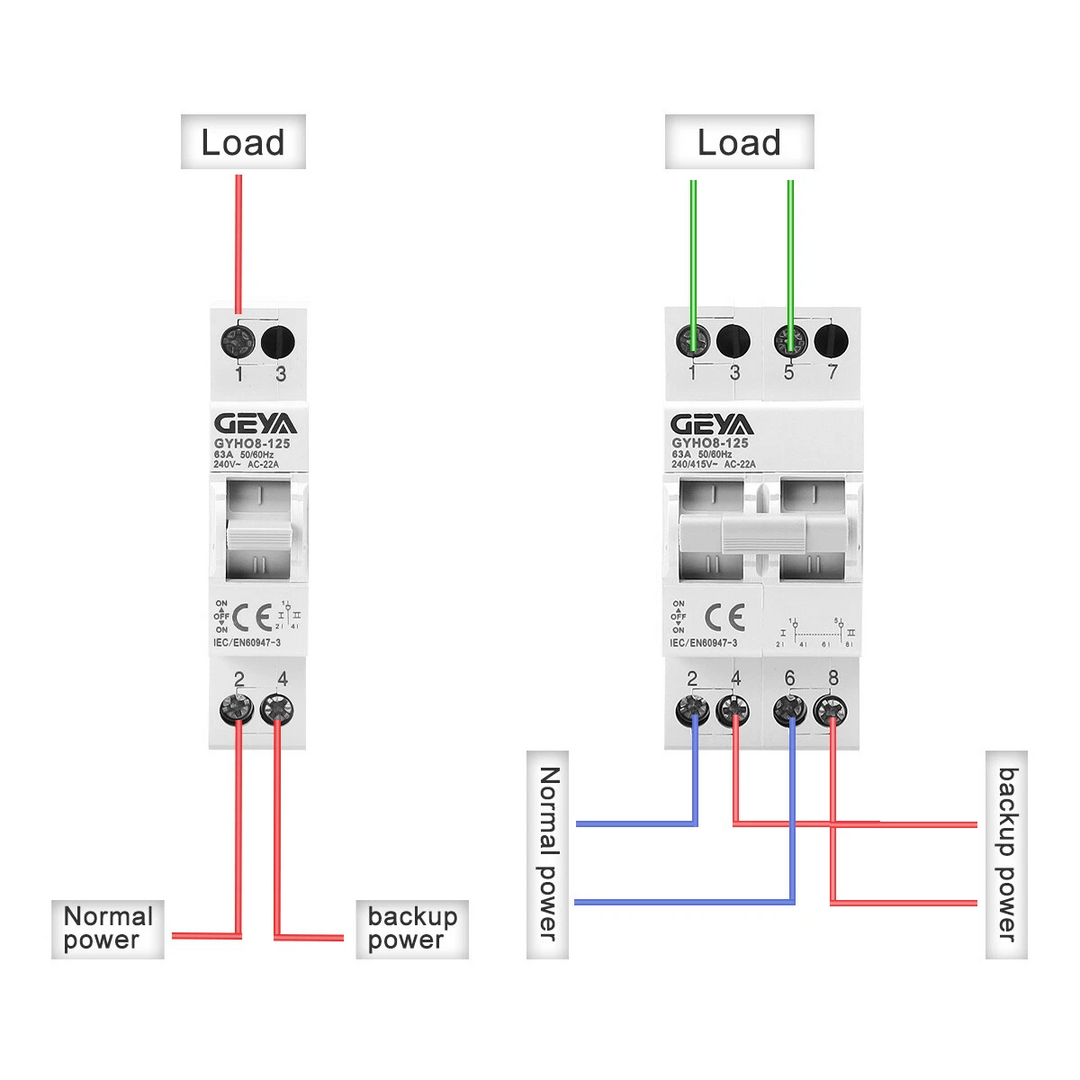
Certainly worthwhile considering Geya. They're a reputable Chinese manufacturer.
But not the left-hand of the two breakers because it's single-pole.
I'm unsure if it's clear from the photos, but these are centre-off switches.
Have you experience with using these manual change-over switches @batpred ?
Yes, the one I use is 125Amps double pole. Top powers the inverter, middle=off, bottom=connect backup loads to grid
I have not found a Geya consumer unit, so I guess it is amber on the regs...
Making sure to get the CU, switch, MCB and RCD from the same manufacturer (when having a powerful inverter) is a problem that most sparkys do not see as theirs. Of course the compliant solution may be lots of boxes under the stairs.
It may meet the regs but means the end user can have some additional trouble getting the lights back on. It can only become even more "interesting" when renting and talking to a property management agency...
8kW Solis S6-EH1P8K-L-PLUS hybrid inverter; G99: 8kw export; 16kWh Seplos Fogstar battery; Ohme Home Pro EV charger; 100Amp head, HA lab on mini PC
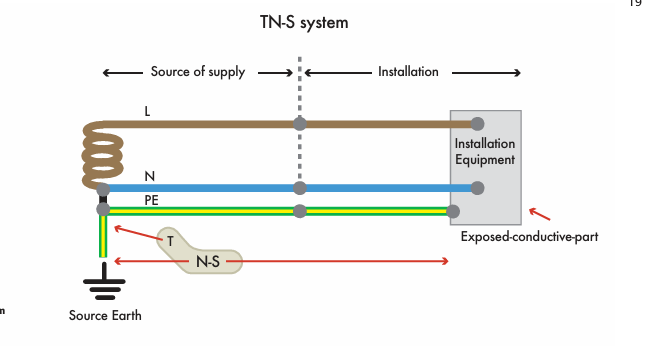
For your PME (TN-S) supply the earth to each property is provided via the neutral wire. Your house earth connects to the Neutral at the Service Fuse.
The Neutral is itself tied to earth in the 'centre' of the substation transformer windings.
That doesnt seem quite the same description as the one here from the IET which says
"A TN-S system, shown in fig 1, has the neutral of the source of energy connected with earth at one point only, at or as near as is reasonably practicable to the source, and the consumer’s earthing terminal is typically connected to the metallic sheath or armour of the distributor’s service cable into the premises"
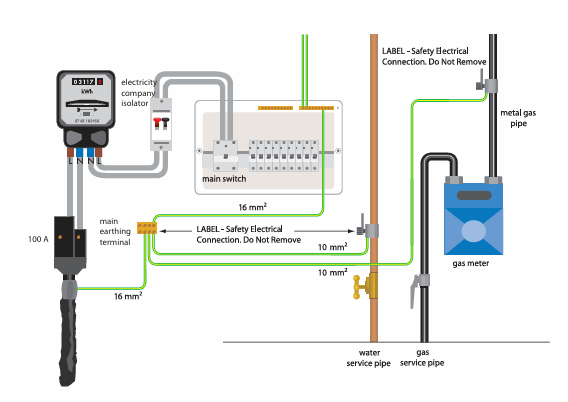
They provide these diagrams of which the second pretty accurately represents my arrangement. What Im struggling to understand is why this needs to change with an inverter, given that there is already a local earth point.
My supply is listed as TN-S on the most recent certificate I have, earthed via the 'suppliers facility'. From visual inspection that looks like a ~3mm twisted bare cable attached to the metallic outer sheath of the incomer
and had assumed that you were querying the designation of TN-S on the certificate, and the quality of the earth due it being merely 3mm of bare twisted metal.
I therefore jumped to the (incorrect) conclusion that the earth wire provided from your Service Fuse location was actually TN-C-S.
If your electrician is happy that the earth provided by the DNO is within resistance specification, then you shouldn't add a separate earth.
The earth wire in the mains supply cable would be sufficient, even if the inverter was working during a power-cut. That's because it remains connected to the grid earth, whilst using its internal 50Hz oscillator in 'off-grid' mode.
For your PME (TN-S) supply the earth to each property is provided via the neutral wire. Your house earth connects to the Neutral at the Service Fuse.
The Neutral is itself tied to earth in the 'centre' of the substation transformer windings.
That doesnt seem quite the same description as the one here from the IET which says
"A TN-S system, shown in fig 1, has the neutral of the source of energy connected with earth at one point only, at or as near as is reasonably practicable to the source, and the consumer’s earthing terminal is typically connected to the metallic sheath or armour of the distributor’s service cable into the premises"
They provide these diagrams of which the second pretty accurately represents my arrangement. What Im struggling to understand is why this needs to change with an inverter, given that there is already a local earth point.
I remember reading in some inverters. They mandate a separate earth arrangement for the inverter to work on UPS/backup/off-grid mode. It could be because in some countries it is not as easy to get a good earth (thinking about sand dunes..), the requirement could be very strictly defined, related to the backup load. The manufacturers sometimes have generic wording and some distributors take it as gospel over the local regulation.
As you stated, the resistance of earthing arrangements needs to be measured and could need upgrading. What could be acceptable in a flat is not for an apartment block, etc.
To be honest, it is something I am considering getting installed when I get a chance. I had a look at the last couple of EICRs for my home and they report different earthing methods. 🙄
I remember reading in some inverters. They mandate a separate earth arrangement for the inverter to work on UPS/backup/off-grid mode.
That might be the case.
But I think we'd need a link to such an instruction before we can follow that up.
I have provided an additional earth for my set of inverters. That's used by the surge suppression devices, as a route through which the surge current is grounded. So the context in which an earth is needed is important.
I remember reading in some inverters. They mandate a separate earth arrangement for the inverter to work on UPS/backup/off-grid mode.
That might be the case.
But I think we'd need a link to such an instruction before we can follow that up.
This is what the Solis Engineers sent me about earthing, it does not mandate a rod in all situations, but it may apply:
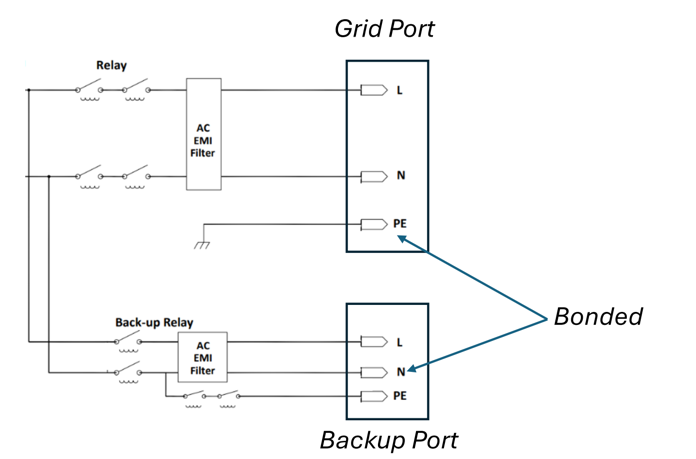
When no voltage is present at the inverter’s grid port, the neutral on the backup port is bonded to the protective earth (PE) terminal on the same port. In typical installations, this is the point where an earth rod is connected. The Solis design offers flexibility by allowing either a dedicated earth rod or the grid’s PE connection to be used at this port. Important: Always consult and comply with local electrical regulations and standards when configuring neutral-to-earth bonding and earthing methods.
This was what led me to believe the requirement for the rod is related to the inverter backup/UPS/off-grid, but this does not stop it covering all earthing requirements in the site.
8kW Solis S6-EH1P8K-L-PLUS hybrid inverter; G99: 8kw export; 16kWh Seplos Fogstar battery; Ohme Home Pro EV charger; 100Amp head, HA lab on mini PC
I remember reading in some inverters. They mandate a separate earth arrangement for the inverter to work on UPS/backup/off-grid mode.
That might be the case.
But I think we'd need a link to such an instruction before we can follow that up.
This is what the Solis Engineers sent me about earthing, it does not mandate a rod in all situations, but it may apply:
When no voltage is present at the inverter’s grid port, the neutral on the backup port is bonded to the protective earth (PE) terminal on the same port. In typical installations, this is the point where an earth rod is connected. The Solis design offers flexibility by allowing either a dedicated earth rod or the grid’s PE connection to be used at this port. Important: Always consult and comply with local electrical regulations and standards when configuring neutral-to-earth bonding and earthing methods.
This was what led me to believe the requirement for the rod is related to the inverter backup/UPS/off-grid, but this does not stop it covering all earthing requirements in the site.
To me that makes sense. Bond the inverter neutral to the local earth arrangement is when islanded, don't when its not islanded. That way you don't disturb the suppliers earthing/neutral arrangement but you do ensure that the neutral is at earth potential earthed when operating in island mode.
and had assumed that you were querying the designation of TN-S on the certificate, and the quality of the earth due it being merely 3mm of bare twisted metal.
Well I am a little sceptical about that given the earth bonding wires are 10-16 sq mm according to the IET diagram, but in fairness I havent actually measured it and anyway its easily upgraded.
If your electrician is happy that the earth provided by the DNO is within resistance specification, then you shouldn't add a separate earth.
The earth wire in the mains supply cable would be sufficient, even if the inverter was working during a power-cut. That's because it remains connected to the grid earth, whilst using its internal 50Hz oscillator in 'off-grid' mode.
Thanks, I think between what @transparent and @batpred has written I now understand the earthing requirements and they make sense.
Im going to attempt a complete diagram over the next few days pulling the above together. This will take a few days as I need to work out what I want to do with the various house circuits (eg separating out the garden circuit) and then apply the constraint of 'AND reasonable practical'. Obviously it will need to go past my electrician, but with the help of those here hopefully much of the thinking has been done. Still not sure if I'm going to go ahead (it will depend on my wife and the quote) but at least I think I now understand the main design issues.
It occurs to me that having the solar inverter connected to the battery inverter (as opposed to connected independently to the CU) has the additional advantage that the PV is still operational and therefore contributing during islanding. That said islanding is less likely to happen when its sunny, so this may be of negligible practical benefit.
This post was modified 2 months ago 2 times by JamesPa
4kW peak of solar PV since 2011; EV and a 1930s house which has been partially renovated to improve its efficiency. 7kW Vaillant heat pump.
A slight change in the discussion which is beyond my technical comprehension, but does your hybrid inverter allow you to supply the house from your EV battery, ie a V2L (H) system? Thanks.
Good point.
To use that, you need some device that allows the power of the car HV DC battery to be fed to the home:
a special adapter in the charging port (external V2L) or built-in AC outlets (internal V2L)
I am not sure if the V2L marketing term translates into a single technical solution. Still a separate inverter would not be needed for VTG. This thread covers VTG.
In any case, the concerns discussed here and here (about bi-directional rcbo´s) being needed in the home circuit seem to be applicable. EV chargers are usually plugged onto circuits protected by a uni directional RCD. Best to consult a registered electrician before going ahead.
8kW Solis S6-EH1P8K-L-PLUS hybrid inverter; G99: 8kw export; 16kWh Seplos Fogstar battery; Ohme Home Pro EV charger; 100Amp head, HA lab on mini PC
This is what the Solis Engineers sent me about earthing, it does not mandate a rod in all situations, but it may apply:
When no voltage is present at the inverter’s grid port, the neutral on the backup port is bonded to the protective earth (PE) terminal on the same port. In typical installations, this is the point where an earth rod is connected. The Solis design offers flexibility by allowing either a dedicated earth rod or the grid’s PE connection to be used at this port. Important: Always consult and comply with local electrical regulations and standards when configuring neutral-to-earth bonding and earthing methods.
This was what led me to believe the requirement for the rod is related to the inverter backup/UPS/off-grid, but this does not stop it covering all earthing requirements in the site.
On reflection your description (which I understood) made more sense than the diagram (which I don't).
The diagram seems to have two contacts/switches in series in some but not all of the connections. Is this 'real' and do you know why?
I am presuming that your description and the diagram imply that internally the BU port neutral and the grid port neutral are permanently connected but the BU port earth and the grid port earth are NOT connected? Is this a correct inference in your view
The annotation 'Bonded' appears to point to grid port neutral and backup port PE. Do you know what that is implying?
Sorry to ask but on reflection the diagram is confusing and the manual no better! I appreciate you may not know!
On reflection your description (which I understood) made more sense than the diagram (which I don't).
The diagram seems to have two contacts/switches in series in some but not all of the connections. Is this 'real' and do you know why?
I am presuming that your description and the diagram imply that internally the BU port neutral and the grid port neutral are permanently connected but the BU port earth and the grid port earth are NOT connected? Is this a correct inference in your view
The annotation 'Bonded' appears to point to grid port neutral and backup port PE. Do you know what that is implying?
Sorry to ask but on reflection the diagram is confusing and the manual no better! I appreciate you may not know!
The diagram describes what happens inside the Solis. All these relays are electronically controlled by the firmware it runs.
By bonding I understand that there is another internal circuit that connects the two but only when the Solis does not detect voltage in the grid port (again it will have relays to do that).
When the inverter was being setup, the first thing we did (after connecting a half charged battery and before connecting to the grid) was to configure the datalogger connection, setup a soliscloud account and raise a ticket to Solis, explaining how I wanted to use it. I probably included a diagram. They did the initial checks and config, firmware upgrade, etc. I think it was at this stage that they shared these instructions on earthing.
8kW Solis S6-EH1P8K-L-PLUS hybrid inverter; G99: 8kw export; 16kWh Seplos Fogstar battery; Ohme Home Pro EV charger; 100Amp head, HA lab on mini PC
On reflection your description (which I understood) made more sense than the diagram (which I don't).
The diagram seems to have two contacts/switches in series in some but not all of the connections. Is this 'real' and do you know why?
I am presuming that your description and the diagram imply that internally the BU port neutral and the grid port neutral are permanently connected but the BU port earth and the grid port earth are NOT connected? Is this a correct inference in your view
The annotation 'Bonded' appears to point to grid port neutral and backup port PE. Do you know what that is implying?
Sorry to ask but on reflection the diagram is confusing and the manual no better! I appreciate you may not know!
The diagram describes what happens inside the Solis. All these relays are electronically controlled by the firmware it runs.
By bonding I understand that there is another internal circuit that connects the two but only when the Solis does not detect voltage in the grid port (again it will have relays to do that).
When the inverter was being setup, the first thing we did (after connecting a half charged battery and before connecting to the grid) was to configure the datalogger connection, setup a soliscloud account and raise a ticket to Solis, explaining how I wanted to use it. I probably included a diagram. They did the initial checks and config, firmware upgrade, etc. I think it was at this stage that they shared these instructions on earthing.
Thanks for the clarification.
4kW peak of solar PV since 2011; EV and a 1930s house which has been partially renovated to improve its efficiency. 7kW Vaillant heat pump.