You haven’t mentioned radiator balancing which you might have to do unless they have currently been perfectly adjusted, which is very rare. There is a good article on the forum on how to do it.
Alas, this is an 1983 network alien to the concept of balancing. I would not dare touch the nobs, lest they come of at my hand.... We have never had the same temperature in all rooms and we are OK with it. We aim mainly at being comfortable in the living room and we get along with lower temperatures at the upper floor bedrooms.
You might want to take a look at the article anyway, @mk4. It's here.
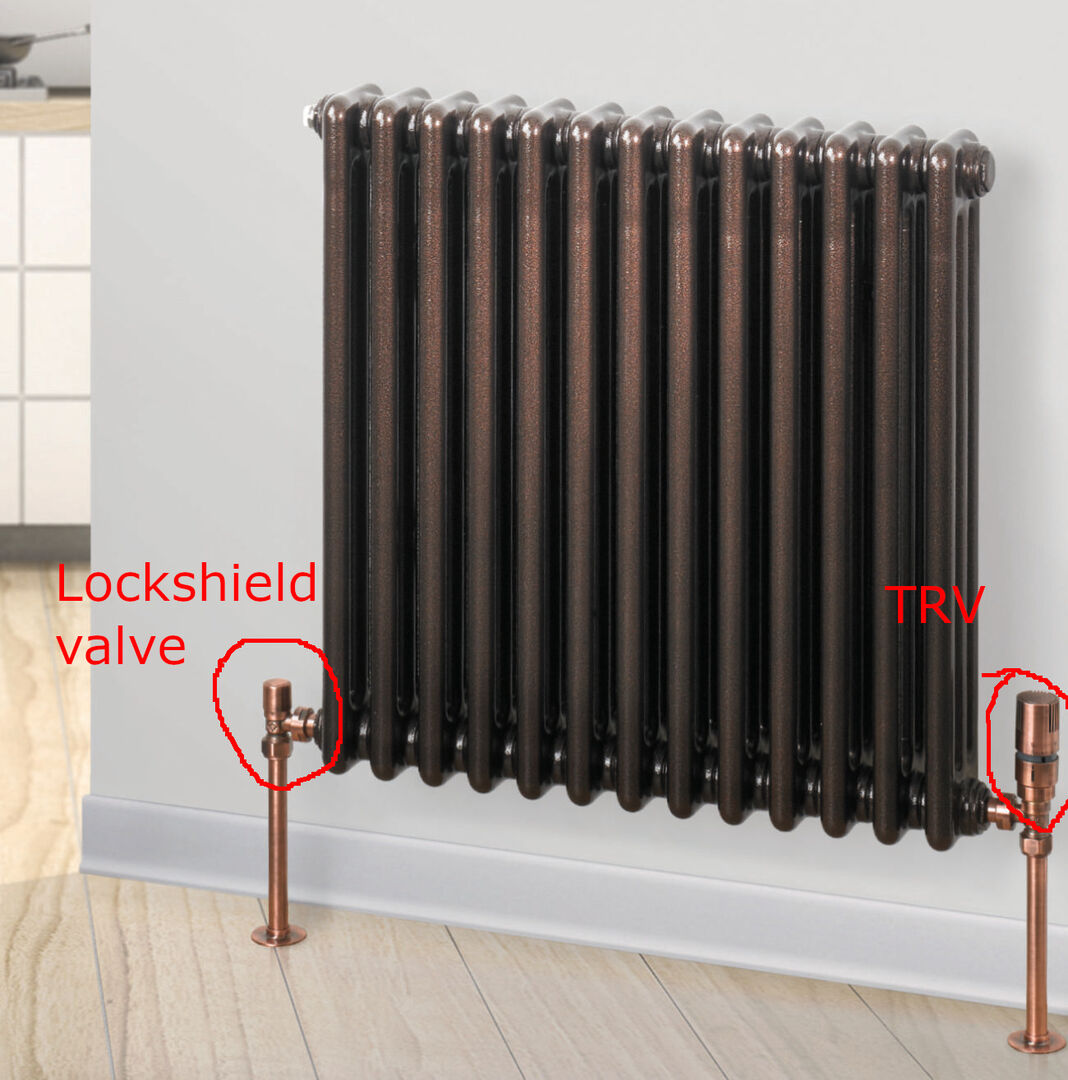
The important bit is that balancing is not done with the thermostat valves at all; it's done with the valves on the other side of the radiators - the lockshield valves. I'm not suggesting you do anything you're not comfortable with, but later on when those thermostatic valves do break (or get kicked or hit with a vacuum cleaner or any of a myriad other accidents), simply taking them off altogether (which is the same as opening them right up), balancing the radiators as laid out in the guide and then tweaking that weather compensation curve to get the internal temperature you like will save you having to fork out for replacement thermostatic valves at £10-£15 a pop. At 20 radiators, that's quite a bit of money, and surely worth a bit of prior information gathering so you're armed to make an informed choice.
105 m2 bungalow in South East England
Mitsubishi Ecodan 8.5 kW air source heat pump
18 x 360W solar panels
1 x 6 kW GroWatt battery and SPH5000 inverter
1 x Myenergi Zappi
1 x VW ID3
Raised beds for home-grown veg and chickens for eggs
"Semper in excretia; sumus solum profundum variat"
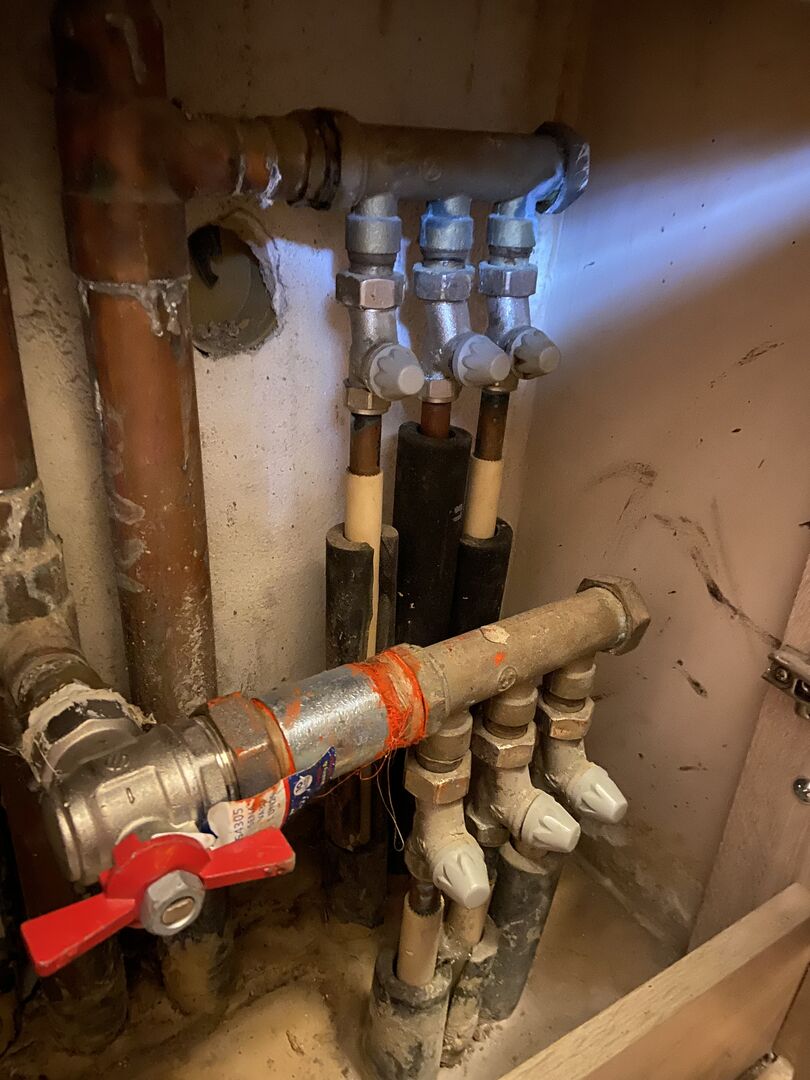
Thank you! In fact I had come across the topic and it made me seek our lockshield valves, which I discovered dusting in a cupboard (per floor). I am not at all a hardware gal (I am the theoretical analyst type) and would not dare touch them. May be I will muster the courage at a later stage, we’ll see….
Meanwhile I am happy to report that our ASHP has been commissioned to production! The circulation pump works just fine for the time being without buffer or any sort of hydraulic separation at 2.1 m3/h. The installer set the curve at 55 C at OAT 0 and 43 C at OAT 43 (so more like a boiler).
Since I had been pestering him the last 3 days with questions he could not or would not answer, I smiled meekly and sent him away. I lowered the curve to 45 C at OAT 2 and 35 C at OAT 17 (still high compared to what I have been reading in the forums). The effect in the less heat coming out of the radiators was felt within minutes.
Armed with the manuals I look forward to the next days outcome. With current OAT 10 degrees, so far we are very comfortable. Due to the PVs we have an accumulated buffer of 7Mwh with our electricity provider, so we do not need to worry much about consumption at the moment (from a cost point of view that is, we still do mind from a carbon footprint PoV).
A point that is somehow bothering me is that Midea R290 seems to combine a set room temperature target with a wc curve (including the daily schedule set up). I have read the numerous posts that reject this as a concept (with a notable exception). It is still too early for me to tell. I will come back when/if I have concrete facts about the issue.
It's not without it's own potential problems. Yes, generally you should balance the radiators, but I overdid it. For the first two and a half winters I had the heat pump, it struggled in cold weather, and never reached it's supposed maximum output. I was very close to flipping the dips to increase the nominal output from 14 to 16kW when a very clever member of the forum worked out I had inadvertently throttled my secondary radiator circuit by over-doing the balancing. I had one particular radiator at the end of a run that refused to warm up adequately, and in an attempt to increase the flow to it, I tightened down the lock shield valves on the other rads to the point where they were literally throttling the system. Following the advice of the wise member, I opened up all the lock shields all the way and suddenly the heat pump output jumped up to where it should be. The effect was so striking I even gave it a name, Big Bang, the day when all the lock shield valve restrictions were removed, and my heat pump could at last trade freely with my radiators. As most of the interior doors are open most of the time in the house, free air movement between the rooms keeps the room temperatures reasonably well balanced, and all is well.
Midea 14kW (for now...) ASHP heating both building and DHW
Thank you! In fact I had come across the topic and it made me seek our lockshield valves, which I discovered dusting in a cupboard (per floor). I am not at all a hardware gal (I am the theoretical analyst type) and would not dare touch them. May be I will muster the courage at a later stage, we’ll see….
That's great, @mk4; just keeping the knowledge in reserve will serve you well.
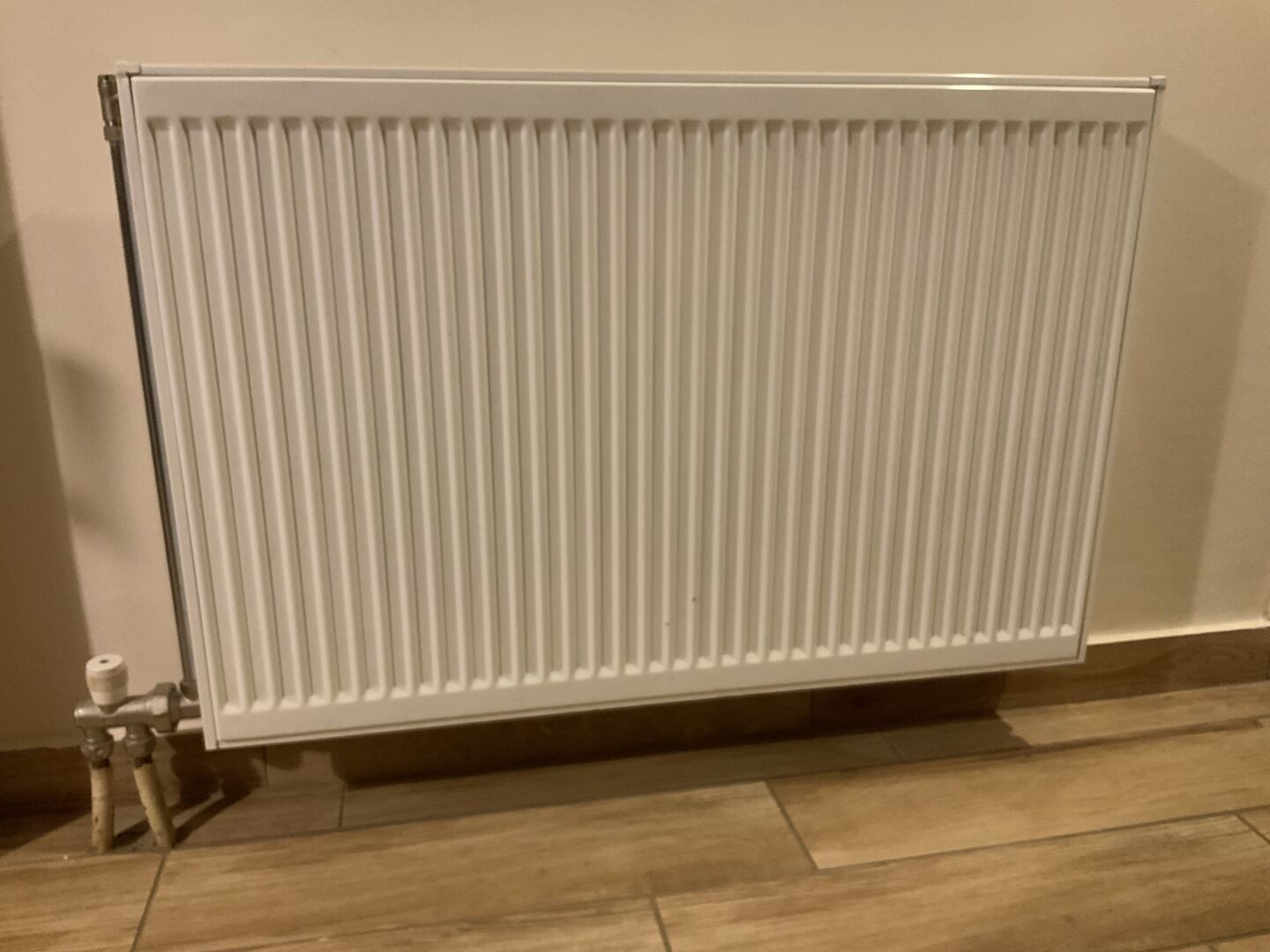
Just one point, though, is that those aren't the lockshield valves we're talking about. Normally, on a radiator there's a TRV on one side and a lockshield on the other. The TRV is designed to be easily turned, whereas the lockshield is designed to be an initial adjustment which is then covered and left as it is.
Of course, if your radiators don't follow that convention, it'd be hard to follow the guide directly, so if you ever get to that point then please just shout.
105 m2 bungalow in South East England
Mitsubishi Ecodan 8.5 kW air source heat pump
18 x 360W solar panels
1 x 6 kW GroWatt battery and SPH5000 inverter
1 x Myenergi Zappi
1 x VW ID3
Raised beds for home-grown veg and chickens for eggs
"Semper in excretia; sumus solum profundum variat"
A point that is somehow bothering me is that Midea R290 seems to combine a set room temperature target with a wc curve (including the daily schedule set up). I have read the numerous posts that reject this as a concept (with a notable exception). It is still too early for me to tell. I will come back when/if I have concrete facts about the issue.
Most (perhaps all) heat pumps have this as an option , but one that you can generally switch on/off through the menu, albeit sometimes the installer menu.
For my Vaillant in my house I found it quite a lot more comfortable with this option off, as well as it almost certainly being the cheapest way to run.
35 at OAT 17 is definitely high and I suspect the installer trying to make sure that the emitters always feel warm, which is not necessary but makes a call out less likely. You almost certainly want to reduce this to 30 or below. Im a bit confused with your previous post however, these valves in a cupboard suggest UFH not radiators in which case 45 is way too high assuming its been well designed. What do you have?
4kW peak of solar PV since 2011; EV and a 1930s house which has been partially renovated to improve its efficiency. 7kW Vaillant heat pump.
A point that is somehow bothering me is that Midea R290 seems to combine a set room temperature target with a wc curve (including the daily schedule set up). I have read the numerous posts that reject this as a concept (with a notable exception). It is still too early for me to tell. I will come back when/if I have concrete facts about the issue.
There are two potential confusion points here. Pure 24/7 weather compensation does not use any room temperature input, it only uses the outside air temp (OAT) to set the leaving water temp (LWT), via 'curve 9' on a Midea unit, which is the custom weather compensation curve, custom in that we can set the end points, as you have done. That is all there is to it, full stop.
Now some people (including me from time to time) try running with a night time setback, in the possibly delusional belief it might save us some money (this is a very complex subject which is thoroughly discussed elsewhere), and the way we do that is to use a timed turn down of the room stat by four degrees say from 2100 to 0300 hours. This effectively turn off the heat pump for those hours, but with a fall if the house really does get too cold. In this setup, the set room temp target is being used, but more as an on/off switch than as part of heating control logic.
The other way room temp is used is to adjust the weather compensation curve (WCC) when the room temp goes outside a certain range. This goes by various names, load balancing, auto-adaption and various increasingly incomprehensible names depending on manufacturer and/or implementation. I myself have a python auto-adapt script that measures the actual room temp every hour, and if it has deviated sufficiently from the desired room temp, then the script moves the WCC up or down to compensate. It does this over a wired modbus connection to the wired controller, and achieves exactly the same thing as going into the FOR SERVICEMAN menu and manually adjusting the WCC end points, only it is all done automatically. It seems to work well.
Thus there are at least two ways in which room temp input is in one way or another used alongside a WCC. But pure weather compensation is just that, it uses just the weather (as measured by the OAT) to control the heat pump output.
The only other thing to mention is that strictly speaking the OAT on a Midea heat pump isn't really the true OAT, it is the air intake temperature inside the heat pump, ie where the sensor is located. The heat pump itself affects to local air temp (obvs) but as it is the same sensor in the same place it seems to work well enough, ie it uses relative values from an OAT proxy, rather than absolutely accurate readings of the true OAT, if that makes sense.
Midea 14kW (for now...) ASHP heating both building and DHW
Most (perhaps all) heat pumps have this [combine a set room temperature target with a wc curve] as an option , but one that you can generally switch on/off through the menu, albeit sometimes the installer menu.
Unless I have misunderstood the manual and actual usage (very possible!) on a Midea unit, it really is an either/or option: either room temp control, with a fixed flow temp (with on/off control for modulation, ie just like a traditional fossil fuel boiler), or weather compensation, with a variable flow temp. If you try to adjust the room temp setting when the unit is in WCC mode, you get a warning saying (in words to this effect) that you have to turn off WCC if you want to make that adjustment. Timing, either by the Midea wired controller, or an external device (room stat) is a separate function.
Midea 14kW (for now...) ASHP heating both building and DHW
A point that is somehow bothering me is that Midea R290 seems to combine a set room temperature target with a wc curve (including the daily schedule set up). I have read the numerous posts that reject this as a concept (with a notable exception). It is still too early for me to tell. I will come back when/if I have concrete facts about the issue.
There are two potential confusion points here. Pure 24/7 weather compensation does not use any room temperature input, it only uses the outside air temp (OAT) to set the leaving water temp (LWT), via 'curve 9' on a Midea unit, which is the custom weather compensation curve, custom in that we can set the end points, as you have done. That is all there is to it, full stop.
Now some people (including me from time to time) try running with a night time setback, in the possibly delusional belief it might save us some money (this is a very complex subject which is thoroughly discussed elsewhere), and the way we do that is to use a timed turn down of the room stat by four degrees say from 2100 to 0300 hours. This effectively turn off the heat pump for those hours, but with a fall if the house really does get too cold. In this setup, the set room temp target is being used, but more as an on/off switch than as part of heating control logic.
The other way room temp is used is to adjust the weather compensation curve (WCC) when the room temp goes outside a certain range. This goes by various names, load balancing, auto-adaption and various increasingly incomprehensible names depending on manufacturer and/or implementation. I myself have a python auto-adapt script that measures the actual room temp every hour, and if it has deviated sufficiently from the desired room temp, then the script moves the WCC up or down to compensate. It does this over a wired modbus connection to the wired controller, and achieves exactly the same thing as going into the FOR SERVICEMAN menu and manually adjusting the WCC end points, only it is all done automatically. It seems to work well.
Thus there are at least two ways in which room temp input is in one way or another used alongside a WCC. But pure weather compensation is just that, it uses just the weather (as measured by the OAT) to control the heat pump output.
The only other thing to mention is that strictly speaking the OAT on a Midea heat pump isn't really the true OAT, it is the air intake temperature inside the heat pump, ie where the sensor is located. The heat pump itself affects to local air temp (obvs) but as it is the same sensor in the same place it seems to work well enough, ie it uses relative values from an OAT proxy, rather than absolutely accurate readings of the true OAT, if that makes sense.
That was exactly my hopeful understanding, that the room set temperature is used as an on/off mechanism and while the ASHP is on it works purely on wc. Which suits me fine really.
And yes I had read the discussion about how the OAT is measured and I get it. Still, it gives us an order of magnitude about what is going on outside. BTW the wired controller sensor regarding room temperature seems to be constantly in disagreement with our Siemens thermostat (used for the oil boiler). The midea one is constantly more optimistic by 0.6 to 1.5 degrees (to the point that I have come to believe that my body heat affects it, because I do spend a lot of time fiddling with it). I think I have read somewhere in the manual (Serviceman obviously) that you can somehow gauge what is shown vs to what it measures. In any case, we do not mind, we use the Siemens one as baseline so that can compare apples to apples
Well, it does cut off the radiator from the circuit if we turn it all the way, whereas the remaining radiators in the same circuit keep operating. I tried it one day prior to switching the boiler on. So I guess we do have the functionality after all, even though I am not confident about trying it with all radiators (some are just way too hard to turn and I do not want to push my luck too much….)
PS Edit: sorry I still need to master the quote/reply post thing….
Most (perhaps all) heat pumps have this [combine a set room temperature target with a wc curve] as an option , but one that you can generally switch on/off through the menu, albeit sometimes the installer menu.
Unless I have misunderstood the manual and actual usage (very possible!) on a Midea unit, it really is an either/or option: either room temp control, with a fixed flow temp (with on/off control for modulation, ie just like a traditional fossil fuel boiler), or weather compensation, with a variable flow temp. If you try to adjust the room temp setting when the unit is in WCC mode, you get a warning saying (in words to this effect) that you have to turn off WCC if you want to make that adjustment. Timing, either by the Midea wired controller, or an external device (room stat) is a separate function.
It has been more than 48h since our midea R290 was commissioned. WC is enabled (albeit with a “Lizzie” type of curve) as well as the time schedule option with two levels of upper IAT (21 during the day, 18 at night). The 3 degrees are probably a lot but we are still on an experimental stage and wanted to verify the ASHP’s behaviour.
We have observed the following, which probably support the idea that with midea R290, target IAT works as an on/off mechanism on top of wc.
a. While operating, midea works with wc. This is indicated on the wired controller and is verified by the sampling of its operational parameters. The LWT and the flow (m3/h) have been varying during the day (the latter significantly).
b. Day 1: While operating, room temperature reached 21, but then the schedule kicked in, upper target dropped to 18 degrees and the ASHP stopped. We had an exceptionally warm night (mid double digit aka 13 to 14 degrees!!!), room temperature had dropped to 19 the next morning and the ASHP did not operate at all during the night (daily operational minutes were 0 in the morning). It resumed operation once the next schedule milestone was reached (having upper room temperature 21C)
c. Day 2: Same behavior, the only difference being that when the daily schedule kicked in, room temperature was 20C and the ASHP did not start. It started approximately an hour later (at unknown room temperature, the logical assumption is below 20)
Note: the installer had told us that there is an hysteresis of 1 degree in the ASHP behavior compared to the IAT we see in the wired controller screen.
We do not have the custom, sophisticated modbus sourcing tools some of you have built, our only source of information is the wired controller, so we may be missing crucial info. In any case, this is what we have experienced so far.
On the comfort level now, we have been fine but then it has been exceptionally warm these days. Monday we expect a few snowflakes, so we’ll see how midea fares. COP is 4.2 (I guess the sheer size of the 16kw combined with the “Lizzie” curve make it hard to have a larger COP even in such mild weather)
It has not been possible to see if the ASHP shortcycles.