

Notifications
Clear all
Joining the Renewable Heating Hub forums is completely free and only takes a minute. By registering you’ll be able to ask questions, join discussions, follow topics you’re interested in, bookmark useful threads and receive notifications when someone replies. Non-registered members also do not have access to our AI features. When choosing your username, please note that it cannot be changed later, so we recommend avoiding brand or product names. Before registering, please take a moment to read the Forum Rules & Terms of Use so we can keep the community helpful, respectful and informative for everyone. Thanks for joining!

Topic starter
10/02/2024 10:21 am
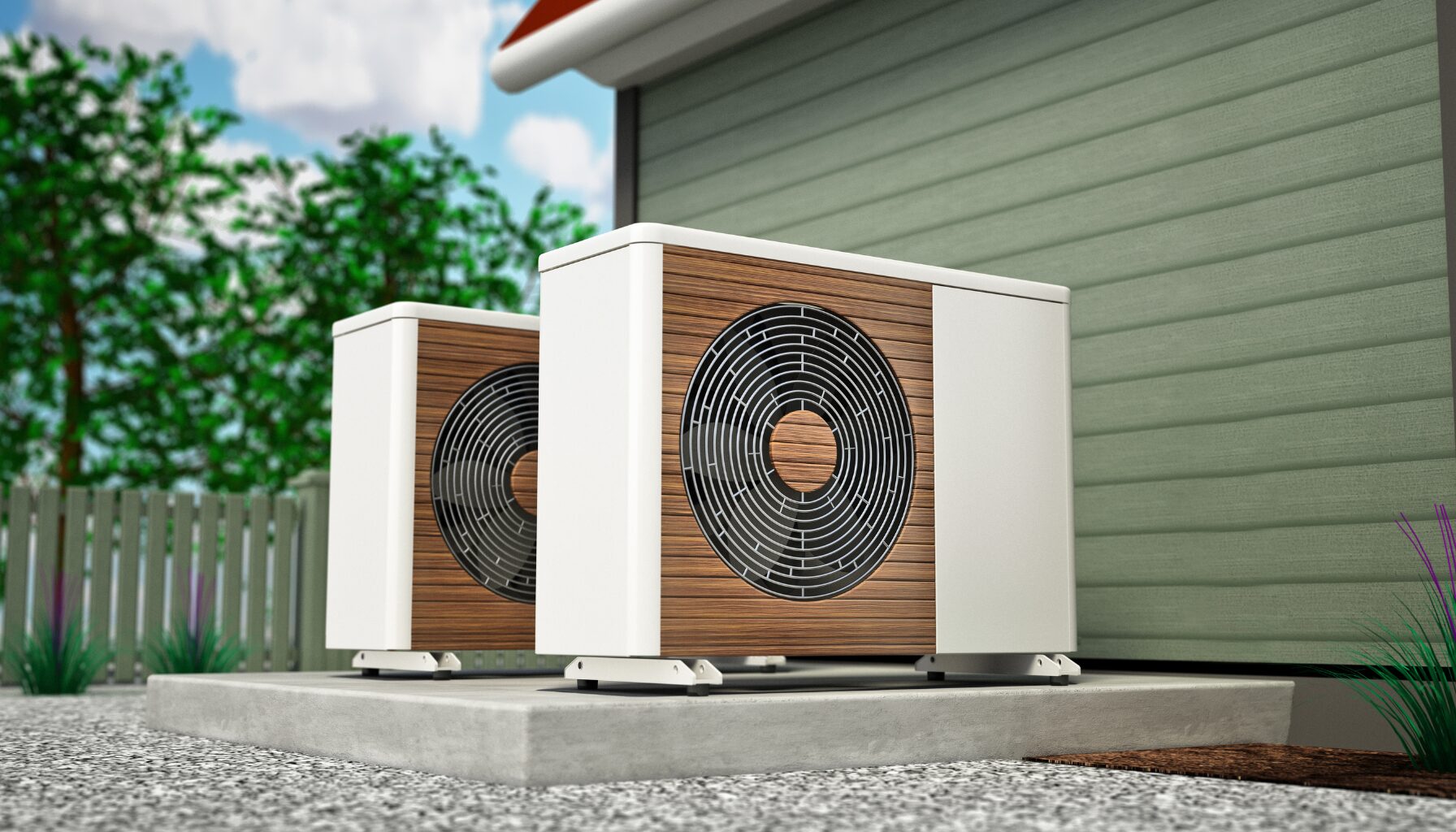
At the heart of every heat pump is a critical component known as the compressor. A heat pump works on the principle of transferring heat from one place to another. It can extract heat from the air, ground or water outside a building and transfer it inside for heating. Conversely, it can remove heat from inside a building and release it outside for cooling. The compressor in a heat pump is akin to the heart in a human body; it pumps the refrigerant, the blood of the system, through the heat pump.
The compressor's primary role is to increase the pressure of the refrigerant. When the refrigerant is compressed, its temperature rises. This high-pressure, high-temperature refrigerant then travels through the heat pump, where it either releases heat for warming or absorbs heat for cooling. The compressor, thus, plays a pivotal role in enabling the heat pump to move heat from one place to another, enabling heating or cooling operation.
The Heat Pump Compressor as a Car Engine
To better understand the compressor, let's compare it to a car engine. A car engine compresses an air and fuel mixture which, when burned, produces power or rotational force, which drives the car forward. Similarly, the compressor consumes electrical energy to pump and compress the refrigerant, propelling it through the system. Just as an engine's efficiency and power output are crucial for the car's performance, the efficiency and capacity of a compressor directly impact the heat pump's effectiveness in heating or cooling a space.
Frequency and Speed
Frequency, usually measured in Hertz (Hz), plays a vital role in the operation of a heat pump compressor, especially in models with variable-speed compressors. The frequency correlates to the speed at which the compressor operates or rotates. A higher frequency means the compressor runs faster, pumping more refrigerant and increasing the heat transfer rate. On the flip side, a lower frequency results in a slower compressor speed, reducing the heat transfer rate.
This concept of frequency controlling the speed is crucial for the efficiency and adaptability of the heat pump. Modern heat pumps often come with inverters that adjust the frequency based on the heating or cooling demand. This not only optimises energy consumption but also enhances comfort by maintaining more consistent indoor temperatures. The sophisticated electronic control strategies within modern, high-quality heat pumps manage compressor speed, maintaining efficient and reliable operation.
A controller may choose to switch off a compressor if it is operating outside a specific operating zone in part-load conditions for efficiency and reliability. This may look like cycling, which it may be in poorer quality units, but in high-quality units, it is to maintain optimal efficiency due to the characteristics of their compressor operation and performance.
Frequency as the Accelerator Pedal
Imagine the frequency of a heat pump compressor as the accelerator pedal in a car. When you press down on the accelerator, the car speeds up, and when you lift your foot, it slows down. Similarly, increasing the frequency makes the compressor run faster, ramping up the heating or cooling output. Reducing the frequency slows down the compressor, decreasing the output. Just as a driver adjusts the accelerator to maintain an optimal speed based on road conditions, the heat pump adjusts the frequency to efficiently meet the heating or cooling needs of the building.
The compressor in a heat pump is a vital component, much like an engine in a car, driving the system's functionality. The frequency at which the compressor operates can be thought of as the accelerator pedal, dictating the speed and efficiency of the heat transfer process. Understanding these aspects of a heat pump not only demystifies its operation but also highlights the sophisticated engineering that goes into creating comfortable, energy-efficient environments in our homes and workplaces.
2

11/02/2024 11:44 am
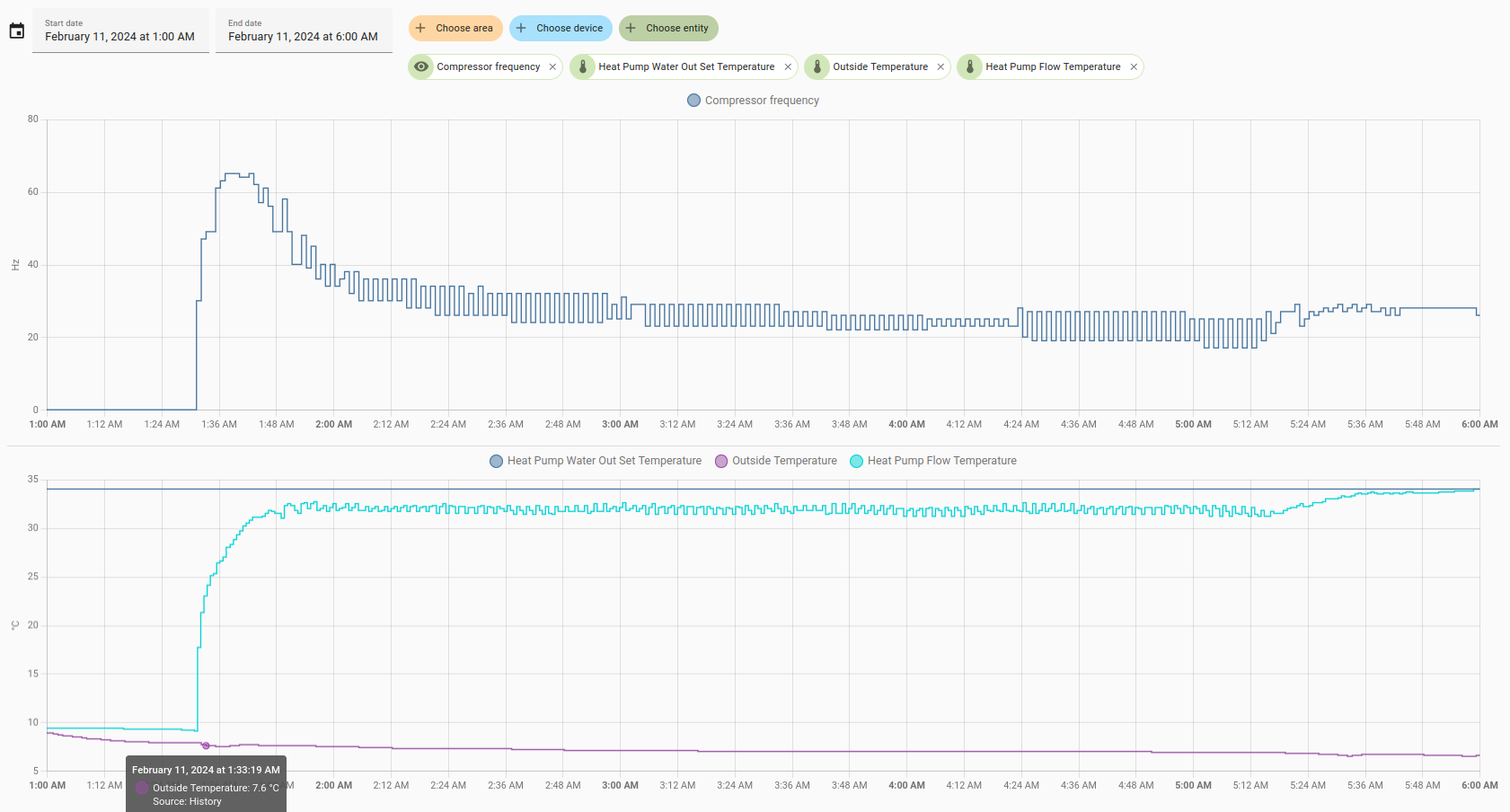
Because I have a lot of thermal mass in my concrete floor, I only run my heating during the 7 hours of cheap[er] electricity [when OAT is higher and my floor will keep the rooms warm the whole day]. It seems to take about 3.5 hours before my compressor speed stabilizes. I have considered "soft starting" my heat pump, and did this manually a couple of times. So set the target water out temp to 25, then once it reaches 25, increase in .5 deg steps until it gets to the target flow temperature. This significantly reduced my max compressor speed during startup. Not sure this will help longevity, but I will automate this at some point and see if it gets to a stable compressor speed quicker.
Last nights "automatic switch on" [WITHOUT a "soft start"] in chart below.
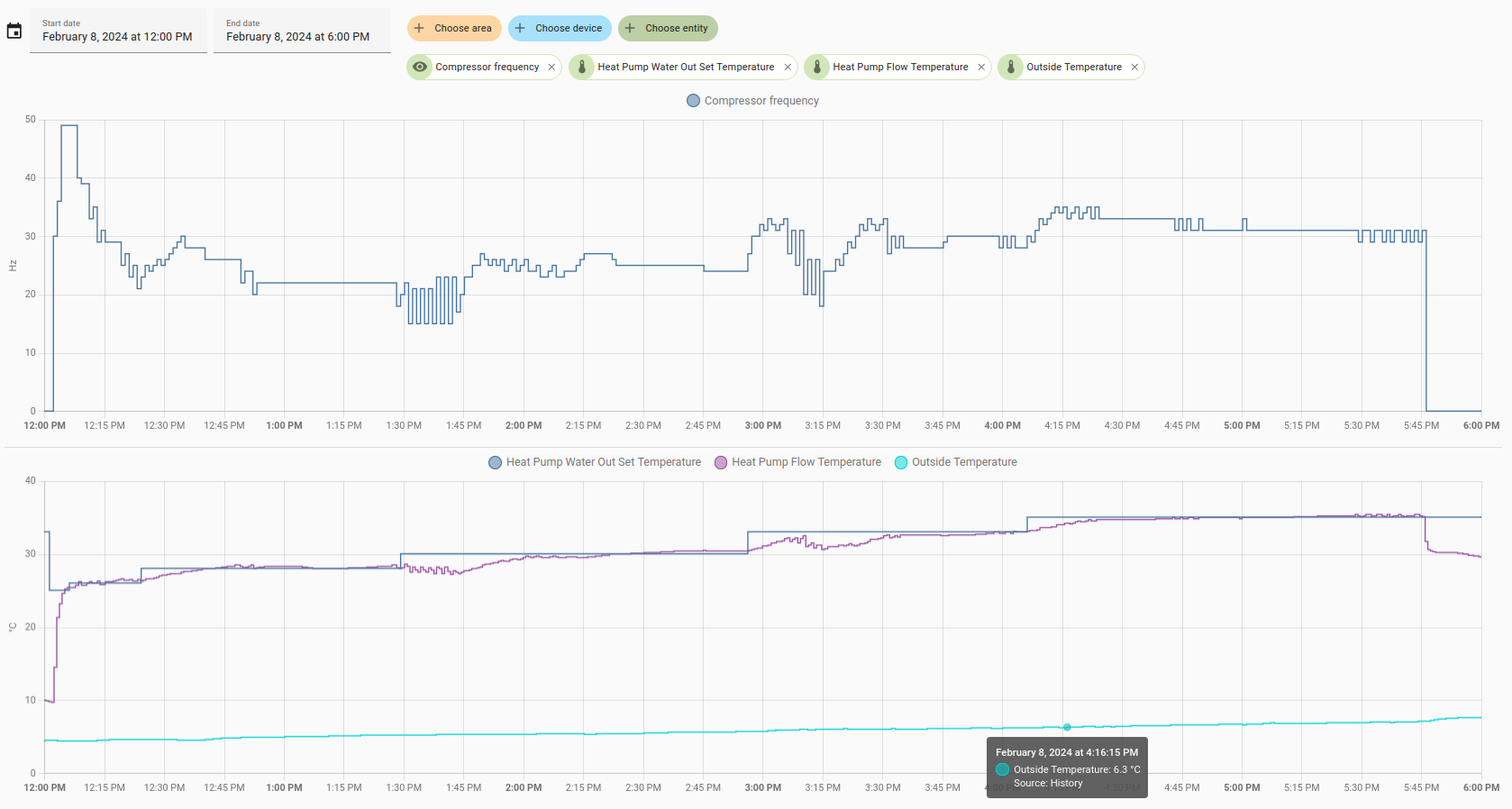
For a fair/scientific comparison with a "soft start" I need to automate it, so this make take a while. A basic test shows my peak compressor speed is much lower with a "soft start". Will report back once I have coded the "soft start" in home assistant and run some tests.
Below is data from one of my manual attempts [ at a "soft start"], though not at .5 deg steps, a bit larger than that. about 18Hz less peak. Need to collect a whole bunch of data in a more controlled manner.

11/02/2024 2:22 pm
It would be useful to include the leaving water temperature, indoor air temperature and power consumption on the chart.
Topic starter
11/02/2024 2:51 pm
@william1066 This is exactly what I would expect to see, your required flow temperature for under floor is very high, the switch on frequency is very high at the beginning because the return temperature is low because the slab and water within is cold, and the heat pump will ramp up fast and as hard as possible to attain the desired flow temperature, this will take some time.
You state that you are running the heat pump at the lower tariff rate to reduce cost. I have my doubts if you are actually achieving what you want, I may be wrong. Have you set the desired temperature lower (I estimate between 28 and 30 Deg C at those external temperature) and run it for 24 hours, and compare the running costs, to a standard single tariff compared to your 2 tier tariff.
On most under floor heating, I will set the weather compensation to 40 at -4 and 23 at 15. This seems to work well in most instances on an open zone system. Remember to leave it for a few days before taking reading so it settles down. I think you may be surprised.
1

11/02/2024 5:01 pm
You state that you are running the heat pump at the lower tariff rate to reduce cost. I have my doubts if you are actually achieving what you want, I may be wrong.
I suspect you will probably be correct, just need to code something to process the data.
On most under floor heating, I will set the weather compensation to 40 at -4 and 23 at 15.
Thank you, that has been my next challenge, is finding a good range for weather compensation, given the thermal mass in the floor. My strategy is [lower] cost over comfort so my max flow temp is 34 [@-2] and my min around 25 [@15], but have not proved this will work continuously given I am on a schedule most of the time.
I will report back once I have had the opportunity to test and crunch the numbers.
1

02/07/2024 2:57 pm
Frequency, usually measured in Hertz (Hz), plays a vital role in the operation of a heat pump compressor
Brendon,
Any ideas what the frequencies are that the Ecodan (6kw) works at/steps up+down to/from, including any correlating to 'full power' (running as standard/normal, as well as Eco if it differs) and its Quiet levels 1 + 2, and whether they could differ between space + water heating? I'm struggling to find any info on this!
TIA.
1


04/07/2024 9:27 am
@rhh2348 I asked around and inverter-driven units generally work within a frequency range of 30 Hz to 120 Hz, with 80 Hz being more typical. They tend to change their frequency in increments of 1 Hz or 3 Hz, but they avoid 50 Hz and 60 Hz to prevent harmonic issues.
For “quiet” mode, both the fan and compressor speeds are reduced. For example, a unit with a maximum capacity of 12 kW might only reach up to 8 kW in quiet mode, making it quieter but also less powerful. The “eco” mode also lowers power usage, balancing energy efficiency with noise reduction.
The peak frequencies are usually consistent across both heating and hot water functions. However, manufacturers rarely disclose detailed frequency specifications and this information is very difficult to come by.
🔥 Britain’s Heat Pump Shitshow
How Installing a Heating System Became a National Nervous Breakdown
Free UK shipping.
📗 Heat Pumps Explained
A Jargon-Free Guide for Homeowners
Rewritten and updated for 2027
📘 From Zero to Heat Pump Hero
🛠️ Bodge Buster
New to heat pumps?
Take the Heat Pump Fundamentals course and use INTRO50 at checkout for 50% off.

04/07/2024 10:33 am
Thanks for the reply, @editor Mars.
@rhh2348 I asked around and inverter-driven units generally work within a frequency range of 30 Hz to 120 Hz, with 80 Hz being more typical. They tend to change their frequency in increments of 1 Hz or 3 Hz, but they avoid 50 Hz and 60 Hz to prevent harmonic issues.
Interesting. I've not been monitoring mine long but I've not seen it above 58Hz (on normal DHW function only during the warmer weather); I suspect it is restricting the maximum frequency due to the weather - when it's colder it makes much more noise at what I assume will be higher frequencies.
On a DHW schedule that just started, it ramped up quickly after being called - in steps from zero to 18Hz to 36Hz in a minute (it may be in smaller steps but I don't have access to the sequential data changes, just points in time), then +2Hz to 38Hz to 46Hz (+8) to 56Hz (+10) to 58 (+2) within five minutes. It stayed there for five minutes before starting to ramp down with -6Hz, -4Hz, -6Hz, and -4Hz decrements.
Looking at the past few days I can see it only once at 50Hz - on a ramp down, and only once at consistent +2Hz increments from 36 to 56 (excluding 50Hz!) on a ramp up.
Both the above may be in +1Hz increments between polling though, I guess.
The peak frequencies are usually consistent across both heating and hot water functions. However, manufacturers rarely disclose detailed frequency specifications and this information is very difficult to come by.
If I remember to, I'll monitor later in the year when the heating is switched back on and report back any variations from the above.
1
04/07/2024 5:17 pm
It may be useful to consider the tasks being performed by a heat pump compressor and how these can be affected by variations in speed and loading.
Just as the water pump is used to pump the liquid around the system, the compressor is used to pump the refrigerant gas around the system. To get a liquid or a gas to flow there needs to be a pressure differential, so the primary task of the compressor is to increase its discharge pressure. The compressor discharges into the primary side of the Plate Heat Exchanger (PHE), which discharges into the Evaporator via the Electronic Exhaust Valve (EEV). At a certain speed the compressor will move a certain quantity of gas from the inlet to the outlet.
Consider when a heat pump first starts to operate and the refrigerant gas pressure around the system is equalised. The discharge pressure of the compressor starts to increase which in turn pushes gas into the PHE. If at this time the EEV is closed, then the PHE will be a sealed system of fixed volume.
It may now be useful to consider Boyle's and Charles's Laws.
Boyle.s law : At constant temperature, the pressure of a given mass of gas varies inversely with volume. Charle. s law : At constant pressure, the volume of the gas is proportional to its absolute temperature.
From the above two laws it can be deduced that if more gas is pushed into a fixed volume, then both the pressure and temperature of the gas will increase.
A good example is pumping up a bicycle tyre, from flat, using a hand bicycle pump. At start the hand pump is fairly easy to operate since the pressure within the tyre is quite low, but as the pressure starts to increase more effort is required to operate the pump. The hand pump will also start to get warmer.
So if the compressor in the heat pump is operating at a fixed speed, it will push a certain quantity of gas into the PHE each minute. If the EEV is closed the pressure within the PHE will start to increase and the compressor motor will have to work harder to continue operating. So even when operating at a fixed speed, how hard a compressor needs to work will be dependent upon the pressure within the PHE.
Now consider what can affect the pressure within the PHE. If cooler water is passed through the secondary side of the PHE, thermal energy will be removed from the gas side and have a cooling effect. According to the above laws temperature and pressure are interrelated, so lowering the temperature must also lower the pressure, but how can this be possible if the PHE contains the same quantity of gas? The answers is that some of the gas changes state from a gas to a liquid, thereby reducing its volume and in so doing lowering the pressure and releasing some thermal energy.
If the above were to continue, the PHE would start to fill with refrigerant gas in liquid form, and the heat pump would eventually stop working.
It is therefore necessary that the EEV starts to open to remove the liquid refrigerant gas from the PHE. The PHE can no longer be said to have a finite volume, since there is now refrigerant gas flowing out as well as in. All of the above of course occurs automatically and is initiated by the heat pump controller. Just as the water flows around the heating system, the refrigerant gas flows around the heat pump, the rate of which is primarily dependent upon the thermal energy output. A greater thermal energy output requires a higher LWT, which in turn requires a greater PHE pressure and a faster gas flow rate, all of which increase the required speed and loading of the compressor.
The heat pump controller therefore performs a number of tasks.
It measures various temperatures and pressures.
It calculates the required Leaving Water Temperature (LWT).
It calculates the required PHE pressure to achieve the required LWT.
It varies the speed of the compressor motor to try to achieve the required PHE pressure under varying temperature and loading conditions.
So in basic terms.
The loading on the compressor motor is predominantly determined by the required thermal energy output.
The speed of the compressor is determined by both the required LWT and also the required thermal energy output, though both of these are interdependent.
I hope the above helps unlock some of the mysteries concerning heat pumps.
4
25/02/2025 6:49 pm
report back any variations from the above
I found this post of mine recently and was to report back by @heacol on findings since the post. However, my system has been significantly improved since I wrote the original and therefore it's unlikely to be useful so I will delay posting some more detailed findings until I have enough post-improvement data to compare with, as I think it will be significantly-different.
However, basic numbers-wise:
- invariably, after the compressor starts, it always first jumps to 10Hz or 18Hz
- after 10, it has run on all even frequencies between 18 and 86
- 36 has been its favourite (23%)
- it spent just 1.5% at 64 or above - each of those frequencies average just 0.12% and 86 was unexpectedly bang in the middle

SPONSORS
Degrees of Separation

Latest Posts
-

RE: Heat pump branding. Clever, contemporary… or a bit too much?
I think Heat Geek have done an amazing job on their bra...
By Tomtheheatingengineer , 2 hours ago
-
RE: HeatGeek vs Octopus surveys: puzzling disparity - any ideas why?
I have just had 3 heat loss surveys, one by heat geek o...
By David , 3 hours ago
-
RE: Heat Geek Zero Disrupt: Are We Sleepwalking Into Another Race to the Bottom?
I think that's the key question. After all inverter uni...
By Prunus , 4 hours ago
-
RE: battery storage without solar
As of October 1st they need specific qualifications to ...
By EtchedPixels , 5 hours ago
-
RE: How should the Boiler Upgrade Scheme be reformed?
A unit which uses water to transfer the heat/chill from...
By Temperature_Gradient , 5 hours ago
-
RE: Renewables & Heat Pumps in the News
With regards to the BUS grant raid, I gave it more thou...
By ASHP-BOBBA , 6 hours ago
-
RE: Why are ASHP installs so expensive?
The whole system seems to work on the basis of...
By ian33a , 6 hours ago
-
RE: Missing flow temperature in Heat Geek proposal
Good plan. If you can get half hourly meter readings a...
By JamesPa , 11 hours ago
-
RE: Heat Pumps Without Grants: Would You Have Installed One & Will You Now?
@editor Most certainly. The heat pump was an ideal s...
By Abernyte , 11 hours ago
-
Although regulations may well vary from country to coun...
By Majordennisbloodnok , 12 hours ago
-
RE: Does anyone have experience of a smart water meter?
Yep I caught our slow leak from a £100 bill rise 8)
By EtchedPixels , 12 hours ago
-
RE: Do You Need a Buffer Tank or Low Loss Header for Underfloor Heating in a Large Property?
@jamespa in some cases, failing the Turing test might b...
By GrahamF , 15 hours ago
-
RE: Passiv Smart Thermostat - Help & Forum Support
@energystoragetech The heat capacity of some...
By JamesPa , 17 hours ago
-
RE: tepeo ZEB UK Support & Info Thread
Sorry you are correct, I was remembering figures from t...
By JamesPa , 1 day ago




SPONSORS