Essentially you probably have a shared neutral and three live cables going onto the inverter. Perhaps the inverter produces power evenly on the three phases?
But I think the meter will offset, it so your supplier will charge you 0? So the electrical considerations may not impact the cost side
I am curious if your CT clamp covers three live cables and so three readings of imports are considered?
A domestic 3ph Smart Meter operates in Vector Sum Mode.
If a home with a single-phase solar inverter exports on one phase and imports on the other two, then you are only charged for the difference between the phases.
A 3ph Inverter would need to have CT clamps on all 3 phases in order to export to the grid at the levels configured.
However, demand on the phases at the inverter won't be even because it's supplying single-phase in-home appliances.
A G98 certified 3ph inverter should import evenly across the three phases. (I wish that was programmable because I'd like to trial one that has asymmetric current demand!)
This post was modified 2 months ago by Transparent
@batpred The installer has been out and found he had connected the CT's off a phase meaning the inverter was trying to adjust the wrong phases, posted here on my thread questioning my import amount.
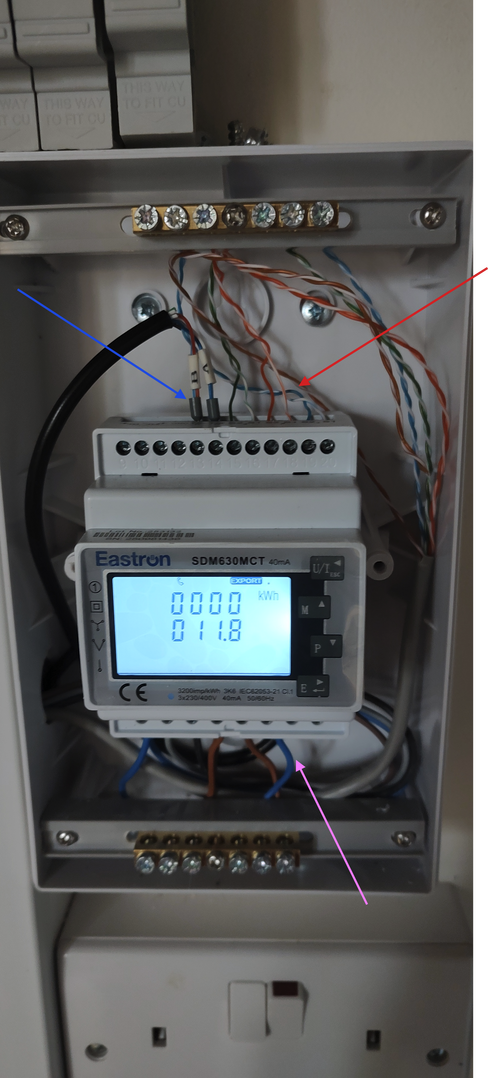
I have 3 CT's and they are connected to a meter beside my inverter and that meter is connected to the main board via a 3 pole MCB. This was connected off by a phase.
@transparent The Solis inverter has an option to switch unbalanced output on or off. As things haven't been balancing properly I haven't seen what it does yet but it is on at the moment and I will switch it off at some point and see if there is much difference. At the moment we are still working on the build and the load is mostly on L3 so I should be able to see what difference it makes to the load and also how it balances the load while charging the car, single phase, while charging the battery. (I have just realised you were talking about importing asymmetically not exporting)
@batpred The installer has been out and found he had connected the CT's off a phase meaning the inverter was trying to adjust the wrong phases, posted here on my thread questioning my import amount.
I have 3 CT's and they are connected to a meter beside my inverter and that meter is connected to the main board via a 3 pole MCB. This was connected off by a phase.
Thank you for letting us know, great to hear it is fixed!
The installer has been back and looking at the screen we could see that 2 of the phases were fairly constantly exporting around 100W each (it's a 3 phase supply). After a bit of searching around and checking the CT's he discovered he had connected the meter to the board in the wrong slots so the phases didn't line up. The CT's are connected through this meter and it meant the inverter was adjusting the wrong phases when trying to balance the load. A very simple thing to correct and looking at the screen on the inverter now I expect we will have minimum import.
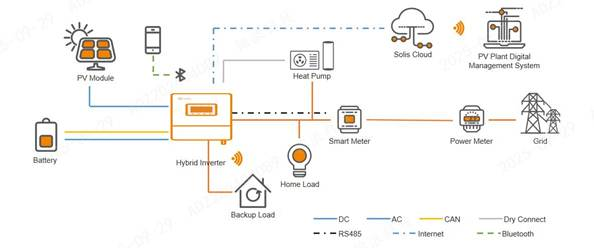
Our Solis is single phase and we initially had the CT clamp directly connected to the inverter. Subsequently we introduced the Din-rail mountable meter that Solis supply, which is plugged via a dedicated rs 485 port on the inverter. I assume the same thing happens with the three phase one.
This is a useful link with information on the Solis meters and CT clamps.
Thanks for all the replies, but a simple mistake that has been easily fixed.
I also discovered that I can connect via bluetooth or WiFi directly to the datalogger or the inverter and get readings every 5 seconds, it doesn't need to be via Solis cloud. I think it would also work with an ethernet cable plugged into the datalogger. This way the app updates more or less in real time. I know I read someone asking about that last night but I can't remember which thread so I'll put it here in case it is of use to someone.
Yes, the functionality available via bluetooth on the SolisApp allows much better troubleshooting including with non supported batteries like Seplos.. I will try to post the list of batteries included on the Solis menu here.
8kW Solis S6-EH1P8K-L-PLUS hybrid inverter; G99: 8kw export; 16kWh Seplos Fogstar battery; Ohme Home Pro EV charger; 100Amp head, HA lab on mini PC
The Solis inverter has an option to switch unbalanced output on or off.
Well that's of great interest.
I'll tell you here of my interest, but don't let's expand on this discussion in this topic please. It's an enormous subject, and will require its own topic.
Background to single-phase domestic supplies:
1ph supplies to houses are causing increased imbalance between phases at the local substation.
The theory of LV distribution is that the load will be approximately the same across the phases for a typical ground-mounted substation. Each would be supplying around 150-houses, and is probably rated 300VA or 500VA.
However, electricity demand is no longer evenly spread between neighbouring houses.
Phase imbalance is now a serious issue, responsible for losses of around 10% of throughput at the local substation. That's a lot of energy being wasted at the last voltage-change node on the network.
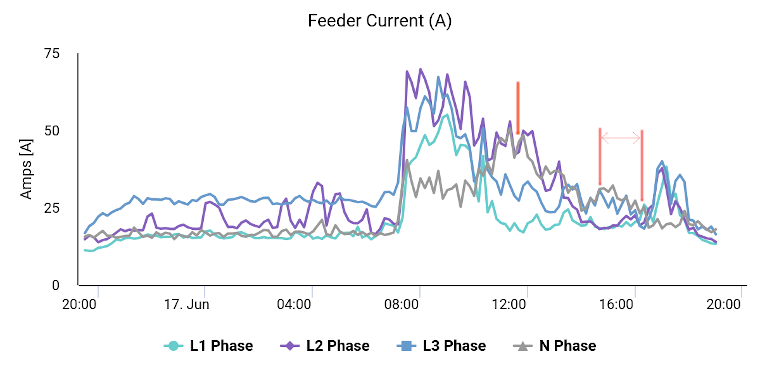
When the phases are imbalanced, more current has to return via the Neutral conductor. At times, the Neutral current exceeds that carried by a phase wire, as marked in the timeline above.
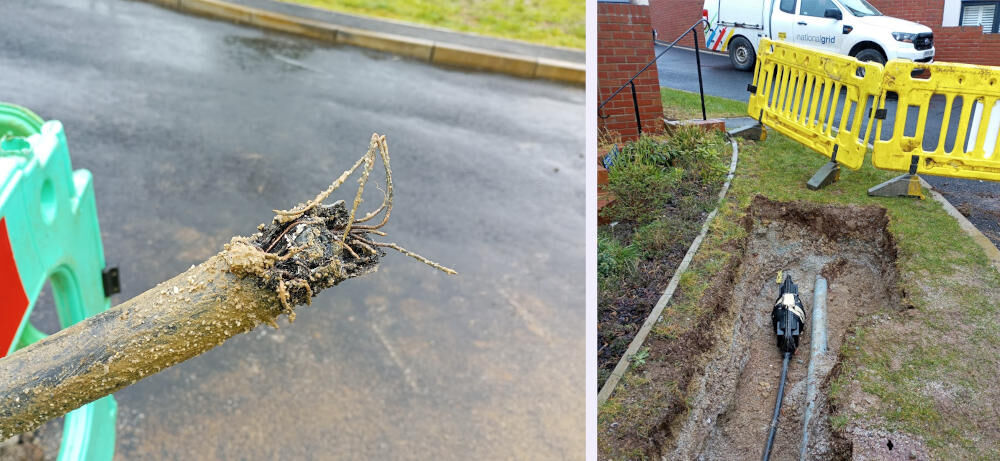
That's another problem because a great many underground cables were installed with a Neutral wire of smaller cross-section. It's simply not meant to be carrying current, and its insulation level is below that of the phases.
The neutral current results in heat, which causes thermal breakdown of the insulation, and an inevitable cable outage.
I now know how to reduce the Neutral current by selectively recharging batteries using a Smart Controller and a monitoring method which isn't yet public knowledge.
That would save the costs of a massive upgrade of underground LV cables.... and hence reduce future consumer bills
The downsides are:
The DNOs are private companies who earn income from making cable repairs. They have little interest in a strategy which reduces costs!
I couldn't find a 3ph inverter (or set of 1ph inverters) which would allow different import currents to recharge a battery
There's no tariff which could reward home owners for implementing a Smart Controller approach
So perhaps I can investigate the Solis strategy further, with a view to crossing item-2 off the list.
Just in case anyone is evaluating which battery manufacturers are "supported" to use in the Solis, below is the list I see for the Solis S6 on Soliscloud today. Many of these are also known by other names in some markets.
When using the Seplos battery, I use the Pylontech protocol and so selected "PYLON_LV".
The main advantage I see in using one of these is in case of any questions you raise with Solis about the performance of the battery or configuration options, you are less likely to be referred to the battery supplier, distributor or installer. I experienced one case where they were all pointing at the other for who would support troubleshooting, etc. 🙄 So between Solis, Seplos and Fogstar...
Or alternatively, forget the need to get entrenched with compatibility lists, and instead get acquainted with the Open Modbus Standards and certification from the SunSpec Alliance.
Thanks. That now makes sense. Connecting to the datalogger via Bluetooth was very straightforward and does indeed refresh more regularly. It seems a bit random, sometimes 10 seconds, sometimes around 30 seconds.I found out how to connect via Bluetooth using the local debugging option.
One thing you may want to do is to get Solis to check your usb datalogger firmware and maybe get Solis to upgrade it.
They upgraded mine a month or so ago:
I have not had time to help them, they sometimes seemed keen to test different modes.
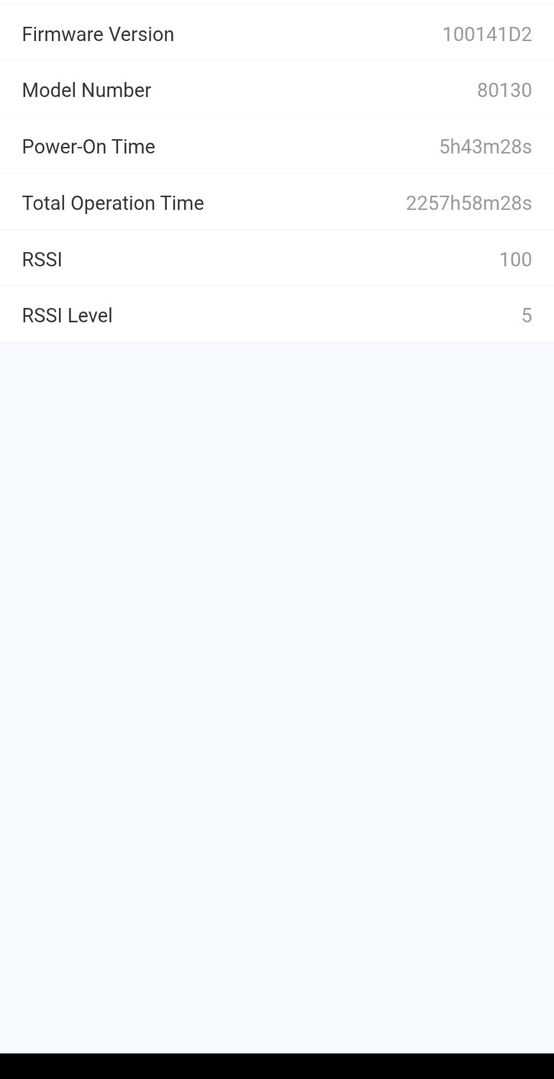
I now also see my datalogger is reporting 5hrs uptime, which does not make much sense.. I last powered the inverter off for an electrician visit, a couple of weeks ago.
Anyway, after the firmware upgrade and the reduction that I made on the polling frequency of the Solis modbus integration from home assistant, the occasional 0 reads (voltage, so, etc) from the battery almost disappeared.
Solis confirmed these soliscloud errors have absolutely no effect on the operation of the inverter. I have seen nothing to the contrary, so all good! I am sure other inverters have a lot more niggles that installers do not bother with..
Now there is an option to connect also via WiFi, which would be perfect as I don't want to go to the garage each time.
Unfortunately I can't get it to work, it keeps saying the password is incorrect. I have tried the WiFi password and the Solis Cloud password, but neither work.
Have you tried this way, if so what password was it?
Now that you mention it, it may have worked once for me! I do not know the password the WiFi interface expects. There seems to be installer and owner access but none works.
I don't know what setup you have with the inverter, but I find mine very reliable, completely hands off operation including ups. The Solis helpdesk is very responsive. So I have not needed to keep a close eye on it after the first few days of stable operation.
I am curious if you are planning to use the Solis heat pump control function? Not that I am expecting anything significant from it..
That is how I have been contecting on the laptop but being 5 minute intervals it doesn't show the detail I would like to see. Last night we were pulling more that the inverter can supply so we were importing a small amount. I would be interested to see how much, for how long, how the inverter shares the power between the phases... but as it only lasted about a minute that isn't captured in all the graphs that are avaliable on Solis Cloud. It isn't important, but it is all new to me and I'm interested to understand a little more about how the inverter works.
This is all very interesting!
I wish Solis would make sure that during the first couple of weeks after an account is configured on Soliscloud, they would increase the polling frequency to one minute or so. It would save having to request it, by raising a ticket via their support site.
If you are looking for information on the operation of the inverter, I would recommend asking the Solis Support directly. In many cases they share technical articles on how it works, like on they did with me on earthing.
I now try to focus on the Solis inverter doing what is more sensible without relying on less defined cloud based solutions like Solis AI.
My current niggle is whether setting a time slot for discharging the battery for export should really limit the battery being used to serve internal loads during that time slot (maybe even prevent it).
The CT's are connected in the top, red arrow, extended with Cat 5 cable. The blue arrow points to two connections labelled A&B and the other end of these cables are connected into the inverter on an RJ45 plug. The connections at the bottom with the pink arrow connect to the main board here
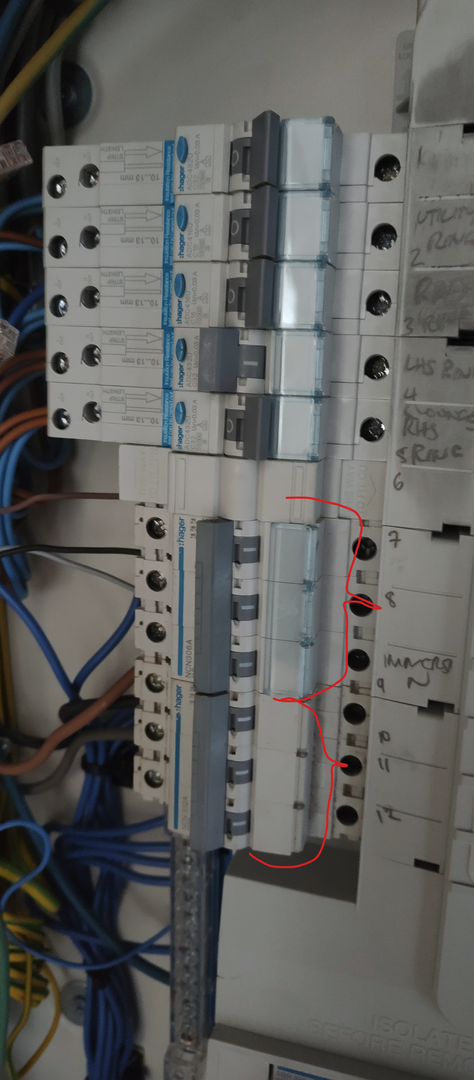
7,8,9 is the meter. 10,11,12 is the Inverter connection to the board.
The issuse with the inverter importing was because the meter was connected to 6,7,8. There was an RCBO in 9 and I guess he didn't notice or it didn't occure to him that this would mix up the phases of the CT's
Thanks, just linking it here, to make it simpler for anyone else in future looking for info on Solis hybrid three phase inverters.
Feel free to continue three phase discussions here.
8kW Solis S6-EH1P8K-L-PLUS hybrid inverter; G99: 8kw export; 16kWh Seplos Fogstar battery; Ohme Home Pro EV charger; 100Amp head, HA lab on mini PC
I too have no idea why the Wifi connection won't work with the password. I wonder if I need to enable the 2.4ghz setting on my router, as you would do when commissioning the inverter? Maybe I'll give that a try.
I asked Solis via a ticket to change the polling time to as low as it would go, which they gladly did to 60 seconds. They have been very helpful when I have needed to contact them. I spoke first when the inverter was installed to a chap in the Netherlands who was more than helpful and very friendly on the phone.
My AC coupled S6 runs flawlessly and has done from day one, I just let it do it's own thing. I checked my data yesterday and it does a good job with the Eastron meter to balance the load.
I also checked the data on charge and discharge amounts of the battery over the last year. The conversion losses match pretty much exactly what they quote of 6.5% (in total both ways), which is excellent, so we aren't losing much converting from AC-DC-AC.
I have no plans to use any Heat Pump specific settings. We have no PV and have no plans to ever install any as the ROI for me isn't worth it, especially as the export rates are plunging, so using it to send back excess storage in the summer months isn't worth it financially, or with extended use on the batteries.
I simply charge our 3 packs up overnight with EON and then discharge them during the day.
I expect on the coldest days we might run out of storage when our HP is installed next week, however getting a 4th pack probably wouldn't be a good ROI as I'd have far too much capacity in the summer which will sit idle, although I'll see how over the next year goes with the HP and see what it looks like, as I'm always tempted by another as I enjoyed building them....
I am curious if you are planning to use the Solis heat pump control function? Not that I am expecting anything significant from it.
Do you know what it does and how it works? I've noticed there is a opton to turn it on but haven't seen any info on what it does and how it works
I do not, and I do not have a heat pump!
It seems to allow an SG-Ready heatpump to be controlled via some special ports. There is an optional "smart mode" which is probably more useful for an aircon..
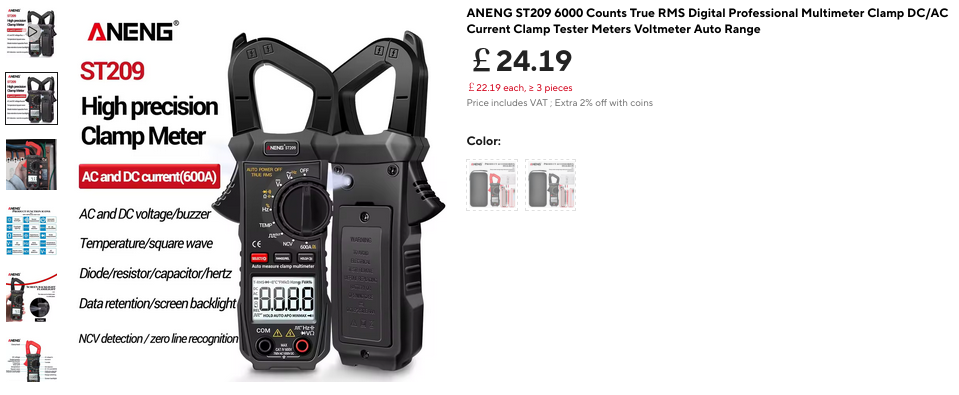
I bought model ST209, which has now been supeceded.
Just have a think whether you will ever need a multimeter with the facility to detect the phase rotation. They'll be more expensive of course, and it's unlikely that a consumer would ever need one. But now is the time to make that decision.
If you don't need to directly cross-reference phases, then having two separate clamp multimeters will probably be the cheaper option.