

Notifications
Clear all
Joining the Renewable Heating Hub forums is completely free and only takes a minute. By registering you’ll be able to ask questions, join discussions, follow topics you’re interested in, bookmark useful threads and receive notifications when someone replies. Non-registered members also do not have access to our AI features. When choosing your username, please note that it cannot be changed later, so we recommend avoiding brand or product names. Before registering, please take a moment to read the Forum Rules & Terms of Use so we can keep the community helpful, respectful and informative for everyone. Thanks for joining!

Topic starter
25/10/2025 10:52 am
I apologise I have missed already a relevant thread on this.
I essentially feel a bit desperate as it is more than one week now that my 2x Growatt 2.56kWh LiFePO4 battery cells are disconnected (with all the financial loss that is coming with it), and I could not come up with a simple solution.
First, the installer basically dodged me as the 2-years workmanship are expired. Now it's clear they are not interested in helping.
I did switch off and on the inverter, hoping that it would see the battery again. I also tried to check any physical damage to cables but it's very difficult to visualise the back and side of my batteries because they are really near the extarnal wall of the house encased in a wooden cabinet (pictures and video attached).
Remote whatsapp support from Growatt was better, but essentially stopped when they asked me to open the battery and check if it was powered.
I didn't feel confident doing that and asked my electrician to come. He couldn't so far, hence I will have to call someone else.
I thought I would anyway post here in case someone else had a similar experience and would share how they handled it.
Thanks in advance for any feedback!!
Elia
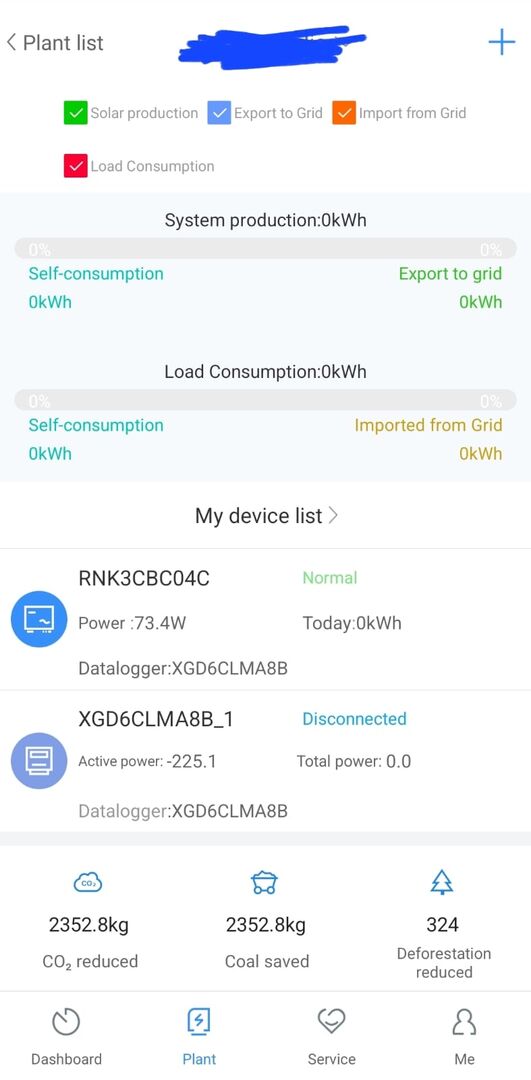
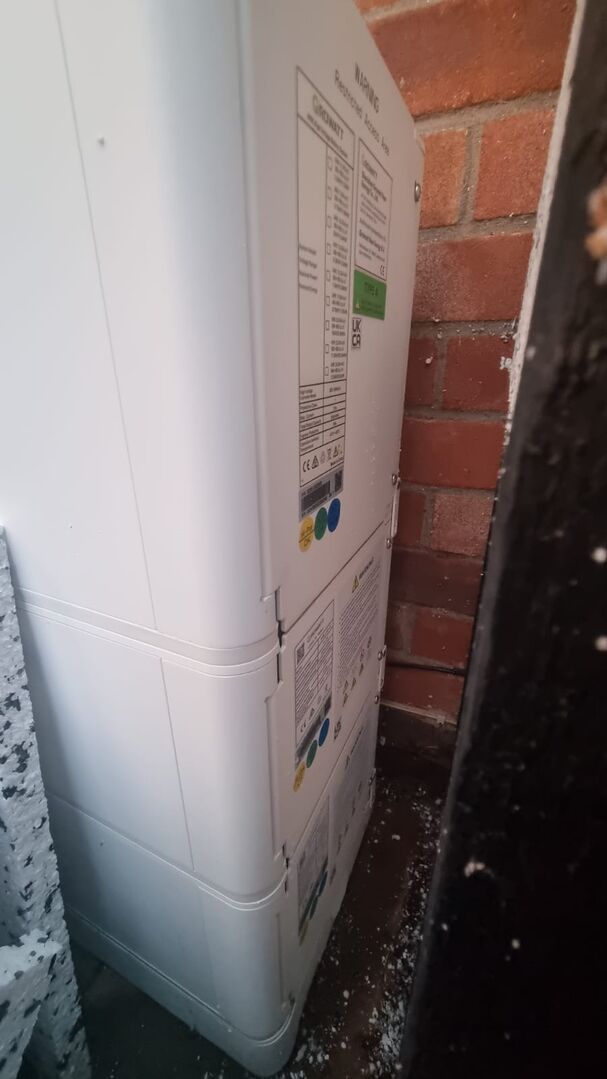
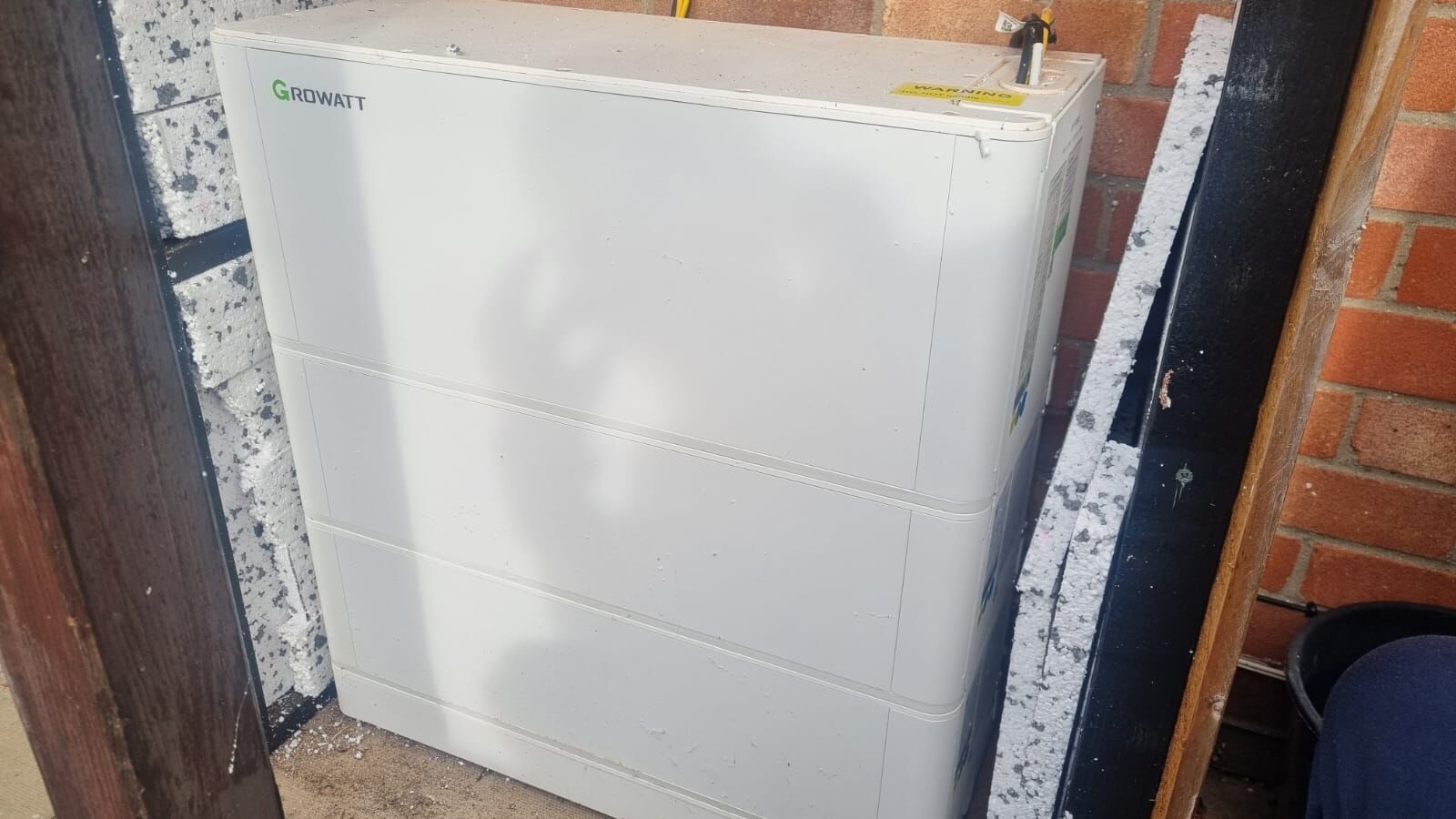
This topic was modified 9 months ago by Mars

25/10/2025 11:39 am
Hi @eliuccio - you are in the right place, and asking the right questions!
I have hands-on experience with separate Growatt inverters connected to generic LiFePO4 batteries,
but I haven't previously met batteries actually manufactured by Growatt.
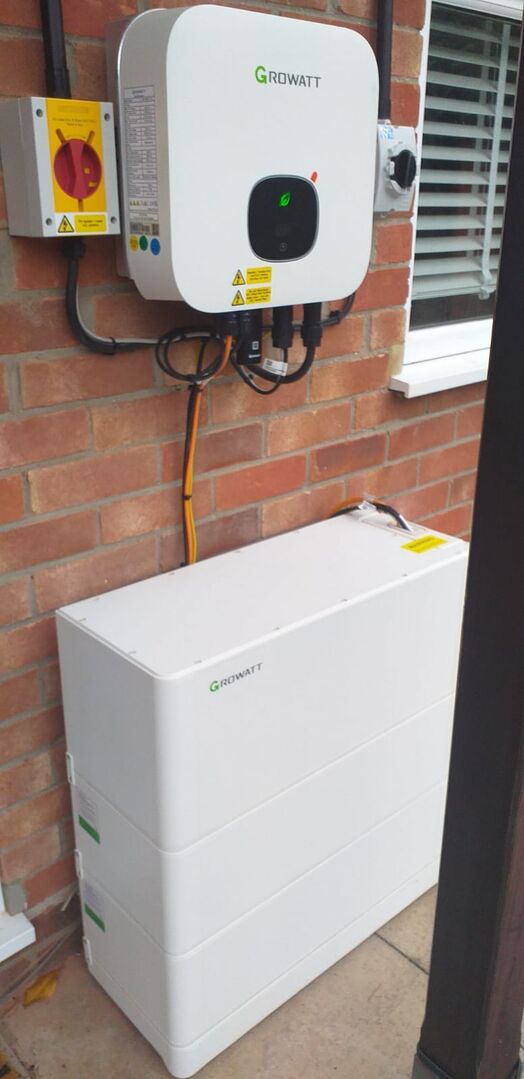
Can we please have the model numbers of the upper box (the inverter?),
and the two battery boxes below it?
What's the history of this installation?
Did you have it installed, or was it already present when you acquired the house?
Where do the wires go from the boxes shown in your photo-set?
To the consumer unit in the house?
Or is there another box which also has solar panels connected?
Whereabouts are you, roughly?
Save energy... recycle electrons!
Topic starter
25/10/2025 3:19 pm
@transparent thanks for your interest.
Inverter is Growatt 3600TL-XH working with a 6x panel (Euroner) 2.58kW solar PV system installed by Cahill ltd.
I can attach the datasheets for your peruse but do let me know if you need more info.
I am in Essex, Colchester. This was installed now more than 2 years ago (July 2023) and worked almost seamlessly thus far.
Cables go to the consumer unit is in the house (video attached), and the electrician who made it anew did a starling job (as apparently acknowledged by the installing team).
Maybe one thing more to be done is to change the 60 ampere fuse that now may be overcharged since I installed a heat pump in July too. But the battery got disconnected without an apparent power cut...
Topic starter
25/10/2025 3:22 pm
The only other event worth of notice has been the installation of a new fibre wifi that required passing a cable behind the cabinet where the batteries are.
However, I recall the whole system was working once reconnected to the internet, so physical damage to a cable should be excluded...


25/10/2025 4:05 pm
@transparent, worth mentioning that my solar setup is a growatt inverter connected to a growatt battery, so if it will help as a reference (working) installation then I’m happy to provide details as and when you need to ask.
105 m2 bungalow in South East England
Mitsubishi Ecodan 8.5 kW air source heat pump
18 x 360W solar panels
1 x 6 kW GroWatt battery and SPH5000 inverter
1 x Myenergi Zappi
1 x VW ID3
Raised beds for home-grown veg and chickens for eggs
"Semper in excretia; sumus solum profundum variat"
1
25/10/2025 4:26 pm
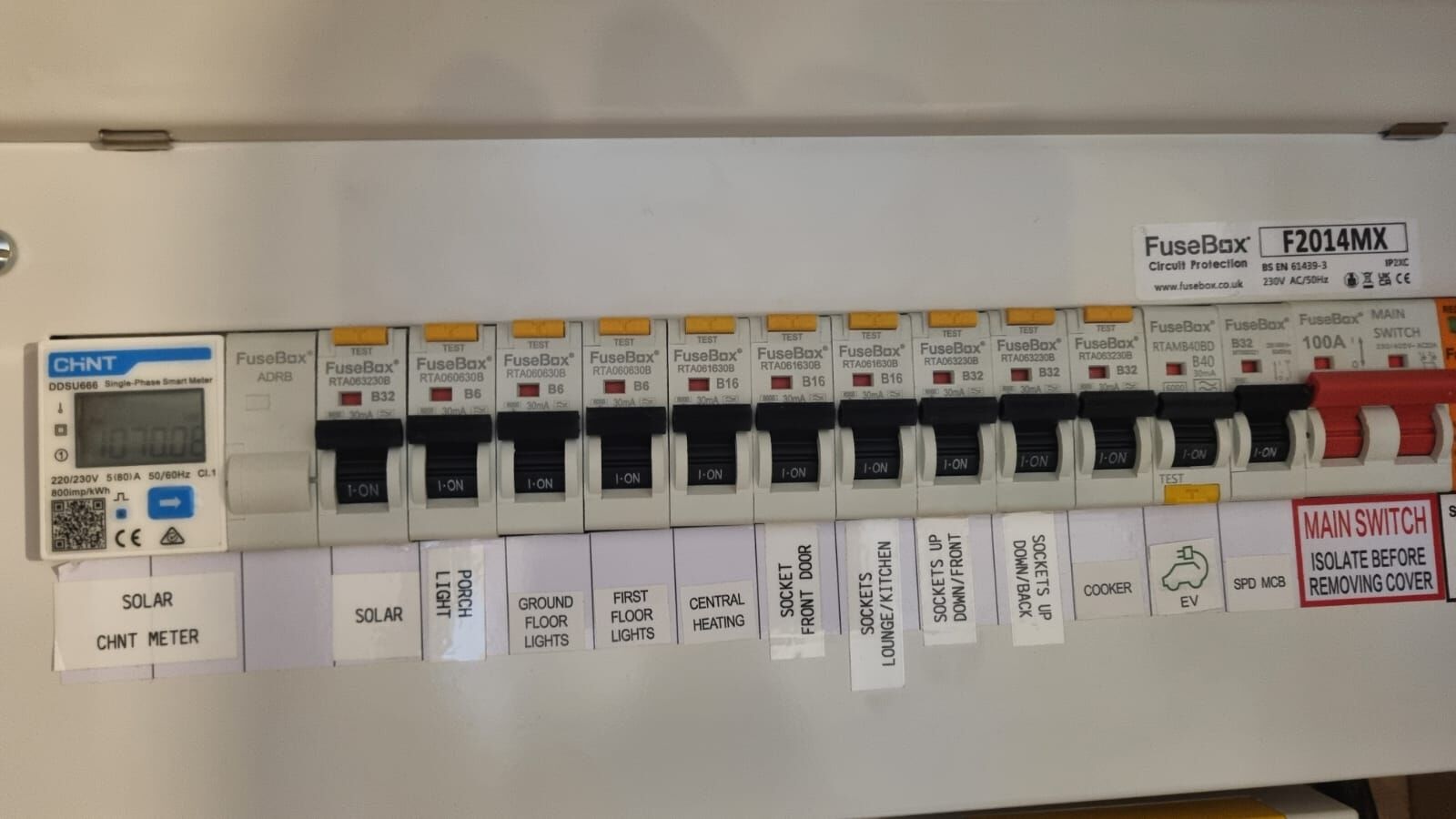
Thanks. Let me point out a few things from what I can see on that video clip:
1: There's a Chint meter, which I believe to be the obligatory one required when a solar-inverter has the capability to export to the grid.
2: There's a separate RCBO marked "solar" which may be in series with the Chint meter.
I don't know when this solar installation occurred, nor can I see the printing on that RCBO.
However, it's likely that the RCBO needs changing for one which can support bi-directional operation. See this explanation.
This is a safety issue. Feel free to post a close-up of the existing trip and ask for further clarification if you want.
We'll assume that the Solar circuit is what connects to the Growatt 3600 TL.
The TL range is known to me.
There's one sitting on the floor beside me as I write!
3: Left of the Main Switch is a trip marked SPD MCB
SPD is Surge Protection Device.
There's one to the right of the Main Switch, coloured red.
Unless the manufacturer states otherwise, SPDs shouldn't have any trip between them and the busbar of circuits they are there to protect.
If a surge were to enter the property from the grid, the MCB's contacts would fly open, thus isolating the SPD.
That renders it useless.
It won't be connected at the very moment when it's meant to be quenching the surge!
4: There's an RCBO for an EV charge-point.
That is probably rated 32A (7.5kW), with a 30mA earth-fault current detection level.
However, it should also be marked either Type-A or Type-B.
EV chargers are known to have a DC component within a leakage-to-earth fault, which must be detected by the RCBO.
The usual RCBOs are Type-AC, which offers inadequate protection.
This is another safety issue.
If you can't see the Type marking on that RCBO, please ensure we can see what's printed on it in a still photo.
5: The lower consumer unit seems to be dedicated to the ASHP.
... in which case, where is the Growatt battery connected?!
I'll assume it's DC-connected to the Growatt inverter, which we can't yet see.
6: Your electricity supply to the house is PME, which we can identify because there's an earth wire leaving the Service Fuse.
That means your EV charger should have its own earth stake (or earth grid) connecting into the ground.
It shouldn't be earthed back to the consumer unit.
If there's any doubt about that, please post a photo of the wires connecting to the Charger itself.
7: The rating of the Service Fuse at 60A will have been decided by your DNO, which is UK Power Networks.
This rating depends on the current-carrying capacity of the supply cable to the house.
You can't just have a larger fuse because you want to draw more power!
If this house was in my area, where the DNO is National Grid (NGED), then you would've been told an upgrade to three-phase is required.
UKPN are a little less stringent in applying the regulations.
But I don't see how a property with
- a heat-pump
- an EV charger
- a grid-tied battery
- a solar inverter
should be supplied via a 'thin' single-phase cable connected to a 60A cut-out...
... unless the DNO doesn't yet know, because the relevant consent/notification online forms weren't submitted.
There's no costs involved if you notify them now.
Their main concern is to ensure that supplies are correctly sized and are safe.
Once I understand where the Growatt battery is connected, we can get back to solving your original problem!
OK so far?
This post was modified 12 months ago 2 times by Transparent
Save energy... recycle electrons!
1
Topic starter
25/10/2025 5:04 pm
Thanks!
I attach two more close-ups of the fusebox.
My assumption was the batteries were connected to the box through the inverter.
I guess some of your questions/comments would be best asked my trusted (currently unavailable) electrician (I can send this through if worth).
He also installed the EV charger (I attached another video showing where this is and also how both the charger and the solar units connect to the box inside).
Concerning the DNO, the aforementioned electrician 🙂 said he would have submitted the request for me but he didn't, so I guess I will do it myself in due course.
Hope this helps...
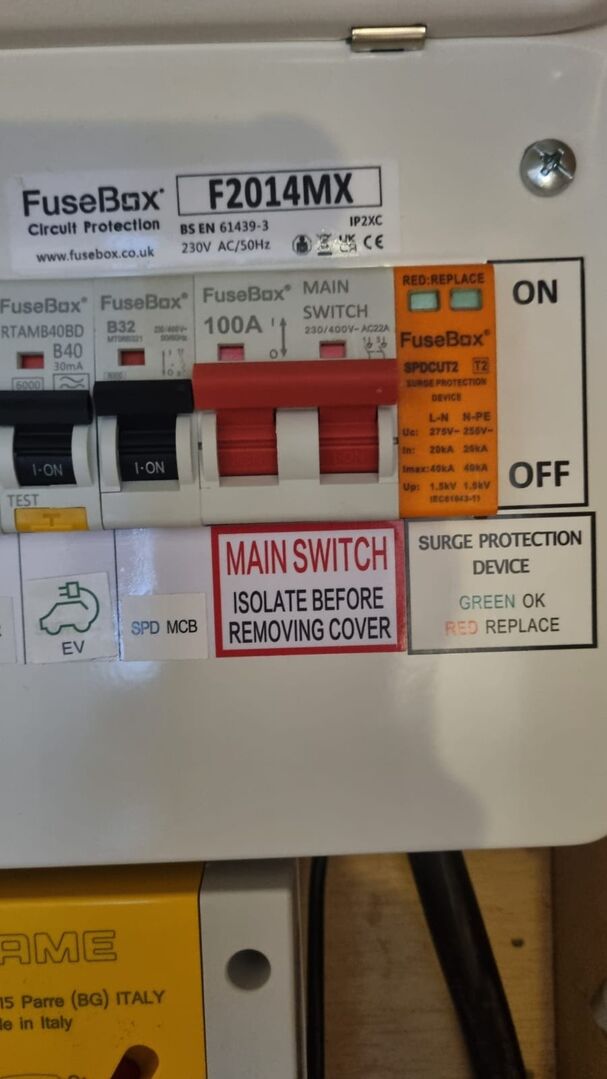
🖐️

25/10/2025 5:05 pm
I have an 80A main fuse, DNO upgraded me from 60A and unlooped me from another meter head when I applied for EV approval
I have 5kW of PV and 5kW off batteries and an export certificate for 5kW of PV
The EV charge has a loop round the supply feed and will load shed when the house is busy cooking, running ASHP, etc
I have ASHP on type B MCB with SPD also on this circuit
if it helps explain the setup to the poster i can upload photo of my setup

25/10/2025 5:46 pm
Yes, please feel free to share anything here with an electrician... friendly or otherwise!
Sticking to the same point numbers:
3: According to the labels, the SPD is indeed connected via an RCBO, rated at 32A.
Now look at the rating of the surge current which the SPD is prepared to accept - 20kA.
That's clearly not going to work!
The SPD needs to be connected to the outgoing points on the Main Switch, by as short and thick a pair of copper wires as can be accommodated (usually 10mm² or 16mm²).
Thus the surge is already starting to be quenched by the SPD before it travels along the live busbar, seeking to damage whatever else is available!
The propagation delay of electromagnetic radiation in copper is two-thirds the speed of light.
A surge caused by a nearby lightning strike will have a number of spikes, each one taking around 1μS to 5μS (a micro-second is one-millionth of a second),
with an interval of 500μS to 600μS between them.
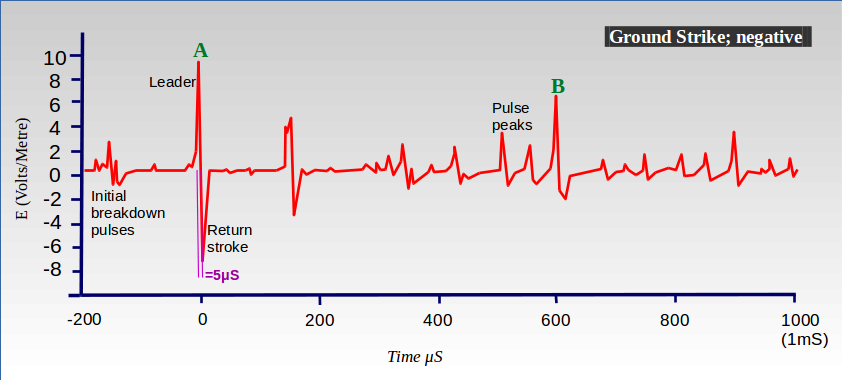
The SPD needs to pick up each of those spikes and send the energy to earth as fast as possible.
In 1μS the electrical wave-front can travel almost 200-metres through copper.
That means the SPD needs to respond in nano-seconds,
otherwise by the time it "sees" the surge it will already have traveled through every copper wire in your house!
One nS is 1-millionth of a μS. There are a thousand million nano-seconds in a second.
To send the energy to earth, that SPD also requires its own (dedicated) thick earth wire, leading to a copper stake outside.
There's no point trying to connect the SPD to the same earth wire which UKPN have provided via your Service Fuse.
That 10mm² wire is connected to the Neutral wire from the local substation.
That would be trying to send the surge spikes back to the same source which had just brought them into your house!
Us moderators here, such as myself and @majordennisbloodnok are approaching such issues from an understanding of the background physics.
That's different to an electrician.
They comply with regulations... simply ensuring that each wire gets connected to the right position.
That's great when everything is working fine, but not when there's a relatively massive fault to be handled!
6: EV charger.
What model of Ohme charger is that?
The later Ohme Home Pro chargers have an inbuilt O-PEN fault protection system.
They don't require a separate earth stake.
The earthing requirement is designed to 'fail safe' when there's a fault/break on the Neutral wire in the (underground) supply cable from the local substation.
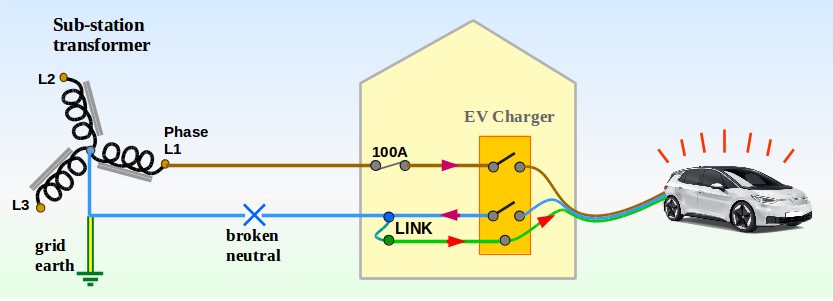
It prevents the bodywork of your car 'floating high' at around 100v or so.
The earth requirement has nothing to do with where a charger is sited, such as outside or in a garage.
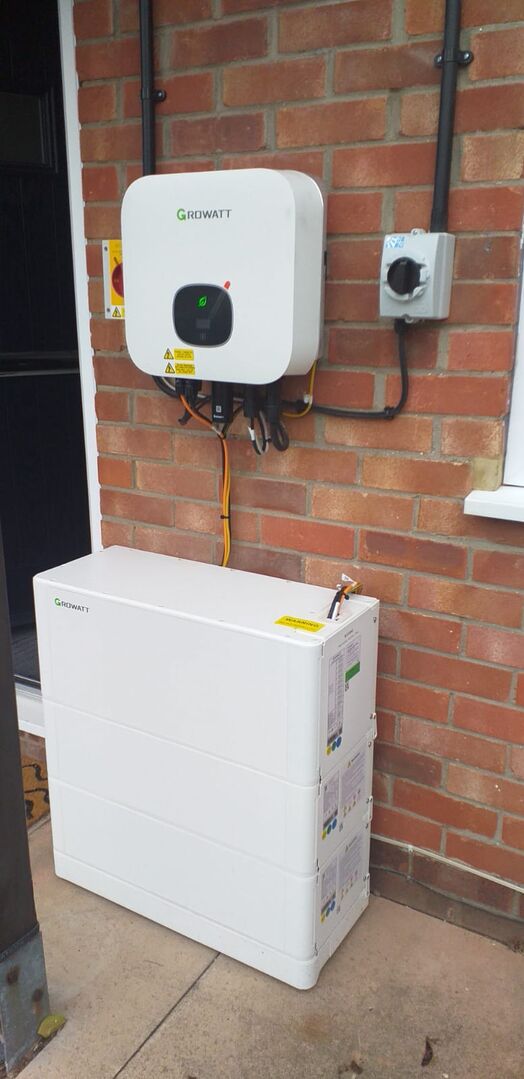
5: We still haven't seen the actual Growatt PV inverter.
Is it in that wooden box on the other side of the front door?
This post was modified 12 months ago 6 times by Transparent
Save energy... recycle electrons!
25/10/2025 6:30 pm
Point 4. update on the RCBO which supplies the EV charger.
The Fusebox RTAMB40BD is a Type-A, which means it can trip if there's a (small amount of) DC within the fault.
Strangely, it's a bi-directional RCBO.
You only expect to meet those when the charger is a V2G type, which can supply electricity back from the car to the house.
Point 2: the supply to/fro the solar inverter
The FuseBox RTA063230B supplying this circuit is not bi-directional, and should be.
If the small coil which causes the trip to operate is still energised with power from the battery or solar inverter during a power-cut then it will burn out.
The RCBO would continue to operate as an over-current trip rated at 32A,
but it wouldn't offer any safety protection for a human receiving an electric shock.
You wouldn't know that the earth-leakage protection was no longer working.
Save energy... recycle electrons!
Topic starter
25/10/2025 6:31 pm
@transparent Thanks very much.
I have shared the first detailed response with the electrician who did the jobs (fusebox and charger).
The charger is indeed a Ohme pro.
Here a couple of pics I took of the system before having the wooden cabinet built around it.
Would you advise calling another electrician for a system check?
Have a lovely rest of the weekend.
E
UPDATE: my electrician replied and said:
"Hi
Just reading through this electricians listed 'issues' with the installation.
The Surge Device with that consumer unit, with the MCB is a factory installed Surge and MCB, and installed as per manufacturer's instructions, so no issue there. The MCB adjacent to it should always be in the up/on position.
The RCBO for the EV charger Is intact and A Type RCBO as per regulatory requirements.
The Charger its self has intergrated PEN Fault system, which means its actually doesnt need an Earth stake required.
In terms of the requirements of solar and batteries installation and its individual regulations, I am not 100% sure on these, so would always recommend as ECS accredited installer for those, which your installers were."
He then offered to swing by tomorrow to have a look. Offer which I think I'll take for now.
If there are safety issues caused by the installer I will have to bring it to them but I guess they will try and dodge the bullet (while the electrician seems keen to take responsibility of his work!).
This post was modified 12 months ago by Eliuccio
25/10/2025 6:32 pm
Can I take the evening off,
and return to the Growatt stuff tomorrow? 😉
Save energy... recycle electrons!

Page 1 / 6
Next
SPONSORS

Degrees of Separation

Latest Posts
-

RE: Heat pump branding. Clever, contemporary… or a bit too much?
I think Heat Geek have done an amazing job on their bra...
By Tomtheheatingengineer , 5 hours ago
-
RE: HeatGeek vs Octopus surveys: puzzling disparity - any ideas why?
I have just had 3 heat loss surveys, one by heat geek o...
By David , 6 hours ago
-
RE: Heat Geek Zero Disrupt: Are We Sleepwalking Into Another Race to the Bottom?
I think that's the key question. After all inverter uni...
By Prunus , 7 hours ago
-
RE: battery storage without solar
As of October 1st they need specific qualifications to ...
By EtchedPixels , 8 hours ago
-
RE: How should the Boiler Upgrade Scheme be reformed?
A unit which uses water to transfer the heat/chill from...
By Temperature_Gradient , 8 hours ago
-
RE: Renewables & Heat Pumps in the News
With regards to the BUS grant raid, I gave it more thou...
By ASHP-BOBBA , 9 hours ago
-
RE: Why are ASHP installs so expensive?
The whole system seems to work on the basis of...
By ian33a , 9 hours ago
-
RE: Missing flow temperature in Heat Geek proposal
Good plan. If you can get half hourly meter readings a...
By JamesPa , 14 hours ago
-
RE: Heat Pumps Without Grants: Would You Have Installed One & Will You Now?
@editor Most certainly. The heat pump was an ideal s...
By Abernyte , 14 hours ago
-
Although regulations may well vary from country to coun...
By Majordennisbloodnok , 15 hours ago
-
RE: Does anyone have experience of a smart water meter?
Yep I caught our slow leak from a £100 bill rise 8)
By EtchedPixels , 15 hours ago
-
RE: Do You Need a Buffer Tank or Low Loss Header for Underfloor Heating in a Large Property?
@jamespa in some cases, failing the Turing test might b...
By GrahamF , 18 hours ago
-
RE: Passiv Smart Thermostat - Help & Forum Support
@energystoragetech The heat capacity of some...
By JamesPa , 20 hours ago
-
RE: tepeo ZEB UK Support & Info Thread
Sorry you are correct, I was remembering figures from t...
By JamesPa , 1 day ago


SPONSORS