

Notifications
Clear all
Joining the Renewable Heating Hub forums is completely free and only takes a minute. By registering you’ll be able to ask questions, join discussions, follow topics you’re interested in, bookmark useful threads and receive notifications when someone replies. Non-registered members also do not have access to our AI features. When choosing your username, please note that it cannot be changed later, so we recommend avoiding brand or product names. Before registering, please take a moment to read the Forum Rules & Terms of Use so we can keep the community helpful, respectful and informative for everyone. Thanks for joining!

25/09/2026 6:19 pm
Hi all,
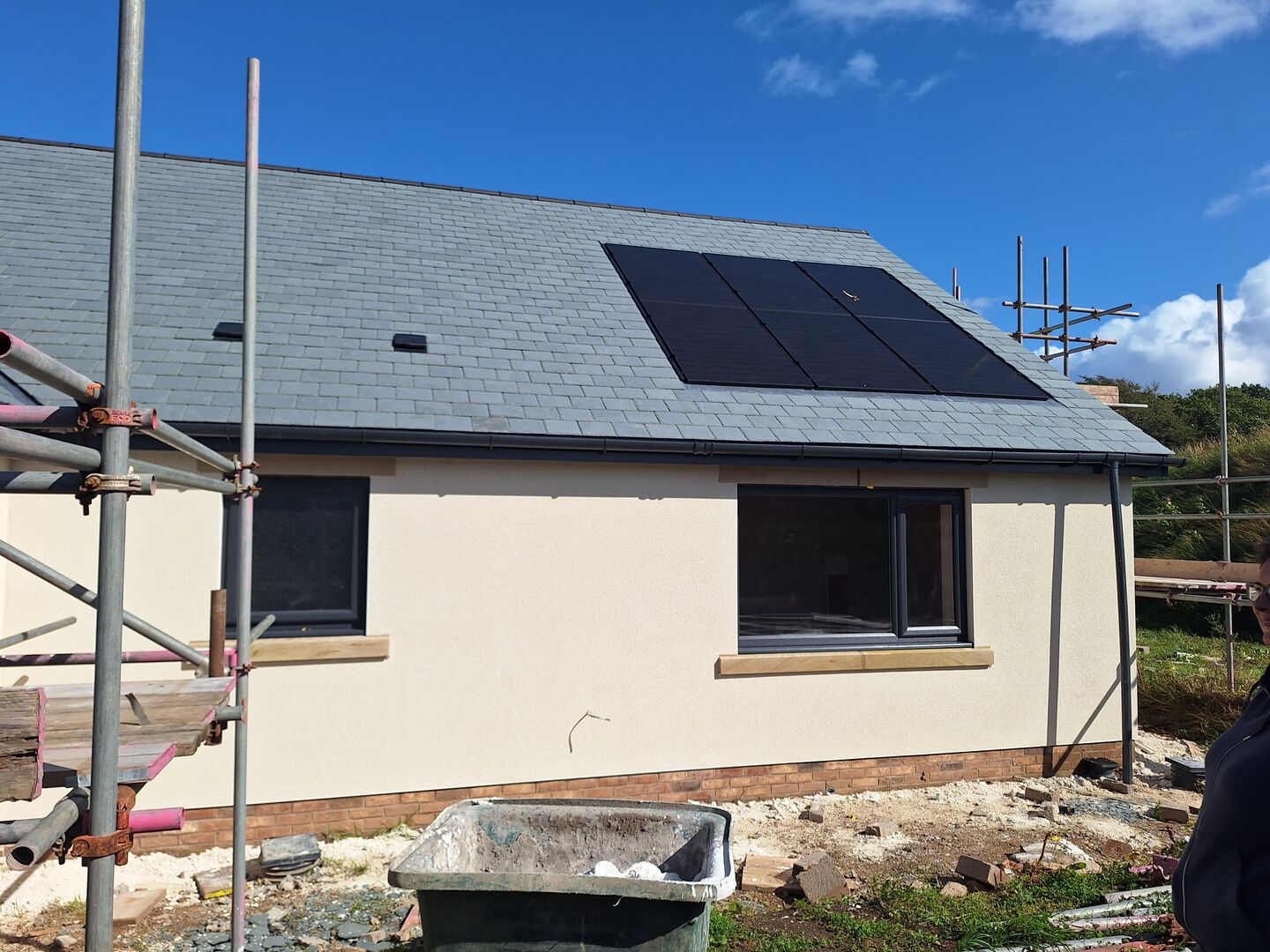
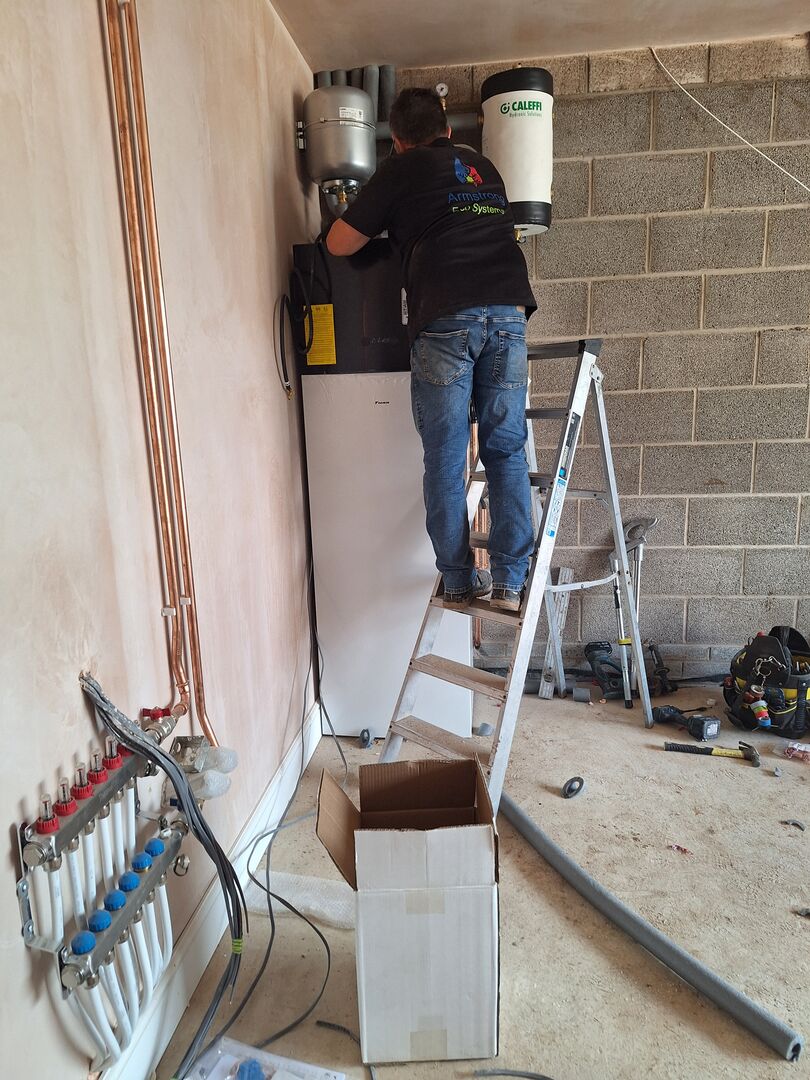
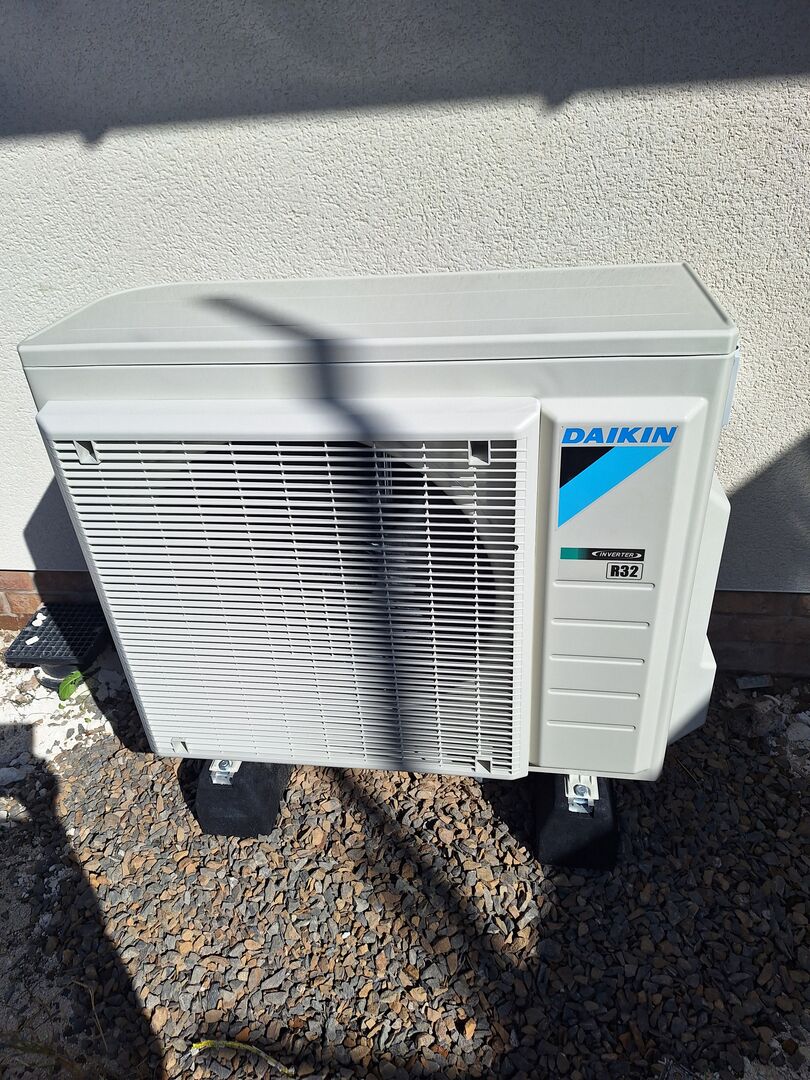
I'm new to this game having spent the last 25 years oil fired. In 2 weeks time I am moving to a brand new bungalow with a ASHP (Daikin) and solar PV (no battery). I don't have any technical details of the system and I'm wondering what to do about electricity tariff. My gut tells me I should just go for the best 12 month fixed rate deal and get used to the system for the next year, but looking at the Octopus website there appears to be some clever tariffs designed just for heat pumps and I've just come away confused.
Any advise would be much appreciated.

26/09/2026 8:22 am
In your position I would (and have) look at Octopus Cosy Fixed, slightly more expensive than the variable option but not tied in.
Run your heat pump 24/7 at your comfortable temperature (21?) dropping that down by a degree or two at the peak price hours and over night.
Solar will contribute a little if you are lucky over winter, but make sure you have your export paperwork set up asap ready for summer when you will likely heat your water for very little.
Oil now a pound a litre so you will notice quite a difference in spend!!

26/09/2026 9:08 am
@gz00 i have used cosy tariff for past year and found it works well for me.
i have the temp set at 20 all day, we like it cooler as we have UFH too.
during the cosy cheap times I boost the temp to 21. I have hush mode set too which makes the HP quieter
during peak rate 4p-7p i set temp to 19 so it doesnt come on.
i note you have no battery. I tried that and found during the summer the PV supported the house, but in late Autumn and Winter there was not enough power. Adding a battery equal to the size of your PV, or at least 50%, allows you to time shift the cheap period for longer.
I monitor my Octopus bill in detail. I am averaging 98% use at the cheap rate.

26/09/2026 9:30 am
@agentgeorge I regard it as a failure if I wander out of the cheapest Cosy 8 hours per day; normally speaking, the only usage outside of those hours is minimal and might amount to perhaps ~500 Wh on a bad day due to a Tesla control app idiosyncrasy. With 27 kWh of Powerwall, I find the Cosy tariff works well for us as there is always some reserve as we approach the next 2 or 3 hour cheapest slot. We have 8.1 kWp of less than ideally orientated solar panels but even a few kWh on a winter day is much appreciated.
Thought….. With the upward trend in energy prices, are my panels paying for themselves more quickly than they were several years ago?🤨Regards, Toodles.
Toodles, heats his home with cold draughts and cooks food with magnets.

26/09/2026 9:55 am
@toodles i have found the limit on the inverter causes me to use grid power if we cook at 6pm in the winter. Summer we get 2.5kW off the battery and 5kW off the PV so are covered. I looked at adding a larger battery, but as this only pays for itself during the low PV periods, it would take decades to pay back.

26/09/2026 9:55 am
@toodles Out of interest, have you managed to get to zero cost (or better) power bills over the 12 mths?
26/09/2026 10:16 am
@gz00
Heating, very very important to run on weather compensation and low as possible flow temp. Someone on the forum whom has a Daikin will help you dial that in, reach out once you are moved in.
from the pictures you only have a few panels, useful, but don’t expect to get much out of it in the winter. Unfortunately OE cosy has just put their fixed tariff prices up a couple of days ago. Given this change, Id be more inclined to stay with OE cosy variable, as there’s now about 5P per unit differential.
Run the house over the winter and see how it behaves, but personally, I wouldn’t consider running a heat pump without a home battery (but a low cost one) as it gives you access to 24/7 off peak, in the case of OE cosy, that’s half price power. But as it’s a new build it might be super efficient and you don’t use enough power to justify it, get through one winter before making the evaluation.
it’s also very important to schedule your hot water cycle to the time corresponding to one of the cosy off peak periods, and to lower the target tank temperature to as low as possible (I keep mine at 45C) and unless you have very poor health disable the legionella cycle or no more than once per month if you are cautious.
This post was modified 3 weeks ago by Papahuhu

26/09/2026 10:17 am
Have you considered adding a battery?
Like others suggest, I would try Octopus Cosy for the first winter to get a baseline for your usage and average unit cost of electricity. You have 8h of cheap rate per day, split over three sessions. you can try to load shift your usage as much as possible into these cheaper windows. Increase the heating a little in the cheap periods and turn down during the peak rate period.
Once you have data for your first winter, it would be easy to evaluate if a battery is worth it for you. You will know the size of battery you would need to allow you to run the house completely on Cosy cheap rate, recharging 3 times per day. You will also know how much per kWh you can save, reducing your first years average price per kWh down to the Cosy cheap rate price.
We have a Tesla PW3 (13.5kWh), solar and a heat pump, which is just about big enough to cover our usage of 45-50kWh on the very coldest winter days.
The battery combined with 7.2kWp of solar affords us a net zero bill - we generate slightly more than we use, and our bill is very slightly negative over the year. Unless you have a huge solar array, you will only be able to achieve this with a battery which will allow you to switch to a more lucrative tariff in summer which allows you to earn enough from summer export to cover your winter usage.
Regardless of the above, your system should be significantly cheaper to run than oil.
This post was modified 3 weeks ago by Old_Scientist
Samsung 12kW gen6 ASHP with 50L volumiser and large radiators. 7.2kWp solar (south facing), Tesla PW3 (13.5kW). Net Zero

26/09/2026 10:20 am
@papahuhu If it weren’t for that dratted ‘standing charge’, we would be in negative billing all summer long and for some of the shoulder months too. We still build up some credit due to exporting more kWh’s than those standing charges total but it does grate with me! As to ‘over the 12 months’, err, no, were there space for another dozen panels…. Regards, Toodles.
Toodles, heats his home with cold draughts and cooks food with magnets.
26/09/2026 10:35 am
@agentgeorge I cook in time for lunch @ 13:00 (one of the many advantages of being retired and enjoying a ‘proper meal’ during the daytime). With us being all electrical and the gas meter long banished, we are set up with an induction hob, air fryer, 2 combination microwave cookers and my enjoyment of preparing and cooking daily for the two of us. It is very satisfying to cook 4 litres of meat and vegetable soup in our cast iron pot on the hob (I like batch cooking) then note that the whole caboodle cooked for less than half a kWh of solar power! Our Tesla system (27 kWh of Powerwall connected to the Gateway plus the solar panels) enables us to draw 10 kW so no problems there. Regards, Toodles.
Toodles, heats his home with cold draughts and cooks food with magnets.
26/09/2026 10:52 am
@toodlesoodles I’m convinced if you were prepared to modify your usage characteristics and jiggle your tariffs you’d manage it, I bet there’s £500 of value over the year you are not extracting. Of course, saving £500 has to be balanced against convenience and quality of life.
Selfishly, I don’t object to the standing charge, it favours high users more than low users or costs would be added to the unit rate instead and network costs need to come from somewhere.
26/09/2026 11:01 am
@papahuhu As you say, the work required to extract that £500 extra involves a great deal of time and effort and with my poor sight, extremely irksome. The Tesla system doesn’t lend itself to best use of IOF type exercises I found and unless greater control were available with monthly subscription to the NetZero app, I’ll ‘stick’ for the present. Regards, Toodles.
This post was modified 3 weeks ago by Toodles
Toodles, heats his home with cold draughts and cooks food with magnets.

SPONSORS

Degrees of Separation

Latest Posts
-

RE: Heat pump branding. Clever, contemporary… or a bit too much?
I think Heat Geek have done an amazing job on their bra...
By Tomtheheatingengineer , 8 minutes ago
-
RE: HeatGeek vs Octopus surveys: puzzling disparity - any ideas why?
I have just had 3 heat loss surveys, one by heat geek o...
By David , 26 minutes ago
-
RE: Heat Geek Zero Disrupt: Are We Sleepwalking Into Another Race to the Bottom?
I think that's the key question. After all inverter uni...
By Prunus , 2 hours ago
-
RE: battery storage without solar
As of October 1st they need specific qualifications to ...
By EtchedPixels , 3 hours ago
-
RE: How should the Boiler Upgrade Scheme be reformed?
A unit which uses water to transfer the heat/chill from...
By Temperature_Gradient , 3 hours ago
-
RE: Renewables & Heat Pumps in the News
With regards to the BUS grant raid, I gave it more thou...
By ASHP-BOBBA , 3 hours ago
-
RE: Why are ASHP installs so expensive?
The whole system seems to work on the basis of...
By ian33a , 4 hours ago
-
RE: Missing flow temperature in Heat Geek proposal
Good plan. If you can get half hourly meter readings a...
By JamesPa , 9 hours ago
-
RE: Heat Pumps Without Grants: Would You Have Installed One & Will You Now?
@editor Most certainly. The heat pump was an ideal s...
By Abernyte , 9 hours ago
-
Although regulations may well vary from country to coun...
By Majordennisbloodnok , 10 hours ago
-
RE: Does anyone have experience of a smart water meter?
Yep I caught our slow leak from a £100 bill rise 8)
By EtchedPixels , 10 hours ago
-
RE: Do You Need a Buffer Tank or Low Loss Header for Underfloor Heating in a Large Property?
@jamespa in some cases, failing the Turing test might b...
By GrahamF , 13 hours ago
-
RE: Passiv Smart Thermostat - Help & Forum Support
@energystoragetech The heat capacity of some...
By JamesPa , 15 hours ago
-
RE: tepeo ZEB UK Support & Info Thread
Sorry you are correct, I was remembering figures from t...
By JamesPa , 24 hours ago




SPONSORS

