Joining the Renewable Heating Hub forums is completely free and only takes a minute. By registering you’ll be able to ask questions, join discussions, follow topics you’re interested in, bookmark useful threads and receive notifications when someone replies. Non-registered members also do not have access to our AI features. When choosing your username, please note that it cannot be changed later, so we recommend avoiding brand or product names. Before registering, please take a moment to read the Forum Rules & Terms of Use so we can keep the community helpful, respectful and informative for everyone. Thanks for joining!
For two weeks I've been trying to get our electrician out to install our smart meter, and I'm losing patience.
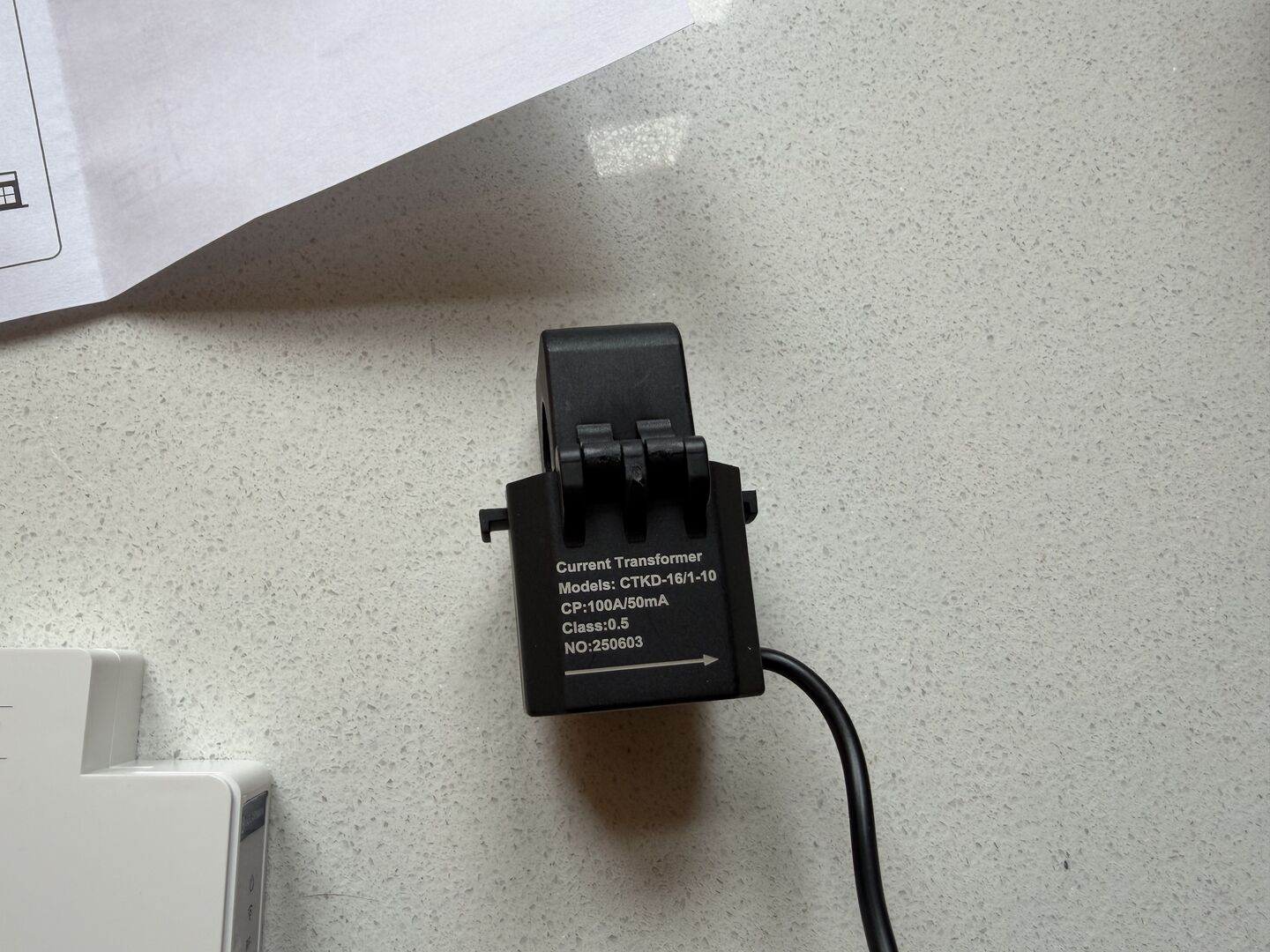
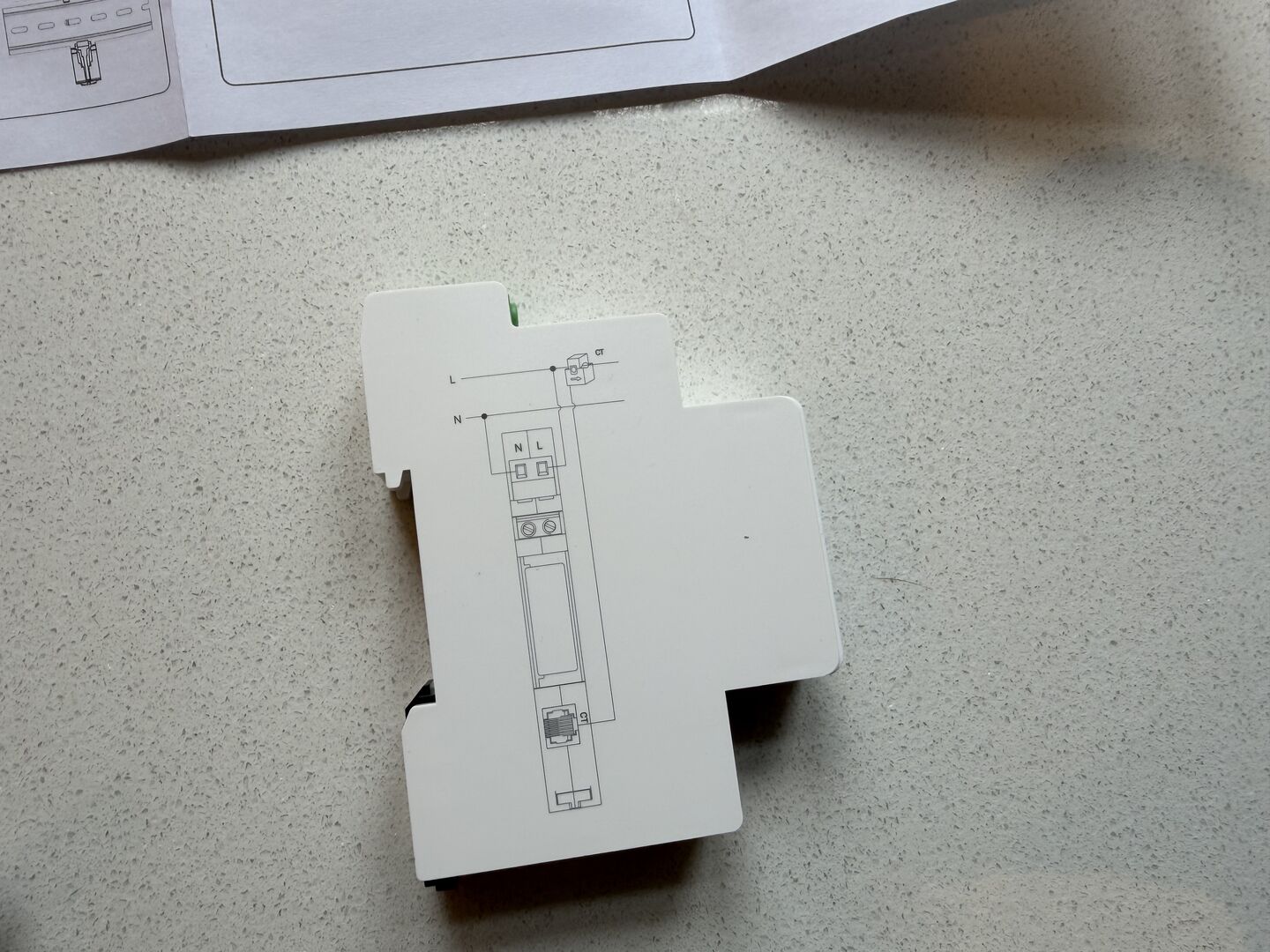
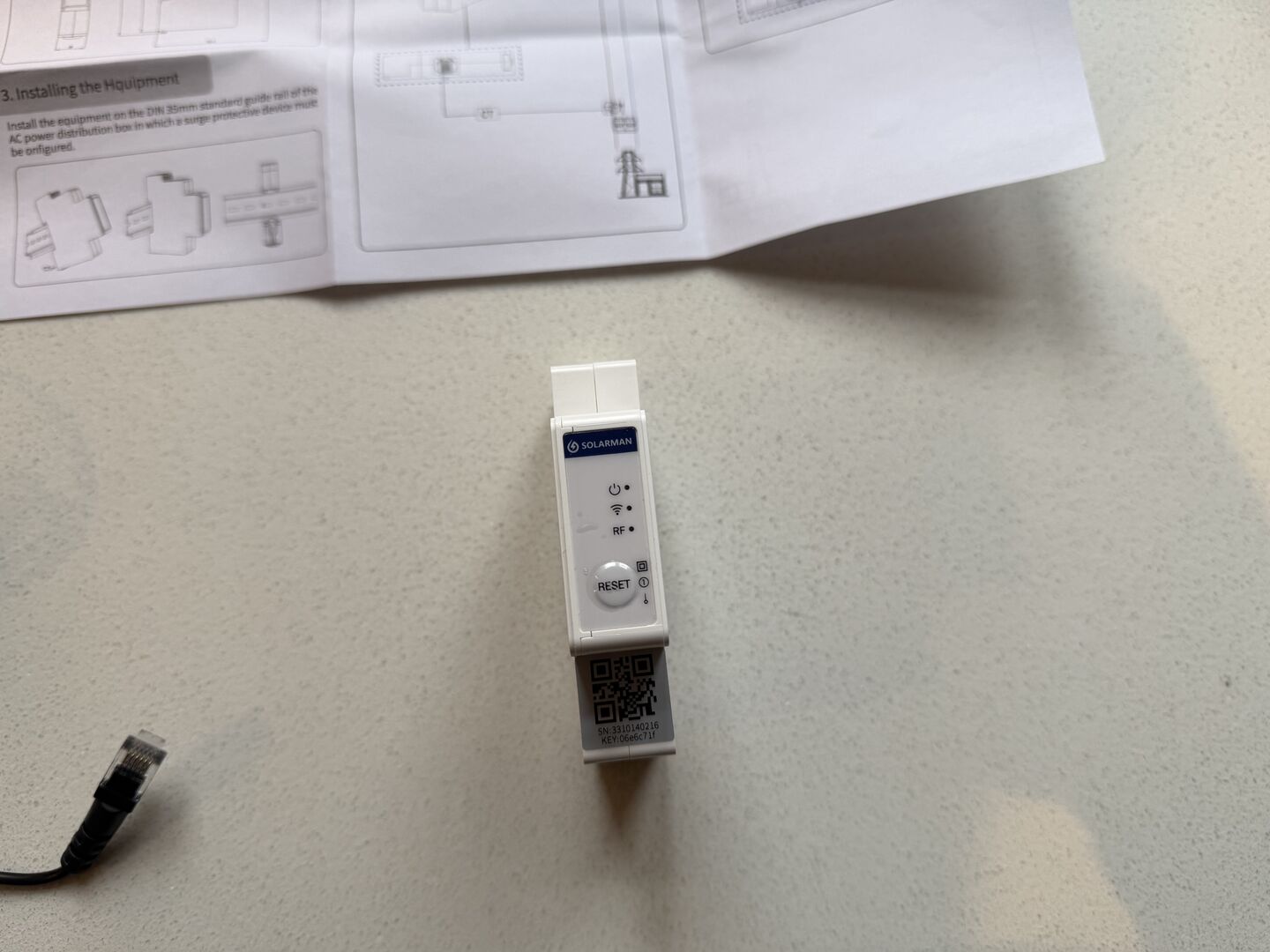
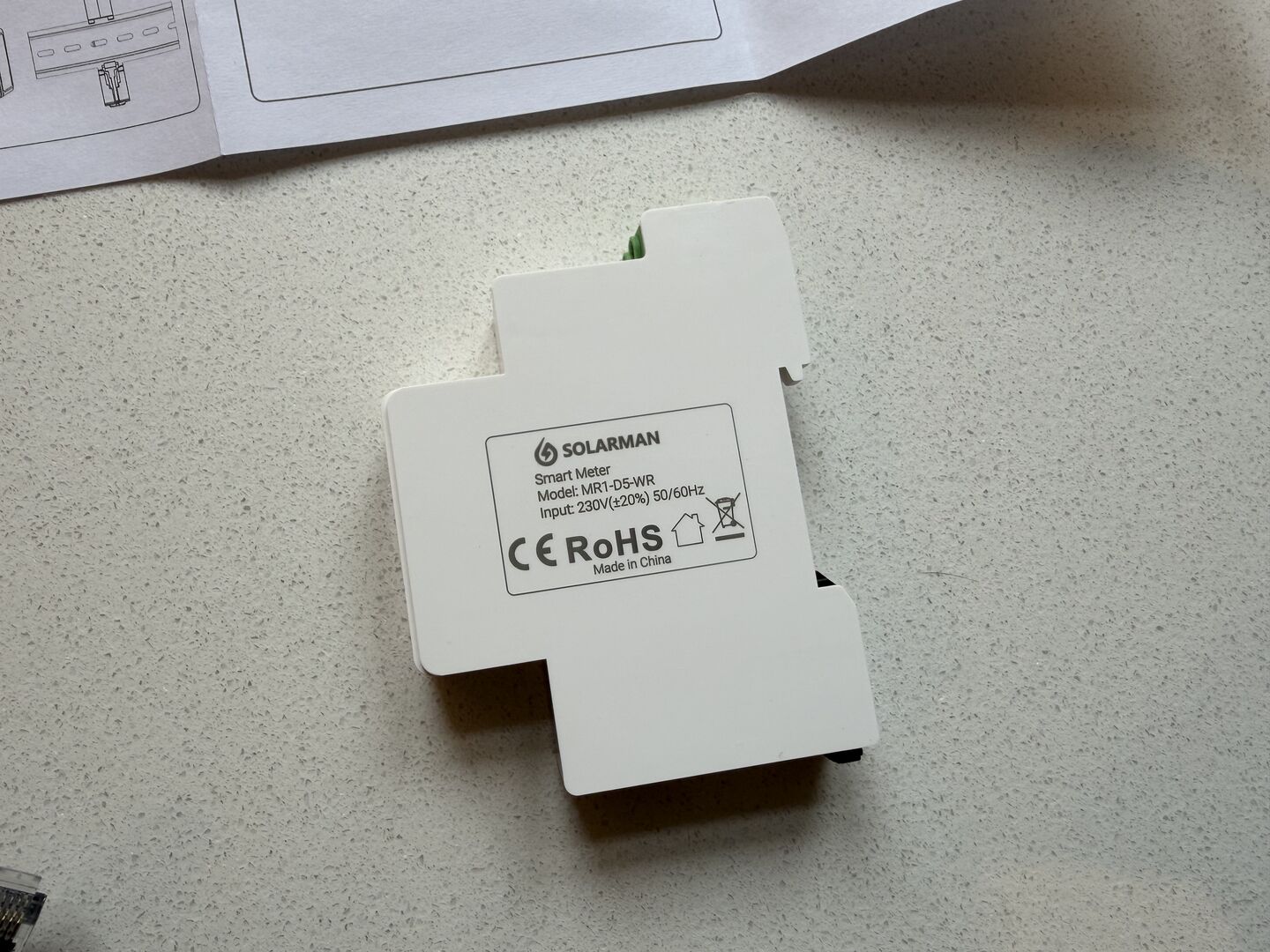
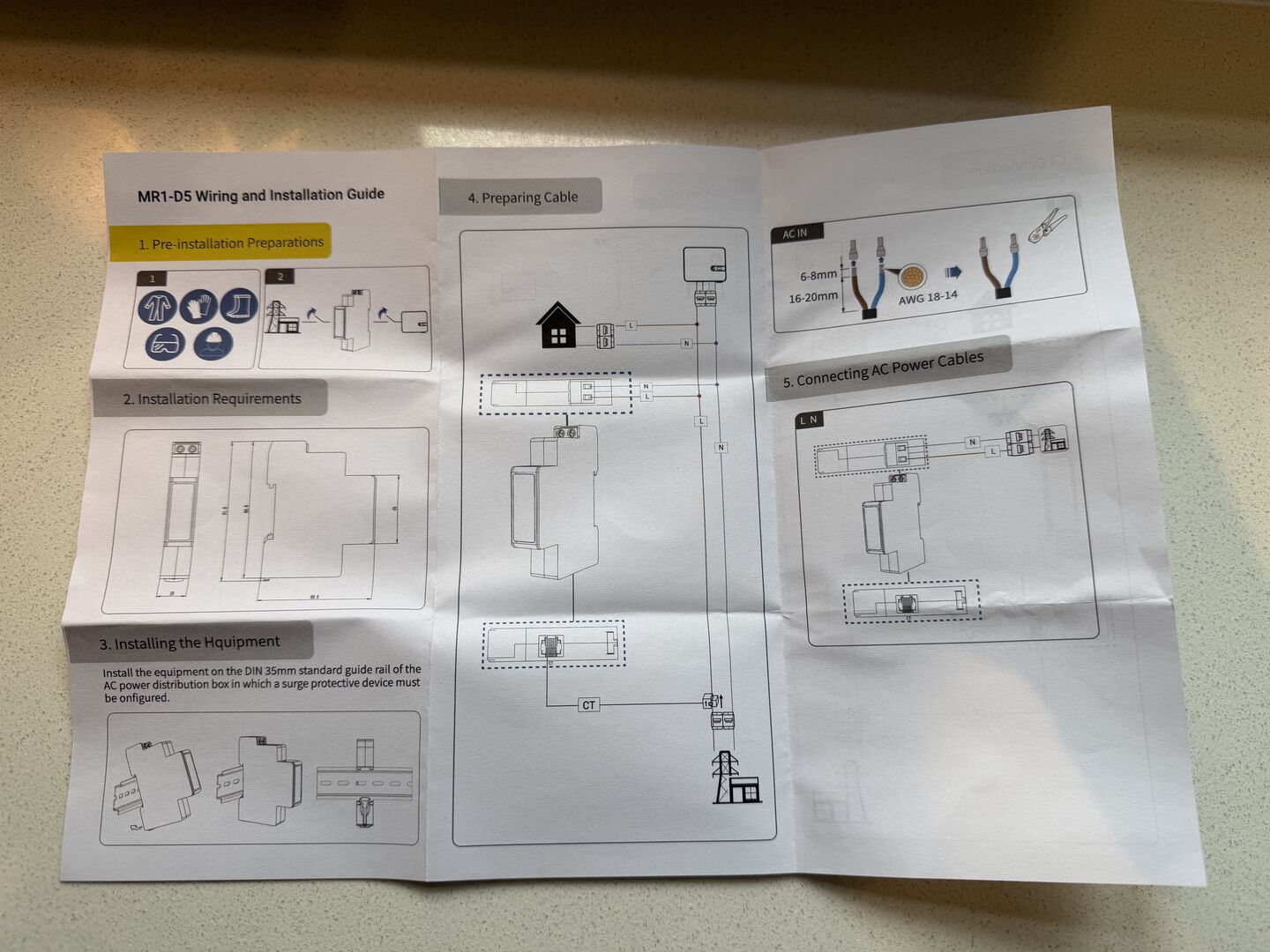
So I wanted to sanity check something before I go any further. I’m looking at installing a smart meter into our distribution board in the garage to allow the Indevolt battery to charge from excess solar. The unit in question is the Solarman Smart Meter MR1-D5-WR (see photos).
The question is, how viable (and allowable) is this as a DIY install? I’m comfortable working methodically, but equally conscious this is edging into territory where I don’t want to create a bigger issue, either from a safety or compliance perspective.
The other sticking point is identifying the AC PV cable feeding back into the house. It’s not immediately obvious which is which in the board. Is there a safe and reliable way to test and confirm this, or is this firmly a "don’t guess, get a pro" situation?
I have read on some forums to wire it to a standard plug top with a 2a fuse and plug it into a standard socket if close by. You’re not actually wiring it into the consumer unit and it saves opening the consumer unit if it needs resetting.
Connecting that just needs live and neutral to any socket (or light). I wired my Huawei CT clamp meter to a lamp base.
For our inverter CT clamp, some rules may have been broken with the flexible power cable, as apparently it cannot go into consumer units. The main considerations were to not go into anything too new (so not in the shiny new CU) but to be protected by an appropriate MCB..
Of course this means that electrical home condition reports led to random comments like "too many cables around" (we have 4 CT clamps at the moment..).
8kW Solis S6-EH1P8K-L-PLUS hybrid inverter; G99: 8kW export; 16kWh Seplos Fogstar battery; Ohme Home Pro EV charger; Vaillant Arotherm Pro 7kW; 100Amp head, HA lab on mini PC
For two weeks I've been trying to get our electrician out to install our smart meter, and I'm losing patience.
So I wanted to sanity check something before I go any further. I’m looking at installing a smart meter into our distribution board in the garage to allow the Indevolt battery to charge from excess solar. The unit in question is the Solarman Smart Meter MR1-D5-WR (see photos).
The question is, how viable (and allowable) is this as a DIY install? I’m comfortable working methodically, but equally conscious this is edging into territory where I don’t want to create a bigger issue, either from a safety or compliance perspective.
The other sticking point is identifying the AC PV cable feeding back into the house. It’s not immediately obvious which is which in the board. Is there a safe and reliable way to test and confirm this, or is this firmly a "don’t guess, get a pro" situation?
Thoughts?
Looks like it needs power to the two terminals at the top (,so it should go in a box for safety) then the CT clamp around one of the wires between the electric meter and the cu, or if it's to measure solar around either the live or neutral coming out of the inverter wherever is convenient.
So you can put it in a box and connect it with a cable that has a plug on the end plugged into a socket. That just leaves the CT clamp. Easy if you are measuring grid draw/return because the live and neutral are separated, more difficult if it's the PV you need to measure because they are probably not. You may need a breakout box or you may be able to tuck it in the back of the isolating switch (be careful!). Alternatively it might be wired in single core from isolator to cu as mine (conveniently) was. Can't tell without being there or close up photos.
Thanks for the advice guys. If I get some time this weekend I'll wire it up via the plug and house it safely in a box, all while trying not to electrocute myself ⚡️🤣
I followed the cables this afternoon and have a good idea as to which the AC cable post Solaredge inverter is, so will clamp on there.
I followed the cables this afternoon and have a good idea as to which the AC cable post Solaredge inverter is, so will clamp on there.
Dont forget it must go round either live or neutral but NOT both, otherwise the magnetic fields on which the measurement depends cancel each other out.
4kW peak of solar PV since 2011; EV and a 1930s house which has been partially renovated to improve its efficiency. 7kW Vaillant heat pump.
The clamp needs to go around the live cable (usually dark red, if tails cable, the second layer is grey), as in the instructions. Apparently it is best to install the clamp before powering the meter.
8kW Solis S6-EH1P8K-L-PLUS hybrid inverter; G99: 8kW export; 16kWh Seplos Fogstar battery; Ohme Home Pro EV charger; Vaillant Arotherm Pro 7kW; 100Amp head, HA lab on mini PC
The clamp needs to go around the live cable (usually dark red, if tails cable, the second layer is grey), as in the instructions. Apparently it is best to install the clamp before powering the meter.
Surely there is the same current in both live and neutral unless there is an earth leakage!
It will need the opposite orientation on the neutral to the one it needs on the live, but I think either will work.
4kW peak of solar PV since 2011; EV and a 1930s house which has been partially renovated to improve its efficiency. 7kW Vaillant heat pump.
The clamp needs to go around the live cable (usually dark red, if tails cable, the second layer is grey), as in the instructions.
Eh?
1: If this is being wired up within an enclosure with an integral DIN rail, then it isn't a Meter Tail cable.
2: Live is brown, not red or dark-red. For a double-insulated cable, the inner colour is still brown.
@editor - since that 'smart' meter uses RF frequencies to communicate, the enclosure needs to be plastic, not metal, of course.
There is no Standard which defines the direction the arrow on the CT should point. You need to read the instructions.
Sometimes it denotes the normal direction of current flow (from the grid and towards the house), whilst other manufacturers state that the arrow should point to the grid.
The clamp needs to go around the live cable (usually dark red, if tails cable, the second layer is grey), as in the instructions.
Eh?
1: If this is being wired up within an enclosure with an integral DIN rail, then it isn't a Meter Tail cable.
2: Live is brown, not red or dark-red. For a double-insulated cable, the inner colour is still brown.
Yes, live has been brown for a while. I still have quite a few pre 2006 circuits where it was red.
8kW Solis S6-EH1P8K-L-PLUS hybrid inverter; G99: 8kW export; 16kWh Seplos Fogstar battery; Ohme Home Pro EV charger; Vaillant Arotherm Pro 7kW; 100Amp head, HA lab on mini PC
The clamp needs to go around the live cable (usually dark red, if tails cable, the second layer is grey), as in the instructions. Apparently it is best to install the clamp before powering the meter.
Surely there is the same current in both live and neutral unless there is an earth leakage!
It will need the opposite orientation on the neutral to the one it needs on the live, but I think either will work.
I think you may be right. 🙂
Still, instructions of CTs are that they should be installed around the live condutor. Probably because, as you stated, a leak to earth would impact the reading of the CT installed around the neutral.
8kW Solis S6-EH1P8K-L-PLUS hybrid inverter; G99: 8kW export; 16kWh Seplos Fogstar battery; Ohme Home Pro EV charger; Vaillant Arotherm Pro 7kW; 100Amp head, HA lab on mini PC