
Notifications
Clear all
Joining the Renewable Heating Hub forums is completely free and only takes a minute. By registering you’ll be able to ask questions, join discussions, follow topics you’re interested in, bookmark useful threads and receive notifications when someone replies. When choosing your username, please note that it cannot be changed later, so we recommend avoiding brand or product names. Before registering, please take a moment to read the Forum Rules & Terms of Use so we can keep the community helpful, respectful and informative for everyone. Thanks for joining!

Topic starter
16/02/2026 12:55 am
My queston is really aimed at @transparent as he seems to be a fount of knowledge in all things electrical but I thought it my be of interest to others as well.
About 6 weeks ago I had a Solis inverter installed and connected a 16kWh Fogstar battery. The Solis inverter was set up to discharge to 20% SOC with the 20% figure taken from the battery BMS. When the battery reports it is at 20%SOC the inverter stops drawing power from the battery, but that 20% changable and I have been trying lower %'s.
Reading online a LiFePo4 battery cell is at about 3.1V when it is at about 20% SOC. The Fogstar battery gives voltages for 8 cells and is reporting about 13% SOC when it shows the cells around 3.1V. I have checked the overall V of the whole pack with a standard volt meter and it gives the same reading as the display on the battery.
I don't want to drain the battery too low every day and degrade it quicker than necessary but I want to use as much of the battery as is sensible as well. This leaves me wondering if it is low voltage that damages the cells or a low SOC, which figure should I be paying attention too, volts or SOC or something else?
Thanks.

16/02/2026 9:15 am
Clearly one for @transparent but is your BMS Seplos? I would not expect much help from Solis.
Was Fogstar aware you were going to use a Solis? If so, are they not helping?
This post was modified 4 weeks ago by Batpred
8kW Solis S6-EH1P8K-L-PLUS hybrid inverter; G99: 8kw export; 16kWh Seplos Fogstar battery; Ohme Home Pro EV charger; 100Amp head, HA lab on mini PC

16/02/2026 11:23 am
The answer to this problem is easy if the LiFePO₄ are 'at rest' with no current passing in either direction.
Under those conditions there will be an alignment between SoC and cell voltage.
It won't matter which parameter you are measuring because either gives you adequate information to prevent cells being damaged.
However:
a: it is difficult to obtain an SoC reading with sufficient accuracy.
The 'correct' way to achieve this is to use coulomb-counting (a coulomb is the SI unit for electrical charge).
The SoC measuring device reads voltage and current passing in/out of a battery, allows for system losses, and can give you an SoC measurement within 5% if you're prepared to pay enough.
Batrium (Australia) offer a ShuntMon device which does accurate coulomb counting.
It's an optional add-on to their WatchMon battery Monitoring system, and won't work in isolation.
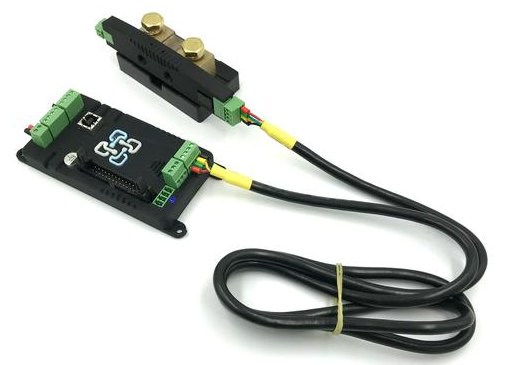
Nor will ShuntMon work with any other shunt that you install.
Batrium measure a number of characteristics for each shunt they buy-in.
Those parameters are programmed into the micro-controller in their ShuntMon electronics, making them a 'matched pair'.
b: Neither the BMS nor the inverter can adequately measure battery voltage whilst there is current passing between them.
During charge operation, the inverter's output voltage must be higher than that of the battery in order for current to flow.
When discharging, the inverter will have a lower voltage than that of the battery.
The thinner the connecting cables, the greater will be the voltage difference for a given current.
As I write this, the input from my rooftop solar arrays is almost the same as the demands being made by the home.
Hardly any current is flowing along the cables connected to the batteries.
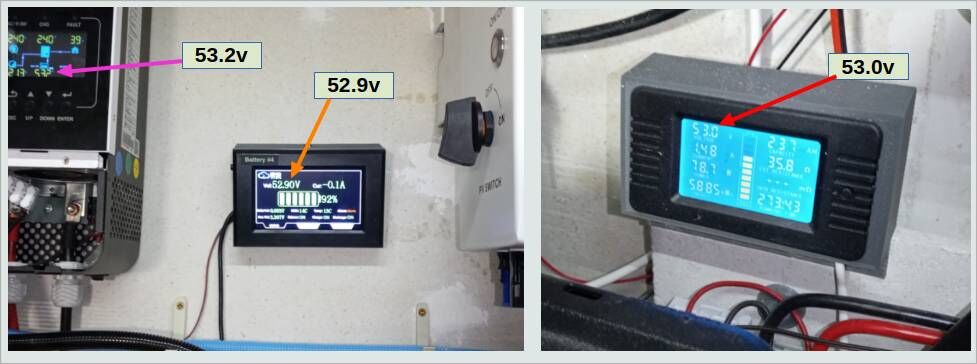
The BMS screen shows 52.9v and thinks this equates to 92% SoC. The SoC calculation is wrong!
The cheap dedicated SoC shunt system on my battery combiner board says 53.0v and gives a more accurate SoC bar-graph around 60%.
For comparison the display on a solar-inverter says the voltage on its connection cables is 53.2v.
In practice I only ever use battery voltage to tell me the SoC, and it gives me sufficient information to avoid cell damage.
Here's a copy of the Voltage Scale I have on the wall in the plant-room.
The left column is cell voltage, and the right is battery voltage, based on 16-cells.

Save energy... recycle electrons!

16/02/2026 11:36 am
@transparent Shame that understanding the answer isn't as easy as you find it to explain 🤣
Retrofitted 11.2kw Mitsubishi Ecodan to new radiators commissioned November 2021.
14 x 500w Monocrystalline solar panels.
2 ESS Smile G3 10.1 batteries.
ESS Smile G3 5kw inverter.
16/02/2026 11:47 am
The conclusion I'm coming to is that it's presumptuous of an inverter to think it can display SoC with sufficient accuracy,
and that it shouldn't be relying on a BMS to deliver that data.
Expecting a home-owner to then use that SoC as the basis for setting charge/discharge criteria is poor strategy.
Save energy... recycle electrons!
16/02/2026 12:36 pm
The Solis must do it in the same imperfect way as other inverters..🙂
But would it be using the soc it calculates or what the BMS is telling it?
This is a question the op is unlikely to get answered. Perhaps at some point we have someone with a battery from the compatibility list that can get an answer from Solis
8kW Solis S6-EH1P8K-L-PLUS hybrid inverter; G99: 8kw export; 16kWh Seplos Fogstar battery; Ohme Home Pro EV charger; 100Amp head, HA lab on mini PC

16/02/2026 12:45 pm
FWIW the way the SoC of the (lead acid) leisure batteries on my narrowboat is determined (by a meter fitted for the purpose) is as follows:
- A low but finite value resistor is placed between the battery and the load/charger
- A meter measures the voltage across the resistor, from which, knowing the resistance, it can infer the current (+ for charge/- for discharge)
- The meter then integrates the current over time to give a SoC (well actually a state of discharge) in Ah.
- When the integrated value reaches zero, it counts only discharge until the value falls below zero again (so the value displayed is always zero or negative)
Pretty naff TBH, but better than nothing!
4kW peak of solar PV since 2011; EV and a 1930s house which has been partially renovated to improve its efficiency. 7kW Vaillant heat pump.
16/02/2026 1:35 pm
To answer the original question, the net result of the amps hours in to and amps hours out out of the battery determines the state of charge.
I don't have a home battery system but I am currently installing a LiFePO4 battery on a boat and have been reading up on this. The general view seems to be (for boats, but I can't see why the same thing doesn't apply to home systems at least in principle):
1. BMS SoC percentometers are a bit of a gimmick. For one thing, a typical BMS doesn't record small currents so they get ignored.
2. Resting voltage has some utility, but is still crude, plus you need to rest your battery.
3. A shunt on the negative side next to the battery with nothing else in between is the way to go, because it can measure amps, and with time, amp hours. I think I read an authoritative source (not manufacturer) saying that these are about 5% accurate. I can live with that. Adequate shunt kits (at least for boats) are not that expensive, I have a 12V Renogy one that cost around £50. I chose it because it has a large visual display of state of charge (in Ah) consisting of a battery that fills up which can be seen at a glance from a distance.
This post was modified 4 weeks ago by cathodeRay
Midea 14kW (for now...) ASHP heating both building and DHW
Topic starter
16/02/2026 1:36 pm
The answer to this problem is easy if the LiFePO₄ are 'at rest' with no current passing in either direction.
Under those conditions there will be an alignment between SoC and cell voltage.
Thanks for the detailed response Transparent but I don't think I have explain things very well.
The volts shown on screen that is on the battery and the SOC, also on the battery, don't align with all the tables I can find online. I'm checking it when the battery is either fully charged or stopped charging.
When the battery is reporting it is 13% SOC it is also reporting the cells are around 3.1A
How long does it need to be resting before the figures are reasonably accurate? I has been half an hour or more with the battery being at 13% when I have been checking the numbers and they don't change by more than a mV or 2
I'm wondering if Fogstar are displaying a lower number for the SOC on the screen to preserve the battery. They do claim an 8000 cycle life.
I'm not to concerned about getting 8000 cycles from it, it'll be very old tech by the time it gets that far, and am happy to discharge it lower but I want to check that the cell voltage is an OK way to measure how low the battery is being discharged and letting it discharge to 3V isn't a silly thing to do as the SOC is showing about 8 or 9% by that point
The conclusion I'm coming to is that it's presumptuous of an inverter to think it can display SoC with sufficient accuracy,
and that it shouldn't be relying on a BMS to deliver that data.
The inverter is getting it's info from the battery.
16/02/2026 2:05 pm
@cathoderay I have had a lipo4 set up on my boat with a shunt on the negative for some years. It is all Victron, it has to be as the BMS is external to their battery. However I find, at times, in the winter layup that the low voltage alarm goes off while the SOC is still (apparently) high. It seems the BMV 702 monitor does not register small currents. So I set the lo volt alarm fairly high so I have time to detect it and recharge before the battery is damaged. I had hoped the 100W solar would keep it charged in winter but I find I cannot rely on it, yet from April to October it keeps the compressor fridge running 24/7 keeping the beer cool!
Daikin 6Kw ASHP.
MG4 EV, Solis 8KW inverter, 32KWh battery
1926 Semi with loft and wall cavity insulation, all radiator.
16/02/2026 2:45 pm
The volts shown on screen that is on the battery and the SOC, also on the battery, don't align with all the tables I can find online. I'm checking it when the battery is either fully charged or stopped charging.
When the battery is reporting it is 13% SOC it is also reporting the cells are around 3.1A
OK.
But an SoC of 13% is reasonable for cell voltages around 3.1v
Your BMS is reporting a more accurate result than the one I showed in my earlier photo.
So, based on that observation, we'd need to know a lot more about the 'tables that you've found online',
what experimentation was done to create them, and who is publishing them.
Save energy... recycle electrons!
16/02/2026 2:47 pm
It is all Victron, it has to be as the BMS is external to their battery.
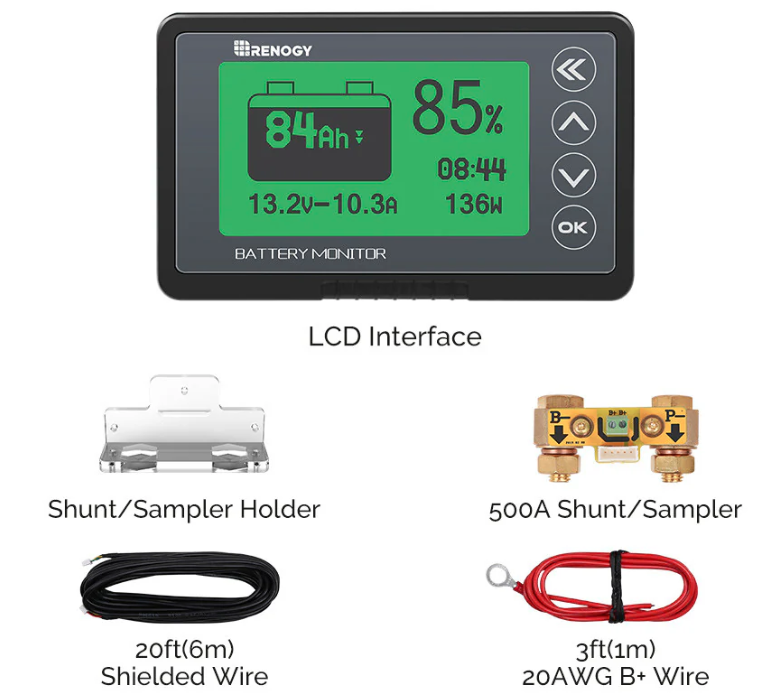
Mindful of the fact this is not a boat forum, but still perhaps relevant, I decided against the blue box premium because (a) Victron's tendency to tie you into using its other products, as you found (b) niggles eg the Orion XS 50a DC to DC charger version 1 (part number ending xxx40) caused VHF interference plus on the version 2 (art number ending xxx50) it is all but impossible to get 4AWG cable into the screw down connectors despite the specs saying it can take 4AWG cable (c) the Renogy battery monitor display is, at least for me, better (see below) and finally (d) I am not sure the blue box premium actually delivers a matching increase in quality. My LiFePO4 battery (EcoWorthy 12V 100Ah, programmable BMS - long story that one!) is still in the kitchen. The Renogy battery monitor I fitted last summer, and it has given credible readings, including times when there have been a very low drain on the (then installed LA) battery. Renogy claim +/- 1% accuracy, but I think the real world accuracy is probably nearer +/- 5%. You do have to calibrate the monitor, set the percentometer to 100% when you know the battery is fully charged, but then it seems to work fine. The monitor display and the rest of the kit looks like this, the expanded image, what you see when you click on it, is about life size, display case is 4" wide:
Midea 14kW (for now...) ASHP heating both building and DHW
Page 1 / 6
Next

Latest Posts
-
RE: Octopus Cosy 12 Heat Pump Regret: Incredibly Loud, Poor Heating & Constant Hum - Help!
Balancing is a long process and its possible to mess th...
By JamesPa , 3 hours ago
-
RE: Daikin Altherma 3 LT compressor longevity question
Up to a point yes. However every heat pump (and every ...
By JamesPa , 4 hours ago
-
Thanks everyone for the help, Havenwise now diasbled. q...
By Boycey , 6 hours ago
-
RE: Advice needed after a successful "leftfield" experiment.....
@pauli Depending on whether you can get an EV tariff, I...
By ChandyKris , 7 hours ago
-
-
RE: New Build ASHP Defects - Looking for Advice, Support & Shared Experiences
Is that a single pair only? If so it may be part if th...
By JamesPa , 9 hours ago
-
RE: Solar Power Output – Let’s Compare Generation Figures
@technogeek I think you are correct, but, it didn’t inf...
By Papahuhu , 9 hours ago
-

@batpred, you’re quite right; it does work well. I don’...
By Majordennisbloodnok , 10 hours ago
-

@Mars at the time of writing heating oil is £1.28 / ltr...
By TechnoGeek , 10 hours ago
-
RE: Ecodan Cylinder Possible Weeping Around Thermostat Port
Update: Mitsubishi sent an engineer around. It was li...
By Gruff2001 , 13 hours ago
-
RE: A Smarter Smart Controller from Homely?
@benson Agreed. I believe the COP gains with homely, i...
By Papahuhu , 13 hours ago
-
RE: Samsung Gen 7 16kW Integrated unit Modbus monitoring
The setup for this is a Samsung Modbus card. Connected ...
By antonical , 14 hours ago
-

RE: Forum updates, announcements & issues
@davidalgarve, if the emails are more than roughly a mo...
By Mars , 15 hours ago
-
How to Find All Your Posts and Topics on the Forum – A Quick Guide
If you’ve ever posted something on the forum and then s...
By Mars , 15 hours ago
-
RE: If a heat pump can only heat DHW to 50C then what? Issue with 18KW Heliotherm heat pump
Sorry to hear that but I'm not surprised TBH. Stratifi...
By JamesPa , 16 hours ago
-
RE: Say hello and introduce yourself
@pt151 welcome to the forums, and looking forward to he...
By Mars , 1 day ago
-
RE: Setback savings - fact or fiction?
The answer was in two parts in my reply, the second par...
By RobS , 1 day ago
-
Samsung Gen 7 16kW Integrated unit Modbus monitoring
Looking for some assistance to get modbus monitoring wo...
By antonical , 1 day ago
-
Ecodan control return to Melpump from Havenwise trial. settings check
Hi, Just got control back after being on the hav...
By Boycey , 1 day ago
-
RE: Refrigerant R32, is it now banned in the EU from 1st Jan 2027 for monobloc ASHPs?
I wonder if heat pump manufacturers will tone these sit...
By JamesPa , 1 day ago
-
RE: Who’s Caved and Switched the Heating On Already?
@editor yesterday we used 12kW of electricity for heat,...
By Judith , 2 days ago
-
RE: Rate the quality of your heat pump design and installation
Loss assessments can be a very serious case of GIGO. I...
By JamesPa , 2 days ago
-
RE: Who's your electricity provider and what's your tariff?
@jamespa Just bizarre. This is our data. I really don't...
By antonical , 2 days ago
-
RE: Mitsubishi Ecodan 11.2kW review
I think you said its an 11.2kW model and your house is ...
By JamesPa , 2 days ago