

Notifications
Clear all
Joining the Renewable Heating Hub forums is completely free and only takes a minute. By registering you’ll be able to ask questions, join discussions, follow topics you’re interested in, bookmark useful threads and receive notifications when someone replies. Non-registered members also do not have access to our AI features. When choosing your username, please note that it cannot be changed later, so we recommend avoiding brand or product names. Before registering, please take a moment to read the Forum Rules & Terms of Use so we can keep the community helpful, respectful and informative for everyone. Thanks for joining!
Solar Photovoltaic (PV)
42
Posts
6
Users
12
Reactions
3,503
Views

Topic starter
18/06/2026 5:28 pm
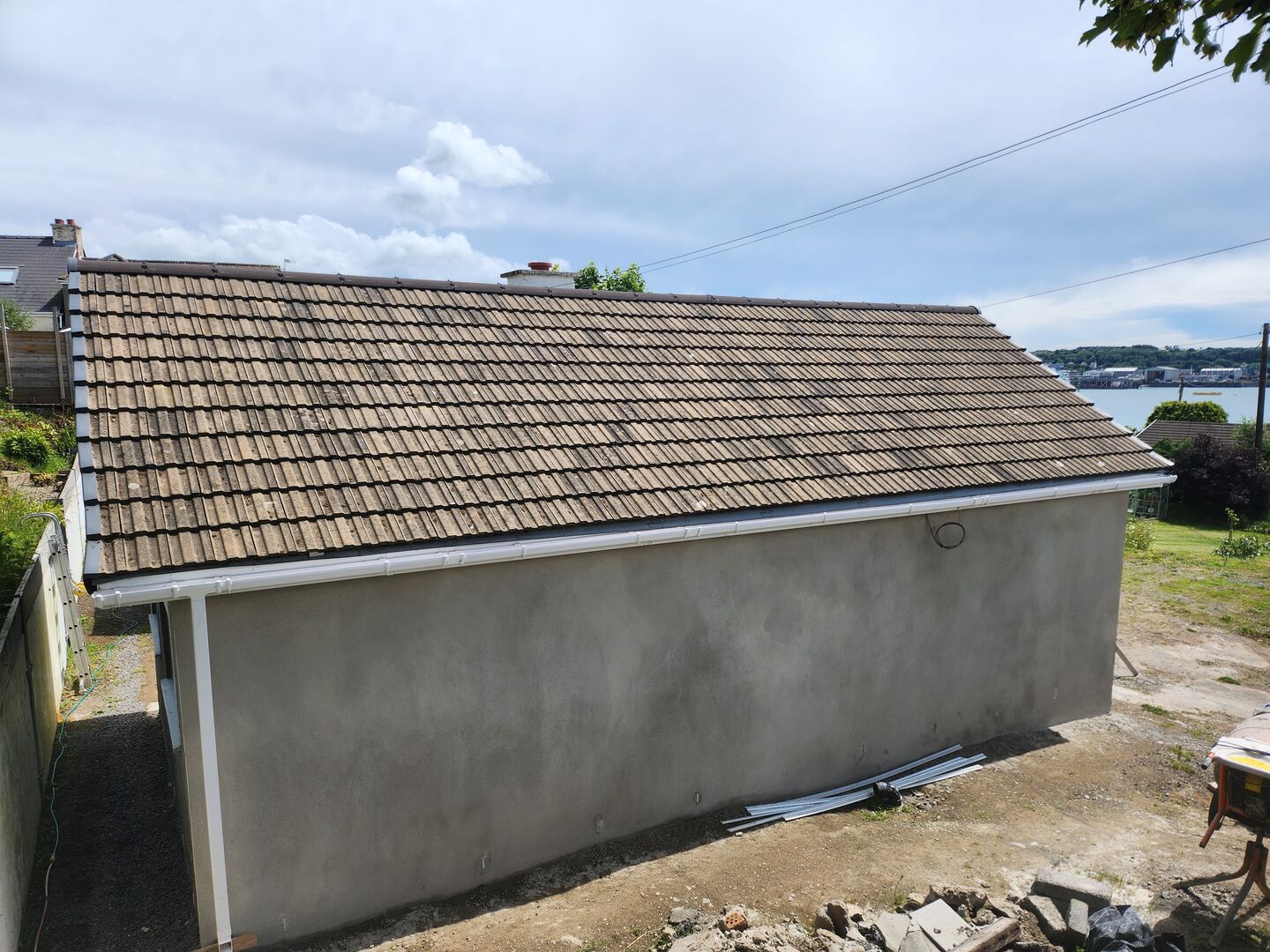
I am currently in a position where it would be very easy to add additional solar panels to a lean too I will be constructing in the near future.
I have a 2.66 kWp FIT system which has been supplemented by a 4.6kWp East/West oriented system DC coupled with a 10kWh battery and 3.6kW inverter.
The battery and inverter are Huawei and the panels have optimisers.
The extra panels would be West orientated and would be very useful in the winter. Their extra output, probably wouldnt make any difference to my peak output and would be clipped by the HUawei inverter anyway.
Is this a sensible thing to do? Would I have to notify anyone? Would I be better trying to source another battery module instead?
I seem to have a spare MPPT on the inverter so Im assuming the new panels are just in a single string with the optimisers doing their thing?
Or would it be simpler to buy a balcony solar system and plug it in when required??? 🙂
Thanks
This topic was modified 4 months ago by bontwoody
House-3 bed partial stone bungalow, 5kW Samsung Gen 6 ASHP (Self install)
6.9 kWp of PV
10kWh DC coupled battery
Blog: https://thegreeningofrosecottage.weebly.com/
Heatpump Stats: http://heatpumpmonitor.org/system/view?id=60

18/06/2026 5:48 pm
@transparent will have chapter and verse but my understanding is that DNOs care about inverters because they are the gateway to the grid. So if you plug extra panels into an existing inverter without changing its export limits they probably dont care, but if you add another inverter they definitely do. Your FIT provider will care though if the output passes through the generation meter and you may have to do an apportionment.
I suspect a plug in inverter in addition to an existing one would be notifiable to the DNO and if it takes the capacity above 16A per phase (possibly even if it doesn't) would require permission.
As to whether its sensible you need to run the numbers if thats what matters, but overprovision on the DC side is generally recommended (or at worst not deprecated) these days.
Someone else may have a more precise answer referencing the regs, but may basic message is that if you want to be certain of compliance then you will need to do investigation either way.
This post was modified 4 months ago 2 times by JamesPa
4kW peak of solar PV since 2011; EV and a 1930s house which has been partially renovated to improve its efficiency. 7kW Vaillant heat pump.
Topic starter
18/06/2026 5:54 pm
@jamespa Thanks James. The FIT system is totally separate from the additional system, so any changes to the latter wont change its output in any case. My feeling, like yours, was that as long as the inverter limits the output the grid wont care.
I am a bit curious as to why I seem to have a spare MPPT port though as it would have made sense to me to put EAST on one and WEST on the other, even with the optimisers. But them maybe it makes no difference with them in the frame. 🙂
House-3 bed partial stone bungalow, 5kW Samsung Gen 6 ASHP (Self install)
6.9 kWp of PV
10kWh DC coupled battery
Blog: https://thegreeningofrosecottage.weebly.com/
Heatpump Stats: http://heatpumpmonitor.org/system/view?id=60

19/06/2026 8:27 pm
Your FIT provider will care though if the output passes through the generation meter
I've discussed this with others who have various levels of FIT income.
In practice the Energy Suppliers don't notice if there are changes to the pattern of generation for which they pay you.
They could easily do so in future by passing the generation statistics through AI, but I'd be surprised if most would bother.
Exporting to the grid using the SEG is similar.
I am a bit curious as to why I seem to have a spare MPPT port though
Just because it uses polarised MC4 plugs doesn't mean its an input.
There are some (Chinese) inverters which use MC4s for a battery connection!
Enter the manufacturer and model name into a search engine and click the "images" option. You should be presented with some diagrams which show the various connections for your model.
I suspect a plug in inverter in addition to an existing one would be notifiable to the DNO and if it takes the capacity above 16A per phase (possibly even if it doesn't) would require permission.
That is indeed so under the current regulations.
You'd need to make a (free) G99 application online because there's more than one generation device at the property.
But the market is rapidly becoming uncontrollable.
None of the uncertified plug-in solar systems which are already being sold in the UK will have received DNO approval of course.
That's because they can't possibly be on the ENA database of G98-approved products.
Save energy... recycle electrons!

19/06/2026 9:44 pm
But the market is rapidly becoming uncontrollable.
A slightly maverick part of me says maybe that's ultimately for the better.
We seem to control new things excessively, whilst allowing old things 'grandfather' rights that would never be allowed if the technology were new. The regulation attached to renewables is way in excess of the regulation attached to fossil (or just old) equipment and, so far as I can see, that's in large measure because its new. I can run 9kW+ of electric resistance heating 24*7 without notification, or install a noisy oil boiler without any planning considerations, but as soon as I install a 7kW heat pump, which actually consumes less than 3kW, emits no noxious gases, warms the plant 75% less, and is whisper quiet by comparison to a loud flue, I have to jump through all sorts of hoops. Im surprised we don't have to have someone walk in front of electric cars with a red flag.
This post was modified 4 months ago 4 times by JamesPa
4kW peak of solar PV since 2011; EV and a 1930s house which has been partially renovated to improve its efficiency. 7kW Vaillant heat pump.
1
Topic starter
20/06/2026 11:52 am
@transparent The fit generation meter does not measure output from the newer system, so adding to that shouldnt affect fit payments.
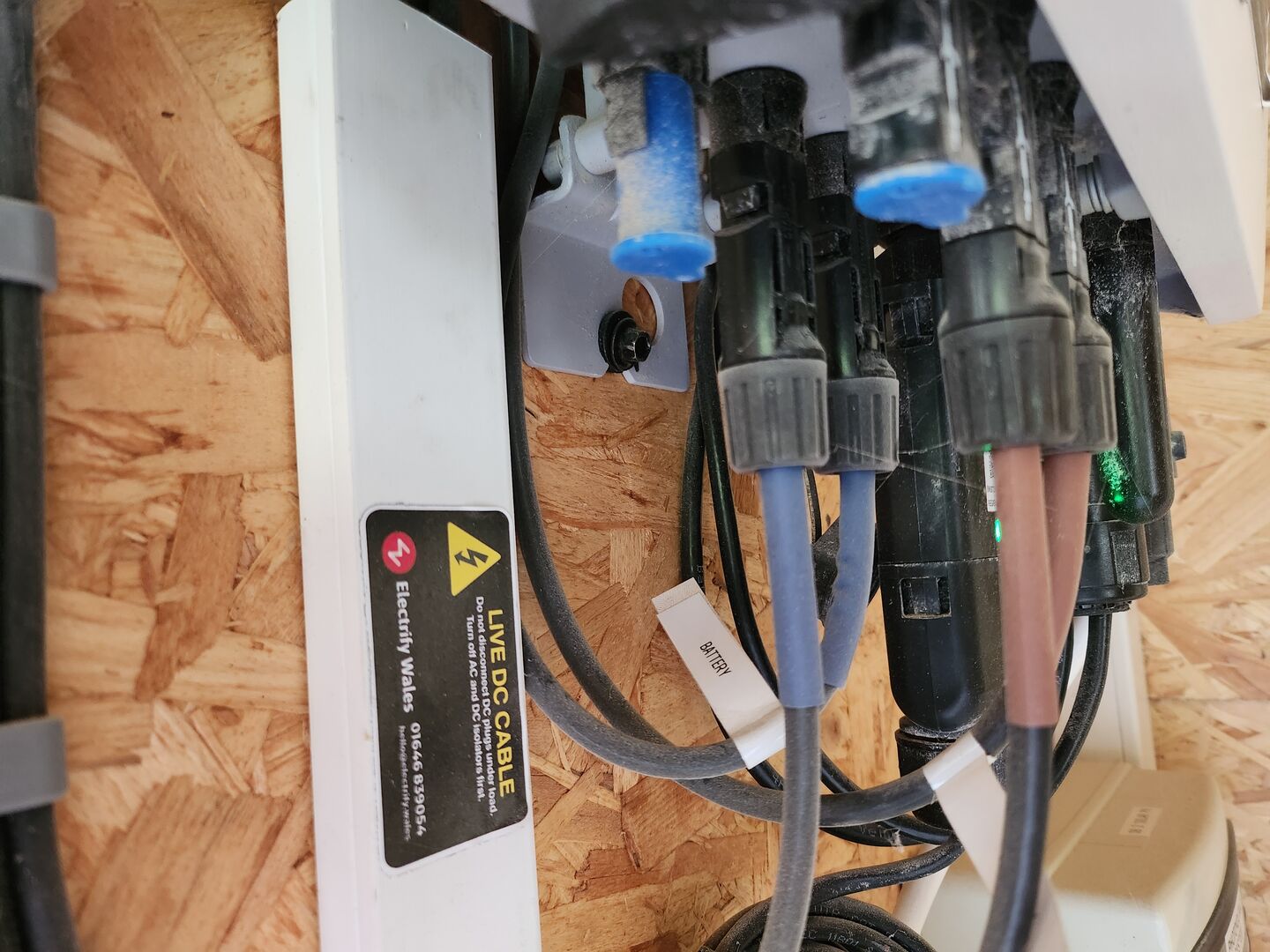
The inverter is the Huawei
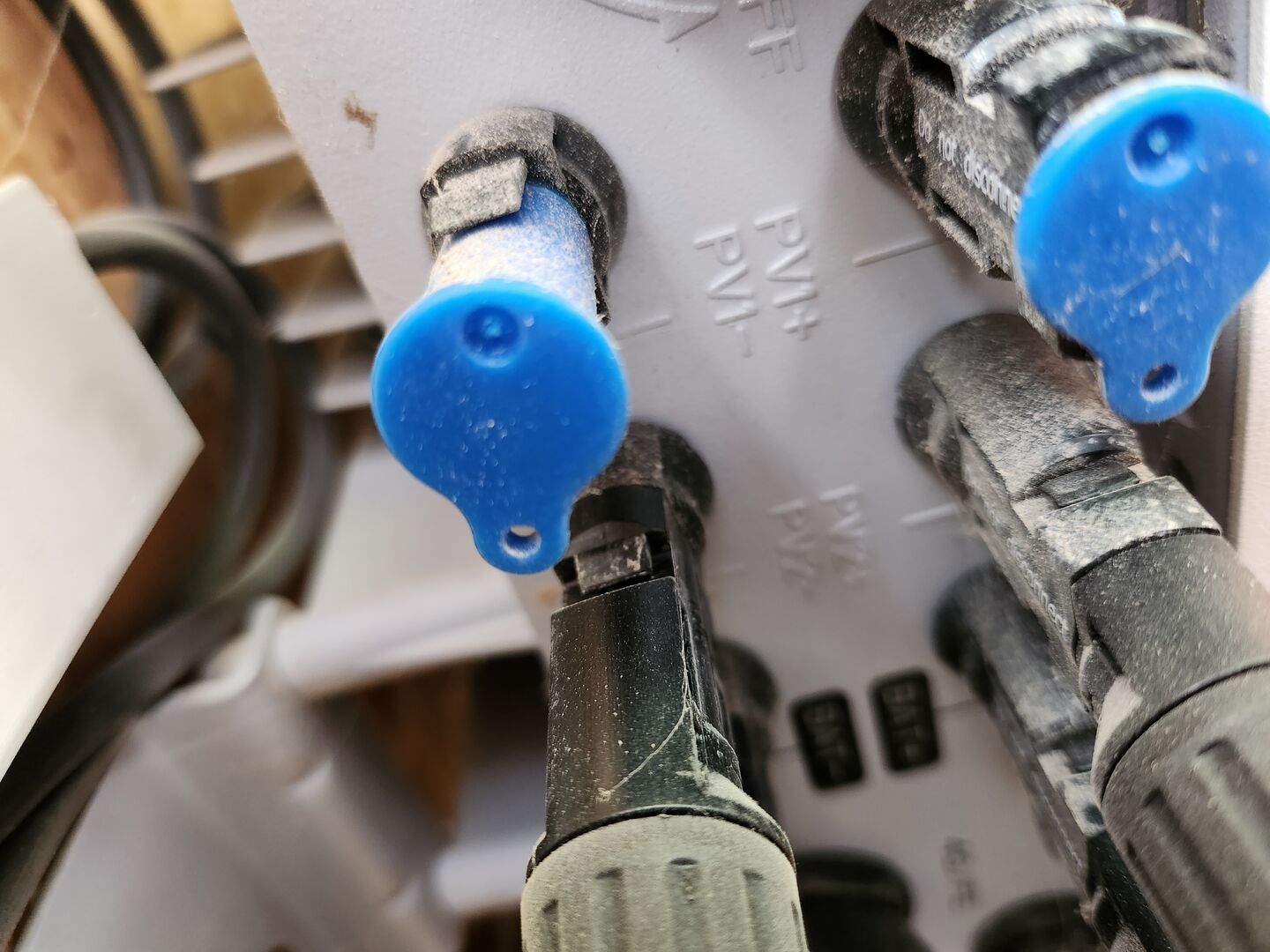
Sun 2000 3.68kW and does indeed connect to the battery in the way you describe (see image), but it does have 2 MPPT connections and only seems to have one used at present.
So could I just connect another PV strind to the vacant connector?
House-3 bed partial stone bungalow, 5kW Samsung Gen 6 ASHP (Self install)
6.9 kWp of PV
10kWh DC coupled battery
Blog: https://thegreeningofrosecottage.weebly.com/
Heatpump Stats: http://heatpumpmonitor.org/system/view?id=60
20/06/2026 2:08 pm
Yes it looks like it @bontwoody
That spare pair of connectors is certainly marked for PV panel input.
Are you going to buy ready-made leads to connect from the solar panel location by joining each section in series?
Or would you like help to identify and buy the required cable and MC4 connectors yourself?
If anything is likely to go wrong with a PV panel array, then it's most likely at the connection points. So you get a more reliable installation by having as few connectors as possible.
Cable which bought on a reel then fixed on-site, and has MC4 plugs/sockets fitted at the panel and the inverter ends, is more likely to have a long operational life.
Save energy... recycle electrons!
Topic starter
20/06/2026 2:25 pm
@transparent I hadnt really thought that far ahead, but I did buy a crimping tool for when I added an extra second hand battery module (it was a bargain) so I would be up for making the cables to the required lengths.
Thinking about things a bit more, I could actually just put the solar panels on the extension roof, rather than waiting till I build the lean to up against its wall. It would tilt the panels to a better angle.
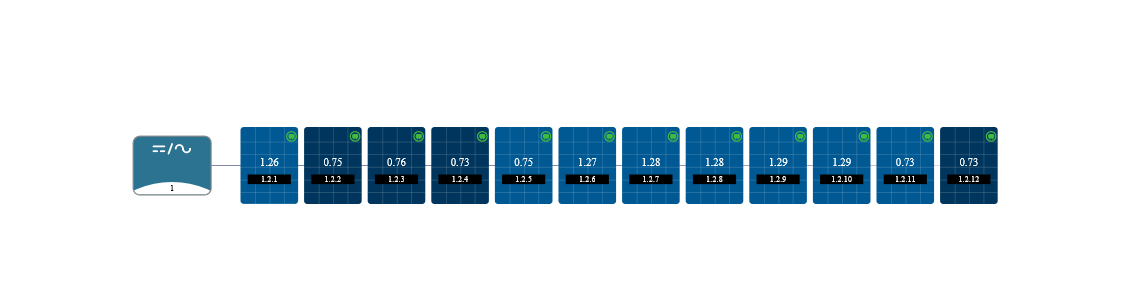
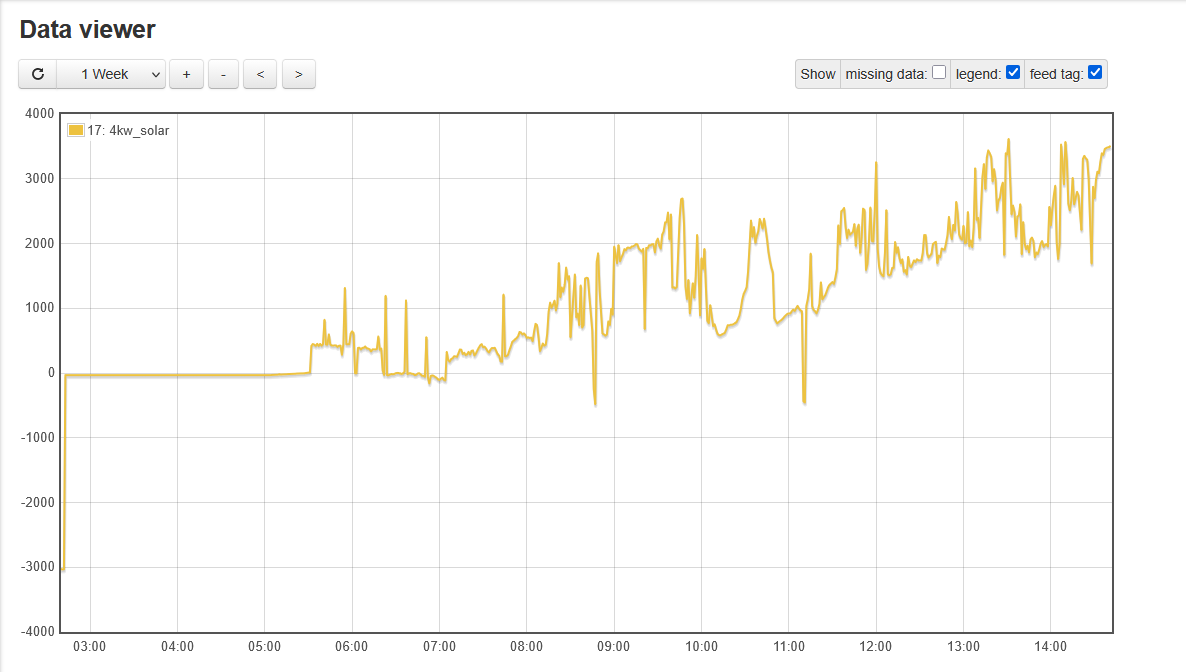
The Huawei software shows the original panels like this, so it again suggests to me that they are all on one string, with the optimisers sorting everything out.
If its feasible, then I would just need to figure out the best size of array and source suitable panels, so yes please help would be much appreciated. 🙂
This post was modified 4 months ago 2 times by bontwoody
House-3 bed partial stone bungalow, 5kW Samsung Gen 6 ASHP (Self install)
6.9 kWp of PV
10kWh DC coupled battery
Blog: https://thegreeningofrosecottage.weebly.com/
Heatpump Stats: http://heatpumpmonitor.org/system/view?id=60
20/06/2026 2:42 pm
1: Is Huawei telling us that their inverter will only operate with PV panels which have their 'optimiser' connected to each panel?
2: Tooling. The definition of MC4 is owned by Stäubli and they own the patent.
All 'MC4-style' plugs and sockets will mate with other, but the tools needed will differ from one manufacturer to another.
Eg the connectors from Amphenol are named Helios M4, and you need a different pair of plastic spanners to do up the housing.
3: Cable. It's most likely that you'll use Double-insulated 4mm² cable.
Best prices are usually from electrical wholesalers rather then the solar industry.
Here's the cable supplied by TLC-Direct.
It must be pure copper, and tinned to counteract oxidisation.
Under no circumstances should you buy lightweight cable marked CCA.
That's Copper-Coated Aluminium and will get hot due to the higher resistance.
Save energy... recycle electrons!
Topic starter
20/06/2026 2:49 pm
Thanks for the link. 🙂
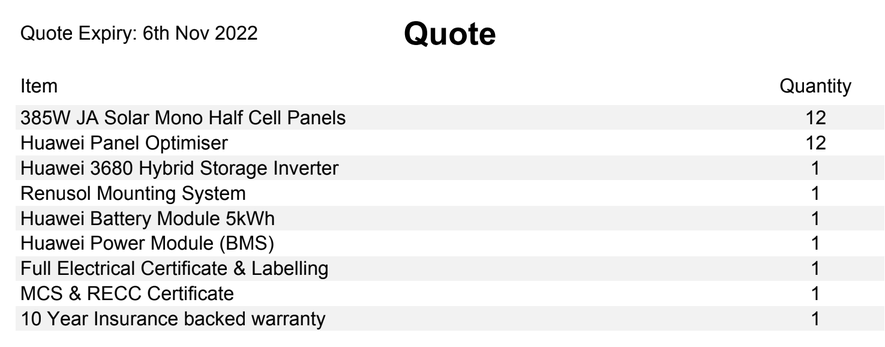
I dont think the panels have to have optimisers, that was the advice of my installer for the roof they were mounted on. Im not sure if it matters that the new string wont have them?
Looking at the output of the new array today whilst sunny, I can see the total output from East and West is maxing out at about 3.5kW. That suggests to me I have some headroom to oversize the system a bit more to improve things in the less sunny days
The original quote is below, so should I try and get the same panels as previously used? Any thoughts on how many?
This post was modified 4 months ago by bontwoody
House-3 bed partial stone bungalow, 5kW Samsung Gen 6 ASHP (Self install)
6.9 kWp of PV
10kWh DC coupled battery
Blog: https://thegreeningofrosecottage.weebly.com/
Heatpump Stats: http://heatpumpmonitor.org/system/view?id=60
Topic starter
20/06/2026 4:50 pm
Ive just done some modelling and my newer additional East/West panels were estimated to produce about 2738 kWk per year. Each direction has 6 panels and I think I could comfortably fit an additional 6 on my extensions West roof. Therefore, the maximum output I could expect from them would be about 1369 kWh minus a bit for clipping, so say 1000 kWh. If all that was exported at 12p per kWH then thats a return of £120 per year. It will probably be a bit more as I expect to displace some grid import. With a 25 year life expectancy thats £3000 if everything stays the same.
I can get the panels on ebay for about £55 each so including mountings etc I could probably fit everything for about £700-£900.
The alternative would be to fit another 5kWh battery module. New they are £2500 so not realistic, but I got the last one used for £500 and saw another on ebay for £1000, but they are quite rare. Battery life is about 10 years.
Im not sure how to estimate the batteries payback but if I assume 5kWh of export at 12p-7p=5p (export rate minus overnight import rate), thats 25p per day for 10 x 365 days = £912.50
Intuitively I feel the panels are a better investment, any thoughts?
House-3 bed partial stone bungalow, 5kW Samsung Gen 6 ASHP (Self install)
6.9 kWp of PV
10kWh DC coupled battery
Blog: https://thegreeningofrosecottage.weebly.com/
Heatpump Stats: http://heatpumpmonitor.org/system/view?id=60

20/06/2026 9:52 pm
None of the uncertified plug-in solar systems which are already being sold in the UK will have received DNO approval of course.That's because they can't possibly be on the ENA database of G98-approved products.
Loads of them are in the database and fully compliant. The fact they can also be used in Germany via a plug and socket does not in any way invalidate them being G98 compliant in the UK if wired in according to our regulations.
Page 1 / 4
Next
SPONSORS

Degrees of Separation
Latest Posts
-

RE: Indevolt Batteries UK Support & Info Thread
@dansus yeah, that definitely needs fixing. Good spot. ...
By Mars , 5 hours ago
-
RE: How will removing the standing charge on gas bills benefit heat pumps?
@toodles GIGO always stands! My Cosy 6, as you can...
By Watcher , 9 hours ago
-
RE: How much of your renewable and home setup would still work if the internet went down?
Interestingly we had an internet outage about a month a...
By Rob of York , 15 hours ago
-
RE: Double or Triple Glazed Windows?
Posted by: @singlespeed With 9 years repairing windo...
By Rob of York , 15 hours ago
-
@transparent we’re still running a secure version of PH...
By Mars , 19 hours ago
-
RE: How quickly would you want/expect heat recovery to take from setback?
Much longer than that here. The heating isn't even on. ...
By bobflux , 1 day ago
-
RE: Passiv Smart Thermostat - Help & Forum Support
Obviously the weather is changeable but there's a defin...
By Singlespeed , 1 day ago
-
RE: The Changing Jet Stream Could Challenge UK Air Source Heat Pumps
@rob-of-york I must admit that when we had a Daikin hea...
By Toodles , 1 day ago
-
RE: Forum updates, announcements & issues
Get the Renewable Heating Hub heads-up on WhatsApp. I...
By Mars , 2 days ago
-
RE: Safety study for plug in batteries out to tender - looks like Q3 2027 at best before legal
@editor I pointed out to the one of the Fuse execs that...
By dansus , 2 days ago
-
RE: 15kw pump for 225m2 1990's house - over kill?
@seaviews As well as loft insulation, there are othe...
By Rob of York , 2 days ago
-
RE: BT cuts you off, Plusnet blames Openreach... welcome to “seamless” broadband switching
Both of which (in most cases) use Openreach for the las...
By JamesPa , 2 days ago
-
RE: Renewables & Heat Pumps in the News
Yes, this is a swiss and german standard I believe, Vai...
By Batpred , 2 days ago
-
RE: Octopus Cosy 12 Heat Pump Regret: Incredibly Loud, Poor Heating & Constant Hum - Help!
@editor FWIW my problem was resolved, eventually, after...
By BigFish , 3 days ago





SPONSORS
