

Notifications
Clear all
Joining the Renewable Heating Hub forums is completely free and only takes a minute. By registering you’ll be able to ask questions, join discussions, follow topics you’re interested in, bookmark useful threads and receive notifications when someone replies. Non-registered members also do not have access to our AI features. When choosing your username, please note that it cannot be changed later, so we recommend avoiding brand or product names. Before registering, please take a moment to read the Forum Rules & Terms of Use so we can keep the community helpful, respectful and informative for everyone. Thanks for joining!
Air Source Heat Pumps (ASHPs)
23
Posts
6
Users
13
Reactions
2,049
Views

Topic starter
01/06/2026 9:30 am
@david-s Thank you. That is very helpful. Do you have a link to the joint covers?

01/06/2026 9:34 am
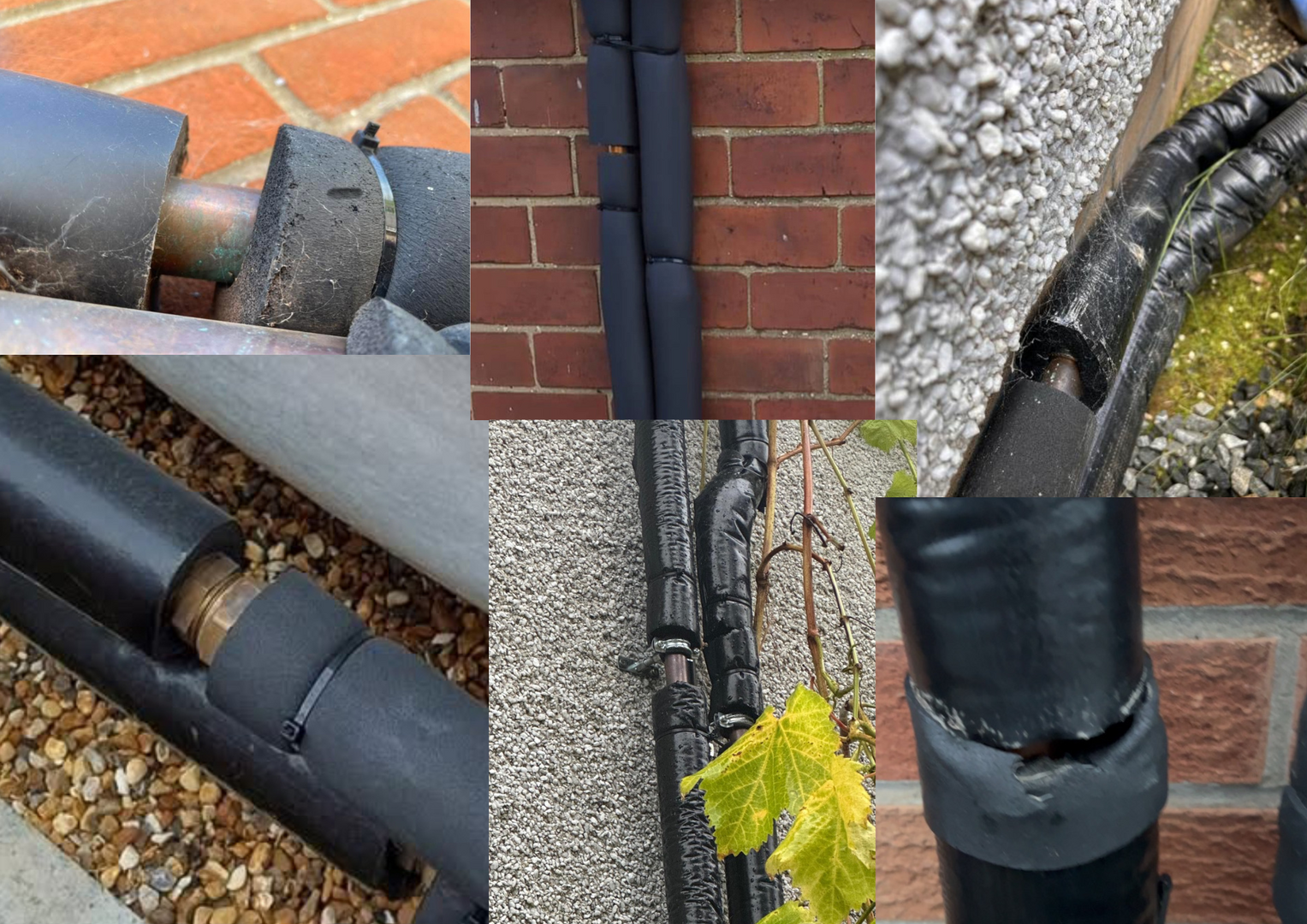
From these photos, it is obvious that the joints have not been sealed to MIs ( see attached Link to PDF )
All materials expand and contract; it is important to not only bond. Seal and Cap as advised, but to allso use the right amount advised ( one tube of Bond & Seal to 3 lengths of 28mm , if a bigger size than more needed)
Last year, we manufactured over 1.8 million insulation lengths in the six years since its launch. Our guidance has always been to form correct joints and ensure enough Bond & Seal is left to seal the sleeve through the wall, typically three tubes for every three lengths of 28mm insulation.
Based on this guidance, approximately 533,000 tubes of Bond & Seal should have been used alongside the insulation supplied. However, we identified a shortfall of around 290,000 tubes. This highlighted that joining can be time-consuming and messy for some installers, which led us to develop additional solutions.
As a result, we introduced joint covers for straight runs and 90° bends. These not only speed up installation but can also be used as a repair solution for issues such as those shown in the images in this post.
Creator of Primary Pro and Condensate Pro
2
01/06/2026 9:50 am
All insulation expands and contracts
If not sealed correctly, it can leave a gap
The insulation you mention will have the same issues, and if sealed with tape, this can stretch, and the gaps is no visibel
Also, check the thickness and conductivity, as all insulation is not the same
Also, check that the insulation has a high water diffusion resistance
Creator of Primary Pro and Condensate Pro
1

01/06/2026 10:01 am
That's not right, if the MIs are followed and the correct amount of bond and seal this will seal the gaps
Also, the manufacturers don't advise one tube to one length; they advise one tube to three lengths of 28mm
Your installer is right about it's easy to rectify, just use the joint covers and add when every length of insulation needed ( making sire is fully bonded and sealed as advised
Creator of Primary Pro and Condensate Pro

01/06/2026 11:10 am
That's extremely helpful to have technical information direct from the manufacturer, @david-s
Good news regarding your introduction of joint covers.
Do you have a photo which shows how you apply Primary Pro in the vicinity of the valve/isolators which are usually positioned behind an ASHP?
Should householders expect to see those valve handles pointing downwards in order to prevent ingress of rain?
I'd just like to gather as much useful information as possible in the same Topic.
That would help us to direct other forum-users here in future.
Thanks
Save energy... recycle electrons!
1

01/06/2026 11:26 am
That's extremely helpful to have technical information direct from the manufacturer, @david-s
Good news regarding your introduction of joint covers.
Do you have a photo which shows how you apply Primary Pro in the vicinity of the valve/isolators which are usually positioned behind an ASHP?
Should householders expect to see those valve handles pointing downwards in order to prevent ingress of rain?
I'd just like to gather as much useful information as possible in the same Topic.
That would help us to direct other forum-users here in future.
Thanks
Take a look at this link of what I did to encapsulate a thumb air valve, I see all to often where the joins come apart, its why I assumed earlier on this post that the pipe may have dropped if the weld was not inserted all the way inside like the MI's video explains. What you see in my video is the same as what we do on the valves and antifreeze valves on the rear of the ASHP.
Here is the link for the isolation valves we use as well, the stem allows us to vapour seal around the top as its goes through the insulation, its very belt and braces.
https://www.bes.co.uk/inta-full-bore-ext-key-type-ball-valve-1-bsp-f-sw-x-28mm-comp-27862/
AAC Group Ltd covering the Kent Area for design, supply and installation of ASHP systems, service and maintenance, diagnostics and repairs.
1
02/06/2026 10:24 am
@transparent so long as they're sealed correctly, they don't have to point down.
This post was modified 5 months ago by David Smith
This post was modified 5 months ago by Mars
Creator of Primary Pro and Condensate Pro

02/06/2026 10:26 am
Creator of Primary Pro and Condensate Pro
02/06/2026 10:42 am
great video
Making the insulated cover for the Inta KT is a great solution
Sealing each joint as advised and using the correct amount of Bond & Seal is very important, as it forms like a welded joint
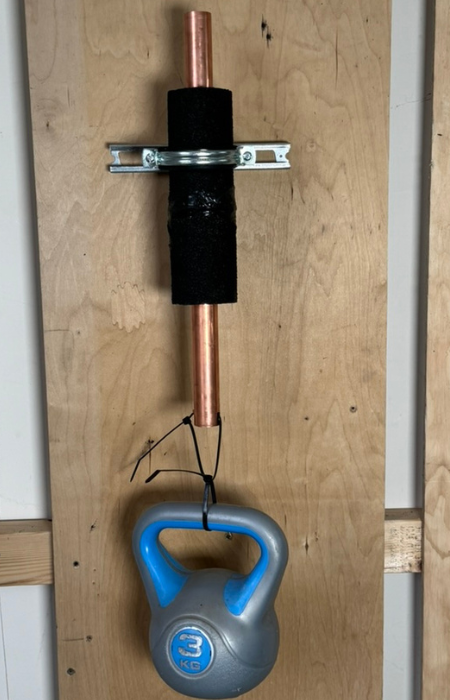
This is important on vertical runs, as when the 28mm pipe is filled with water, the weight of every 1 m length is around 1.2 KG
when the rubber-lined clip is fitted, it supports both the insulation and the copper pipe filled with water.
as you can see, we have tested pipework over the last few years with 1 3KG weight
all the products and tools in the primary Pro range have been designed to help professionals provide maximum efficiency and can help maintain the life of the heat pumps
This post was modified 5 months ago by David Smith
Creator of Primary Pro and Condensate Pro
1
02/06/2026 10:51 am
Nice video clip @ashp-bobba - you make it look like creating a piece of sculpture.
And I'm just adding a screenshot of that 28mm full-bore ball valve from Inta.
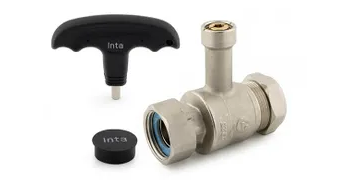
That high upstand provides plenty of room for adequate insulation and sealant.
£28.86 each from BES is a reasonable price for a well-designed isolation valve.
Save energy... recycle electrons!
1
Page 2 / 2
Prev

SPONSORS

Degrees of Separation

Latest Posts
-

If you freeze water it expands. That's been a big probl...
By EtchedPixels , 23 minutes ago
-
RE: Heat pump branding. Clever, contemporary… or a bit too much?
Ultimately they are trying to make it possible for low ...
By EtchedPixels , 26 minutes ago
-
This post is about how I successfully configured a buff...
By Tony.Stolz , 47 minutes ago
-
The installer visited yesterday and suggested the noise...
By JamesChatz , 2 hours ago
-
RE: Heat Geek installations: share your experiences
I struggled with this problem as well. An independent t...
By L8Again , 3 hours ago
-
RE: HeatGeek vs Octopus surveys: puzzling disparity - any ideas why?
Your house sounds a lot like mine. 2 surveyors each sp...
By JamesPa , 4 hours ago
-
RE: Heat Geek Zero Disrupt: Are We Sleepwalking Into Another Race to the Bottom?
Thats true only if you do the wrong experiment. Done c...
By JamesPa , 5 hours ago
-
RE: How should the Boiler Upgrade Scheme be reformed?
@temperature_gradient Isn't that just describing a regu...
By Prunus , 6 hours ago
-
RE: battery storage without solar
As of October 1st they need specific qualifications to ...
By EtchedPixels , 18 hours ago
-
RE: Renewables & Heat Pumps in the News
With regards to the BUS grant raid, I gave it more thou...
By ASHP-BOBBA , 19 hours ago
-
RE: Why are ASHP installs so expensive?
The whole system seems to work on the basis of...
By ian33a , 19 hours ago
-
RE: Missing flow temperature in Heat Geek proposal
Good plan. If you can get half hourly meter readings a...
By JamesPa , 1 day ago
-
RE: Heat Pumps Without Grants: Would You Have Installed One & Will You Now?
@editor Most certainly. The heat pump was an ideal s...
By Abernyte , 1 day ago
-
RE: Does anyone have experience of a smart water meter?
Yep I caught our slow leak from a £100 bill rise 8)
By EtchedPixels , 1 day ago


SPONSORS
