

Notifications
Clear all
Joining the Renewable Heating Hub forums is completely free and only takes a minute. By registering you’ll be able to ask questions, join discussions, follow topics you’re interested in, bookmark useful threads and receive notifications when someone replies. Non-registered members also do not have access to our AI features. When choosing your username, please note that it cannot be changed later, so we recommend avoiding brand or product names. Before registering, please take a moment to read the Forum Rules & Terms of Use so we can keep the community helpful, respectful and informative for everyone. Thanks for joining!

06/08/2026 1:50 pm
So a final update on Charge Pack, now I have nearly reached the end of the month.

While only announcing 5 events in the month, its plain to see that the tariff makes good use of the battery every night (The outliers in the centre are where we lost broadband for a few days). Each event earns me between £1.23 and £1.61, so adding that to the £12 guaranteed income, I should make about £20. However I notice that my battery only gets charged to about 70% before sunrise and so am losing 20% of 10 kWh (2kWh) of solar export every day (12p-8p = 4p/kWh)
For me, given the high cost of Huawei battery modules, I dont think the reward is worth the extra wear and tear on the battery. Once I get my £12, Im going to switch out of the tariff and export 50% of my battery at peak time every night in the summer.
House-3 bed partial stone bungalow, 5kW Samsung Gen 6 ASHP (Self install)
6.9 kWp of PV
10kWh DC coupled battery
Blog: https://thegreeningofrosecottage.weebly.com/
Heatpump Stats: http://heatpumpmonitor.org/system/view?id=60

08/08/2026 10:26 am
Interesting read from NESO on their Demand Flexibility Service (DFS), published this week:
I think this is what is behind things like Octopus Saving Sessions, where they are able to offer free electricity sessions where there is excess generation, or rewards for powering down and using less electricity where demand is very high. I assume this is also what VPPs like Charge Pack are also leveraging.
Interesting stuff.
Samsung 12kW gen6 ASHP with 50L volumiser and large radiators. 7.2kWp solar (south facing), Tesla PW3 (13.5kW). Net Zero

08/08/2026 2:14 pm
Demand Flexibility Services appears to conflict with present government policy. But NESO are correctly following 'good science' rather than political whims.
Ed Miliband had attempted to introduce Nodal Pricing in spring'25 when he was Secretary of State for Energy. However, he was 'over-ruled' by No.10 who thought it wouldn't benefit consumers in red-wall constituencies. The idea was withdrawn in July'25.
The crucial factor to make Demand Flexibility work is the size of area in which that tariff change will be applied. It needs to align to the area covered by a Bulk Supply Point (BSP).
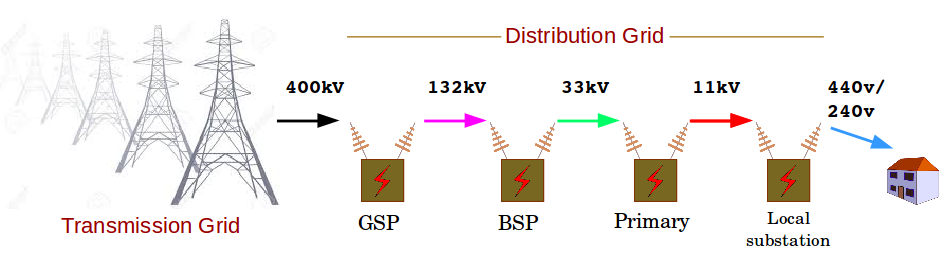
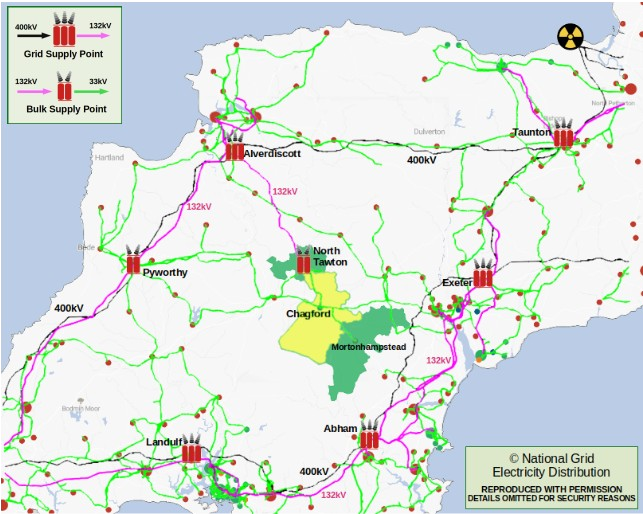
Within a BSP supply area the weather conditions are generally homogenous. Thus there will be roughly the same amount of solar generation wherever you live in the area. That's what will cause excess generation... beyond the capacity of the BSP transformer to handle. So it's better to allow consumers to store it, rather than discard it.
The map below shows three BSP supply areas (shaded) at the north-east corner of Dartmoor National Park.
This post was modified 2 months ago by Transparent
Save energy... recycle electrons!
08/08/2026 2:36 pm
The Octopus Saving Sessions are regional, and are defined by the electricity regions I believe (so a lot larger than the BSP's @transparent refers to above), but I think most sessions run nationally although they have the ability to run or vary regional sessions.
I wonder what level of granularity Octopus have for things like IOF (their VPP), where they can control batteries by postcode so could control supply and demand at a far more local level within 30min time frames.
I really see systems like IOF as the future whereby the homeowner is compensated for allowing access and control of the hardware. Ultimately most of us buy batteries for cost savings reasons so if the numbers stack up then I'd just as soon Octopus control my battery as Tesla (especially as the Powerwall control algorithm is not the best). It will be interesting to see what Tesla Electric come to market with when they launch.
Samsung 12kW gen6 ASHP with 50L volumiser and large radiators. 7.2kWp solar (south facing), Tesla PW3 (13.5kW). Net Zero

08/08/2026 3:08 pm
I think most sessions run nationally although they have the ability to run or vary regional sessions.
Nationally-based Demand Flexibility makes little sense.
The Transmission grid is divided by Boundaries, each of which has a maximum capacity rating. NESO mustn't send more than the stated GVA across a Boundary.
Here's the Boundaries Map for England and Wales, as set in June'26
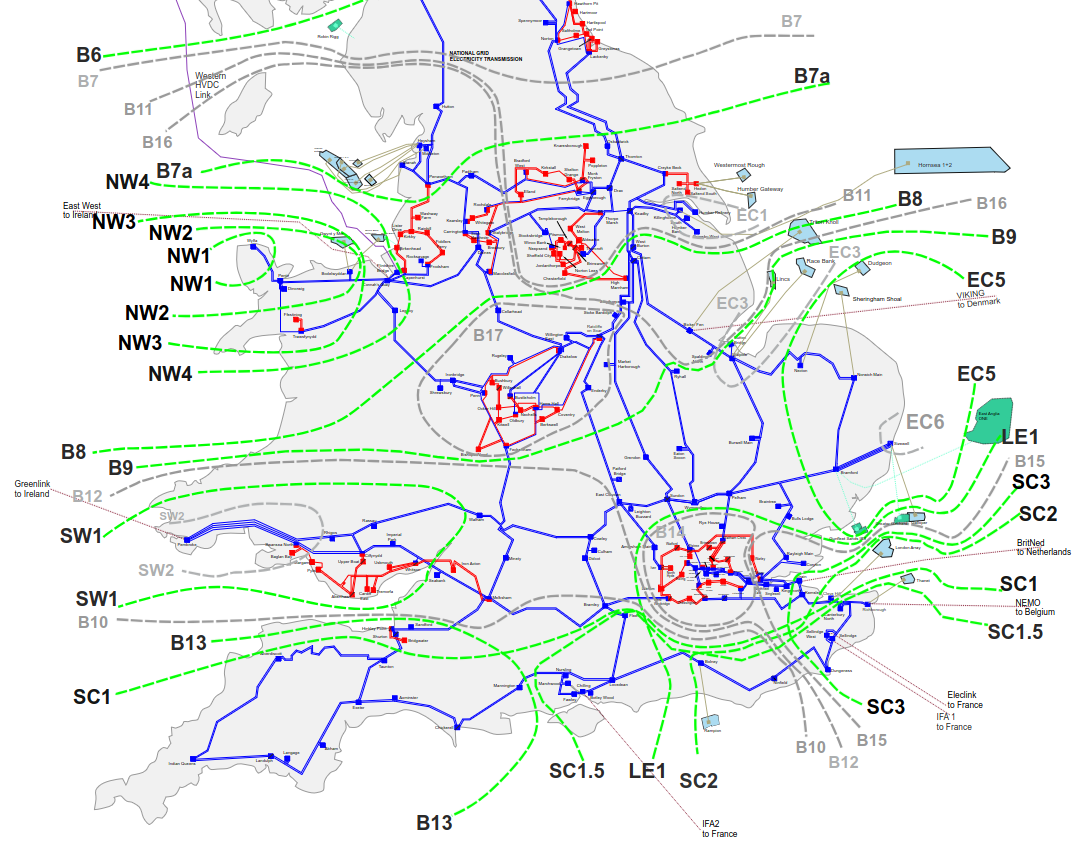
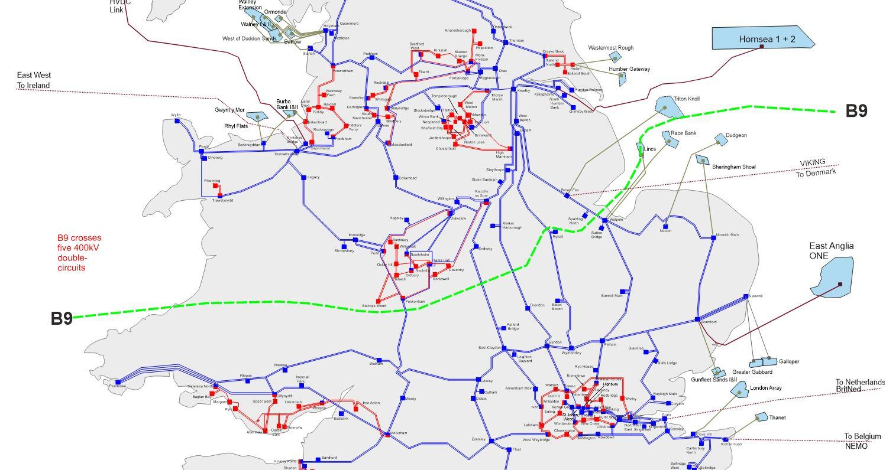
Each Boundary has a limit and reason(s) for that constraint existing. Thus we can look at B9, for which the parameters are Limited to 12 GW due to a voltage constraint for a fault on the Spalding North – Walpole – Bicker Fen 400kV circuits
This post was modified 2 months ago by Transparent
Save energy... recycle electrons!
2

08/08/2026 6:23 pm
I really see systems like IOF as the future whereby the homeowner is compensated for allowing access and control of the hardware. Ultimately most of us buy batteries for cost savings reasons so if the numbers stack up then I'd just as soon Octopus control my battery as Tesla (especially as the Powerwall control algorithm is not the best).
yes, same with the IOG tariff which is even a bit harder to implement. It does create odd situations where IOG can charge the car at a very cheap rate during normal hours and at the same time allowing cheap consumption for the home at a much cheaper rate than the agile export rate at that time (perhaps one is regional and the other driven by more local factors). So if I could simultaneously buy and sell, I could maximise savings, even if it wokld make no sense from a real grid perspective…
8kW Solis S6-EH1P8K-L-PLUS hybrid inverter; G99: 8kW export; 16kWh Seplos Fogstar battery; Ohme Home Pro EV charger; Vaillant Arotherm Pro 7kW; 100Amp head, HA lab on mini PC

09/08/2026 7:47 am
yes, same with the IOG tariff which is even a bit harder to implement. It does create odd situations where IOG can charge the car at a very cheap rate during normal hours and at the same time allowing cheap consumption for the home at a much cheaper rate than the agile export rate at that time (perhaps one is regional and the other driven by more local factors). So if I could simultaneously buy and sell, I could maximise savings, even if it wokld make no sense from a real grid perspective…
Iog is definitely a bit beta IMHO. I get no control at all over how much charge it puts in (there is a contolf feature but it does not work) which means that whenever I plug in it attempts to schedule 12hrs plus charging time then complains when the car stops charging because the battery is full. On the last charge it reported 80kWh in charge insights, but the battery is only 64kWh and it put in about 48. Then there are fish the purpose of which escapes me entirely.
Charge cap is apparently coming, restricting you to 6hrs cheap charging per day, if the control works. These may be scheduled by octopus at any time and you still get 6cheap hours for the house at night. I can't help felling that's closer to what octopus intended than what it currently is.
4kW peak of solar PV since 2011; EV and a 1930s house which has been partially renovated to improve its efficiency. 7kW Vaillant heat pump.

09/08/2026 8:53 am
…
I really see systems like IOF as the future whereby the homeowner is compensated for allowing access and control of the hardware. Ultimately most of us buy batteries for cost savings reasons so if the numbers stack up then I'd just as soon Octopus control my battery as Tesla (especially as the Powerwall control algorithm is not the best).
….
I can certainly see the appeal and if ever there was an energy supplier with a fighting chance of treating the customer fairly it’s Octopus. However, I can’t ignore the inherent conflict of interest which, at least with less ethical suppliers, could be a scandal waiting for an inquisitive journalist.
Eventually, I have misgivings asking someone else to manage my money (effectively) when they have a clear vested interest in managing theirs. In the event of a conflict, whose interests get the higher priority?
That’s not to say the Intelligent range of tariffs are a bad idea; just that they don’t suit me.
105 m2 bungalow in South East England
Mitsubishi Ecodan 8.5 kW air source heat pump
18 x 360W solar panels
1 x 6 kW GroWatt battery and SPH5000 inverter
1 x Myenergi Zappi
1 x VW ID3
Raised beds for home-grown veg and chickens for eggs
"Semper in excretia; sumus solum profundum variat"

09/08/2026 11:01 am
if ever there was an energy supplier with a fighting chance of treating the customer fairly it’s Octopus.
That comment and others here are 'on topic' in that this discussion is based on money.
However, the only way to way to correctly address NESO's call for Demand Flexibility is to start with the science.
It makes little sense to attempt the creation of tariff structures which change the way we consumers draw power, unless those tariffs sit on top of the grid constraints.
What I'd like to see is that Octopus treats the grid fairly.
I don't think any energy Supplier could (or should) attempt a tariff based on the Transmission Grid boundaries. They aren't set for 30-min periods, but managed and tweeked by the Electricity National Control Centre every second.
But tariffs based on data from the Bulk Supply Points would allow consumer choices to offer the level of Demand Flexibility which NESO seeks. That data is already available... albeit no longer with the helpful User Interface and API which Western Power created as part of a specific project.
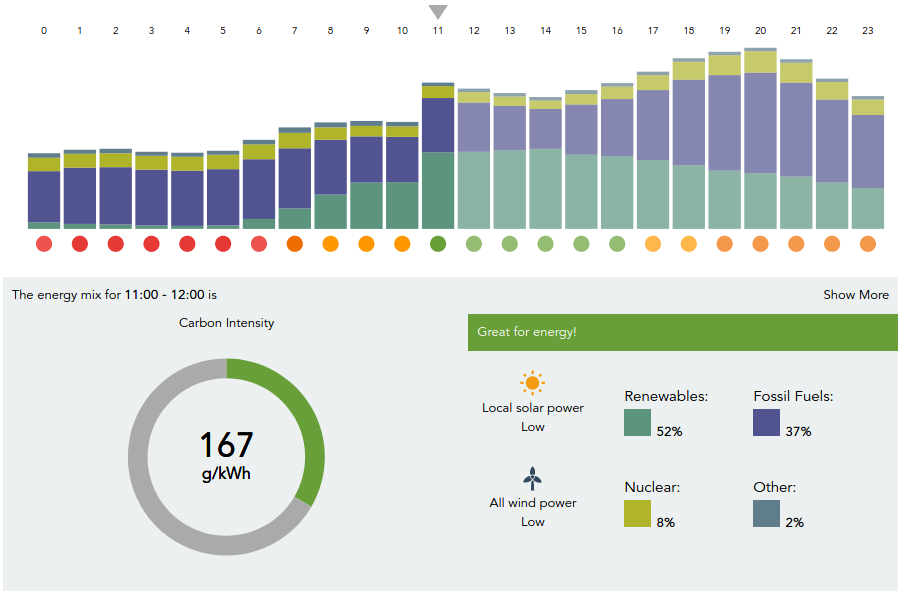
I've deliberately selected Fraddon BSP for the above example. It's the pinch-point in Cornwall which accepts the majority of generation from solar and wind sites.
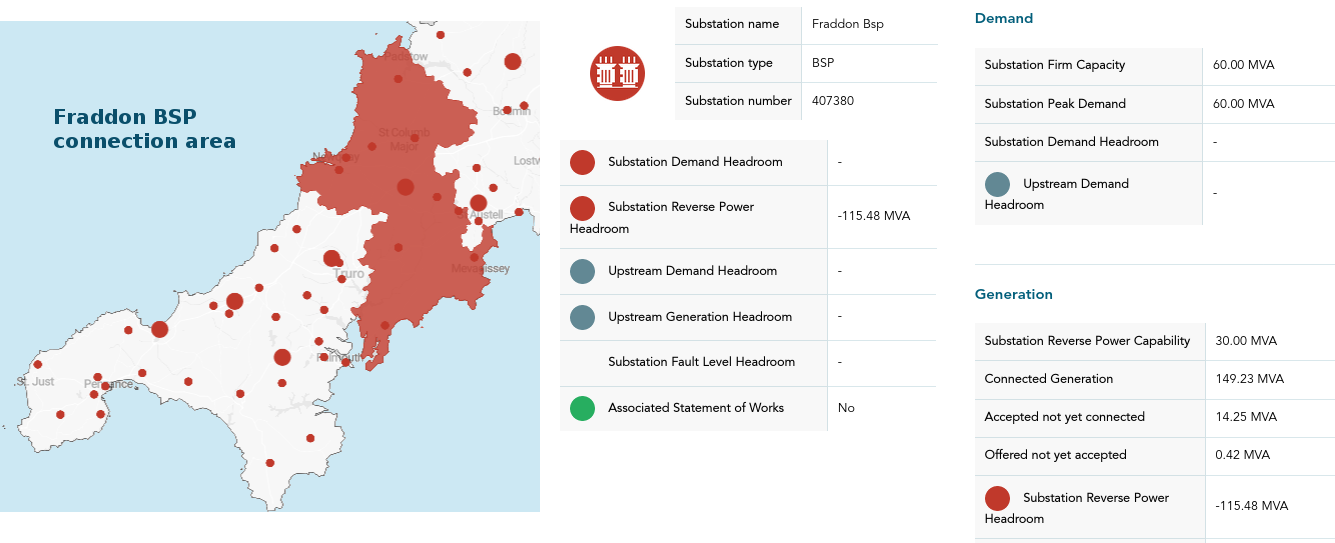
I paid particular attention to Fraddon during 2022. Its supply and demand statistics consistently differ from the national data on which consumer tariffs are based.
This post was modified 2 months ago by Transparent
Save energy... recycle electrons!
09/08/2026 11:02 am
yes, same with the IOG tariff which is even a bit harder to implement. It does create odd situations where IOG can charge the car at a very cheap rate during normal hours and at the same time allowing cheap consumption for the home at a much cheaper rate than the agile export rate at that time (perhaps one is regional and the other driven by more local factors). So if I could simultaneously buy and sell, I could maximise savings, even if it wokld make no sense from a real grid perspective…
Iog is definitely a bit beta IMHO. I get no control at all over how much charge it puts in (there is a contolf feature but it does not work) which means that whenever I plug in it attempts to schedule 12hrs plus charging time then complains when the car stops charging because the battery is full. On the last charge it reported 80kWh in charge insights, but the battery is only 64kWh and it put in about 48.
In our case, we constrain the charging level etc using the charger app and that still works.
Our (unrelated) annoyance is that the car charger is not able to query the car battery level (due to their own choice) unless we manually set the current battery level (on the charger app) at start of the charging session.
8kW Solis S6-EH1P8K-L-PLUS hybrid inverter; G99: 8kW export; 16kWh Seplos Fogstar battery; Ohme Home Pro EV charger; Vaillant Arotherm Pro 7kW; 100Amp head, HA lab on mini PC
10/08/2026 9:35 am
…
I really see systems like IOF as the future whereby the homeowner is compensated for allowing access and control of the hardware. Ultimately most of us buy batteries for cost savings reasons so if the numbers stack up then I'd just as soon Octopus control my battery as Tesla (especially as the Powerwall control algorithm is not the best).
….
I can certainly see the appeal and if ever there was an energy supplier with a fighting chance of treating the customer fairly it’s Octopus. However, I can’t ignore the inherent conflict of interest which, at least with less ethical suppliers, could be a scandal waiting for an inquisitive journalist.
Eventually, I have misgivings asking someone else to manage my money (effectively) when they have a clear vested interest in managing theirs. In the event of a conflict, whose interests get the higher priority?
That’s not to say the Intelligent range of tariffs are a bad idea; just that they don’t suit me.
I think the principle is that both parties are better off - the supplier because they can receive extra payments for grid balancing (or whatever), and the consumer because the supplier shares some of that financial benefit in exchange for use of the equipment.
As a consumer, we have no way of knowing how much (more) the supplier is making, and whether the split is fair. All we as consumers can evaluate is whether the benefits outweigh the costs. Having purchased my battery primarily for winter usage to run the heat pump off peak (Cosy), in summer I'm simply looking to make as much money as possible from my excess solar to offset my winter running costs.
I much prefer tariffs like Flux and Intelligent Flux which have clear pricing structures to those like Power Pack and other VPP add-ons (Axle) which are largely unknowns as they are event driven rather than clearly priced per kWh (I can reasonably estimate my generation / consumption in kWh) as I have no idea how many events there may be and therefore how much I may earn from them, and therefore am unable to evaluate them against a tariff like Flux.
Essentially I have 3 choices in summer (an EV tariff is not an option for me):
1. I could simply self-consume my own solar and export the excess at SEG rates, whereby my import tariff is irrelevant as I'm self-sufficient from Apr-Oct
2. I could do option 1 and use a VPP add-on like Octopus Power Pack or Axle, which would presumably be financially better than option 1, but I have no real way of knowing how much better before switching
3. I could use a tariff like Flux / IOF to achieve higher export rates, and for which I can reasonably estimate the financial rewards.
Option 1 is the least grid friendly - my battery is fully charged by early morning and I'm exporting large amounts of solar all day when the grid needs it least. Option 2 (if there is an event) and 3 are more grid friendly as I'm exporting my battery during the evening peak which helps reduce load on the grid at peak time, and as a consequence I'm then recharging from solar the following day rather than exporting that solar to the grid.
Given option 2 is fairly new, and I have no way to financially evaluate it (other than to try it as @bontwoody has done), option 3 is the clear winner for me, and IOF beats Flux as the financial rewards are slightly better plus I don't need to manage it - I can just leave Octopus to get on with it.
In summary, as a consumer I can evaluate a tariff like IOF in financial terms and make a decision if I consider I'm being adequately compensated for handing over use of my battery to my supplier. How and when they then use it is up to them. I get some people have trust issues in handing over control of their equipment - I view it simply as a financial transaction whereby you can have use of my battery in summer in exchange for a substantially higher average export price for my excess generation (in July my average export price was 20.6p/kWh and is 22.65p/kWh so far in Aug. Last summer it was 25-26p/kWh on IOF)
Samsung 12kW gen6 ASHP with 50L volumiser and large radiators. 7.2kWp solar (south facing), Tesla PW3 (13.5kW). Net Zero
10/08/2026 10:09 am
I understand your viewpoint, @old_scientist, and agree with much of it. I think the key is that in order for the more difficult to compare tariffs to work there has to be a level of mutual trust. Arguably, in the current market, that's most likely to occur with Octopus since they have now built up a history of being seen to act with some integrity. Not sure I could say the same of all the competitors.
What I was keen to say before - and it bears repeating - is that any criticisms I have of third parties controlling my kit are criticisms specific to me and my setup. If an intelligent tariff works for you, you should make use of it, which, of course, you are doing. The only cautionary note I would want to sound is that decisions like that should be made with eyes wide open precisely because of the difficulty in judging how equitable the arrangement is.
105 m2 bungalow in South East England
Mitsubishi Ecodan 8.5 kW air source heat pump
18 x 360W solar panels
1 x 6 kW GroWatt battery and SPH5000 inverter
1 x Myenergi Zappi
1 x VW ID3
Raised beds for home-grown veg and chickens for eggs
"Semper in excretia; sumus solum profundum variat"
1

SPONSORS
Degrees of Separation

Latest Posts
-

RE: Heat pump branding. Clever, contemporary… or a bit too much?
I think Heat Geek have done an amazing job on their bra...
By Tomtheheatingengineer , 4 hours ago
-
RE: HeatGeek vs Octopus surveys: puzzling disparity - any ideas why?
I have just had 3 heat loss surveys, one by heat geek o...
By David , 4 hours ago
-
RE: Heat Geek Zero Disrupt: Are We Sleepwalking Into Another Race to the Bottom?
I think that's the key question. After all inverter uni...
By Prunus , 6 hours ago
-
RE: battery storage without solar
As of October 1st they need specific qualifications to ...
By EtchedPixels , 7 hours ago
-
RE: How should the Boiler Upgrade Scheme be reformed?
A unit which uses water to transfer the heat/chill from...
By Temperature_Gradient , 7 hours ago
-
RE: Renewables & Heat Pumps in the News
With regards to the BUS grant raid, I gave it more thou...
By ASHP-BOBBA , 7 hours ago
-
RE: Why are ASHP installs so expensive?
The whole system seems to work on the basis of...
By ian33a , 8 hours ago
-
RE: Missing flow temperature in Heat Geek proposal
Good plan. If you can get half hourly meter readings a...
By JamesPa , 13 hours ago
-
RE: Heat Pumps Without Grants: Would You Have Installed One & Will You Now?
@editor Most certainly. The heat pump was an ideal s...
By Abernyte , 13 hours ago
-
Although regulations may well vary from country to coun...
By Majordennisbloodnok , 14 hours ago
-
RE: Does anyone have experience of a smart water meter?
Yep I caught our slow leak from a £100 bill rise 8)
By EtchedPixels , 14 hours ago
-
RE: Do You Need a Buffer Tank or Low Loss Header for Underfloor Heating in a Large Property?
@jamespa in some cases, failing the Turing test might b...
By GrahamF , 17 hours ago
-
RE: Passiv Smart Thermostat - Help & Forum Support
@energystoragetech The heat capacity of some...
By JamesPa , 19 hours ago
-
RE: tepeo ZEB UK Support & Info Thread
Sorry you are correct, I was remembering figures from t...
By JamesPa , 1 day ago


SPONSORS

