Joining the Renewable Heating Hub forums is completely free and only takes a minute. By registering you’ll be able to ask questions, join discussions, follow topics you’re interested in, bookmark useful threads and receive notifications when someone replies. Non-registered members also do not have access to our AI features. When choosing your username, please note that it cannot be changed later, so we recommend avoiding brand or product names. Before registering, please take a moment to read the Forum Rules & Terms of Use so we can keep the community helpful, respectful and informative for everyone. Thanks for joining!
Seal the Deal: Don't Let Your Heat Pump Leak Energy
Listed Grade 2 building with large modern extension. LG Therma V 16kw ASHP Underfloor heating + Rads 8.7kw pv solar 3 x 8.2kw GivEnergy batteries 1 x GivEnergy Gen1 hybrid 5.0kw inverter Manual changeover EPS MG4 EV
Listed Grade 2 building with large modern extension. LG Therma V 16kw ASHP Underfloor heating + Rads 8.7kw pv solar 3 x 8.2kw GivEnergy batteries 1 x GivEnergy Gen1 hybrid 5.0kw inverter Manual changeover EPS MG4 EV
I'll go with the standard grey open cell foam insulation you see indoors (as it's protected from UV), with the normal 45deg cut corners. Surely they cannot get that too wrong, can they?
Samsung 12kW gen6 ASHP with 50L volumiser and large radiators. 7.2kWp solar (south facing), Tesla PW3 (13.5kW). Net Zero
House-3 bed partial stone bungalow, 5kW Samsung Gen 6 ASHP (Self install)
6.9 kWp of PV
10kWh DC coupled battery
Blog: https://thegreeningofrosecottage.weebly.com/
Heatpump Stats: http://heatpumpmonitor.org/system/view?id=60
@editor yep... pipe size is more of concern maybe?
Insulation can certainly be improved!
Listed Grade 2 building with large modern extension. LG Therma V 16kw ASHP Underfloor heating + Rads 8.7kw pv solar 3 x 8.2kw GivEnergy batteries 1 x GivEnergy Gen1 hybrid 5.0kw inverter Manual changeover EPS MG4 EV
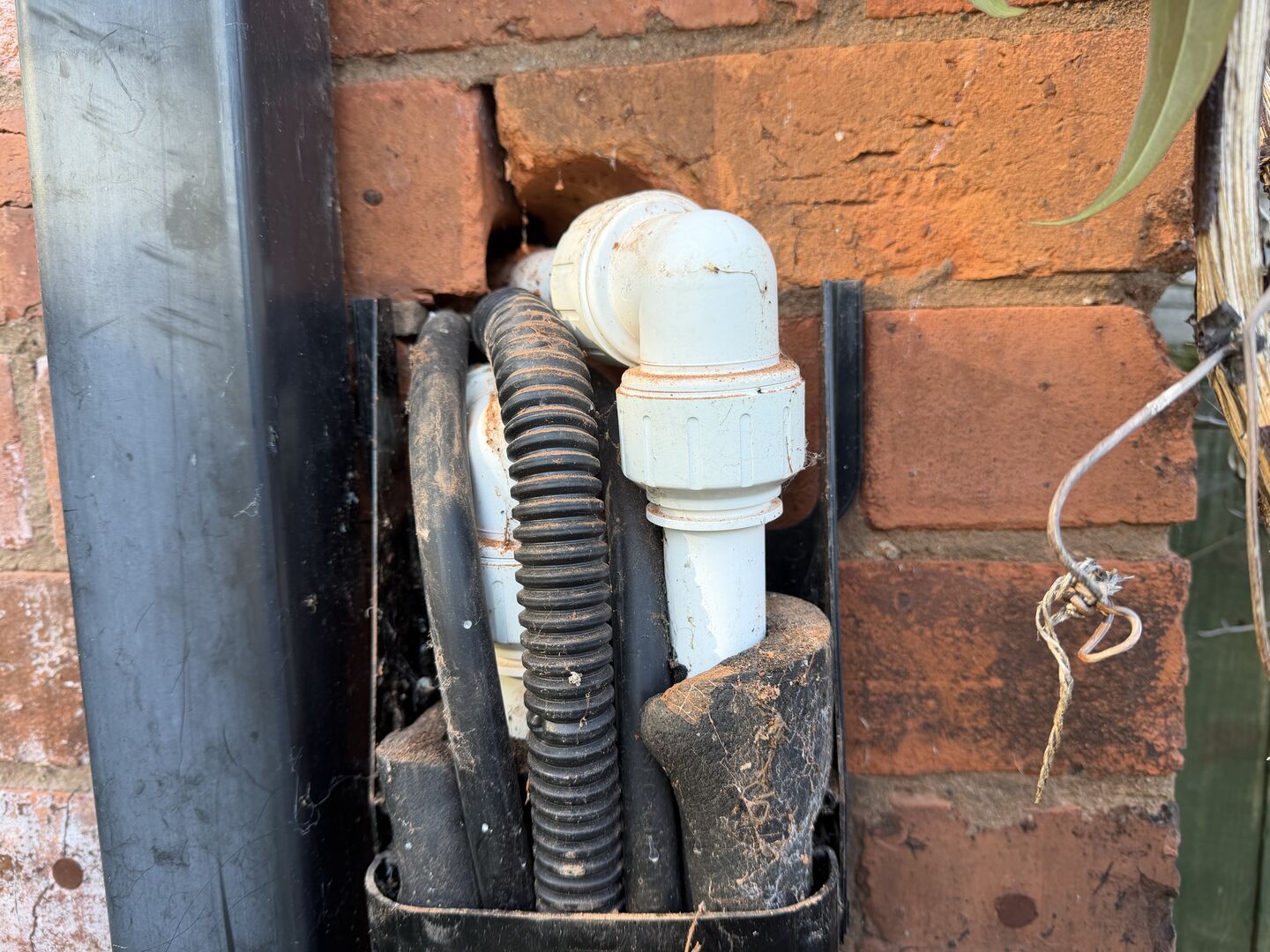
My first concern is that the hole through the brickwork doesn't appear to be sleeved.
There should be an outer casing which takes the weight of the wall above. That allows the inner pipes to move freely as they expand/contract with temperature.
To achieve that, all those existing pipes and electrical connections would need to be drawn out.
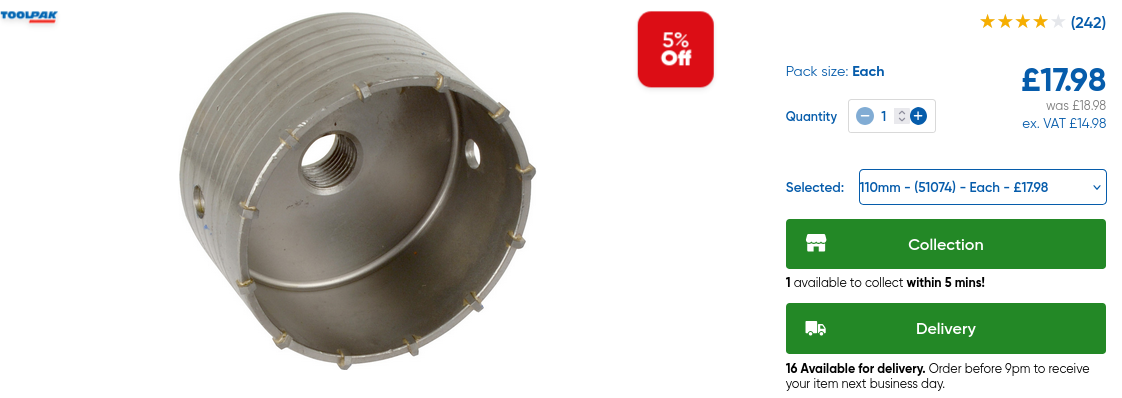
The hole should then be bored out with a TCT/Carbide core bit of an appropriate diameter for the sleeve. You don't need diamond bits to go through brick. It's 'soft'.
The hole needs to slop downwards to the outside at around 5°. Any rain or condensation will then not enter the house.
The sort of sleeve you'd be looking for would be a 110mm orange (underground) soil pipe.
That will leave enough space for pipe insulation to continue straight through the wall.
The best person to get this right is the home-owner. A DIY approach is preferable because you'll care about getting it right !