

Notifications
Clear all
Joining the Renewable Heating Hub forums is completely free and only takes a minute. By registering you’ll be able to ask questions, join discussions, follow topics you’re interested in, bookmark useful threads and receive notifications when someone replies. Non-registered members also do not have access to our AI features. When choosing your username, please note that it cannot be changed later, so we recommend avoiding brand or product names. Before registering, please take a moment to read the Forum Rules & Terms of Use so we can keep the community helpful, respectful and informative for everyone. Thanks for joining!

25/05/2026 8:57 pm
The point I was making about averages (in any region) is that the average of the half hourly, or daily, price over a year is not the same as the average price paid. If most of the consumption is when the price is highest (which is very likely the case) then the average price paid will be closer to the highest price than the unweighted average of the daily/half hourly prices.
OK, I missed that bit and you're right, of course.
That said, we still can't escape that the prices I provided were a direct comparison of leccy and gas under the same tariff structure on the same day, and so that gives a very real ratio based on actuals rather than averages. However, as you say, the tracker tariffs are not the most common ones chosen so it makes a lot of sense to try to find some similar historical comparison data for a more common tariff. I'll see what I can find.
105 m2 bungalow in South East England
Mitsubishi Ecodan 8.5 kW air source heat pump
18 x 360W solar panels
1 x 6 kW GroWatt battery and SPH5000 inverter
1 x Myenergi Zappi
1 x VW ID3
Raised beds for home-grown veg and chickens for eggs
"Semper in excretia; sumus solum profundum variat"

25/05/2026 9:38 pm
I'll see what I can find.
Good luck, I spent a couple of hours and, whilst I found several leads, the 'new' ONS numbers I found (source references in the spreadsheet) were by far the ones I trusted most. They don't say obviously what the methodology is, but I think it's likely to be consumption weighted. However even if it isn't that matters less than with a daily varying tracker rate, because the supplier tarrifs on which the ONS data is based will vary relatively infrequently compared to the octopus ones.
I do not dispute that that the ratios from octopus tracker are real and relevant, this does illustrate that choice of tarrif matters. I do wonder how octopus managed to depart so far, were they playing commercial games (or experiments) maybe they bought ahead the wrong amount by a large margin.
This post was modified 5 months ago 2 times by JamesPa
4kW peak of solar PV since 2011; EV and a 1930s house which has been partially renovated to improve its efficiency. 7kW Vaillant heat pump.
1
26/05/2026 10:28 am
OK, another day, another spreadsheet.
I managed to track down the historical prices since April 2019 for Octopus' gas and leccy under their Flexible tariff. I suspect this is the most widely adopted tariff structure.
I've posted the graph separately here.
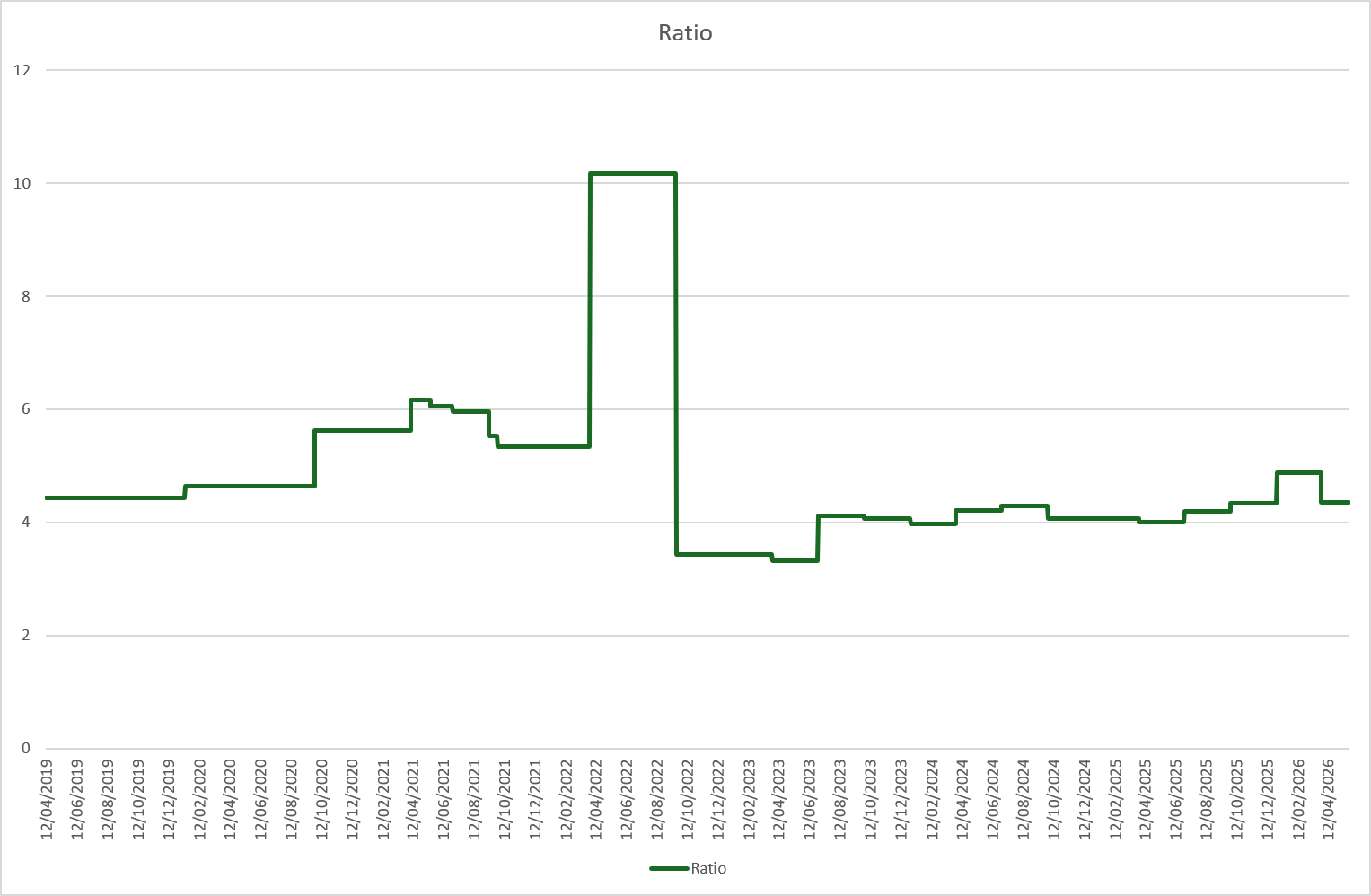
I'm not sure what to make of it to be frank except that it shows the ratio between gas and (price capped) leccy is pretty consistently just over 4. The blip between April 2022 and September 2022 is the really worrying one, though, since the gas prices stayed as it had been before but the leccy price shot up. The reason the ratio dropped back down again is not because the leccy price dropped but the gas price went up in proportion to the earlier leccy price rise.
What this graph is telling me in practical terms, though, is that apart from short term anomalies we've had 7 years where a heat pump has had to achieve a SCoP of more than 4 to maintain financial parity with a gas boiler, and that's never going to help the strategy of getting fossil fuel heating replaced. However, even a small reduction in the average price a homeowner pays for leccy can change the balance quite significantly, so it's understandable why so many of us now are playing with tariffs, growing our own power, time-shifting leccy purchase and so on.
105 m2 bungalow in South East England
Mitsubishi Ecodan 8.5 kW air source heat pump
18 x 360W solar panels
1 x 6 kW GroWatt battery and SPH5000 inverter
1 x Myenergi Zappi
1 x VW ID3
Raised beds for home-grown veg and chickens for eggs
"Semper in excretia; sumus solum profundum variat"
26/05/2026 10:42 am
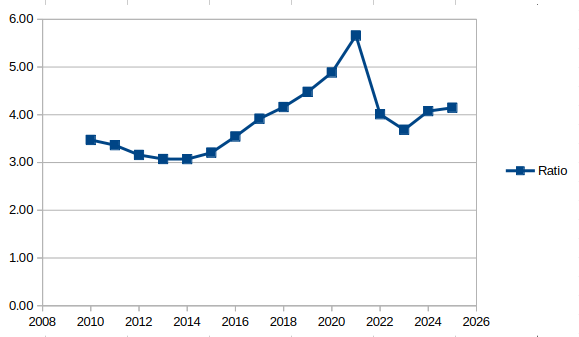
Thanks.Thats not far from being consistent with the ONS data (below). If you count late 2021/22 as a blip, the real change (if I believe the ONS data) happened between 2014 and 2021 when the ratio rose steadily from around 3.5 to around 4. Gas boilers are typically only 90% efficient so break even is probably a smidgen under 4, but its really of little consequence at this level (so I agree with your overall conclusion). The fact is that at a ratio of 4 you have to play with ToU tarrifs or batteries to achieve parity even unless you have a good install.
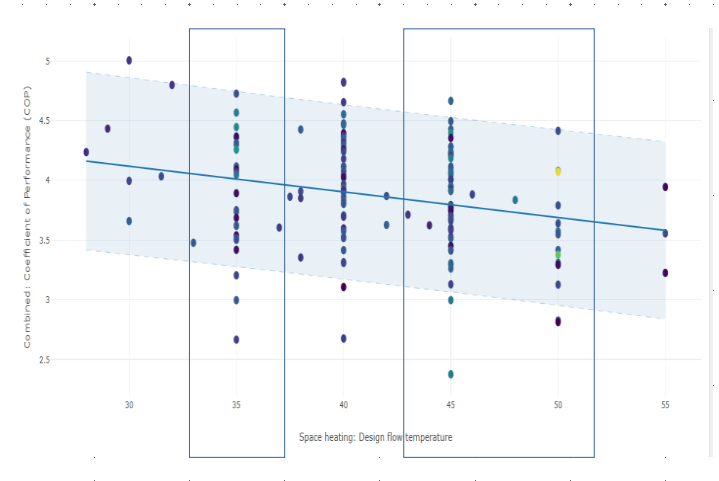
I have also pasted below a scattergram from openenergymonitor showing actual achieved SCOP vs design FT. Whats particularly interesting about this is how little design FT matters, the real variable is clearly installation quality/operating regime. I suspect this observation is what underlies the Octopus and Heat Geek zero disrupt philosophies.
This post was modified 5 months ago 3 times by JamesPa
4kW peak of solar PV since 2011; EV and a 1930s house which has been partially renovated to improve its efficiency. 7kW Vaillant heat pump.

26/05/2026 11:17 am
Thanks, @jamespa
There is one other thing to mention, though. If we've demonstrated some form of consistency between the Octopus data and the ONS data, we've demonstrated a consistent ratio of 4:1 between electricity and gas prices after the price cap. The tracker graphs show a rather larger ratio for the actual energy prices, so achieving that 4:1 is only after intervention by the Government - a cludge rather than a solution. Moreover, the energy companies are certainly under pressure to maintain their profits so what they can't charge as a result of a price cap is highly likely to just be recouped elsewhere (**cough**standing charge**cough**).
I'm not suggesting the standing charges are necessarily unfair but I'm sure there will be a wide range of approaches across energy suppliers ranging from socially upstanding and responsible to downright immoral. Overall, if we are to compare the cost of fossil fuel heating with the cost of electrical heating, I'm not comfortable using a capped pricing structure is a reasonable tool except in the short term for individual households choosing their next purchase, and even then only if they're sure some relevant information isn't being missed out.
105 m2 bungalow in South East England
Mitsubishi Ecodan 8.5 kW air source heat pump
18 x 360W solar panels
1 x 6 kW GroWatt battery and SPH5000 inverter
1 x Myenergi Zappi
1 x VW ID3
Raised beds for home-grown veg and chickens for eggs
"Semper in excretia; sumus solum profundum variat"
26/05/2026 11:23 am
Thanks, @jamespa
There is one other thing to mention, though. If we've demonstrated some form of consistency between the Octopus data and the ONS data, we've demonstrated a consistent ratio of 4:1 between electricity and gas prices after the price cap. The tracker graphs show a rather larger ratio for the actual energy prices, so achieving that 4:1 is only after intervention by the Government - a cludge rather than a solution. Moreover, the energy companies are certainly under pressure to maintain their profits so what they can't charge as a result of a price cap is highly likely to just be recouped elsewhere (**cough**standing charge**cough**).
I'm not suggesting the standing charges are necessarily unfair but I'm sure there will be a wide range of approaches across energy suppliers ranging from socially upstanding and responsible to downright immoral. Overall, if we are to compare the cost of fossil fuel heating with the cost of electrical heating, I'm not comfortable using a capped pricing structure is a reasonable tool except in the short term for individual households choosing their next purchase, and even then only if they're sure some relevant information isn't being missed out.
I agree, and not. Energy prices are a largely political construct because so much of what goes into them is politically influenced either at the local level or the global level. Furthermore the 'price cap' is in fact based on an analysis of costs not 'affordability' and designed to allow the energy suppliers to make a profit, its not a cap in the 'hard' sense, rather its a mechanism to ensure that those who cant be bothered (or are not eligible) to switch aren't ripped off. It does not involve any subsidy.
So I am not sure we can honestly talk about a 'true' price anyway and I think that the 'price cap' may be as good as anything (ie its no more imperfect than any other measure).
This post was modified 5 months ago by JamesPa
4kW peak of solar PV since 2011; EV and a 1930s house which has been partially renovated to improve its efficiency. 7kW Vaillant heat pump.

27/05/2026 8:43 am
Thanks, @jamespa
There is one other thing to mention, though. If we've demonstrated some form of consistency between the Octopus data and the ONS data, we've demonstrated a consistent ratio of 4:1 between electricity and gas prices after the price cap. The tracker graphs show a rather larger ratio for the actual energy prices, so achieving that 4:1 is only after intervention by the Government - a cludge rather than a solution. Moreover, the energy companies are certainly under pressure to maintain their profits so what they can't charge as a result of a price cap is highly likely to just be recouped elsewhere (**cough**standing charge**cough**).
I'm not suggesting the standing charges are necessarily unfair but I'm sure there will be a wide range of approaches across energy suppliers ranging from socially upstanding and responsible to downright immoral. Overall, if we are to compare the cost of fossil fuel heating with the cost of electrical heating, I'm not comfortable using a capped pricing structure is a reasonable tool except in the short term for individual households choosing their next purchase, and even then only if they're sure some relevant information isn't being missed out.
I agree, and not. Energy prices are a largely political construct because so much of what goes into them is politically influenced either at the local level or the global level. Furthermore the 'price cap' is in fact based on an analysis of costs not 'affordability' and designed to allow the energy suppliers to make a profit, its not a cap in the 'hard' sense, rather its a mechanism to ensure that those who cant be bothered (or are not eligible) to switch aren't ripped off. It does not involve any subsidy.
So I am not sure we can honestly talk about a 'true' price anyway and I think that the 'price cap' may be as good as anything (ie its no more imperfect than any other measure).
I have posted elsewhere but thought this was interesting historical data wrt to the conversation. Gives a view of what has and is driving the electricity cap. I haven't looked in detail, others will be more qualified than me to draw interesting observations. Of course it may have been posted before.
https://www.electricitybills.uk/
27/05/2026 9:36 am
Whether it's been posted before or not (I don't remember seeing it), @jeff, that's a hugely useful chart that has explained clearly several details I was only half understanding. Thank you.
105 m2 bungalow in South East England
Mitsubishi Ecodan 8.5 kW air source heat pump
18 x 360W solar panels
1 x 6 kW GroWatt battery and SPH5000 inverter
1 x Myenergi Zappi
1 x VW ID3
Raised beds for home-grown veg and chickens for eggs
"Semper in excretia; sumus solum profundum variat"

27/05/2026 11:13 am
Whether it's been posted before or not (I don't remember seeing it), @jeff, that's a hugely useful chart that has explained clearly several details I was only half understanding. Thank you.
Yep, lots of interesting points about how components of our bills may rise and fall, for example probably expect large increases in inflation protected capacity market and CfD costs etc even if the basic wholesale price goes down. The major energy retailers have spoken in the past about this and that although getting off fossil fuels will reduce the likelyhood of spikes, we should still likely have price rises over time.
27/05/2026 11:46 am
Whether it's been posted before or not (I don't remember seeing it), @jeff, that's a hugely useful chart that has explained clearly several details I was only half understanding. Thank you.
Yep, lots of interesting points about how components of our bills may rise and fall, for example probably expect large increases in inflation protected capacity market and CfD costs etc even if the basic wholesale price goes down. The major energy retailers have spoken in the past about this and that although getting off fossil fuels will reduce the likelyhood of spikes, we should still likely have price rises over time.
I've always expected price rises over time; it's in the nature of things. What I'm really interested in is any efforts to reduce or remove the link between gas and electricity prices; for better or worse, each should stand on its own.
Your chart helps to lay bare the component parts which in turn helps understand the wider mechanism. Being a bear of very little brain, there are still effects I can only see after sitting for a while and mulling it all over, where others might see things more instinctively, but I'm certainly feeling better informed now.
105 m2 bungalow in South East England
Mitsubishi Ecodan 8.5 kW air source heat pump
18 x 360W solar panels
1 x 6 kW GroWatt battery and SPH5000 inverter
1 x Myenergi Zappi
1 x VW ID3
Raised beds for home-grown veg and chickens for eggs
"Semper in excretia; sumus solum profundum variat"

28/05/2026 9:36 am
Yep, lots of interesting points about how components of our bills may rise and fall, for example probably expect large increases in inflation protected capacity market and CfD costs etc even if the basic wholesale price goes down. The major energy retailers have spoken in the past about this and that although getting off fossil fuels will reduce the likelyhood of spikes, we should still likely have price rises over time.
Thanks, useful to have the breakdown. One thing is always true, the less we consume, be it because of insulation, PV or installing a pump, the less we pay.
8kW Solis S6-EH1P8K-L-PLUS hybrid inverter; G99: 8kW export; 16kWh Seplos Fogstar battery; Ohme Home Pro EV charger; Vaillant Arotherm Pro 7kW; 100Amp head, HA lab on mini PC
28/05/2026 10:00 am
...
One thing is always true, the less we consume, be it because of insulation, PV or installing a pump, the less we pay.
Not entirely accurate. We are on Octopus' Agile Incoming tariff, so there are (infrequent, but common enough) times when the price goes negative and we're paid to take electricity. In those cases, obviously, we pay less by consuming more.
Being a techie at heart (and by profession), I seem to be constitutionally incapable of hearing or reading an absolute statement without mentally testing it. In fact, rather than being petty and attempting to correct just for the sake of it, I'm seeing this edge case as the "exception that proves the rule".
In short, @batpred, I do in fact agree with you.
105 m2 bungalow in South East England
Mitsubishi Ecodan 8.5 kW air source heat pump
18 x 360W solar panels
1 x 6 kW GroWatt battery and SPH5000 inverter
1 x Myenergi Zappi
1 x VW ID3
Raised beds for home-grown veg and chickens for eggs
"Semper in excretia; sumus solum profundum variat"
SPONSORS

Degrees of Separation
Latest Posts
-

RE: How will removing the standing charge on gas bills benefit heat pumps?
I'm not sure it makes much of a difference to heat-pump...
By Temperature_Gradient , 3 hours ago
-
@editor Ouch, sorry to re start the tick. I had assume...
By DavidB , 4 hours ago
-
RE: Say hello and introduce yourself
@e-a-west as the good Major said, welcome to the forums...
By Mars , 5 hours ago
-
RE: New Build 3 Phase or 1Phase
We are on three phase power because it's an enormous li...
By EtchedPixels , 6 hours ago
-
RE: How much of your renewable and home setup would still work if the internet went down?
Yes I actually have a copy of a tool that whenever a ce...
By EtchedPixels , 14 hours ago
-
RE: Indevolt Batteries UK Support & Info Thread
@editor Hi, To resolve this, please tap on the A...
By Indevolt Tech , 22 hours ago
-
RE: Double or Triple Glazed Windows?
Posted by: @singlespeed With 9 years repairing windo...
By Rob of York , 2 days ago
-
@transparent we’re still running a secure version of PH...
By Mars , 2 days ago
-
RE: How quickly would you want/expect heat recovery to take from setback?
Much longer than that here. The heating isn't even on. ...
By bobflux , 2 days ago
-
RE: Passiv Smart Thermostat - Help & Forum Support
Obviously the weather is changeable but there's a defin...
By Singlespeed , 2 days ago
-
RE: The Changing Jet Stream Could Challenge UK Air Source Heat Pumps
@rob-of-york I must admit that when we had a Daikin hea...
By Toodles , 2 days ago
-
RE: Forum updates, announcements & issues
Get the Renewable Heating Hub heads-up on WhatsApp. I...
By Mars , 2 days ago
-
RE: Safety study for plug in batteries out to tender - looks like Q3 2027 at best before legal
@editor I pointed out to the one of the Fuse execs that...
By dansus , 2 days ago
-
RE: 15kw pump for 225m2 1990's house - over kill?
@seaviews As well as loft insulation, there are othe...
By Rob of York , 3 days ago




SPONSORS

