Joining the Renewable Heating Hub forums is completely free and only takes a minute. By registering you’ll be able to ask questions, join discussions, follow topics you’re interested in, bookmark useful threads and receive notifications when someone replies. Non-registered members also do not have access to our AI features. When choosing your username, please note that it cannot be changed later, so we recommend avoiding brand or product names. Before registering, please take a moment to read the Forum Rules & Terms of Use so we can keep the community helpful, respectful and informative for everyone. Thanks for joining!
Regarding the last 3 cycles. These are coming out of the defrost cycles, so the temperature rises.
Yes but it reaches a higher temperature than the previous defrost cycles, for which there must be an explanation. This might give a clue to why the rest of the defrost cycles don't get back to 31. We saw this behaviour before and its a bit puzzling. Lets see what this night tells us. I feel we need to get to the bottom of this. I will keep thinking about it in the mean time.
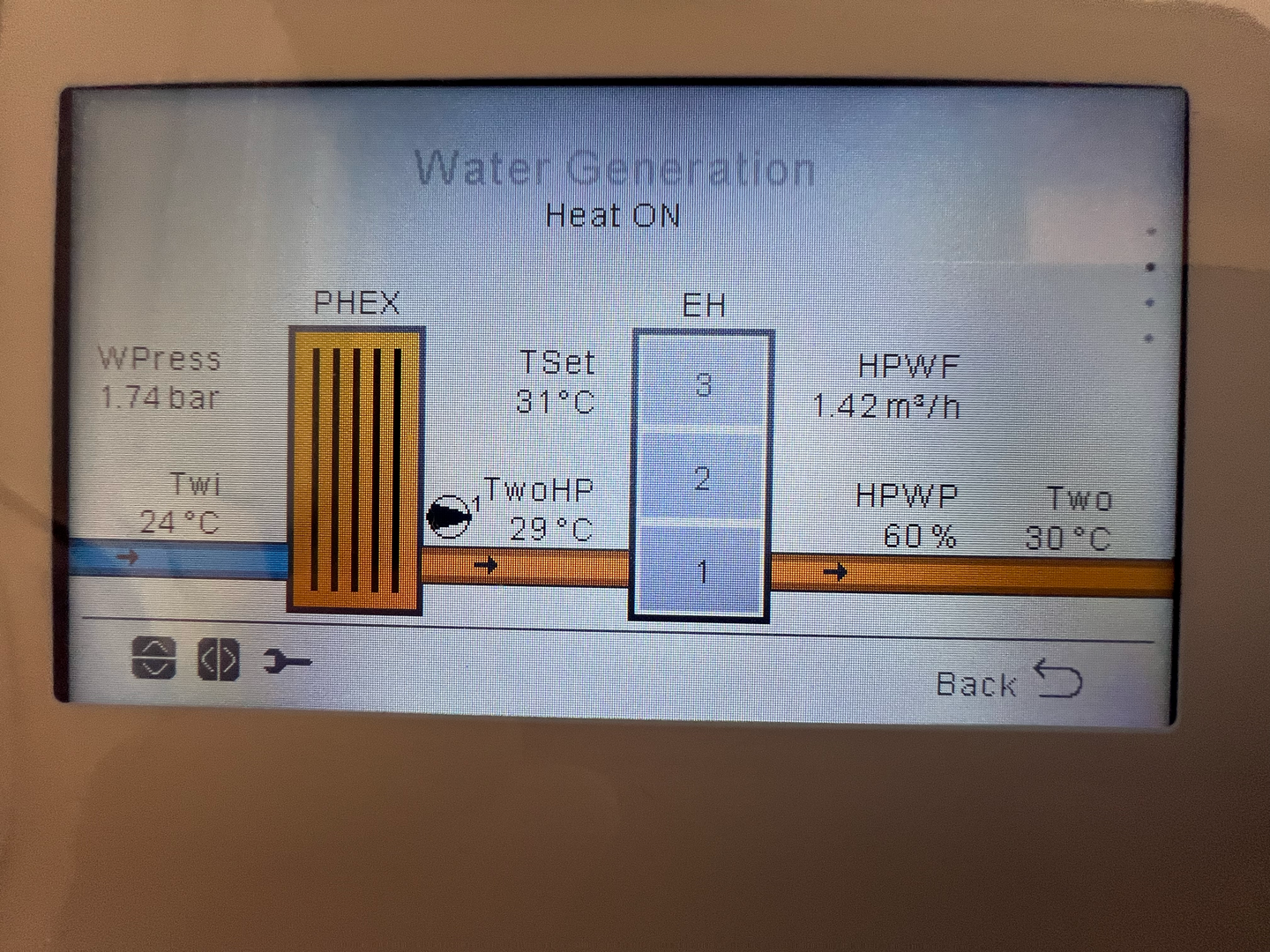
Do you by any chance know what the heat pump thinks the TWO and TWI are at the high point of a defrost cycle and at a high point of a non defrost part. It could just possibly be a buffer effect. I cant immediately see a mechanism for the specific symptom but it would be good to rule this out, and the heat pump knows!
Regarding the last 3 cycles. These are coming out of the defrost cycles, so the temperature rises.
Do you by any chance know what the heat pump thinks the TWO and TWI are at the high point of a defrost cycle and at a high point of a non defrost part. It could just possibly be a buffer effect. I cant immediately see a mechanism for the specific symptom but it would be good to rule this out, and the heat pump knows!
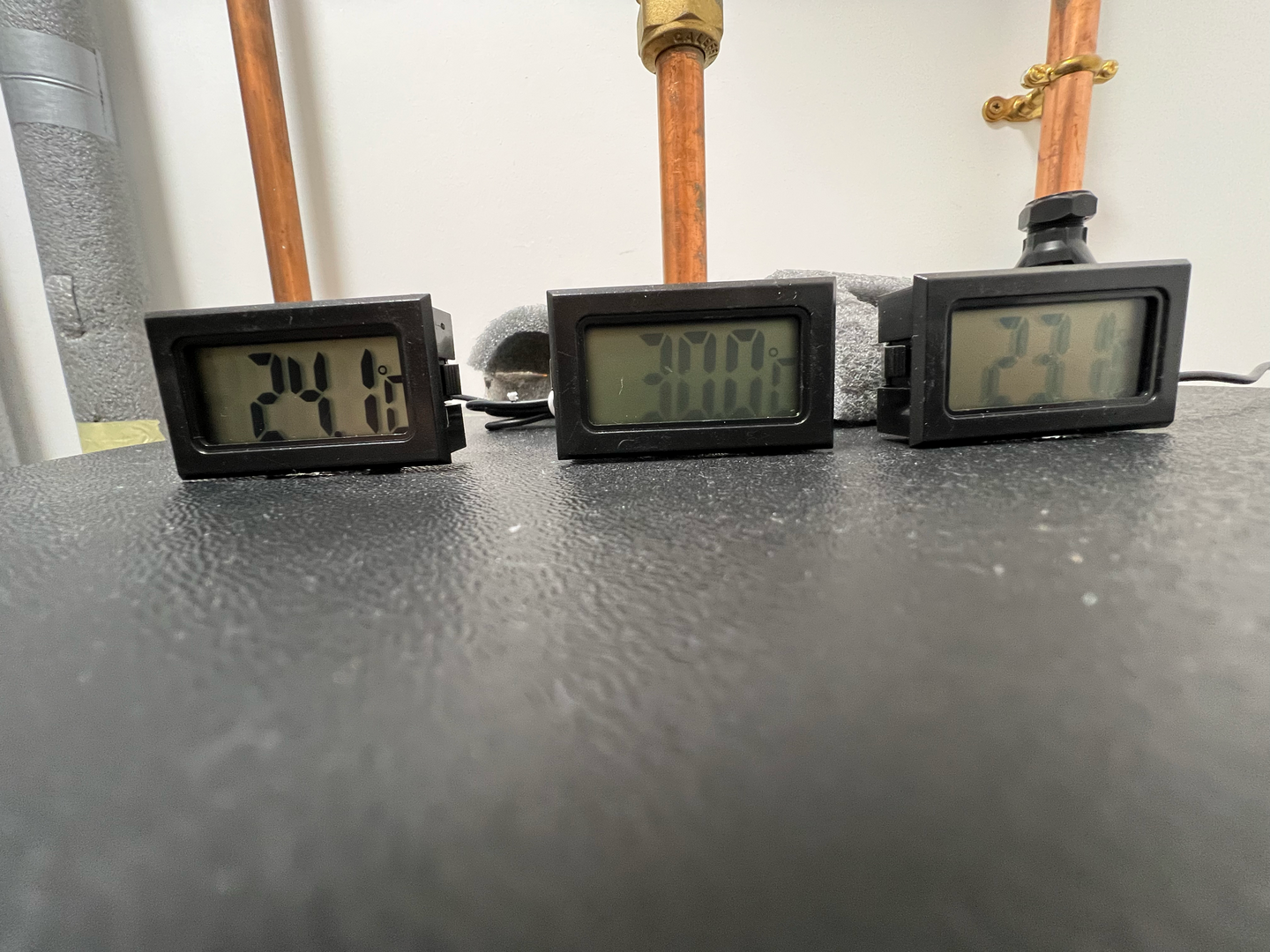
I have been writing down the temperatures on the probes on top of the buffer.
High Point just prior to Defrost Cycle
Two - 28.8C (significant drop in temperature)
Twi - 26.3C
Water is a lot cooler because the HP is iced up and not producing the heat required.
High Point Normal Cycle
Two - 31.3C
Twi - 27.3C
Typically I see 31C into the top of the buffer. 4 or 5C across the floor manifold. +0.7C differential across the lower ports of the buffer (so the mixing inside the buffer thats going on).
2024 build bungalow, Southern England, 179 m2, 12w/m2 Underfloor heating, fully open
Vaillant aroTHERM plus 3.5kW
50 litre volumiser
3.6KW solar panels Tesla 13.5kw Powerwall 3
Water is a lot cooler because the HP is iced up and not producing the heat required.
Thats an assumption you are making and it may well turn out to be true, but the evidence is entirely consistent with that:
In the first plot you shared the flow temperature drop occurred well before the onset of defrost cycling. In both that plot and the latest plot the flow temperature rise also occurs about 3 cycles before defrost cycling ceases. Now it may be both of these are due to OAT changes but we need to know for certain because...
If the heat pump cant keep up during defrost then your original statement that it is oversized cant be true, by definition, an thus getting a smaller one will make matters worse. The exception to this would be if the heatpump is faulty
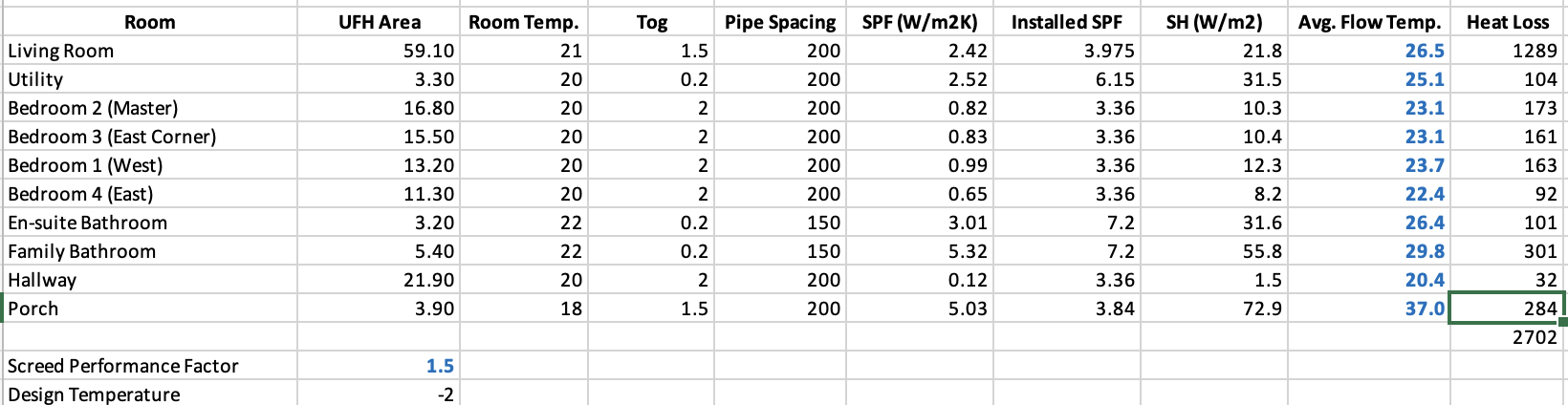
It also begs the question, if your house loss is 2.8kW, where is the rest going?
Defrost every 40mins is quite a lot, but not so far out that it would make such a big difference if your heat pump is as oversized as you say it is.
I have been writing down the temperatures on the probes on top of the buffer.
Noted. Can you check what the heat pump itself thinks TWI and TWO are in the defrost and non defrost condition and also what the heat pump thinks its target temperature is in the defrost condition. This info plus what happens tonight should help narrow down whether the assumption is correct or whether there is something else going on.
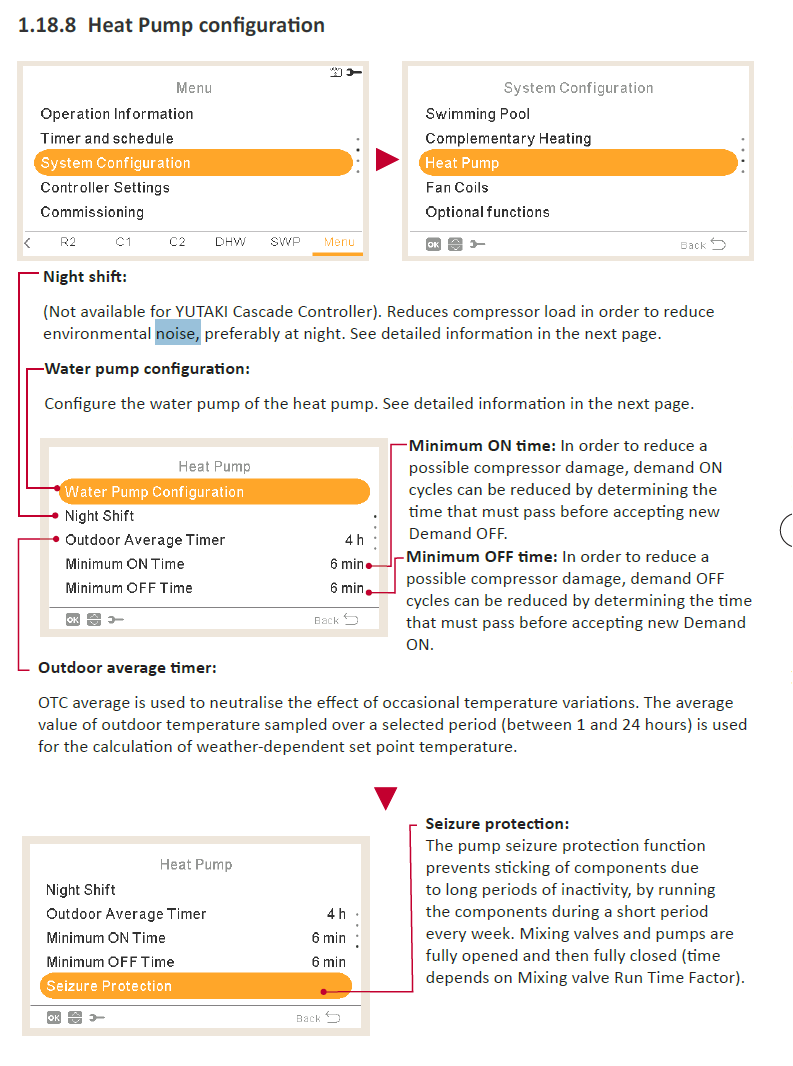
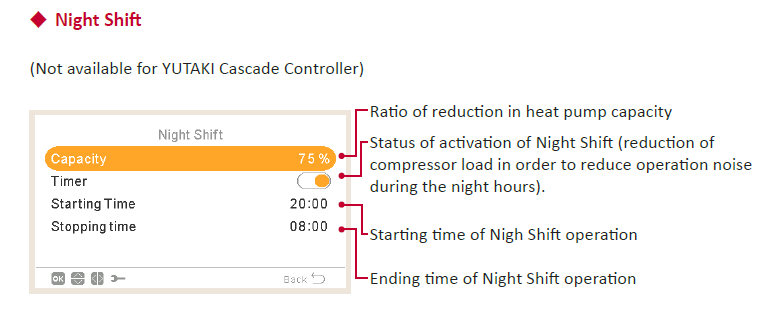
PS Hitachi call low noise mode 'night shift'
This post was modified 11 months ago 3 times by JamesPa
4kW peak of solar PV since 2011; EV and a 1930s house which has been partially renovated to improve its efficiency. 7kW Vaillant heat pump.
Water is a lot cooler because the HP is iced up and not producing the heat required.
Thats an assumption you are making and it may well turn out to be true, but the evidence is entirely consistent with that:
In the first plot you shared the flow temperature drop occurred well before the onset of defrost cycling. In both that plot and the latest plot the flow temperature rise also occurs about 3 cycles before defrost cycling ceases. Now it may be both of these are due to OAT changes but we need to know for certain because...
If the heat pump cant keep up during defrost then your original statement that it is oversized cant be true, by definition, an thus getting a smaller one will make matters worse. The exception to this would be if the heatpump is faulty
It also begs the question, if your house loss is 2.8kW, where is the rest going?
Defrost every 40mins is quite a lot, but not so far out that it would make such a big difference if your heat pump is as oversized as you say it is.
I have been writing down the temperatures on the probes on top of the buffer.
Noted. Can you check what the heat pump itself thinks TWI and TWO are in the defrost and non defrost condition and also what the heat pump thinks its target temperature is in the defrost condition. This info plus what happens tonight should help narrow down whether the assumption is correct or whether there is something else going on.
PS Hitachi call low noise mode 'night shift'
2024 build bungalow, Southern England, 179 m2, 12w/m2 Underfloor heating, fully open
Vaillant aroTHERM plus 3.5kW
50 litre volumiser
3.6KW solar panels Tesla 13.5kw Powerwall 3
Heating only just going on today (4:30pm), been off since last night (my intervention as we are too hot). Outside it's 13C here. Only reason for putting on tonight is to keep some heat in the floor. Bungalow at 21C, so not really cold.
I know about night shift. Hitachi set this up when they updated the sw. It was done to lower the output of the heat pump because it was oversized.
Regarding Twi and Two they match my probe data, but I will send the evidence from tonight. (only in non-defrost mode as no defrosts tonight).
2024 build bungalow, Southern England, 179 m2, 12w/m2 Underfloor heating, fully open
Vaillant aroTHERM plus 3.5kW
50 litre volumiser
3.6KW solar panels Tesla 13.5kw Powerwall 3
It also begs the question, if your house loss is 2.8kW, where is the rest going?
I know these surveys are not the most accurate.
From the Energy Performance Report
From the Energy Survey
The building is incredible in mild conditions, such as today, no heating on. But in very cold conditions (-4C) it seems to struggle (12kw overnight at AOT -4C), but that could be down to the inefficient defrost cycles.
I should add we have heat recovery running at the time, which is worth a loss of 500 Watts.
Just some observations above.
2024 build bungalow, Southern England, 179 m2, 12w/m2 Underfloor heating, fully open
Vaillant aroTHERM plus 3.5kW
50 litre volumiser
3.6KW solar panels Tesla 13.5kw Powerwall 3