

Notifications
Clear all
Joining the Renewable Heating Hub forums is completely free and only takes a minute. By registering you’ll be able to ask questions, join discussions, follow topics you’re interested in, bookmark useful threads and receive notifications when someone replies. Non-registered members also do not have access to our AI features. When choosing your username, please note that it cannot be changed later, so we recommend avoiding brand or product names. Before registering, please take a moment to read the Forum Rules & Terms of Use so we can keep the community helpful, respectful and informative for everyone. Thanks for joining!

09/07/2026 9:50 am
... but as I said, I did get a call to say they wouldn’t upgrade the cable to my house at some point.
You had mentioned that they told you they would upgrade the cable at some point, but not very soon?
8kW Solis S6-EH1P8K-L-PLUS hybrid inverter; G99: 8kW export; 16kWh Seplos Fogstar battery; Ohme Home Pro EV charger; Vaillant Arotherm Pro 7kW; 100Amp head, HA lab on mini PC
1

Topic starter
09/07/2026 10:00 am
... but as I said, I did get a call to say they wouldn’t upgrade the cable to my house at some point.
You had mentioned that they told you they would upgrade the cable at some point, but not very soon?
Ah ha! People are paying attention 😀! My mistake, they said they would upgrade it. I’ll chase it and ask if switching phase would help.
2

09/07/2026 2:28 pm
The fact they said they would upgrade it is important. If that was in writing then that's a promise you can reasonably expect to enforce and have relied upon.
Topic starter
09/07/2026 2:43 pm
Not in writing, just a phone call but the chap said it had been logged so....I haven't had a chance to contact them yet but I will do so. My inverter has real-time info including "Phase A Voltage" (currently reporting 249.09V) which is where i've seen the spikes >254V reported before. I would assume that is either how it reads it OR what it has raised it to in order to export (I am absolutely no expert or knowledge reservoir on this stuff!!)


09/07/2026 2:54 pm
@andrewj fwiw if you look at my other thread you can see my spreadsheet for voltages. That is based on my GivEnergy inverter.
It gives a reading for its perceived Grid voltage as well as the Inverter voltage.
There is a significant difference. Often around 6v
As @transparent has observed the true DNO voltage at the meter will probably be different again. And in terms of DNO they are most interested in "sustained" voltage - not brief spikes.
ChatGPT tells me
For a complaint like yours, DNO would typically look at several things:
1. Continuous logged voltage, often recorded every 1 second or every few seconds by a power quality recorder (such as the PM1000 my engineer installed).
2. 10-minute average voltage. This is commonly used in power quality standards because it filters out very short spikes while still showing whether the network is genuinely operating too high or too low.
3. Duration above the statutory limit. They're interested in whether the voltage is just briefly touching 253–254 V, or whether it remains above the limit for many minutes or even hours.
This post was modified 4 months ago 2 times by Tim441
Listed Grade 2 building with large modern extension.
LG Therma V 16kw ASHP
Underfloor heating + Rads
8.7kw pv solar
3 x 8.2kw GivEnergy batteries
1 x GivEnergy Gen1 hybrid 5.0kw inverter
Manual changeover EPS
MG4 EV
Topic starter
09/07/2026 3:10 pm
@tim441 They did that last year: fitted a voltage recorder for a week and then took it away to analyse the data. They agreed that it was reaching voltages of around 259V, although I can't remember now if they mentioned anything about bad 10-minute averages. I suspect the averages are ok. Anyway, as I mentioned, I'm some distance from the substation - I reckon a good 250m as the crow flies but who knows by cable!! - and tapping down wasn't an option. Hence the decision to upgrade the cable to the house to reduce resistance.
09/07/2026 3:14 pm
@andrewj if will be interesting to see if a phase change was considered. Presumably was as it must be much cheaper & easier than cable upgrade! But maybe they tested the other phase and found it was even worse!!!
Listed Grade 2 building with large modern extension.
LG Therma V 16kw ASHP
Underfloor heating + Rads
8.7kw pv solar
3 x 8.2kw GivEnergy batteries
1 x GivEnergy Gen1 hybrid 5.0kw inverter
Manual changeover EPS
MG4 EV

09/07/2026 4:07 pm
May I please clarify what is being reported here?
The problem that @tim441 is stating is a solar inverter which is still exporting to the grid despite the voltage being above the 253v upper limit.
That seems most likely to be in a neighbouring property, rather than his own house.
But I'm also concerned that the voltage deviation is being interpreted by his GivEnergy inverter as being sufficiently great that it should back-off from exporting.
Those are the early signs of a possible Cascade Effect, whereby a few hundred inverters in a geographical area all disconnect and the voltage plummets.
That's what happened in Spain on 28th April 2025...
... which we refer to as the Iberian Blackout.
See Technical / Factual Report here as a PDF,
and read Section 1.3 starting on p.10.
The EV charger doesn’t tell me voltage levels, just goes red when a PE fault is detected. This happens a lot at the moment during the day when it’s very sunny
OK. Now let's clarify that.
There is no direct link between a PE Fault and an Over-Volts Fault.
I've tried to make a few reasonable assumptions based on what you've written, so as not to ask you technical questions.
But the time to go deeper into technical stuff has arrived.
1: I've assumed that your house is supplied using a TN-C or TN-CS cable connection to the local substation transformer.
That's where the DNO provides you with the earth connection rather than the house having its own earth stake in the ground outside.
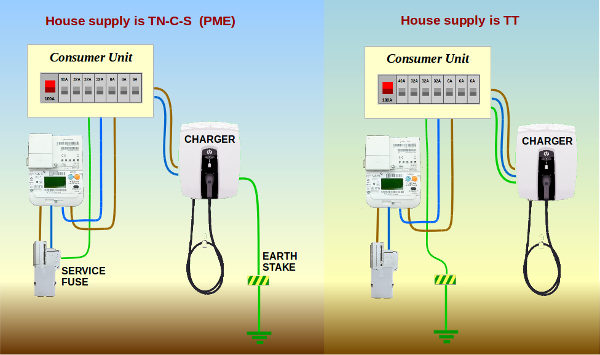
Most UK homes have TN-C or TN-CS cable feeds, and the substation will have a notice fixed to it PME which stands for Protective Multiple Earth.
The safety earth is actually provided at the centre-point of the transformer windings, which is the same as the Neutral connection.
Do you know what type of electricity supply you have?
2: There are possible dangers with using an EV charger on a TN-C or TN-CS supply.
You need to consider what happens if there is a cable-break in the Neutral/Earth conductor back to the transformer.
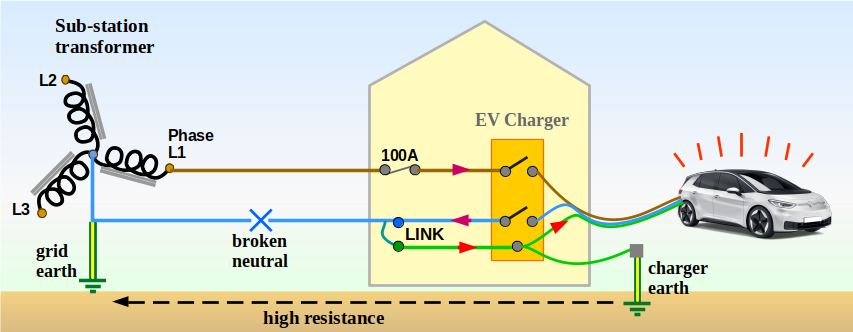
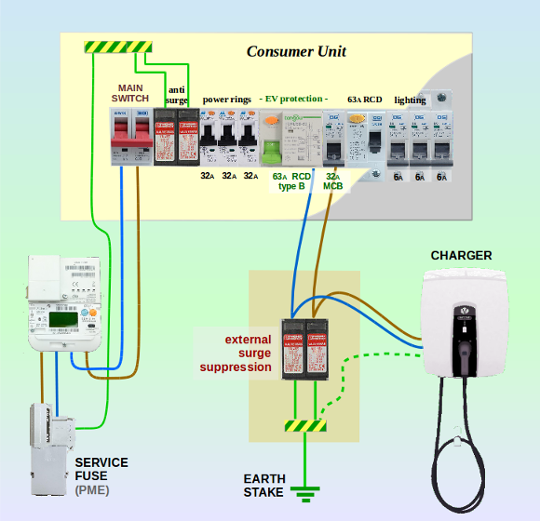
For several years this was addressed by Professional Installers fitting a dedicated earth stake into the ground, for use solely by the EV charger.
Very often they used a connection box which also had surge suppression to prevent a lightning strike to earth being picked up by that ground-stake and being carried into the home.
3: EV Charger manufacturers could see problems with that arrangement.
It took time and effort from the Installer to get right and test, and there was a greater possibility of shoddy installations existing.
Some manufacturers therefore changed to a different approach in which the charger's own electronics senses the resistance between the conductors, which confirmed whether there really was a Protective Earth path all the way back to the substation transformer.
If not, the charger would cease charging and notify the home owner that a PE Fault existed.
That means the householder receives a PE Fault alert and hasn't a clue what to do about it!
You have no idea if the Neutral wire has been cut below ground level, especially since below-ground Neutral breakages are becoming more likely due to the use of EV chargers!
If you can sense a circular argument emerging here, then you're absolutely right!
Let me pause at this point and allow @andrewj to check his type of electrical supply...
... and ponder whether the High-Volts error he's writing about actually exists or not.
This post was modified 4 months ago by Transparent
Save energy... recycle electrons!

Topic starter
09/07/2026 5:01 pm
@transparent I'll try and answer this as best I can.
My house looks like your TN-CS (PME) image: there is an earth lead directly back into the service fuse. My charger does not have its own Earth stake but it does have its own consumer unit wired via Henley Block to the incoming supply (i.e. it isn't wired into the house consumer unit) The charger consumer unit has a surge protector in it but no earth stake.
I originally had a PodPoint charger but this was changed to a HyperVolt 3 charger. The PodPoint charger had no indicator LEDs for notifying problems but I believe has built-in PEN protection; the HyperVolt also has built in PEN protection and can indication problems by flashing a red led.
From my limited reading the inbuilt PEN detection is poor on most chargers and doesn't really reflect a genuine PEN problem (the exception may be Zappi chargers.)
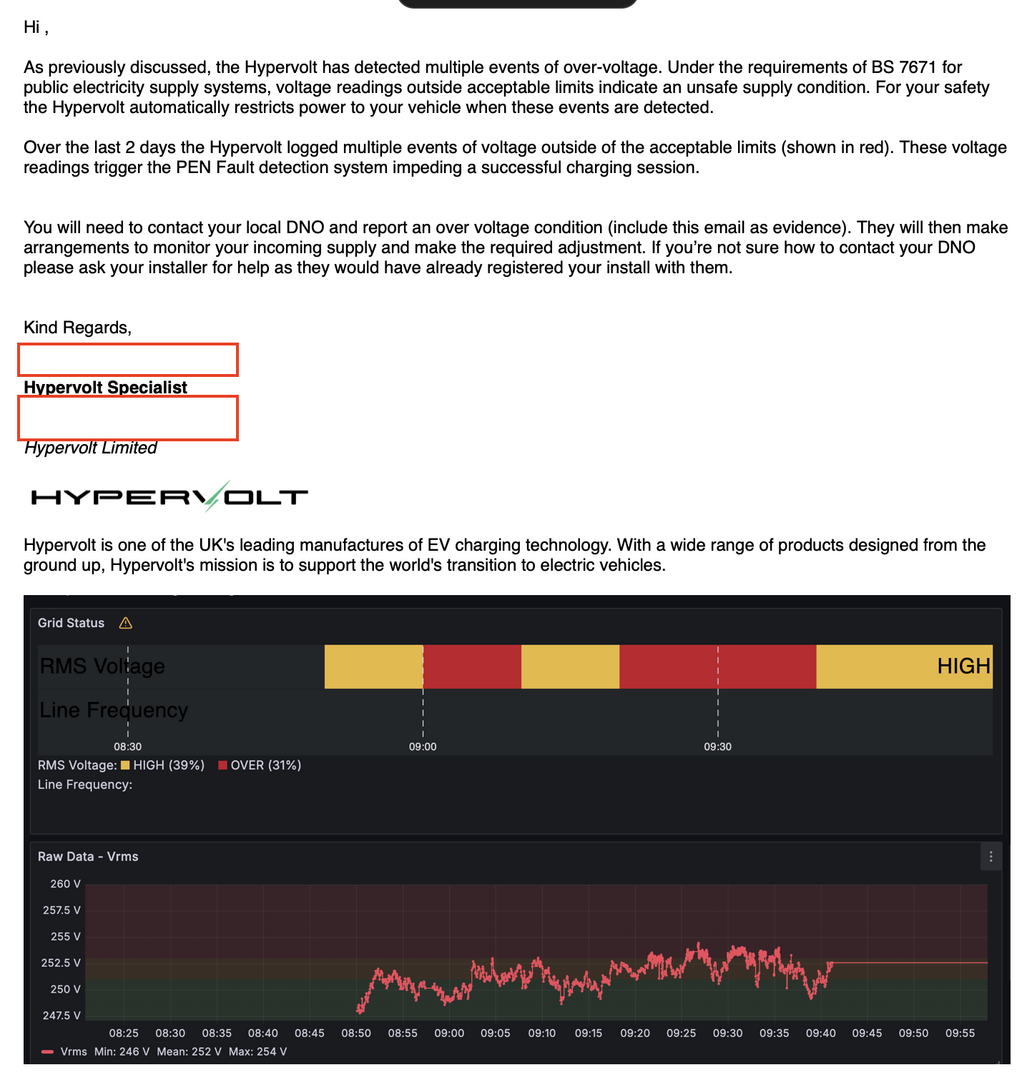
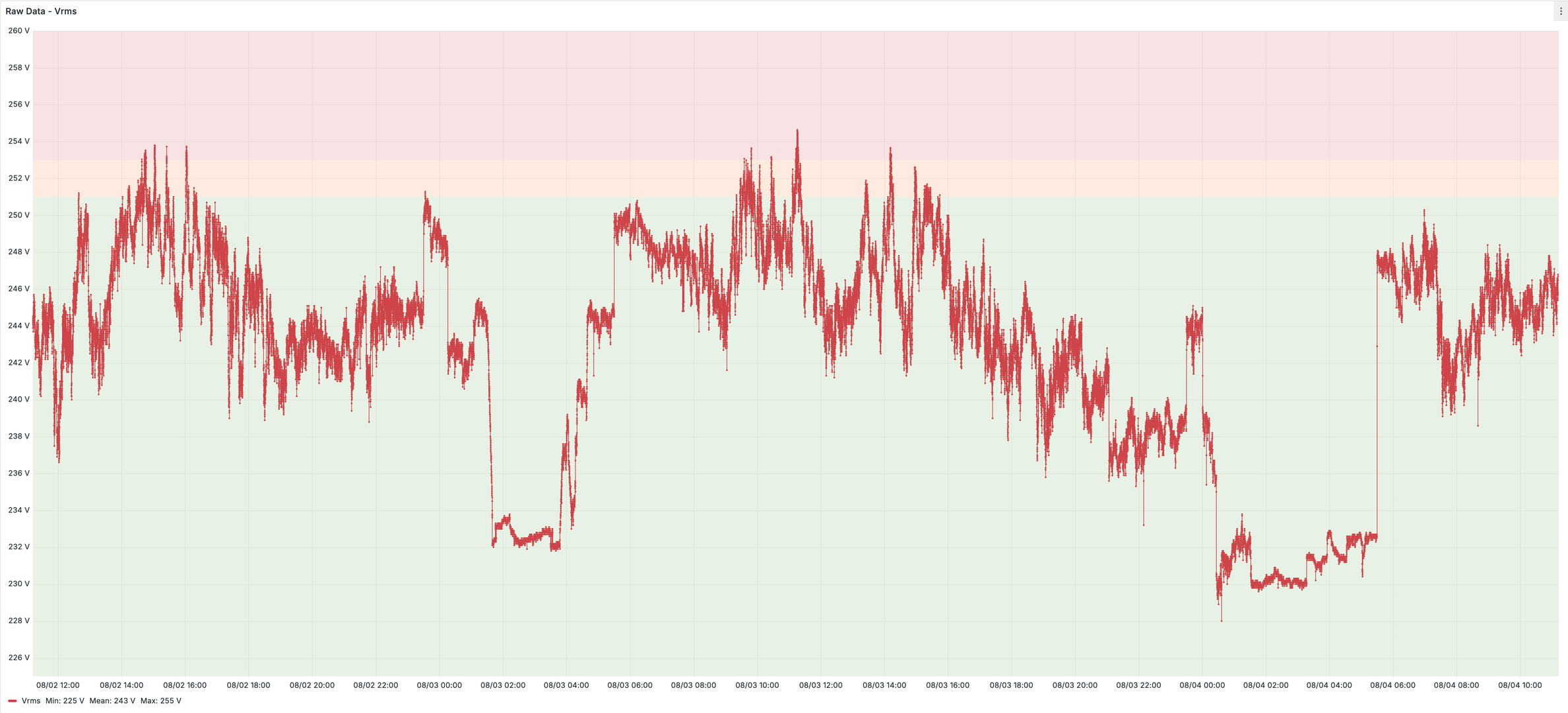
When the Hypervolt was first installed it was summertime and, because of the red light, I could see there was an issue (something that I could never be aware of with the PodPoint and, by extension, perhaps wasn't a problem?!?.) The installer checked and could see the inverter was showing voltage spiking over 254V. Not continuously but spiking nonetheless and this was corresponding to the red light on the charger. I contacted Hypervolt support who did some troubleshooting and produced some graphs showing that the voltage was going over 254V and the charger was shutting down to prevent damage to the car (and then recovering.) They said I needed to contact the DNO to resolve. See the attached images although frankly I don't think they are that clear. They were generated from two different contacts with them.
I contacted the DNO who fitted a voltage meter for a week. After analysing the data they agreed it was logging spikes and...as I've said previously. This seems to be co-incident with changes in PV export, i.e. sun comes out from behind a cloud, PV generation suddenly increases and voltage spikes for a short period of time. I assume everyone's system reacts at the same time. I don't really know if the inverter is shutting down and recovering or not, there's nothing really for me to see.
09/07/2026 7:07 pm
The installer checked and could see the inverter was showing voltage spiking over 254V. Not continuously but spiking nonetheless and this was corresponding to the red light on the charger.
The timelines you've posted here have insufficient information to refer to this as 'spiking'.
There isn't sufficient granularity to determine whether the voltage is going above 253v for a few milliseconds or a minute at a time. The sample rate seems to be at 1min intervals, and we don't know if the metering has been configured to display the average or maximum reading which occurred during that 60seconds.
This drawing shows 'spikes', but there's not that much energy in them because they don't last for long.
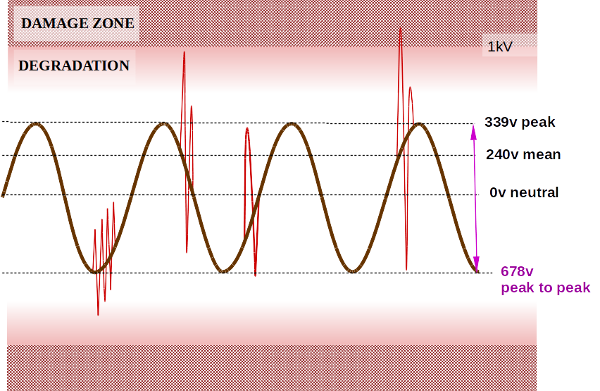
Fast transient spikes like that can be removed using a (low pass) filter
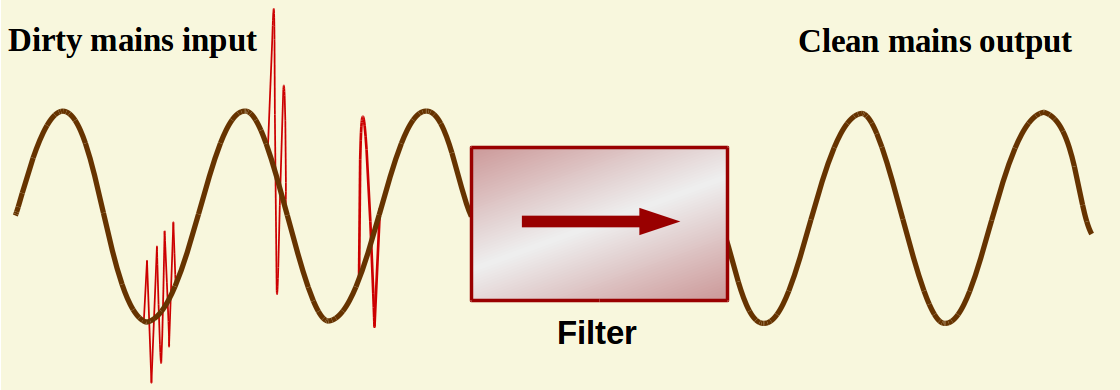
I use filters 'in reverse' to prevent any high frequency transient spikes originating within my solar inverters from being passed back to the rest of the house.
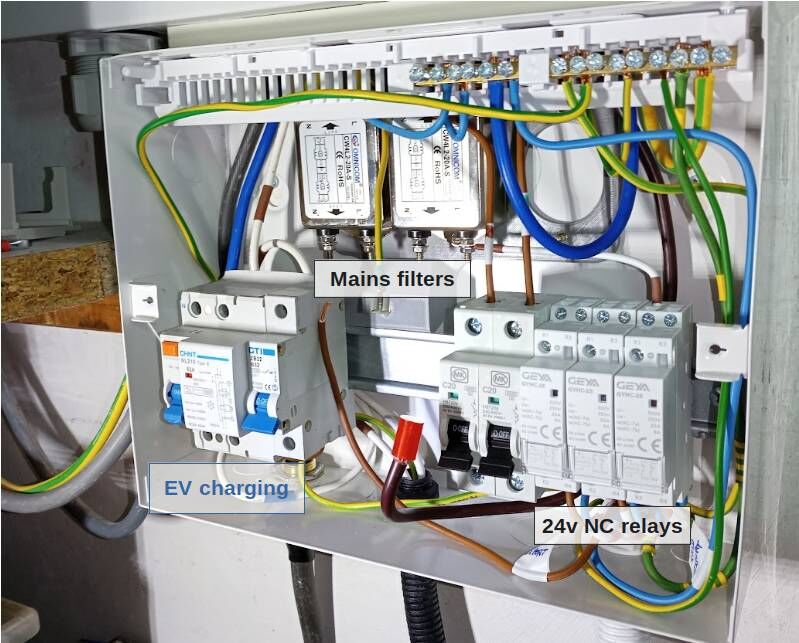
I also have a spike filter fitted within the isolation switch that supplies my TIG Welder, for the same reason.
I contacted Hypervolt support who did some troubleshooting and produced some graphs showing that the voltage was going over 254V and the charger was shutting down to prevent damage to the car
Ah... so that appears to be an admission that the charger itself is unable to handle voltages much above 253v, rather than it being a requirement to implement a Standard.
Remember that a DNO will pass the supply as being within specification based on a 10min rolling average.
The Hypervolt charger doesn't seem capable of operating under those conditions.
Isn't that what we'd call a design deficiency?
This post was modified 4 months ago 3 times by Transparent
Save energy... recycle electrons!
Topic starter
09/07/2026 7:26 pm
@transparent It seems to be designed that way - from their support page:
.....
Pen Fault Detection
A PEN fault refers to a problem with the protective earth and neutral conductors, potentially leading to electric shock or fire.
Our PEN fault detection system is triggered if the supply voltage between live and neutral conductors spikes above 253V or dips below 207V for more than 5 seconds. Upon detection, the charger disconnects the live, neutral, and earth connections to the vehicle, halting the charging process. Once normal voltage is sensed for 30 seconds, the charger resumes its normal operation, often indicated by the standby blue LEDs.
.....
Perhaps I shouldn't be worried about the high voltage itself but if we're in a sunny period where PV generation fluctuates because of cloud cover then the Hypervolt is pretty much useless. Normally I'm not bothered as I don't charge the car during the day as I'm making the most of my export allowance and I don't want that going into the car. Evenings, night time, early mornings are no problem. Octopus are wanting to move to a more "always plugged in" model in order to make better use of wholesale pricing and grid balancing (their words not mine.) That brings different problems but is a bit moot as I'd have difficulty with this during the summer months at the moment.
09/07/2026 8:40 pm
A PEN fault refers to a problem with the protective earth and neutral conductors, potentially leading to electric shock or fire.
Hmmm.
Those are issues which you would expect to be addressed by the RCD or RCBO. Ie they offer protection for for the connecting cable to the charger, not just the charger itself.
Our PEN fault detection system is triggered if the supply voltage between live and neutral conductors spikes above 253V or dips below 207V for more than 5 seconds
That's more stringent than any regulation I've come across.
But I think there should also be an immediate cessation of the charger operating if the voltage falls below 186v, rather than waiting 5 seconds. That's the bit of the EREC G98 certification which prevents DNO engineers being killed when working at the local substation.
Once normal voltage is sensed for 30 seconds, the charger resumes its normal operation
And I don't like that either.
Once 'normal' conditions are detected, there should be a fixed delay plus a randomised delay before a charger restarts.
If there were a dozen Hypervolt chargers installed for a set of flats, then they would restart simultaneously after 30s, thereby causing a surge demand and an associated voltage drop..
Low Carbon Technology (LCT) should be designed to be 'grid friendly'.
If in doubt... use common sense!
This discussion needs to be moved to your local pub. The more you tell others about this, the better informed they'll be.
All of us need to become much more grid-savvy and understand how to 'treat it well'.
Save energy... recycle electrons!


SPONSORS
Degrees of Separation
Latest Posts
-

RE: New Build 3 Phase or 1Phase
@toodles Thanks Toodles, definitely something to consid...
By E A WEST , 21 minutes ago
-
-
Mars asked for an update on progress so …. Out HP has...
By DavidB , 4 hours ago
-
RE: How much of your renewable and home setup would still work if the internet went down?
Yes I actually have a copy of a tool that whenever a ce...
By EtchedPixels , 5 hours ago
-
RE: How will removing the standing charge on gas bills benefit heat pumps?
The shoulder months are very difficult to judge COP on ...
By scrchngwsl , 7 hours ago
-
RE: Indevolt Batteries UK Support & Info Thread
@editor Hi, To resolve this, please tap on the A...
By Indevolt Tech , 13 hours ago
-
RE: Double or Triple Glazed Windows?
Posted by: @singlespeed With 9 years repairing windo...
By Rob of York , 1 day ago
-
@transparent we’re still running a secure version of PH...
By Mars , 1 day ago
-
RE: How quickly would you want/expect heat recovery to take from setback?
Much longer than that here. The heating isn't even on. ...
By bobflux , 2 days ago
-
RE: Passiv Smart Thermostat - Help & Forum Support
Obviously the weather is changeable but there's a defin...
By Singlespeed , 2 days ago
-
RE: The Changing Jet Stream Could Challenge UK Air Source Heat Pumps
@rob-of-york I must admit that when we had a Daikin hea...
By Toodles , 2 days ago
-
RE: Forum updates, announcements & issues
Get the Renewable Heating Hub heads-up on WhatsApp. I...
By Mars , 2 days ago
-
RE: Safety study for plug in batteries out to tender - looks like Q3 2027 at best before legal
@editor I pointed out to the one of the Fuse execs that...
By dansus , 2 days ago
-
RE: 15kw pump for 225m2 1990's house - over kill?
@seaviews As well as loft insulation, there are othe...
By Rob of York , 2 days ago




SPONSORS