You say you haven’t advocated buying anything yet you have posted the product name and posted a retailer where the products can be purchased with a link to the site in your post. This was not requested.
That is an unequivocal promotion to buying the product.
Of course I have mentioned the OEM heat pump monitoring system that I have, doing so gives context to what I write. I have posted links to OEM's website as it contains the data being discussed. But have I posted a link to the shop and said people should buy the heat pump monitoring kit? No.
Both of our monitoring systems have electrical energy meters/sensors and so both record the heat pump electrical energy use to a high degree of accuracy.
Yes and no for me. I do have meters and sensors, but most of them are Midea hardware. What I do is collect more of that data (ie more variables) at minute intervals than say the Midea apps do. I also have independent meters for energy in and flow rate (and a very rough and ready IR thermometer of LWT and RWT) that I use to check the Midea data but those are either spot readings (for flow rate and temperatures) or aggregates over long times frames (energy in) as they all require manual reading.
I think I have said before, I think if the energy in and out data is ranked for quality, then @sunandair's is the least robust, mine is in the middle, and @robs 's is the most robust.
Midea 14kW (for now...) ASHP heating both building and DHW
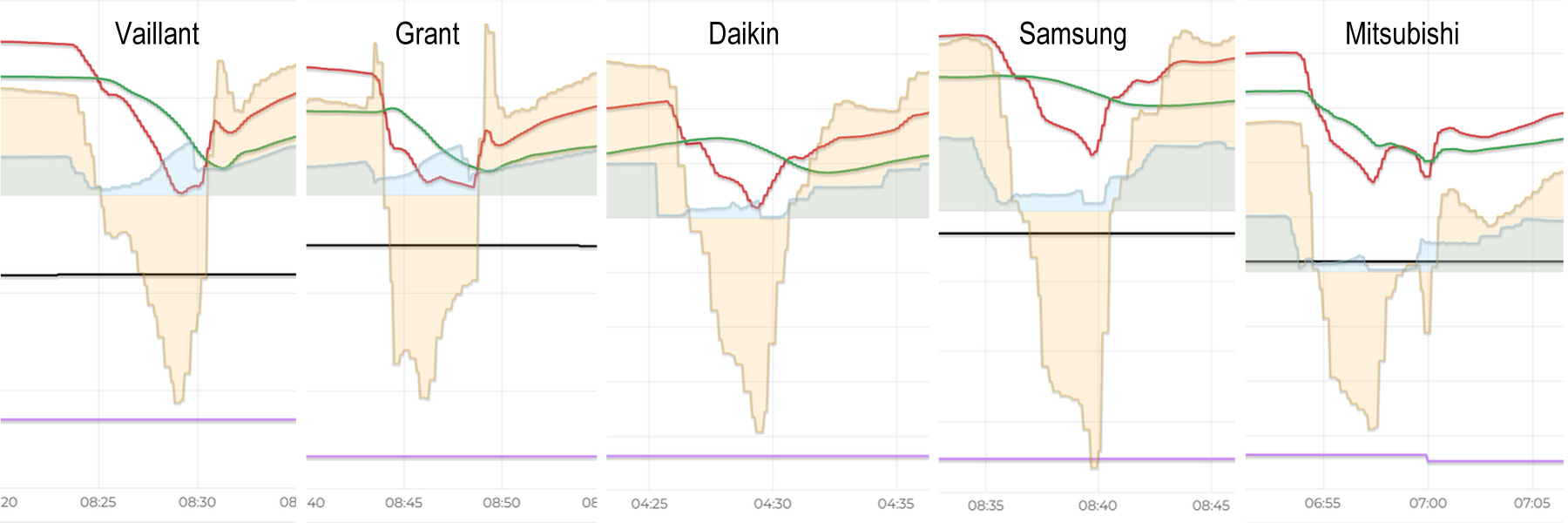
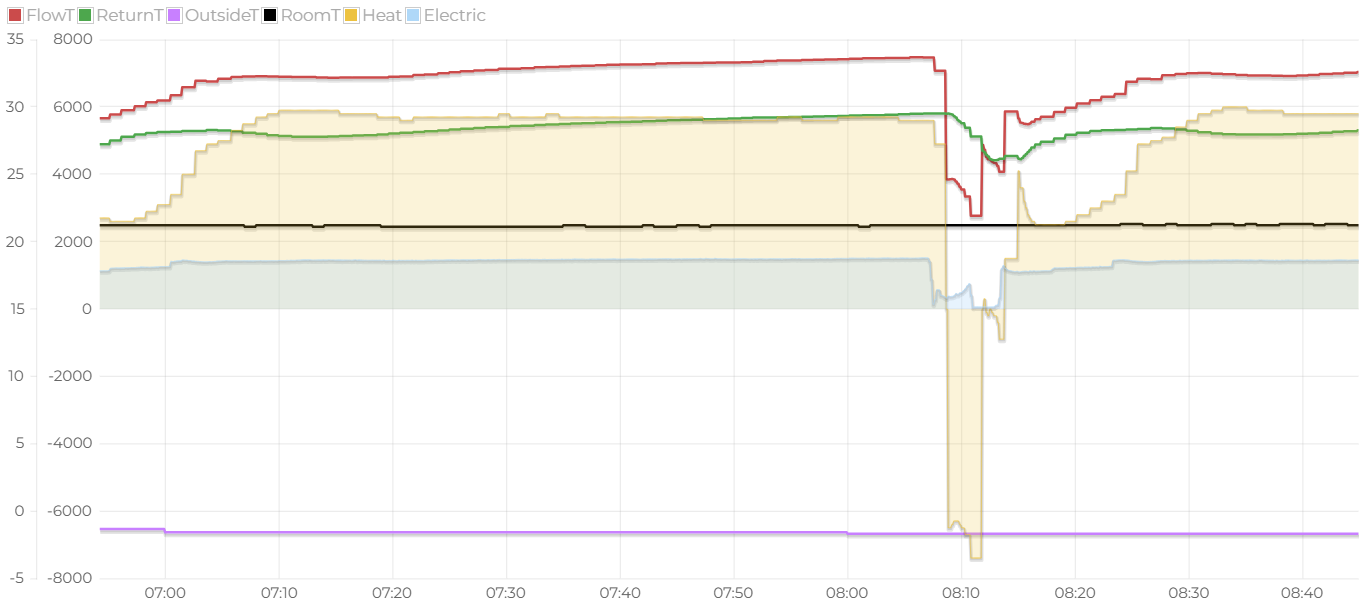
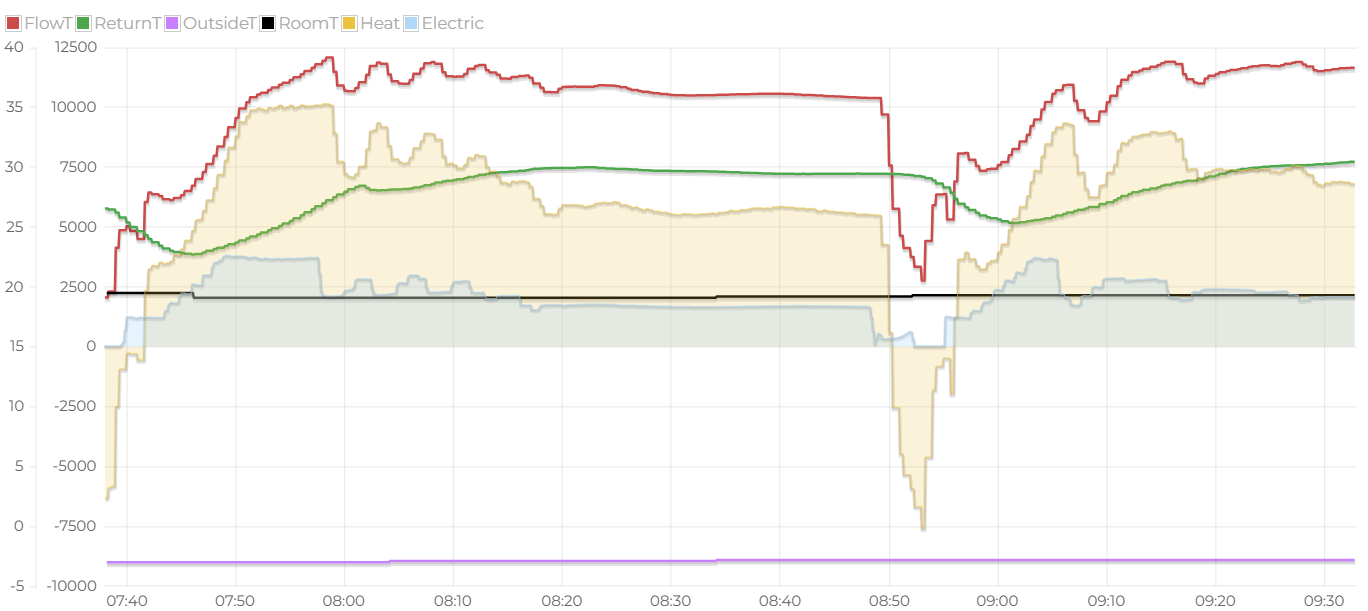
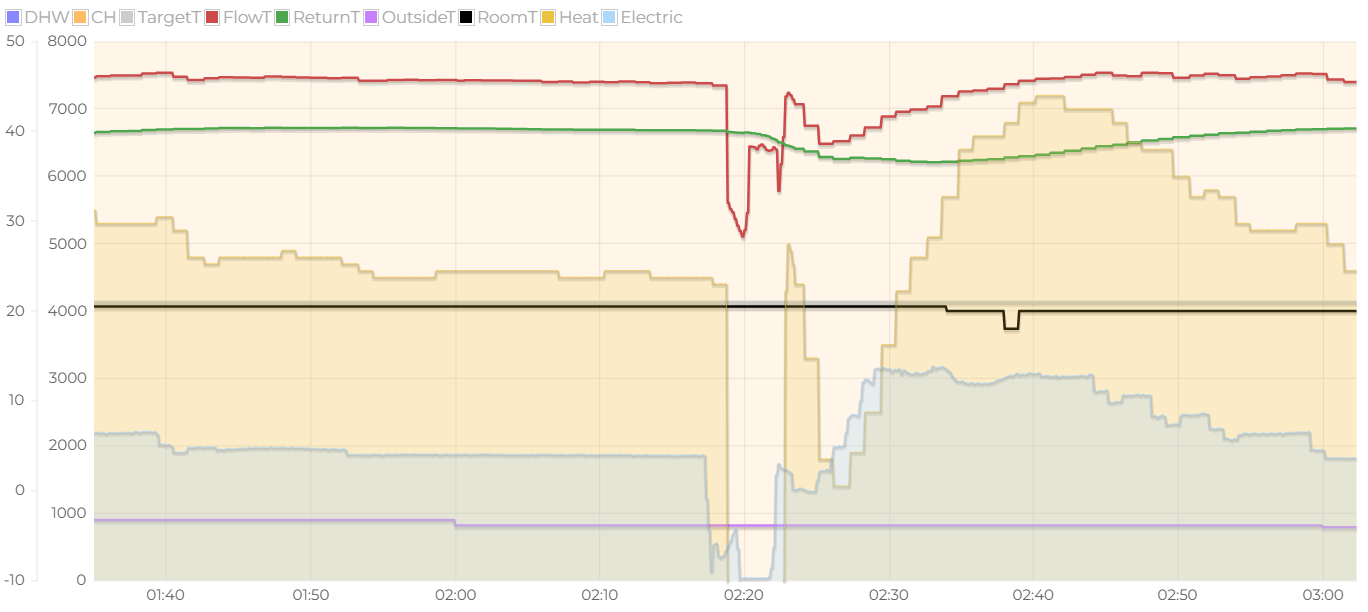
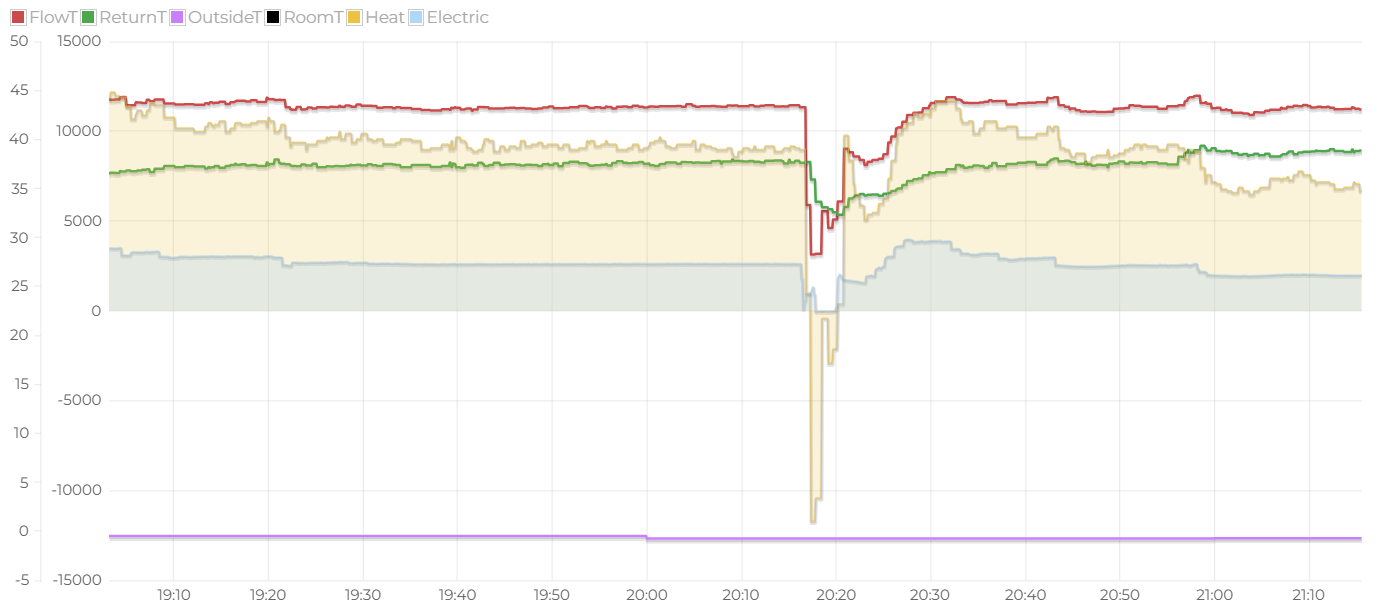
The heat pump brands shown below at an averaged defrost temperature of say + 1c would be a much better operating condition to truly evaluate the defrost burden. This range of HP brands show quite varied energy use, graphically, during the defrost period. There is also longer time spans for some brands. So it would be very useful to know how much each HP brand does consume during the defrost period.
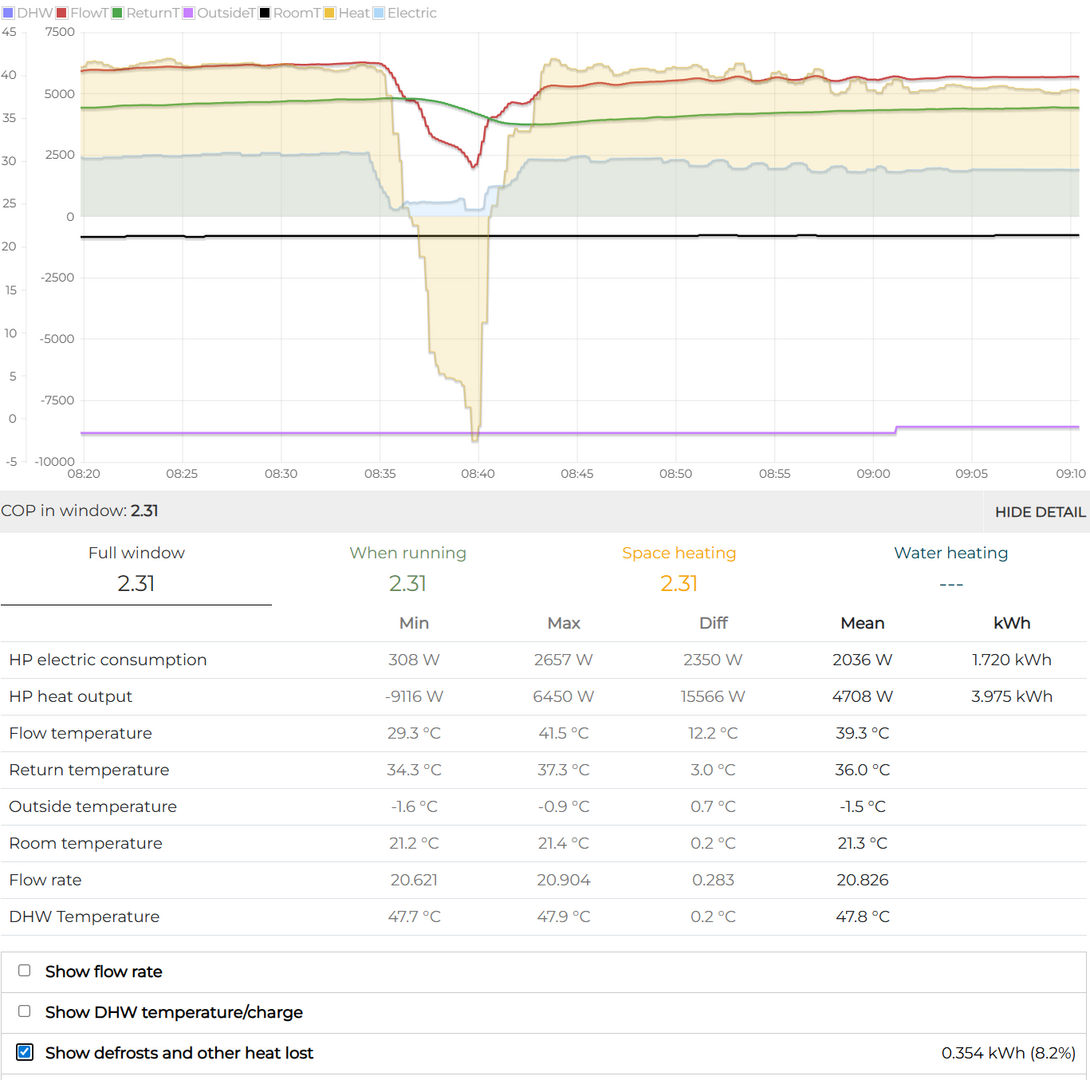
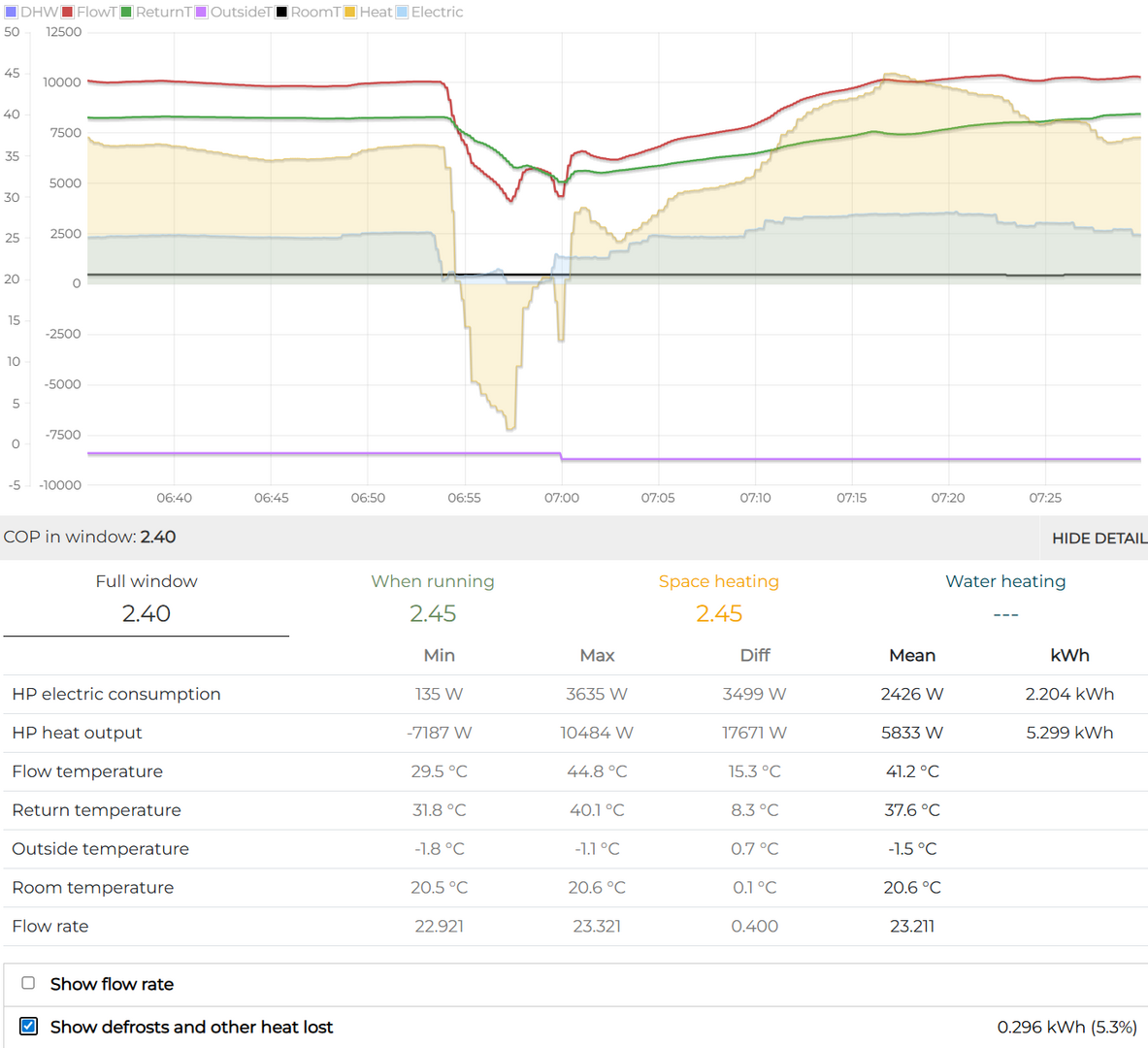
In fuller detail shown below.
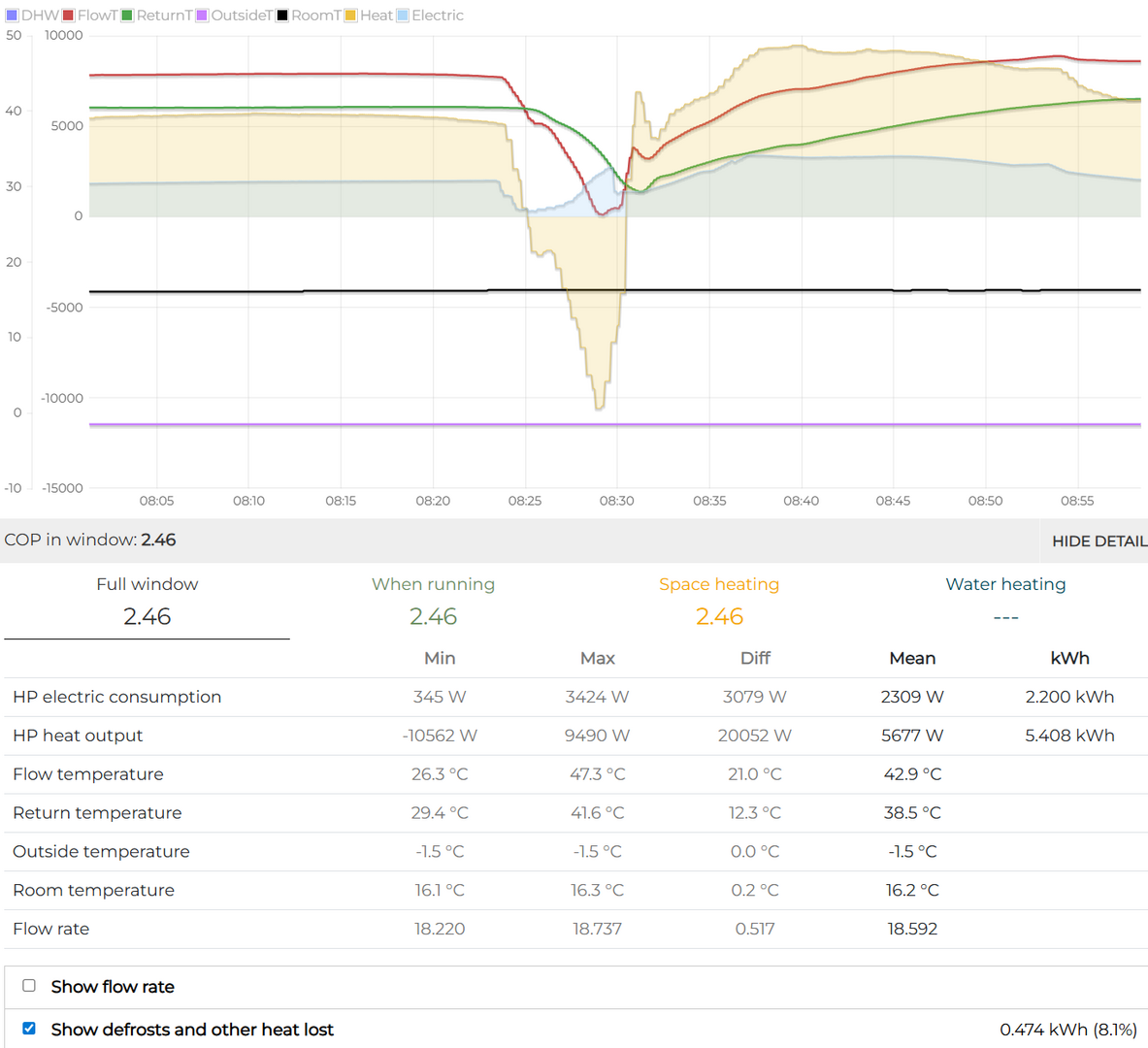
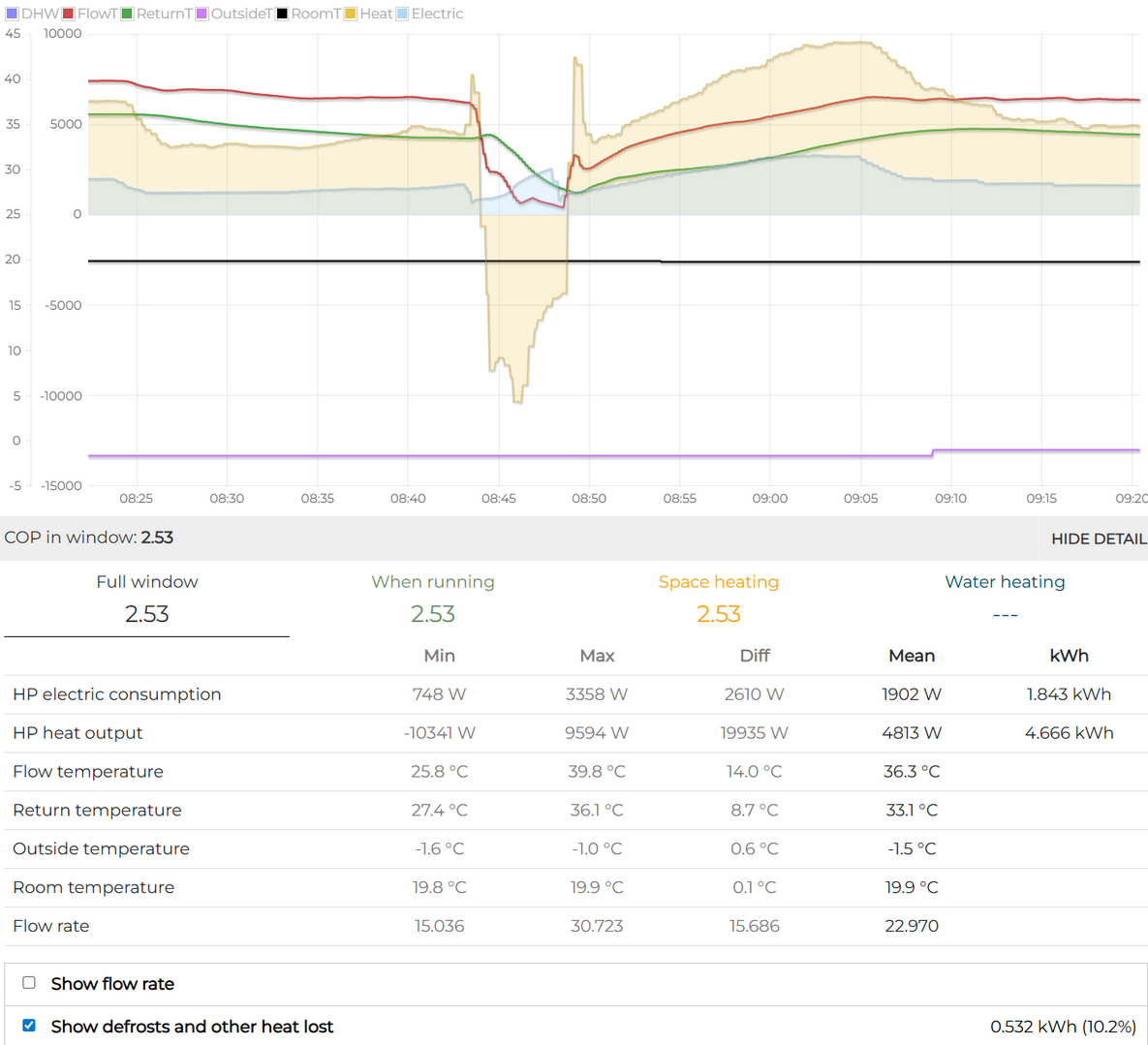
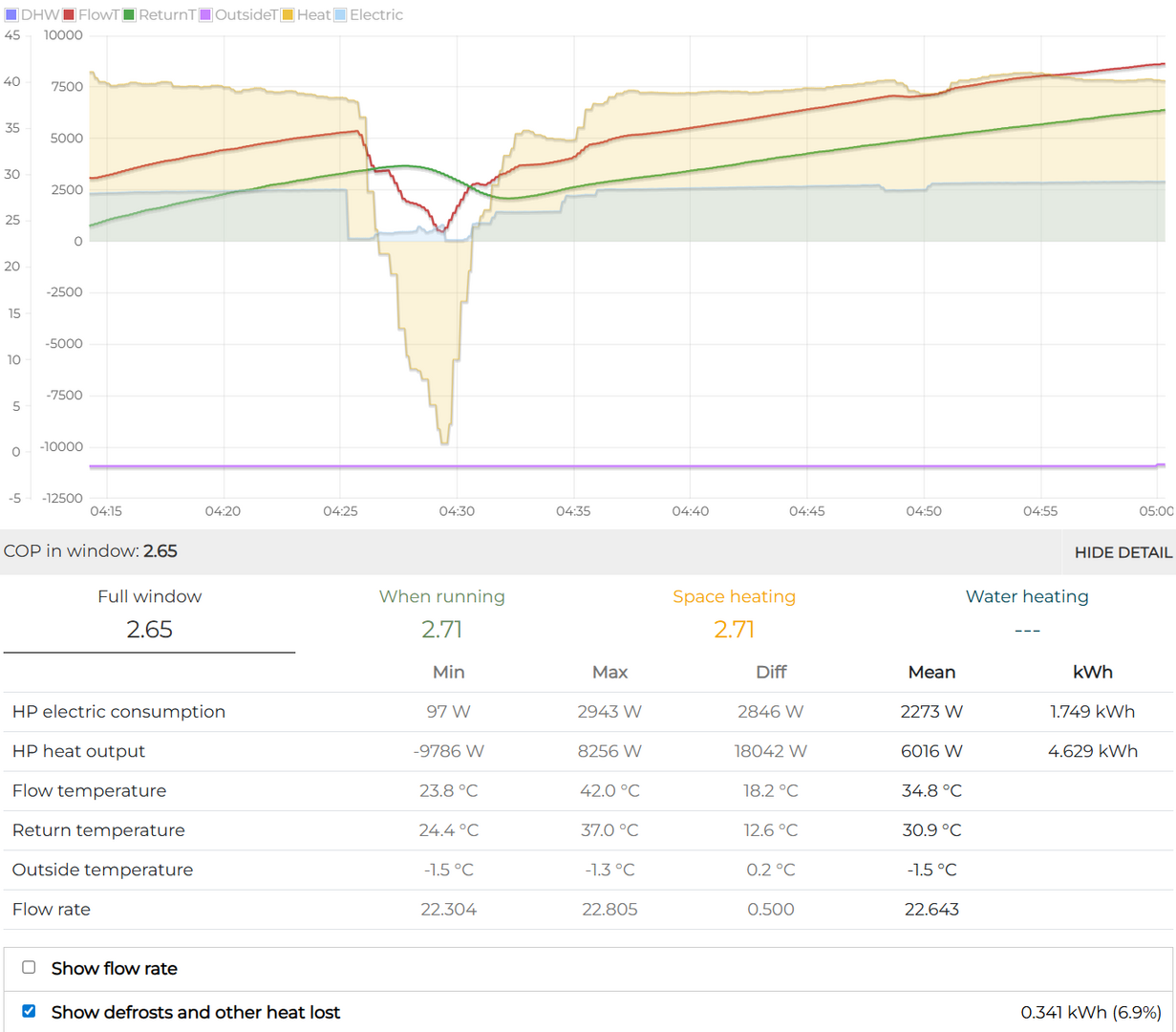
Thanks for posting my images again, the OAT in each of these examples was -1.5C. They were posted to show the differences and similarities in approach used by different manufacturers.
furthermore the correct energy appraisal which RobS has not done would then account for the preparation period before the defrost which is needed to prevent liquid refrigerant from getting into the compressor when the reversing valve changes the flow direction.
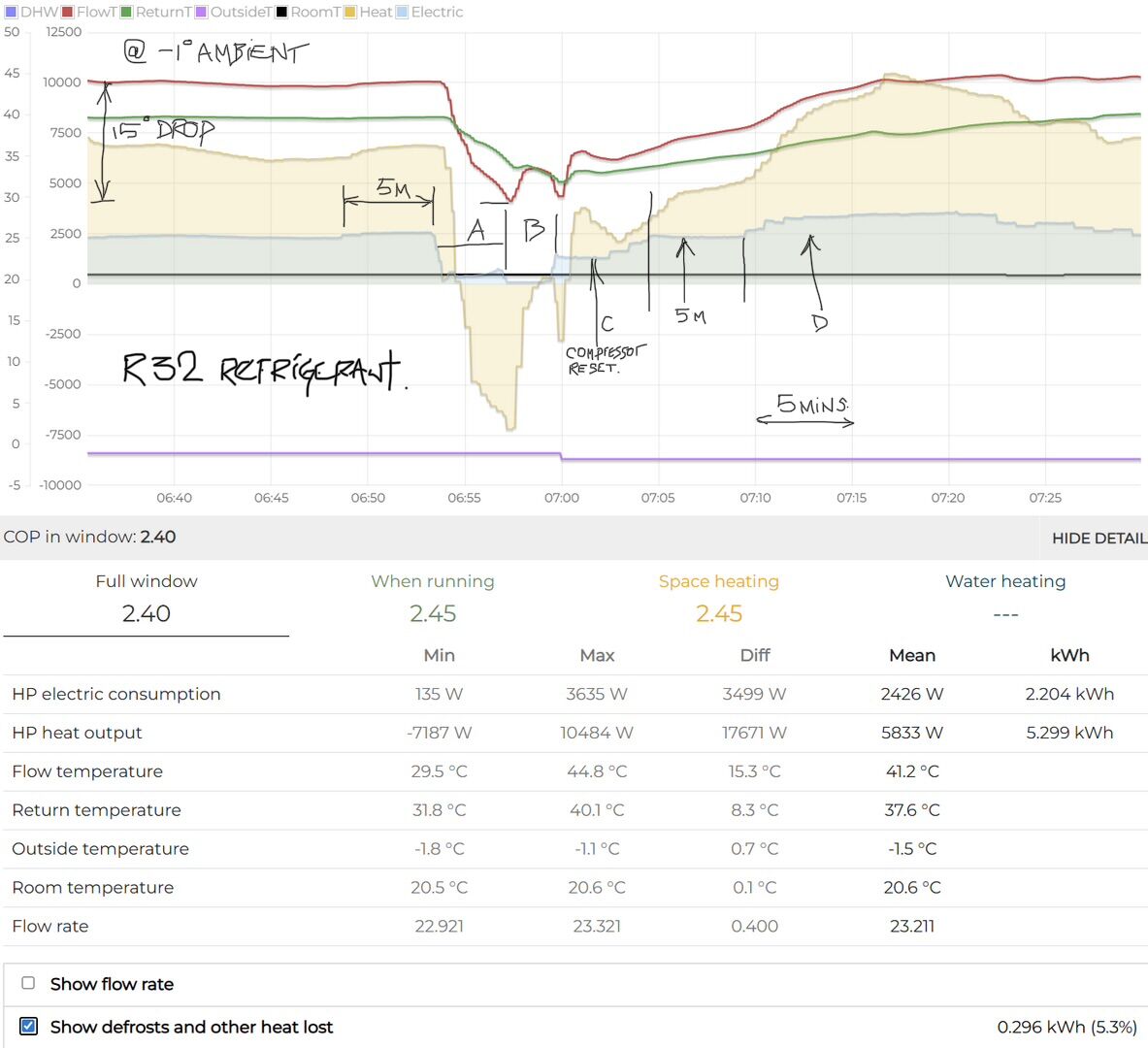
There is also no accounting for the fully compressed refrigerant liquid reservoir which continually takes energy which is particularly used as a conduit to execute the defrost while the compressor operates at a lower output to primarily circulate the hot gas. The graph below shows that when the preparation and reset times are added the full defrost operation period is more like 15 to 20 minutes and not the 11 minutes quoted by RobS.
"...adds an additional 0.06 kWh to the electricity deficit (0.254kWh was removed from the heated water and this was generated pre-defrost at a COP of 4.2), so the additional electrical input as a result of the defrost then becomes 0.081kWh - which is still very small."
The above chart is of the Mitsubishi hp 8.5 R32 model which has a similar defrost signature to my own HP. I have marked up the step changes A, B, C and D which align with what our graphs show. But there are other periods which mark reset, monitoring and preparation periods.
Here are three Mitsi 8.5kW R32s doing a defrost, but your 5 minute "preparation period before the defrost" seems to be missing, so maybe not a component of all defrosts:
And here's a Mitsi 11.2kW R32 defrosting without a 5 minute "preparation period before the defrost":
Also, your example 5 minute "preparation period before the defrost" only consumed an extra 0.06kWh of energy. So again not a significant amount and not sufficient to be able to say that defrosts use a significate amount of additional electrical energy.
There also appears to be a second preparation period after the defrost when we know that the flow reverses again. The energy specifically being used for liquid refrigerant separation as opposed to normal compressor heating would be difficult to quantify as solely for defrost purposes without scientific knowledge of the procedure. In any case that has not been accounted for or even recognised by RobS assessment.
This electrify usage was included in the reheat part of my analysis.