

Notifications
Clear all
Joining the Renewable Heating Hub forums is completely free and only takes a minute. By registering you’ll be able to ask questions, join discussions, follow topics you’re interested in, bookmark useful threads and receive notifications when someone replies. Non-registered members also do not have access to our AI features. When choosing your username, please note that it cannot be changed later, so we recommend avoiding brand or product names. Before registering, please take a moment to read the Forum Rules & Terms of Use so we can keep the community helpful, respectful and informative for everyone. Thanks for joining!
Air Source Heat Pumps (ASHPs)
232
Posts
23
Users
27
Reactions
110.2 K
Views

05/10/2023 1:56 pm
I forgot about your final requirement.
Slowly ramping up the LWT for DHW production is indeed a good idea.
The only suggestion that I would make is start the ramp up with the LWT at the same temperature, or slightly higher, than the DHW cyclinder temperature, otherwise the system could start by cooling the DHW rather than heating.

05/10/2023 1:57 pm
If the IAT is 0.5C below the desired temperature setting, set the required LWT at the value required to run the heat pump at constant minimum output.
LWT that runs the HP at a constant min output, balanced with emitter output, that will be I think about 38-40C for my system. which will obviously force cycling to "no demand" state as the IAT will go over target reasonably quickly. whereas with the lower LWT, the IAT stays almost unmoving , close to target, and we cycle on the HP getting too high an LWT. obviously with the higher LWT the cop whilst running will be worse but does that balance it with having the "off" periods ... an interesting experiment.
that isn't the same as what I proposed though. I proposed keeping the LWT close to the value that matches the heat demand of the house and increasing/decreasing it a small amount to try to lengthen the LWT-went-too-high-for-the-HP based cycles. does that approach seem worth trying to you?
My octopus signup link https://share.octopus.energy/ebony-deer-230
210m2 house, Samsung 16kw Gen6 ASHP Self installed: Single circulation loop , PWM modulating pump.
My public ASHP stats: https://heatpumpmonitor.org/system/view?id=45
11.9kWp of PV
41kWh of Battery storage (3x Powerwall 2)
2x BEVs
05/10/2023 1:59 pm
The only suggestion that I would make is start the ramp up with the LWT at the same temperature, or slightly higher, than the DHW cyclinder temperature, otherwise the system could start by cooling the DHW rather than heating.
yes of course that makes total sense. will probably automate it to not run unless cylinder is below 25C, then start at an LWT of 30 and work up from there.
My octopus signup link https://share.octopus.energy/ebony-deer-230
210m2 house, Samsung 16kw Gen6 ASHP Self installed: Single circulation loop , PWM modulating pump.
My public ASHP stats: https://heatpumpmonitor.org/system/view?id=45
11.9kWp of PV
41kWh of Battery storage (3x Powerwall 2)
2x BEVs
05/10/2023 2:29 pm
If the IAT is 0.5C below the desired temperature setting, set the required LWT at the value required to run the heat pump at constant minimum output.
LWT that runs the HP at a constant min output, balanced with emitter output, that will be I think about 38-40C for my system. which will obviously force cycling to "no demand" state as the IAT will go over target reasonably quickly. whereas with the lower LWT, the IAT stays almost unmoving , close to target, and we cycle on the HP getting too high an LWT. obviously with the higher LWT the cop whilst running will be worse but does that balance it with having the "off" periods ... an interesting experiment.
that isn't the same as what I proposed though. I proposed keeping the LWT close to the value that matches the heat demand of the house and increasing/decreasing it a small amount to try to lengthen the LWT-went-too-high-for-the-HP based cycles. does that approach seem worth trying to you?
It is difficult to provide definitive suggestions, since I cannot watch your system operate and see how it responds under different operating conditions, which is the reason why my suggestion was rather vague.
Having said that we have the same thought.
Run the heat pump with the LWT as low as possible, but high enough to stop it cycling. Operate in this way until the IAT has increased to the upper limit, then cause the heat pump to stop operation by lowering the LWT setting.
Allow the IAT to gradually fall over a period of time until it reaches the lower limit, then raise the required LWT to the value calculated above to cause the heat pump to restart.
I suspect that operating the heat pump at a slightly higher LWT may reduce the efficiency slightly, but since this is during milder weather conditions (hence the cycling) the overall affect will be minimal, and may even turn out to be more efficient since the heat pump will not be operating for longer periods of time.
A further thing to consider, and maybe experiment with, is do you also stop the water pump or keep it running?


04/11/2023 9:00 pm
Hi guys,
I have a Samsung heat pump, split type (part no. AE160JXEDGH/EU and AE160JNYDGH/EU) and in my search to find a solution to integrate it in Home Assistant I found the posts of @william1066 and @tomc in which I saw that they were successful and I decided to order the MIM-B19N modbus module which I connected to the outdoor unit at terminals R1 and R2 because the indoor unit is already connected to F1 and F2. Not having the possibility to run another cable from the house to the outdoor unit, I followed @Steven's approach, the one with ESPHOME so I can connect via wifi. The problem is that in Home Assistant I see all the sensors, only they are unavailable, and in the ESPHOME log there are "Duplicate modbus command found" errors, as if there were 2 modbus modules sending the same commands. I am also attaching the log, maybe one of you can point me in the right direction.
Cosmin
06/11/2023 10:42 am
@cosmin can you please explain your cabling and physical setup more clearly? Are you trying to re-use the F1/F2 cable from the indoor to the outdoor units to carry your own modbus?
My octopus signup link https://share.octopus.energy/ebony-deer-230
210m2 house, Samsung 16kw Gen6 ASHP Self installed: Single circulation loop , PWM modulating pump.
My public ASHP stats: https://heatpumpmonitor.org/system/view?id=45
11.9kWp of PV
41kWh of Battery storage (3x Powerwall 2)
2x BEVs
06/11/2023 11:41 am
@iancalderbank modbus module is connected to my outdoor unit, at R1 & R2 terminals. F1 & F2 are already used for communication between indoor and outdoor units.

08/11/2023 7:55 pm
Quick question: What is your observed frequency with which data read through modbus changes?
To me it seems that while I obviously can read temperature data every second or so, the same value is reported for 30 seconds and only then the value gets updated and gets reported for another 30 seconds. Do you observe the same behaviour?


15/12/2023 4:42 pm
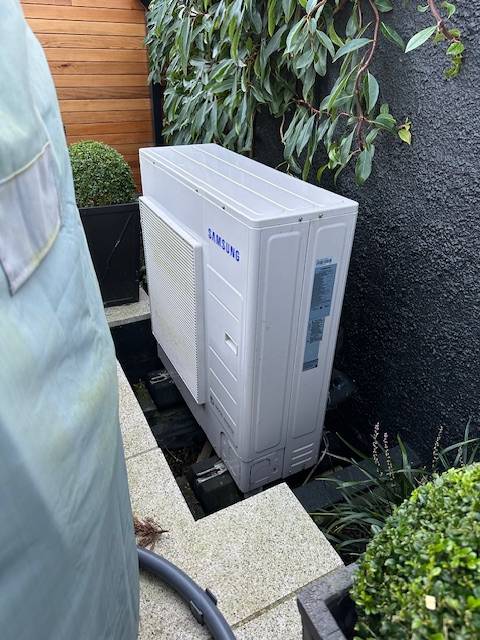
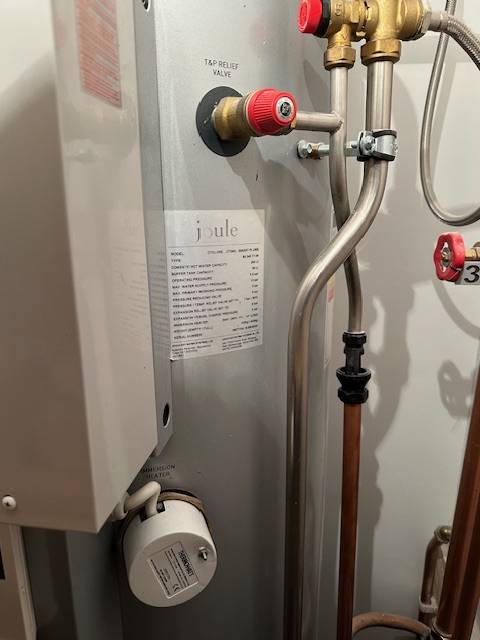
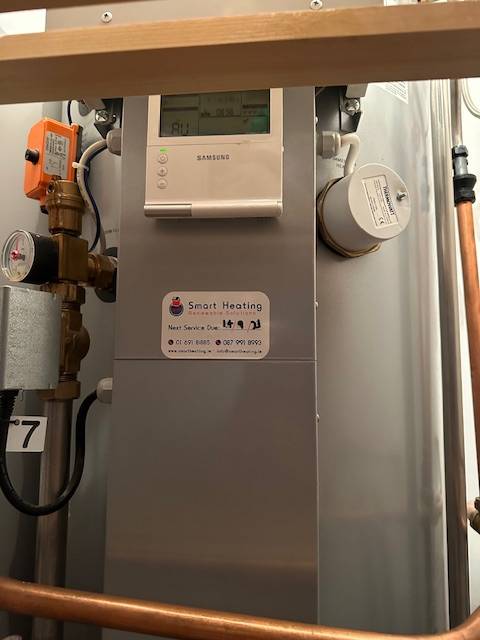
Hi all, we have a 9KW Samsung AE090JXYDEH, also in Ireland so maybe a similar set up to the other poster where i have joule thermostats. We have UFH downstairs and radiators in the upper floors, maybe 6 zones.
Can this model be integrated with home assistant?
15/12/2023 6:15 pm
@cyrusir yes. worth reading some of the previous discussion on this thread but quick summary:
- install modbus MIM-19 module into samsung outdoor unit
- home assistant PC with uart module , two core cable to the MIM
- OR ESP8266/32 with uart module, cabled to the MIM. ESP connected to home assistant via ESPHOME.
My octopus signup link https://share.octopus.energy/ebony-deer-230
210m2 house, Samsung 16kw Gen6 ASHP Self installed: Single circulation loop , PWM modulating pump.
My public ASHP stats: https://heatpumpmonitor.org/system/view?id=45
11.9kWp of PV
41kWh of Battery storage (3x Powerwall 2)
2x BEVs
15/12/2023 6:34 pm
@iancalderbank thank you, so either way i need a wire from the unit back to home assistant in some way?

15/12/2023 7:36 pm
@cyrusir I was thinking about this the other day. If you go the ESP route, you could position the ESP board wherever you can run a cable to that has power and WiFi/ethernet e.g. shed or garage
SPONSORS

Degrees of Separation

Latest Posts
-

RE: Heat pump branding. Clever, contemporary… or a bit too much?
I think Heat Geek have done an amazing job on their bra...
By Tomtheheatingengineer , 2 hours ago
-
RE: HeatGeek vs Octopus surveys: puzzling disparity - any ideas why?
I have just had 3 heat loss surveys, one by heat geek o...
By David , 3 hours ago
-
RE: Heat Geek Zero Disrupt: Are We Sleepwalking Into Another Race to the Bottom?
I think that's the key question. After all inverter uni...
By Prunus , 4 hours ago
-
RE: battery storage without solar
As of October 1st they need specific qualifications to ...
By EtchedPixels , 5 hours ago
-
RE: How should the Boiler Upgrade Scheme be reformed?
A unit which uses water to transfer the heat/chill from...
By Temperature_Gradient , 5 hours ago
-
RE: Renewables & Heat Pumps in the News
With regards to the BUS grant raid, I gave it more thou...
By ASHP-BOBBA , 6 hours ago
-
RE: Why are ASHP installs so expensive?
The whole system seems to work on the basis of...
By ian33a , 6 hours ago
-
RE: Missing flow temperature in Heat Geek proposal
Good plan. If you can get half hourly meter readings a...
By JamesPa , 11 hours ago
-
RE: Heat Pumps Without Grants: Would You Have Installed One & Will You Now?
@editor Most certainly. The heat pump was an ideal s...
By Abernyte , 11 hours ago
-
Although regulations may well vary from country to coun...
By Majordennisbloodnok , 12 hours ago
-
RE: Does anyone have experience of a smart water meter?
Yep I caught our slow leak from a £100 bill rise 8)
By EtchedPixels , 12 hours ago
-
RE: Do You Need a Buffer Tank or Low Loss Header for Underfloor Heating in a Large Property?
@jamespa in some cases, failing the Turing test might b...
By GrahamF , 15 hours ago
-
RE: Passiv Smart Thermostat - Help & Forum Support
@energystoragetech The heat capacity of some...
By JamesPa , 17 hours ago
-
RE: tepeo ZEB UK Support & Info Thread
Sorry you are correct, I was remembering figures from t...
By JamesPa , 1 day ago




SPONSORS
