

Notifications
Clear all
Joining the Renewable Heating Hub forums is completely free and only takes a minute. By registering you’ll be able to ask questions, join discussions, follow topics you’re interested in, bookmark useful threads and receive notifications when someone replies. Non-registered members also do not have access to our AI features. When choosing your username, please note that it cannot be changed later, so we recommend avoiding brand or product names. Before registering, please take a moment to read the Forum Rules & Terms of Use so we can keep the community helpful, respectful and informative for everyone. Thanks for joining!
Air Source Heat Pumps (ASHPs)
10
Posts
5
Users
6
Reactions
1,213
Views

Topic starter
15/03/2026 4:39 pm
I have a neighbour whose Panasonic heat pump was badly damaged a few weeks ago by a power surge and she is anxious to ensure no repetition, so she has been looking into suitable devices to protect against surges, lightning etc.
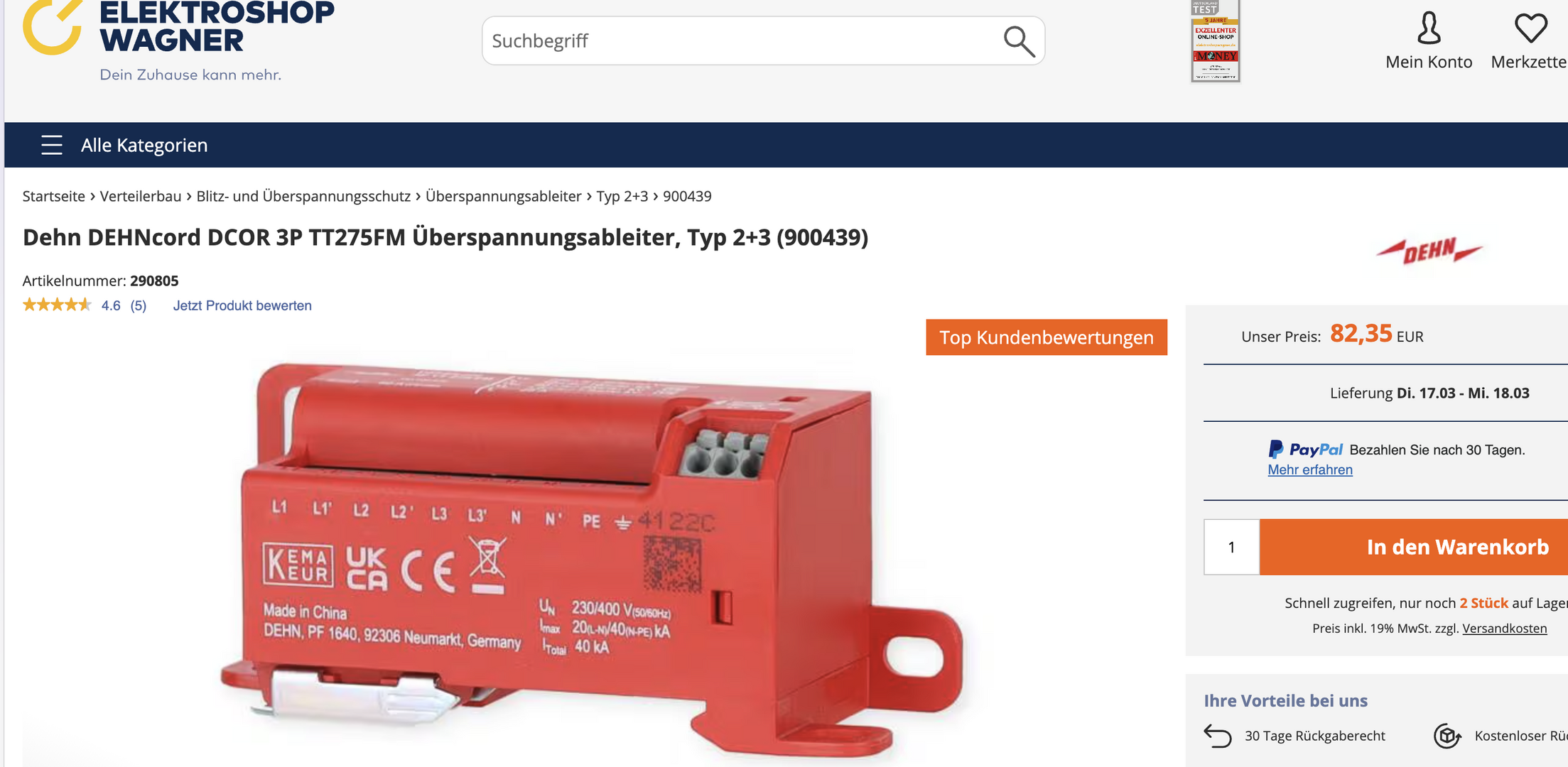
She has found this Dehn device and I wonder if it is worth considering:
My installation has an ABB FH204 AC RCD before the circuit breaker but I understood this only gives earth leakage, rather than surge protection.
Here in Portugal we are mostly on 3 phase and the incidence of surges might be rather more frequent than in UK, but I would be interested to hear if the RCD is generally considered sufficient and if anyone has installed an additional device of this type.
342sq m "Upside down" house in Algarve. Portugal
Mitsubishi PUHZ-120YUK 12kW ASHP
12 Solar Panels Growatt Inverter
2 x Growatt 7.5kW Batteries
Fronius EV Charger
Kia e- Niro 64kW

15/03/2026 4:52 pm
Nominal current is only 0.3A per phase, it's intended to protect public lights, not beefy enough for a heat pump.
1
Topic starter
15/03/2026 5:21 pm
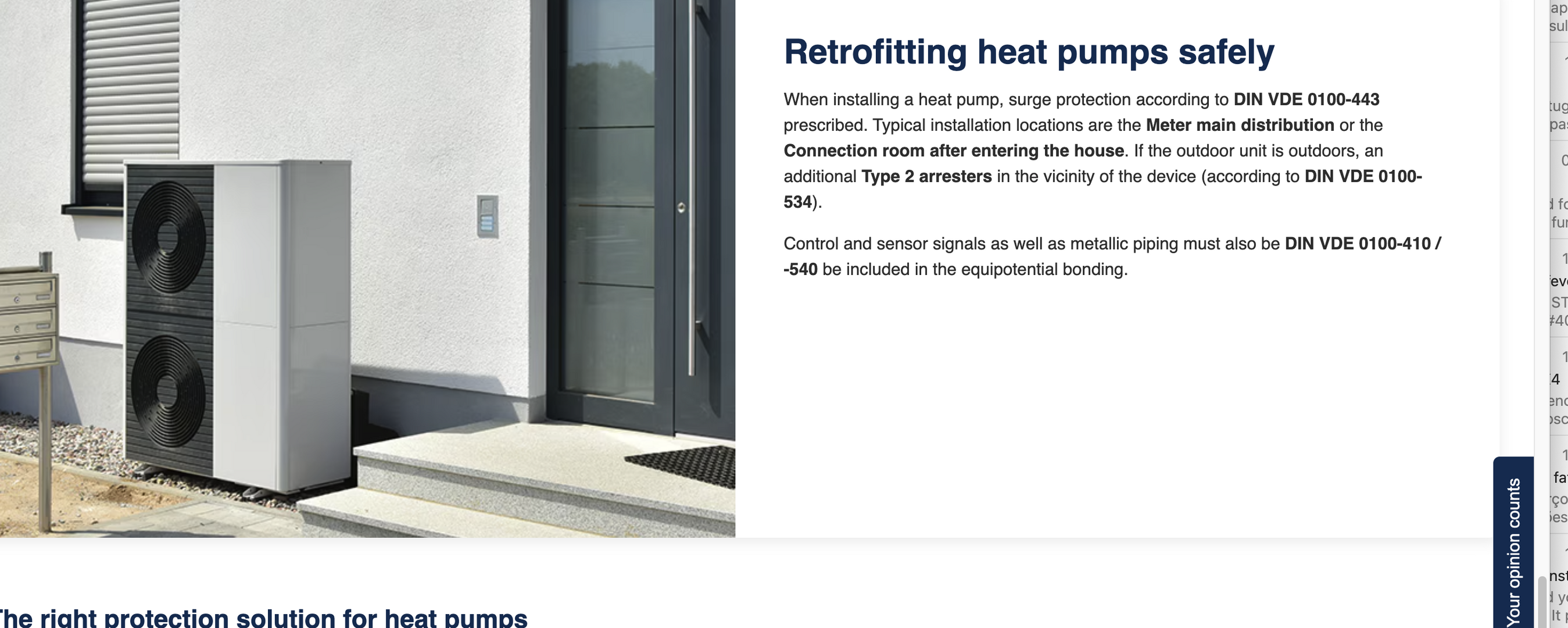
@bobflux I now see that this is only one of the devices they offer for heat pump protection and I picked the the wrong one. Here is the full page and I would be interested to receive a comment on the principle of installing one of these in addition to the RCD.
This post was modified 7 months ago by DavidAlgarve
342sq m "Upside down" house in Algarve. Portugal
Mitsubishi PUHZ-120YUK 12kW ASHP
12 Solar Panels Growatt Inverter
2 x Growatt 7.5kW Batteries
Fronius EV Charger
Kia e- Niro 64kW


15/03/2026 9:58 pm
I’d love to get your input here @transparent… this is an interesting question.
🔥 Britain’s Heat Pump Shitshow
How Installing a Heating System Became a National Nervous Breakdown
Free UK shipping.
📗 Heat Pumps Explained
A Jargon-Free Guide for Homeowners
Rewritten and updated for 2027
📘 From Zero to Heat Pump Hero
🛠️ Bodge Buster
New to heat pumps?
Take the Heat Pump Fundamentals course and use INTRO50 at checkout for 50% off.


16/03/2026 11:12 am
I have a neighbour whose Panasonic heat pump was badly damaged a few weeks ago by a power surge and she is anxious to ensure no repetition, so she has been looking into suitable devices to protect against surges, lightning etc.
...
but I would be interested to hear if the RCD is generally considered sufficient and if anyone has installed an additional device of this type.
@transparent and others have addressed this before in the forum.
RCDs are concerned with disconnecting a circuit when it leaks to earth (to protect life).
SPDs are instead about ensuring that, if lightening or similar events induce very strong and unusual currents, they are discharged to earth! This protects the other circuits from "getting fried". Electronic circuits can be a weak link. My Vaillant gas boiler needed the PCB replaced after a power failure.
SPDs are built into some consumer units and are mandatory whenever a new CU is installed in certain locations in the UK. I had one installed a year ago.
The IET's "electricians rulebook" BS7671 addresses this. Manufacturers of consumer units with SPDs need to comply with BS7671 534.4.6.
8kW Solis S6-EH1P8K-L-PLUS hybrid inverter; G99: 8kW export; 16kWh Seplos Fogstar battery; Ohme Home Pro EV charger; Vaillant Arotherm Pro 7kW; 100Amp head, HA lab on mini PC

16/03/2026 12:13 pm
We don't know the nature of the 'surge' @davidalgarve
The speed (rise time) of a surge matters.
Lightning strikes are particularly fast, whereas surges which occur when the utility company switches circuits are slower.
A typical domestic surge-protection device would operate at a pre-defined point above the normal mains voltage, such as 600v.
Anything above that would be routed to earth by the SPD, which effectively becomes a short-circuit.
The recovery time is just as important as the reaction time. Lightning arrives as a series of spikes, requiring the SPD to recover after each one and be ready for the next.
Low quality units may well operate fine for the first few surges, and then die.
I prefer German-designed protection devices because the Schwarzwald has the highest probability of lightning strikes in Europe. That provides lots of test-time!
My own preference is Phoenix Contact, but I don't see anything wrong with the Dehn products you refer to.
You would normally have one surge suppressor module per phase, plus one for the Neutral.
If one module 'blows' sacrificially, then you don't need to replace the entire set.
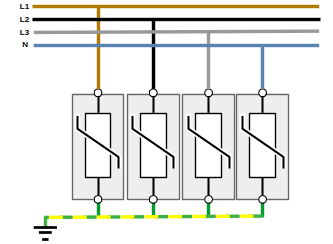
An SPD set would usually be located in the Consumer Unit where the mains supply enters the property.
It keeps the entire home protected, not just the Heat Pump !
There are a number of possible candidates in the Dehn brochure which would operate like this.
Each has varying speeds and levels of protection.
The more you pay, the better are the characteristics of course!
Have a look at this one and read through the specifications.
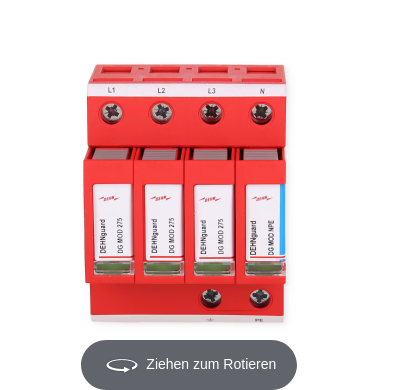
You need to think what you'd do if a single one of those modules needed replacement.
How quickly could you get one?
Is it in Portugal, or needing to be imported from Germany?
What sort of (remote) indicator do you want, to tell you that a module has blown?
This post was modified 7 months ago 2 times by Transparent
Save energy... recycle electrons!
1
16/03/2026 2:12 pm
@transparent potentially ignorant question alert, but does the UK generally experience fewer electrical surges than other countries?
I’ve lived in a number of developed countries where voltage spikes and surges were fairly common and occasionally damaged equipment. By contrast, I don’t think I’ve ever personally experienced that here in the UK.
Is that just luck on my part or is there something about the way the UK grid is designed and regulated that makes it more stable and less prone to surges? I’m curious whether it’s down to grid infrastructure, stricter standards or simply the fact that our distribution network tends to be relatively well maintained.
🔥 Britain’s Heat Pump Shitshow
How Installing a Heating System Became a National Nervous Breakdown
Free UK shipping.
📗 Heat Pumps Explained
A Jargon-Free Guide for Homeowners
Rewritten and updated for 2027
📘 From Zero to Heat Pump Hero
🛠️ Bodge Buster
New to heat pumps?
Take the Heat Pump Fundamentals course and use INTRO50 at checkout for 50% off.
Topic starter
16/03/2026 3:42 pm
@transparent Many thanks for the advice and I will certainly seriously look into it for my own heat pump and will pass it on to my friend.
In her case, I believe it was a supplier power surge, but I have had one occasion when a lightening strike on the incoming telephone line took out a lot of equipment.
One factor here in Portugal, is that (at least outside the towns), the mains supplies are frequently above ground and consequently more susceptible to damage in one way or another.
I don't think I can fit such a device in the main incomer box, but could do so in the newer box for the heat pump. That needn't be a disaster because I have a number of Eaton single phase surge protectors on important equipment, i.e. my Ubiquiti network; computers and TV's.
The lady and her partner do travel back to Germany frequently so replacement may not be a big problem, but now that I am aware, I will check availability here in Portugal.
As far as indication is concerned, I do have a 3 phase Shelly power meter monitoring the heat pump, so possibly could use this to give notification of a phase down.
P.S. Have just checked on Amazon.es and Amazon.de and they do have a selection including the one you mentioned, so delivery normally 2-3 days
This post was modified 7 months ago by DavidAlgarve
342sq m "Upside down" house in Algarve. Portugal
Mitsubishi PUHZ-120YUK 12kW ASHP
12 Solar Panels Growatt Inverter
2 x Growatt 7.5kW Batteries
Fronius EV Charger
Kia e- Niro 64kW
1

16/03/2026 5:15 pm
Ah... well you'll need surge protection on an incoming (copper) telephone wire too.
As you've said, there will be just as much damage caused if lightning enters the property by that route.
The basic idea is to regard the home as an envelope with surge suppression on all metal connections which pass to/from the outside world.
There's a Dehn leaflet describing telecoms protection devices. It has useful diagrams with Dehn part numbers identified.
I didn't explain clearly enough the feature which detects if an SPD has blown sacrificially.
The mounting assembly into which the SPD units are inserted includes a pair of "no-volt" changeover contacts.
When an SPD 'blows' the contacts switch across, rather like a relay.
That means you can decide what mains or low-volt system you connect such that an indicator tells you to replace an SPD unit.
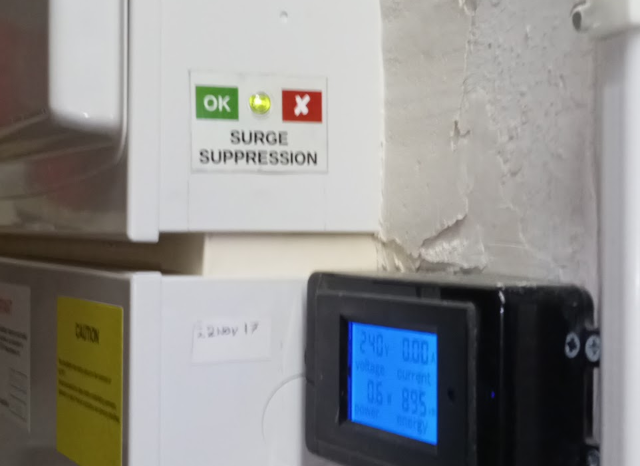
I have ULV available at 12v, 24v and 52v. So I've used a small circuit-board with a red/green LED to tell me if the SPD units themselves are active.
That means there should be a light of one colour or the other showing under all circumstances, providing a fail-safe indication.
You could alternatively connect a neon mains indicator which illuminates when an SPD needs replacing.
It's extremely rare for a properly-designed SPD to blow.
So you only need to be checking this if you believe there's just been a local surge.
does the UK generally experience fewer electrical surges than other countries?
I’ve lived in a number of developed countries where voltage spikes and surges were fairly common and occasionally damaged equipment.
Yes, your location matters a lot.
High ground is more likely to experience lightning strikes.
Rwanda has several each day during the two rainy seasons.
Overhead mains supplies in GB have surge suppressors installed by default.
But takes a finite amount of time for the spike to reach that device.
If your house is nearer, then the spike will reach you before any quenching occurs.
It was a lightning strike on the 400kV Transmission line near Stevenage which initiated the grid outage on Friday 9th August 2019.
Houses in Hertfordshire and North London were contributing around 150MW of power to the grid, mainly through rooftop solar.
Since most didn't have surge suppression, their solar-inverters detected the spike and disconnected from the grid in compliance with G98 (or G58).
The offshore windfarm at Hornsea was the designated generation plant to provide frequency stability, but failed to do so. Instead it actually lost half of the power it was already sending to the Transmission Grid in Lincolnshire.
The two gas turbine plants at Little Barford were called on, but each in turn suffered a fuse/trip disconnection.
The original Report by NG-ESO seems to have been 'lost' on the NESO website, but there's a later version available on the Government online digital library. I can tell it's a later copy because the original contained much better detail on the loss of embedded generation. In contrast, the copy I've just linked to amalgamates the loss of generation in North London, and the consequential losses which occurred when Hornsea and Little Barford failed to deliver.
This post was modified 7 months ago by Transparent
Save energy... recycle electrons!
2
Topic starter
16/03/2026 8:33 pm
@transparent I do so appreciate your contribution on this topic and I will be acting upon it.
I just hope that it has been useful to other contributors who may have not given due consideration to the fact that a heat pump is an expensive piece of kit that can be rendered useless in seconds and it can be avoided at minimal cost!
Thank you!
342sq m "Upside down" house in Algarve. Portugal
Mitsubishi PUHZ-120YUK 12kW ASHP
12 Solar Panels Growatt Inverter
2 x Growatt 7.5kW Batteries
Fronius EV Charger
Kia e- Niro 64kW
1

SPONSORS
Degrees of Separation
Latest Posts
-

RE: How will removing the standing charge on gas bills benefit heat pumps?
I'm not sure it makes much of a difference to heat-pump...
By Temperature_Gradient , 6 hours ago
-
@editor Ouch, sorry to re start the tick. I had assume...
By DavidB , 6 hours ago
-
RE: Say hello and introduce yourself
@e-a-west as the good Major said, welcome to the forums...
By Mars , 8 hours ago
-
RE: New Build 3 Phase or 1Phase
We are on three phase power because it's an enormous li...
By EtchedPixels , 8 hours ago
-
RE: How much of your renewable and home setup would still work if the internet went down?
Yes I actually have a copy of a tool that whenever a ce...
By EtchedPixels , 17 hours ago
-
RE: Indevolt Batteries UK Support & Info Thread
@editor Hi, To resolve this, please tap on the A...
By Indevolt Tech , 1 day ago
-
RE: Double or Triple Glazed Windows?
Posted by: @singlespeed With 9 years repairing windo...
By Rob of York , 2 days ago
-
@transparent we’re still running a secure version of PH...
By Mars , 2 days ago
-
RE: How quickly would you want/expect heat recovery to take from setback?
Much longer than that here. The heating isn't even on. ...
By bobflux , 2 days ago
-
RE: Passiv Smart Thermostat - Help & Forum Support
Obviously the weather is changeable but there's a defin...
By Singlespeed , 2 days ago
-
RE: The Changing Jet Stream Could Challenge UK Air Source Heat Pumps
@rob-of-york I must admit that when we had a Daikin hea...
By Toodles , 2 days ago
-
RE: Forum updates, announcements & issues
Get the Renewable Heating Hub heads-up on WhatsApp. I...
By Mars , 3 days ago
-
RE: Safety study for plug in batteries out to tender - looks like Q3 2027 at best before legal
@editor I pointed out to the one of the Fuse execs that...
By dansus , 3 days ago
-
RE: 15kw pump for 225m2 1990's house - over kill?
@seaviews As well as loft insulation, there are othe...
By Rob of York , 3 days ago




SPONSORS

