Joining the Renewable Heating Hub forums is completely free and only takes a minute. By registering you’ll be able to ask questions, join discussions, follow topics you’re interested in, bookmark useful threads and receive notifications when someone replies. Non-registered members also do not have access to our AI features. When choosing your username, please note that it cannot be changed later, so we recommend avoiding brand or product names. Before registering, please take a moment to read the Forum Rules & Terms of Use so we can keep the community helpful, respectful and informative for everyone. Thanks for joining!
I too saw that, it looks like a well thought through good package of measures to me that actually responds to the feedback, and the announcement includes encouraging people who have installation install;ed under ECO to get the audit, which I understand is FoC to them.
For me, without a thorough independent hands on check at the time of installation I suspect we won't see enough of material change in the number of issues. Even if this added a couple of hundred pounds.
That opportunity could be easily addressed.
Each Local Planning Authority already has responsibility for ensuring compliance with the Building Regulations. That remains so even if they contract-out the work to a private company.
Instead of DESNZ increasing the total BUS grant from £5000 to £7500 in October'23, it could've had a better outcome by requiring Installers to pay £500 of that to the LPA for on-site inspection before a Part-L certificate was issued by the LPA.
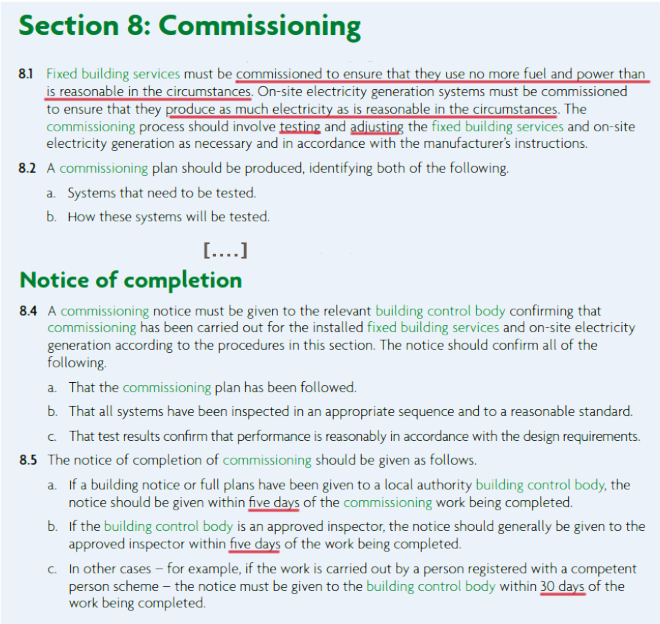
An Inspection by qualified building surveyors would include the Installer showing the site-specific diagrams, instructions and Commissioning document which must be provided to the householder.
An enterprising LPA could still decide to offer such a service without the need for a change in legislation.
Once a few installers included a Building Regs inspection in their quotation, consumers would tend to favour them. Their share of the local market would grow in comparison to their rivals.
This post was modified 4 months ago by Transparent
For me, without a thorough independent hands on check at the time of installation I suspect we won't see enough of material change in the number of issues. Even if this added a couple of hundred pounds.
That opportunity could be easily addressed.
Each Local Planning Authority already has responsibility for ensuring compliance with the Building Regulations. That remains so even if they contract-out the work to a private company.
Instead of DESNZ increasing the total BUS grant from £5000 to £7500 in October'23, it could've had a better outcome by requiring Installers to pay £500 of that to the LPA for on-site inspection before a Part-L certificate was issued by the LPA.
An Inspection by qualified building surveyors would include the Installer showing the site-specific diagrams, instructions and Commissioning document which must be provided to the householder.
An enterprising LPA could still decide to offer such a service without the need for a change in legislation.
Once a few installers included a Building Regs inspection in their quotation, consumers would tend to favour them. Their share of the local market would grow in comparison to their rivals.
It is definitely something I would pay for if it was available. A relatively small price to pay to at least reduce the risks.
An enterprising LPA could still decide to offer such a service without the need for a change in legislation.
Once a few installers included a Building Regs inspection in their quotation, consumers would tend to favour them. Their share of the local market would grow in comparison to their rivals.
Could the Building Reg inspector not use some certificate issued by the installer on a self certify basis? Or any similar mechanism to obviate the need for a visit?
8kW Solis S6-EH1P8K-L-PLUS hybrid inverter; G99: 8kW export; 16kWh Seplos Fogstar battery; Ohme Home Pro EV charger; Vaillant Arotherm Pro 7kW; 100Amp head, HA lab on mini PC
An enterprising LPA could still decide to offer such a service without the need for a change in legislation.
Once a few installers included a Building Regs inspection in their quotation, consumers would tend to favour them. Their share of the local market would grow in comparison to their rivals.
Could the Building Reg inspector not use some certificate issued by the installer on a self certify basis? Or any similar mechanism to obviate the need for a visit?
I can't speak for others.
For me the actual visit by someone suitably qualified and not connected with the installer is the important point I was trying to make. I don't personally think a self certification process is going to work with these insulation grants , especially for relatively hard to remediate properties, including my own.
The revised process IMHO is still too geared to redress rather than attempting to prevent poor practice at the point of install, with limited assurance via self certification. The old self certification process resulted in the majority of the installations failing, I fear many installs will fail under the revised process. It will be interesting to see what happens in practice.
An enterprising LPA could still decide to offer such a service without the need for a change in legislation.
Once a few installers included a Building Regs inspection in their quotation, consumers would tend to favour them. Their share of the local market would grow in comparison to their rivals.
Could the Building Reg inspector not use some certificate issued by the installer on a self certify basis? Or any similar mechanism to obviate the need for a visit?
I can't speak for others.
For me the actual visit by someone suitably qualified and not connected with the installer is the important point I was trying to make. I don't personally think a self certification process is going to work with these insulation grants , especially for relatively hard to remediate properties, including my own.
The revised process IMHO is still too geared to redress rather than attempting to prevent poor practice at the point of install, with limited assurance via self certification. The old self certification process resulted in the majority of the installations failing, I fear many installs will fail under the revised process. It will be interesting to see what happens in practice.
That's an extra £500+ on the cost which even the best installers will need to impose and we need to pay. Dont forget that its not just the cost of the inspection you also have to add in the cost of enforcement and inevitable challenge. Additionally you introduce another scamming opportunity, assessor nit picks,finding problems that don't exist or are trivial, and his mate gets to fix it.
I'm not sure I personally can support that tbh, there is already more than enough overhead costs on top of the cost of actually doing the work
What I would support is a programme of customer education so that customers who choose have a better chance of detecting the bad installers.
This post was modified 4 months ago 4 times by JamesPa
4kW peak of solar PV since 2011; EV and a 1930s house which has been partially renovated to improve its efficiency. 7kW Vaillant heat pump.
An enterprising LPA could still decide to offer such a service without the need for a change in legislation.
Once a few installers included a Building Regs inspection in their quotation, consumers would tend to favour them. Their share of the local market would grow in comparison to their rivals.
Could the Building Reg inspector not use some certificate issued by the installer on a self certify basis? Or any similar mechanism to obviate the need for a visit?
I can't speak for others.
For me the actual visit by someone suitably qualified and not connected with the installer is the important point I was trying to make. I don't personally think a self certification process is going to work with these insulation grants , especially for relatively hard to remediate properties, including my own.
The revised process IMHO is still too geared to redress rather than attempting to prevent poor practice at the point of install, with limited assurance via self certification. The old self certification process resulted in the majority of the installations failing, I fear many installs will fail under the revised process. It will be interesting to see what happens in practice.
That's an extra £500+ on the cost which even the best installers will need to impose and we need to pay. Dont forget that its not just the cost of the inspection you also have to add in the cost of enforcement and inevitable challenge. Additionally you introduce another scamming opportunity, assessor nit picks,finding problems that don't exist or are trivial, and his mate gets to fix it.
I'm not sure I personally can support that tbh, there is already more than enough overhead costs on top of the cost of actually doing the work
What I would support is a programme of customer education so that customers who choose have a better chance of detecting the bad installers.
It is a fair challenge. I don't think we have much in common.
I wouldn't support an education programme as a replacement. Happy for it to be offered as well. Also I honestly have no interest in learning the detail, in the same way I have no interest in maintaining my car. I wouldn't be even trust myself to put up a shelf these days to be very open due to my health.
I am no way qualified to assess a suitable solution or if the actual insulation is properly installed for our old house and I am am certain any education isn't going is going to be as good as a LPA from our local council with years worth of local knowledge and a formal qualification given our experience of using building control in our house.
An education programme wouldn't be any good for my mum, my two disabled brothers, the elderly people in my close or me. Honestly it would be wasted money on us.
I appreciate some people won't need or want the reassurance of an independent assessment. For me the significant damage a poor install can cause would be worth us spending a bit more. A house in our close was made structurally unsafe under the government scheme. Unless there is an independent assessment option we personally wouldn't make any insulation changes now given our personal situation, I suspect I am not alone given the mess of the previous scheme to help vulnerable and disadvantaged people.
This post was modified 4 months ago 2 times by Jeff
It is a fair challenge. I don't think we have much in common.
I wouldn't support an education programme as a replacement. Happy for it to be offered as well. Also I honestly have no interest in learning the detail, in the same way I have no interest in maintaining my car. I wouldn't be even trust myself to put up a shelf these days to be very open due to my health.
I am no way qualified to assess a suitable solution or if the actual insulation is properly installed for our old house and I am am certain any education isn't going is going to be as good as a LPA from our local council with years worth of local knowledge and a formal qualification given our experience of using building control in our house.
An education programme wouldn't be any good for my mum, my two disabled brothers, the elderly people in my close or me. Honestly it would be wasted money on us.
I appreciate some people won't need or want the reassurance of an independent assessment. For me the significant damage a poor install can cause would be worth us spending a bit more. A house in our close was made structurally unsafe under the government scheme. Unless there is an independent assessment option we personally wouldn't make any insulation changes now given our personal situation, I suspect I am not alone given the mess of the previous scheme to help vulnerable and disadvantaged people.
Fair enough, but no reason to make an independent inspection mandatory, any more than it is mandatory when you buy a car.
So as @transparent says make it an option provided eg by your local authority.
Actually I suspect it may already be an option if one went out to seek it, albeit one that isn't particularly easy to find because there isn't much of a market. I have on one occasion in the past invited the building inspector to attend primarily because I wasn't happy with the work, and of course paid the fee as a result.
Im happy with the customer having the option option to be educated (very low/no cost), pay for an independent inspection (medium cost) or take the risk (either zero cost or high cost, high risk). What I wouldn't be happy with is being obliged to pay for an inspection because there are already too many overheads.
This post was modified 4 months ago 4 times by JamesPa
4kW peak of solar PV since 2011; EV and a 1930s house which has been partially renovated to improve its efficiency. 7kW Vaillant heat pump.
Could the Building Reg inspector not use some certificate issued by the installer on a self certify basis?
That's what happens at the moment.
All the installations we see being described here on the Forum will have a letter from their LPA declaring that they comply with Building Regulations.
Do you think that's true?
The ECO insulation scheme was a disaster with the majority of solid wall installations failing. Whatever letters were not worth the paper they were written on.... I don't know if these were from the LPA or the installers or some other body?
The ECO insulation scheme was a disaster with the majority of solid wall installations failing. Whatever letters were not worth the paper they were written on.... I don't know if these were from the LPA or the installers or some other body?
Thats true, but in this case the only option is restitution because its already happened. Perhaps thats why the announcement has a focus on restitution.
Could the Building Reg inspector not use some certificate issued by the installer on a self certify basis?
That's what happens at the moment.
All the installations we see being described here on the Forum will have a letter from their LPA declaring that they comply with Building Regulations.
Do you think that's true?
I am not surprised, the solution must be to make sure whoever is inspecting cannot take shortcuts, and that they will engage with the consumer.
As for funding, if there's not enough, it needs to be found. But we should also want value for the money that is already being spent on services that have not been delivering? Like if there were missed inspections presumably there was insurance, so it should be activated to do the work and cover the losses.
I think that on a relatively well managed future system, it will be very unlikely that the problems will be the same everywhere. So that system needs some randomness and to follow the signs of malpractice that appear with targetted measures.
So as @transparent says make it an option provided eg by your local authority.
Actually I suspect it may already be an option if one went out to seek it, albeit one that isn't particularly easy to find because there isn't much of a market. I have on one occasion in the past invited the building inspector to attend primarily because I wasn't happy with the work, and of course paid the fee as a result.
I hadn't thought this was an option, to appoint someone after the work started.
We had building work checked by independent inspectors (that we had appointed) and that was money very well spent. What should not be allowed is for tradespeople to offer to appoint their inspectors (I had cases that they "offered"). Some consumers may not understand what that really means.
8kW Solis S6-EH1P8K-L-PLUS hybrid inverter; G99: 8kW export; 16kWh Seplos Fogstar battery; Ohme Home Pro EV charger; Vaillant Arotherm Pro 7kW; 100Amp head, HA lab on mini PC