
Notifications
Clear all
Joining the Renewable Heating Hub forums is completely free and only takes a minute. By registering you’ll be able to ask questions, join discussions, follow topics you’re interested in, bookmark useful threads and receive notifications when someone replies. When choosing your username, please note that it cannot be changed later, so we recommend avoiding brand or product names. Before registering, please take a moment to read the Forum Rules & Terms of Use so we can keep the community helpful, respectful and informative for everyone. Thanks for joining!

Topic starter
19/02/2026 9:05 pm
The humidity in my house is very low since the heat pump started providing heating - most rooms are somewhere between 30% and 40%. Bathroom is higher after a shower obviously and some of hat persists during the day but is down around 45% by the end of the day.
Is this something that is common? What do you do?
This topic was modified 3 weeks ago by Mars

19/02/2026 9:16 pm
What makes you think it's too low?

19/02/2026 9:25 pm
The humidity in my house is very low since the heat pump started providing heating - most rooms are somewhere between 30% and 40%. Bathroom is higher after a shower obviously and some of hat persists during the day but is down around 45% by the end of the day.
Is this something that is common? What do you do?
I am currently at 37% RH and it's been at that level for most of the winter season. I believe it comes from the underfloor heating being on 24/7.
My previous houses would have been some 60/70%.
Hitachi Yutaki SCombi Heat Pump
(Indoor Unit ) RWD-3.0RW1E-220S-K
(Outdoor Unit) RAS-3WHVRP1
2024 build bungalow
Southern england
179 m2
High level of insulation
Underfloor heating
All 12 circuits are fully open all the time
1 thermostat in family room
7KW heat pump
50 litre buffer tank (4 port)
3.6KW solar panels
Energy used by heating 2527 KWh - 7527 KWh (SCOP 3.5 approx)
Topic starter
19/02/2026 9:44 pm
@deltona I always thought a range of 40% to 50% was a good level to have. It can feel a little dry sometimes and I wonder if it’s good for wooden furniture.

19/02/2026 11:36 pm
@deltona I always thought a range of 40% to 50% was a good level to have. It can feel a little dry sometimes and I wonder if it’s good for wooden furniture.
Actually, it’s better for wooden furniture – or at least the consistency is. It’s the swings in humidity that cause the problems unless the furniture is well designed.
As for people, guidelines vary; 30-50%, 40-60% and the NHS’s own 50-55%, so the 30-40% you mention is on the low side but definitely better than being too high. @andrewj, how many house plants have you? They’re a well proven way to gently raise humidity; 5-6 medium ones can raise it by 10-15%.
This post was modified 3 weeks ago by Majordennisbloodnok
105 m2 bungalow in South East England
Mitsubishi Ecodan 8.5 kW air source heat pump
18 x 360W solar panels
1 x 6 kW GroWatt battery and SPH5000 inverter
1 x Myenergi Zappi
1 x VW ID3
Raised beds for home-grown veg and chickens for eggs
"Semper in excretia; sumus solum profundum variat"
1
20/02/2026 6:48 am
@deltona I always thought a range of 40% to 50% was a good level to have. It can feel a little dry sometimes and I wonder if it’s good for wooden furniture.
I'd be happy with what you have (so would millions of others), if you aren't actually 100% seeing any ill effects then conclude that it's fine.
1
Topic starter
20/02/2026 9:54 am
@majordennisbloodnok really? We have loads, but they are all in the conservatory. Maybe I need to distribute them a bit more.
Topic starter
20/02/2026 9:57 am
@deltona It feels a bit dry and definitely a result of this heating. I never measured it with the gas CH but it was more comfortable and condensation was never a problem.
20/02/2026 10:09 am
@majordennisbloodnok really? We have loads, but they are all in the conservatory. Maybe I need to distribute them a bit more.
That would make sense. I've found the effects are pretty localised so spreading them around is a good idea.
Obviously, a humidifier will work well but I generally feel that if I can avoid unnecessary electrical consumption then that's a good thing. Plants naturally deal with humidity and make a home feel more "homely" (in my opinion) so are a good leccy-free alternative.
Transpiration is the natural plant process that increases humidity in that water absorbed through the roots will end up evaporating from the leaves. Plants with bigger leaves or more leaves will have a greater effect, for obvious reasons. Conversely, many plants are also able to absorb moisture from the surrounding air and so reduce high humidity, and since quite a few of the best known plants for one problem are actually pretty good at dealing with the other problem too, you may be able to mitigate against both extremes at the same time.
Some classic recommendations:
- Boston Fern
- Peace Lily (for very different and personal reasons, my favourite)
- Areca Palm
- Spider Plant
- Rubber Plant
- Philodendron
- Bamboo Palm
105 m2 bungalow in South East England
Mitsubishi Ecodan 8.5 kW air source heat pump
18 x 360W solar panels
1 x 6 kW GroWatt battery and SPH5000 inverter
1 x Myenergi Zappi
1 x VW ID3
Raised beds for home-grown veg and chickens for eggs
"Semper in excretia; sumus solum profundum variat"
1

20/02/2026 12:40 pm
I've found that generally the humidity in the house is lower in the winter and higher in the summer.
I assumed this was due to cooler air being dryer or unable to 'contain' (is that the right word?) as much moisture as warm air rather than anything to do with heating!?
“Anything worth doing, is worth doing right.”


20/02/2026 2:16 pm
I remember reading about this a couple of years ago, so I hope I remember it correctly (andn the numbers are roughly accurate), but when you warm air up, its ability to hold moisture increases. So even if the actual amount of water vapour in the air stays the same, the relative humidity drops. That’s why homes often sit at 30-40% in winter once the heating is running steadily, whether it’s a heat pump, gas boiler or anything else.
In fact, heat pumps can sometimes feel drier simply because they provide more continuous, even heat rather than short hot bursts.
Below 30% is where people tend to notice dry skin, sore throats, static, etc. Bathrooms spiking after showers and then drifting back down is completely normal too.
Love the info about indoor plants @majordennisbloodnok... we have loads. That's very interesting indeed.
Get a copy of The Ultimate Guide to Heat Pumps
Subscribe and follow our YouTube channel!
20/02/2026 2:35 pm
@majordennisbloodnokjordennisbloodnok, this is in an intriguing direction you've taken this discussion in.
If you can nudge humidity back into a comfortable range without plugging something in, that’s awesome. Plants are also a far more elegant solution than having a plastic box.
As you say, transpiration does the work in the background, and the effect is nicely self-regulating. There’s also something psychologically important about greenery in winter. When heating systems run steadily, homes can feel a bit “sealed” and clinical. Plants soften that.
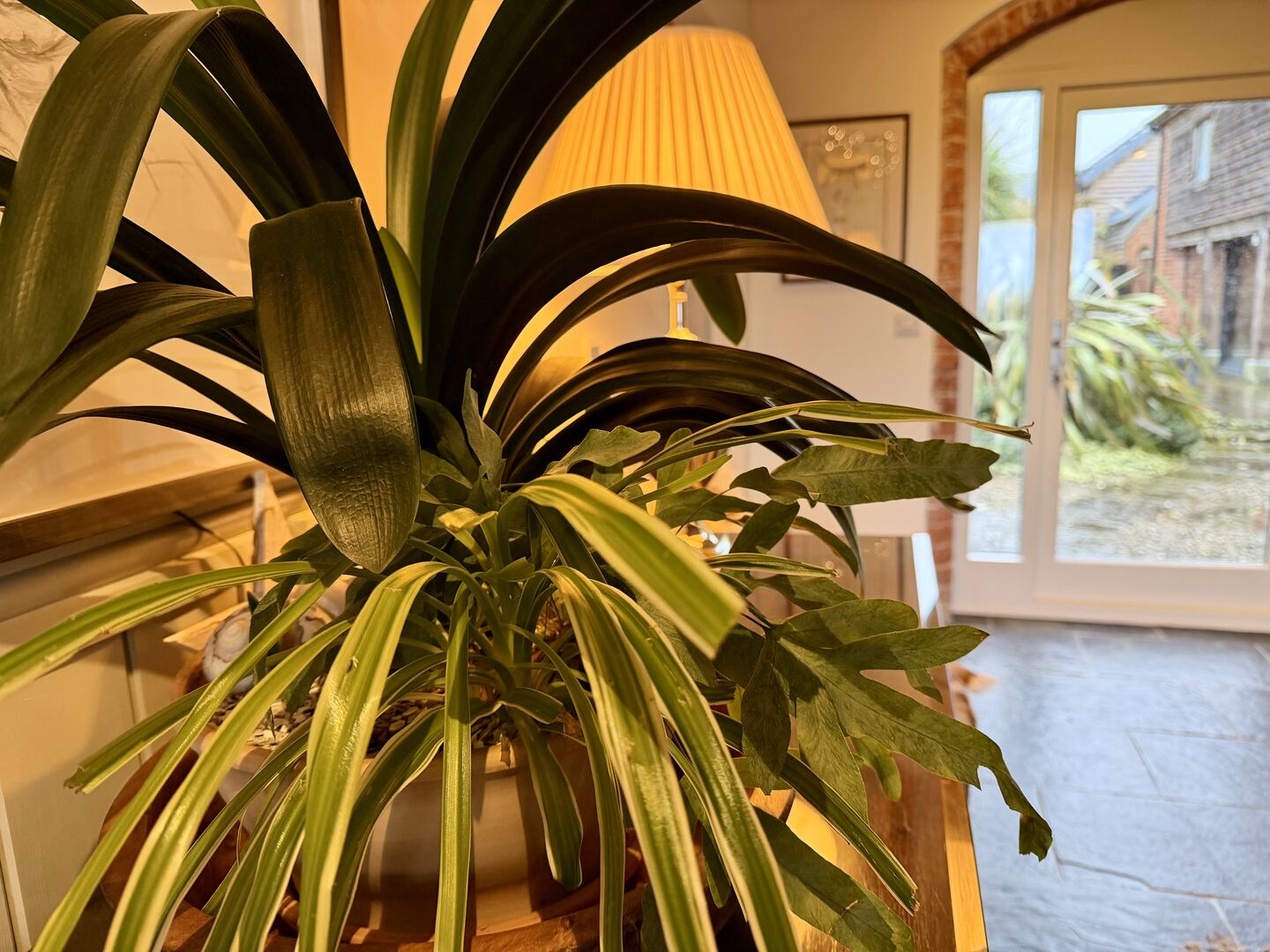
Our indoor plants on the hallway featuring a spider plant.
Get a copy of The Ultimate Guide to Heat Pumps
Subscribe and follow our YouTube channel!
Page 1 / 2
Next

Latest Posts
-

RE: Octopus Cosy 12 Heat Pump Regret: Incredibly Loud, Poor Heating & Constant Hum - Help!
Balancing is a long process and its possible to mess th...
By JamesPa , 2 hours ago
-
RE: Daikin Altherma 3 LT compressor longevity question
Up to a point yes. However every heat pump (and every ...
By JamesPa , 3 hours ago
-
Thanks everyone for the help, Havenwise now diasbled. q...
By Boycey , 5 hours ago
-
RE: Advice needed after a successful "leftfield" experiment.....
@pauli Depending on whether you can get an EV tariff, I...
By ChandyKris , 6 hours ago
-
-
RE: New Build ASHP Defects - Looking for Advice, Support & Shared Experiences
Is that a single pair only? If so it may be part if th...
By JamesPa , 7 hours ago
-
RE: Solar Power Output – Let’s Compare Generation Figures
@technogeek I think you are correct, but, it didn’t inf...
By Papahuhu , 8 hours ago
-
@batpred, you’re quite right; it does work well. I don’...
By Majordennisbloodnok , 8 hours ago
-

@Mars at the time of writing heating oil is £1.28 / ltr...
By TechnoGeek , 9 hours ago
-
RE: Ecodan Cylinder Possible Weeping Around Thermostat Port
Update: Mitsubishi sent an engineer around. It was li...
By Gruff2001 , 11 hours ago
-
RE: A Smarter Smart Controller from Homely?
@benson Agreed. I believe the COP gains with homely, i...
By Papahuhu , 12 hours ago
-
RE: Samsung Gen 7 16kW Integrated unit Modbus monitoring
The setup for this is a Samsung Modbus card. Connected ...
By antonical , 13 hours ago
-

RE: Forum updates, announcements & issues
@davidalgarve, if the emails are more than roughly a mo...
By Mars , 14 hours ago
-
How to Find All Your Posts and Topics on the Forum – A Quick Guide
If you’ve ever posted something on the forum and then s...
By Mars , 14 hours ago
-
RE: If a heat pump can only heat DHW to 50C then what? Issue with 18KW Heliotherm heat pump
Sorry to hear that but I'm not surprised TBH. Stratifi...
By JamesPa , 15 hours ago
-
RE: Say hello and introduce yourself
@pt151 welcome to the forums, and looking forward to he...
By Mars , 1 day ago
-
RE: Setback savings - fact or fiction?
The answer was in two parts in my reply, the second par...
By RobS , 1 day ago
-
Samsung Gen 7 16kW Integrated unit Modbus monitoring
Looking for some assistance to get modbus monitoring wo...
By antonical , 1 day ago
-
Ecodan control return to Melpump from Havenwise trial. settings check
Hi, Just got control back after being on the hav...
By Boycey , 1 day ago
-
RE: Refrigerant R32, is it now banned in the EU from 1st Jan 2027 for monobloc ASHPs?
I wonder if heat pump manufacturers will tone these sit...
By JamesPa , 1 day ago
-
RE: Who’s Caved and Switched the Heating On Already?
@editor yesterday we used 12kW of electricity for heat,...
By Judith , 1 day ago
-
RE: Rate the quality of your heat pump design and installation
Loss assessments can be a very serious case of GIGO. I...
By JamesPa , 2 days ago
-
RE: Who's your electricity provider and what's your tariff?
@jamespa Just bizarre. This is our data. I really don't...
By antonical , 2 days ago
-
RE: Mitsubishi Ecodan 11.2kW review
I think you said its an 11.2kW model and your house is ...
By JamesPa , 2 days ago