

Notifications
Clear all
Joining the Renewable Heating Hub forums is completely free and only takes a minute. By registering you’ll be able to ask questions, join discussions, follow topics you’re interested in, bookmark useful threads and receive notifications when someone replies. Non-registered members also do not have access to our AI features. When choosing your username, please note that it cannot be changed later, so we recommend avoiding brand or product names. Before registering, please take a moment to read the Forum Rules & Terms of Use so we can keep the community helpful, respectful and informative for everyone. Thanks for joining!

Topic starter
05/12/2025 11:12 am
Two year old system, serviced annually has repeatedly shutdown with E911 error code.
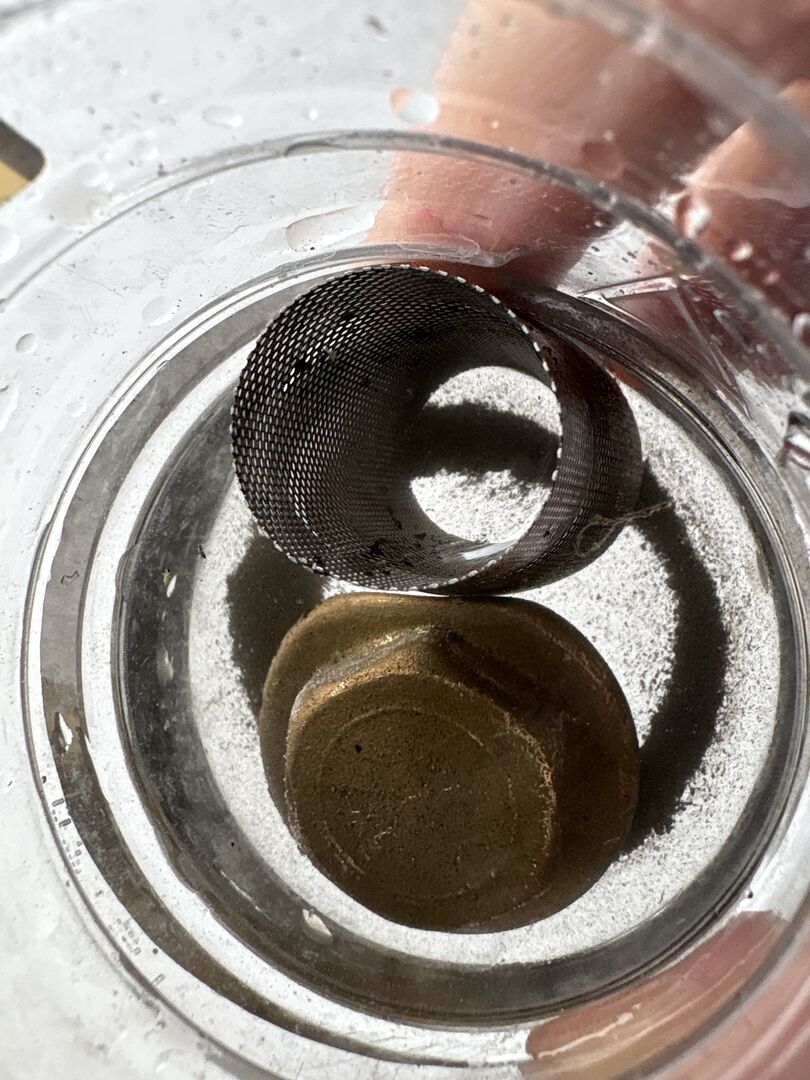
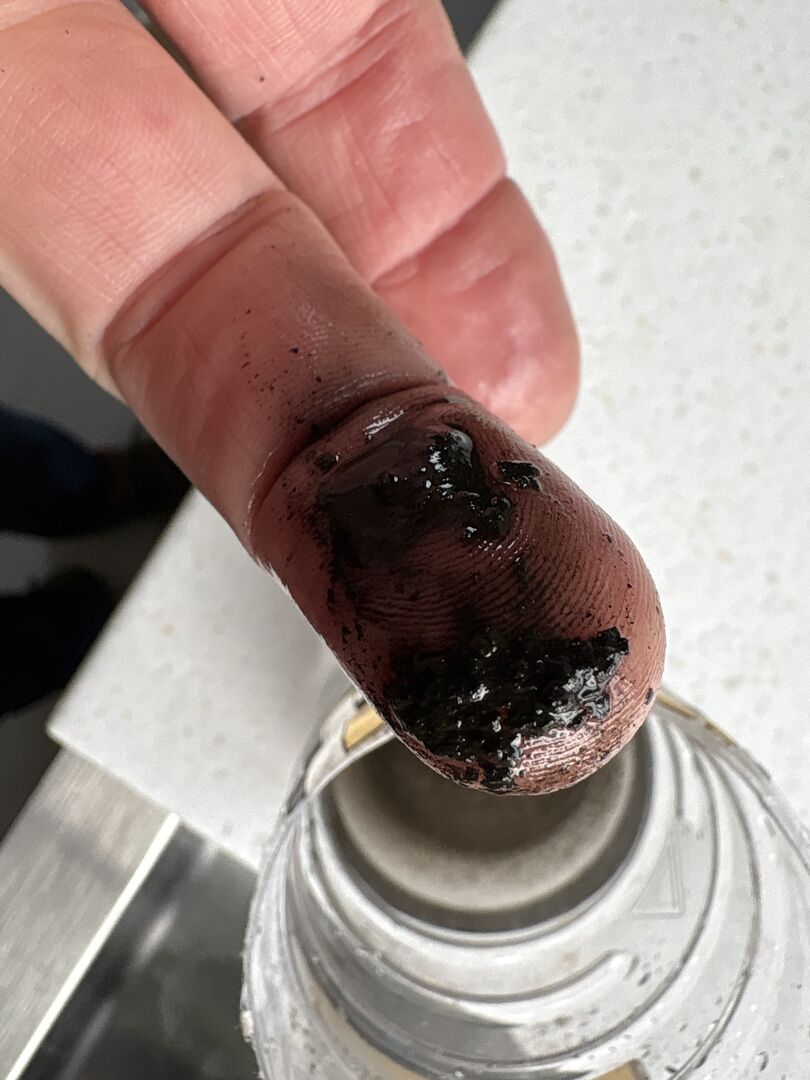
ASHP filter has been cleaned of debris 3 times (non ferrous).
any ideas why this keeps happening every 3-4 days.
thanks in advance.
Paul
photo attached
1


05/12/2025 11:24 am
Welcome to the forums @isaac. What you’re describing is really common on systems that weren’t flushed properly at installation. We went through something very similar with our own heat pump, and the good news is that if you keep on top of cleaning the strainer, the issue usually settles down over time.
From the photo, it looks like you’ve got a mix of general sludge and early-stage corrosion. The sludge/gunk will clear with repeated cleaning (in our case it took around a dozen cleans before it finally calmed down) but any corrosion you’re seeing won’t go away on its own.
E911 on a Samsung is (from memory) a flow-related error, and it’s extremely common when the strainer starts to clog. If it’s reappearing after three or four days, I’d honestly be cleaning the filter once or twice a day for a little while just to get ahead of it.
Remember to keep an eye on your expansion vessel pressure.
Once the biological/algae-like sludge has stopped appearing, it’s worth getting a proper inhibitor/biocide into the system. This Fernox one works well with low-temperature systems: https://amzn.to/3MiBpr4
You can add it through a towel rail. There’s a strong chance your original installers didn’t dose the system at all, so get a bottle in now and then ask your installer to check the levels properly at your next service.
🔥 Britain’s Heat Pump Shitshow
How Installing a Heating System Became a National Nervous Breakdown
Free UK shipping.
📗 Heat Pumps Explained
A Jargon-Free Guide for Homeowners
Rewritten and updated for 2027
📘 From Zero to Heat Pump Hero
🛠️ Bodge Buster
New to heat pumps?
Take the Heat Pump Fundamentals course and use INTRO50 at checkout for 50% off.

SPONSORS

Degrees of Separation

Latest Posts
-

RE: Heat pump branding. Clever, contemporary… or a bit too much?
I think Heat Geek have done an amazing job on their bra...
By Tomtheheatingengineer , 10 hours ago
-
RE: HeatGeek vs Octopus surveys: puzzling disparity - any ideas why?
I have just had 3 heat loss surveys, one by heat geek o...
By David , 10 hours ago
-
RE: Heat Geek Zero Disrupt: Are We Sleepwalking Into Another Race to the Bottom?
I think that's the key question. After all inverter uni...
By Prunus , 12 hours ago
-
RE: battery storage without solar
As of October 1st they need specific qualifications to ...
By EtchedPixels , 12 hours ago
-
RE: How should the Boiler Upgrade Scheme be reformed?
A unit which uses water to transfer the heat/chill from...
By Temperature_Gradient , 13 hours ago
-
RE: Renewables & Heat Pumps in the News
With regards to the BUS grant raid, I gave it more thou...
By ASHP-BOBBA , 13 hours ago
-
RE: Why are ASHP installs so expensive?
The whole system seems to work on the basis of...
By ian33a , 14 hours ago
-
RE: Missing flow temperature in Heat Geek proposal
Good plan. If you can get half hourly meter readings a...
By JamesPa , 19 hours ago
-
RE: Heat Pumps Without Grants: Would You Have Installed One & Will You Now?
@editor Most certainly. The heat pump was an ideal s...
By Abernyte , 19 hours ago
-
Although regulations may well vary from country to coun...
By Majordennisbloodnok , 19 hours ago
-
RE: Does anyone have experience of a smart water meter?
Yep I caught our slow leak from a £100 bill rise 8)
By EtchedPixels , 19 hours ago
-
RE: Do You Need a Buffer Tank or Low Loss Header for Underfloor Heating in a Large Property?
@jamespa in some cases, failing the Turing test might b...
By GrahamF , 23 hours ago
-
RE: Passiv Smart Thermostat - Help & Forum Support
@energystoragetech The heat capacity of some...
By JamesPa , 1 day ago
-
RE: tepeo ZEB UK Support & Info Thread
Sorry you are correct, I was remembering figures from t...
By JamesPa , 1 day ago




SPONSORS

