2024 build bungalow
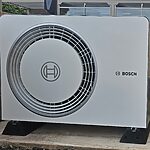
Southern england 179 m2 High level of insulation Underfloor heating All 12 circuits are fully open all the time 1 thermostat in family room 7KW heat pump 50 litre buffer tank (4 port)
3.6KW solar panels Energy used by heating 2527 KWh - 7527 KWh (SCOP 3.5 approx)
Has anyone had a heat loss calculation to the 2025 standard? The firm I am using for my new HP is still using a building figure of 0.5ACH.
I didn't word the above question very well. I am trying to see what the 0.5 ACH old standard would mean to a 2024 built building with a Air permeability = 2.35 m³/(h·m²) @ 50 Pa?
2024 build bungalow
Southern england 179 m2 High level of insulation Underfloor heating All 12 circuits are fully open all the time 1 thermostat in family room 7KW heat pump 50 litre buffer tank (4 port)
3.6KW solar panels Energy used by heating 2527 KWh - 7527 KWh (SCOP 3.5 approx)
We had an "Air Permeability Test Certificate" of 9.76 m³/(h·m²) @ 50 Pa and we went with ACH 0.5 (which has enabled an appropriate sized Vaillant 7kW ASHP for our 155m2 detached house in Hampshire.)
so it looks like you should be much less....
but wait for more knowledgeable inputs for the forum mentors!
Slowly built up 4kW peak PV, 19.5kWh battery system, BMW i3 got us Octopus Intelligent Go low price off-peak supply, thorough insulation to EPC B in detached 1905 home, underfloor heating 26m2 of total 160m2. Vaillant 7kW pump, Unistor 300L cylinder. All working well and saving £1,500 / year versus gas central heating.
MatWin I am also a B. Below is a summary of our heat loss. Staggered by the ventilation loss. I would estimate only 500 watts or 0.1 ACH. Base on the heat recovery spec.
2024 build bungalow
Southern england 179 m2 High level of insulation Underfloor heating All 12 circuits are fully open all the time 1 thermostat in family room 7KW heat pump 50 litre buffer tank (4 port)
3.6KW solar panels Energy used by heating 2527 KWh - 7527 KWh (SCOP 3.5 approx)
MatWin I am also a B. Below is a summary of our heat loss. Staggered by the ventilation loss. I would estimate only 500 watts or 0.1 ACH. Base on the heat recovery spec.
My chosen supplier has just used 0.5 ACH.
You are lucky they have used 0.5, many surveys use 2-3. With a very low loss home air changes (unless you have MVHR) are going to dominate, they are pretty significant even for a house like mine which is 7kW loss at -2 (or 10.5kW if you take the default ACH as opposed to the real one)
I have a feeling 0.5 is the min (deemed) required for adequate air change to prevent mould. That said if you have 0.5 and MVHR with 80% recovery its equivalent to 0.1
4kW peak of solar PV since 2011; EV and a 1930s house which has been partially renovated to improve its efficiency. 7kW Vaillant heat pump.
Passive house standard is 0.6ACH if I remember correctly so 0.5 is a low figure. I know someone who built to passive standard and was very careful with his airtightness tape and he achieved 0.3.
I developer who built opposite us had a blower door test a few months ago and his result was 3-3.5, I can't remember the exact figure. He was building on pre Oct 23 building regs so didn't need to be careful over airtightness but he is a good builder and takes care to do a good job so I imagine there are a lot worse built houses out there.
Reading that the OP had a test of 0.5 on an old property seems very good, and surprising to me if passive house is 0.6.
MatWin I am also a B. Below is a summary of our heat loss. Staggered by the ventilation loss. I would estimate only 500 watts or 0.1 ACH. Base on the heat recovery spec.
My chosen supplier has just used 0.5 ACH.
You are lucky they have used 0.5, many surveys use 2-3. With a very low loss home air changes (unless you have MVHR) are going to dominate, they are pretty significant even for a house like mine which is 7kW loss at -2 (or 10.5kW if you take the default ACH as opposed to the real one)
I have a feeling 0.5 is the min (deemed) required for adequate air change to prevent mould. That said if you have 0.5 and MVHR with 80% recovery its equivalent to 0.1
The first year we were at the property we didn't run the MVHR with no problems. Currently the property is at 21/22C (24/7) and only 33% RH with the MVHR running on its minimum setting.
It appears, as per this thread, a MCS contractor can only issue a MCS certificate if they do the latest method of calculation.
I am paying a lot of money (12K) to have my current HP replaced, I have to make sure that the heat loss calculation is correct, currently sits at 3.5 or 5kw Valiant.
This post was modified 2 weeks ago 2 times by trebor12345
2024 build bungalow
Southern england 179 m2 High level of insulation Underfloor heating All 12 circuits are fully open all the time 1 thermostat in family room 7KW heat pump 50 litre buffer tank (4 port)
3.6KW solar panels Energy used by heating 2527 KWh - 7527 KWh (SCOP 3.5 approx)
Passive house standard is 0.6ACH if I remember correctly so 0.5 is a low figure. I know someone who built to passive standard and was very careful with his airtightness tape and he achieved 0.3.
I developer who built opposite us had a blower door test a few months ago and his result was 3-3.5, I can't remember the exact figure. He was building on pre Oct 23 building regs so didn't need to be careful over airtightness but he is a good builder and takes care to do a good job so I imagine there are a lot worse built houses out there.
Reading that the OP had a test of 0.5 on an old property seems very good, and surprising to me if passive house is 0.6.
How is the figure measured, specifically is it a measure of it passive infiltration or an artificial measure with a pressure that is greater than would normally be expected?
4kW peak of solar PV since 2011; EV and a 1930s house which has been partially renovated to improve its efficiency. 7kW Vaillant heat pump.
It appears, as per this thread, a MCS contractor can only issue a MCS certificate if they do the latest method of calculation.
The question is, what is 'the latest method of calculation'? Here are two relevant extracts from MIS3005-D which point to the answer to that question.
So what is actually mandated in BS EN 12831-1:2017.
Unfortunately this document is not public domain and costs quite a lot to buy (so I dont have a copy and it would be a breach of copyright to post one here. I wonder what it actually says, there are excerpts scattered around the internet which may allow the answer to be pieced together without purchasing a copy.
This text in the latest version of MIS-3005-D is different to the previous version of MIS-3005-D. The earlier version actually specified a method (which MCS have admitted to me in writing was not entirely satisfactory), rather than simply specifying someone else's method. I wouldn't mind betting many installers haven't got a copy of the BS either and are either working from the old method or using an online tool (probably the latter). Of course the new one may be just as bad, or not!
PS here is one take on the differences between the old and new methods. Based on this the new method seems likely to result in lower estimated losses in many cases, but is more complex and requires more input data (much of which will still be assumptions) probably to the point where an installer cand do it practically without a software tool. This take suggests that the changes most directly affect ACH. I cant vouch for the veracity of the material on these links.
This post was modified 2 weeks ago 16 times by JamesPa
4kW peak of solar PV since 2011; EV and a 1930s house which has been partially renovated to improve its efficiency. 7kW Vaillant heat pump.
With a 'blower door' test. I assume at 50pa as that is the pressure that is always mentioned. I have read that the pressure can be increased to try and find the very smallest leaks when going to extremes with the air tightness.
I quick search online says that is equivalent to a wind speed of about 20mph, which is reasonably frequent where we live. We have open fields to the south west.
With a 'blower door' test. I assume at 50pa as that is the pressure that is always mentioned. I have read that the pressure can be increased to try and find the very smallest leaks when going to extremes with the air tightness.
I quick search online says that is equivalent to a wind speed of about 20mph, which is reasonably frequent where we live. We have open fields to the south west.
sounds possible but of course wind only blows from one direction and its not from the inside of the house! I think that might be the drift of the comments about the difference between the new BS standard and the old MCS rules/old BS standardhere I haven't gone into depth in investigating this however. What I do know is that, to reconcile the calculated loss with the measured loss in my 1930s house (which has partial fabric upgrades but is very far from a passivhaus) I had to assume ACH=0.5 (this is on the basis of using whole house ACH not room by room with diversity in the style of the 2017 BS). I also know that several well trusted installers reckon that 0.5-1 is actually realistic, as opposed to 2-3 that the old MCS recipe typically used.
4kW peak of solar PV since 2011; EV and a 1930s house which has been partially renovated to improve its efficiency. 7kW Vaillant heat pump.
I have been looking at ACH and the requirements of BS EN 12831-1:2017. Whilst information is sketchy because I don't have full access to the standard I am now of the opinion that there are 2 methods for calculating heat loss with respect to the ventilation section.
(i) There is the simplified method, this can be used when there are no unusual ventilation strategies and the building is simple and has no complex zoning. So the default ACH can be used i.e 0.5 ACH
(ii) The second option is where there a measured airtightness test and a MVHR system. And in this case a more complex calculation has to be used.
2024 build bungalow
Southern england 179 m2 High level of insulation Underfloor heating All 12 circuits are fully open all the time 1 thermostat in family room 7KW heat pump 50 litre buffer tank (4 port)
3.6KW solar panels Energy used by heating 2527 KWh - 7527 KWh (SCOP 3.5 approx)