

Notifications
Clear all
Joining the Renewable Heating Hub forums is completely free and only takes a minute. By registering you’ll be able to ask questions, join discussions, follow topics you’re interested in, bookmark useful threads and receive notifications when someone replies. Non-registered members also do not have access to our AI features. When choosing your username, please note that it cannot be changed later, so we recommend avoiding brand or product names. Before registering, please take a moment to read the Forum Rules & Terms of Use so we can keep the community helpful, respectful and informative for everyone. Thanks for joining!
Electricity, Tariffs, Monitoring, Electrics & Providers
4
Posts
4
Users
3
Reactions
2,169
Views


Topic starter
29/01/2024 10:09 am
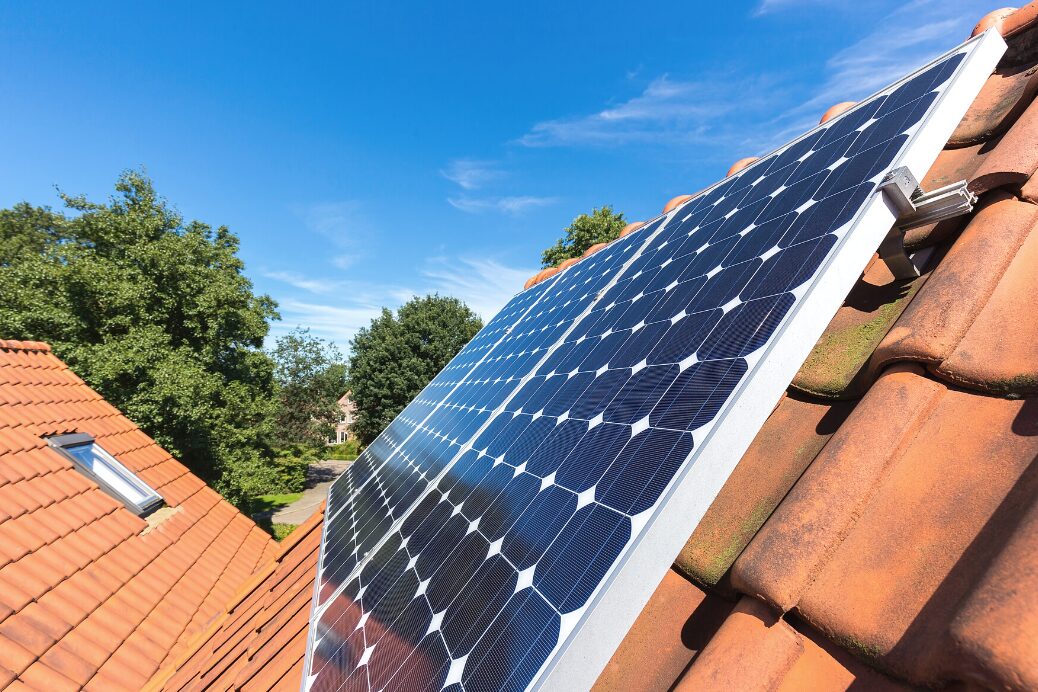
In the contemporary landscape of energy production, one of the most pressing questions is whether it's time to start paying realistic rates for outgoing tariffs from domestic solar systems to homeowners. Currently, the rates offered under export tariffs by electricity providers per kilowatt-hour (kWh) are widely perceived as inadequate, especially when compared to the rates consumers pay for electricity. This discrepancy not only raises questions about fairness but also about the broader implications for renewable energy adoption.
The core of the issue lies in the compensation rates for solar energy fed back into the grid from domestic systems. Homeowners with solar panels often generate more electricity than they consume, especially during peak sunlight hours. This excess energy is exported back to the grid, for which homeowners receive a tariff per kWh.
Currently, UK homeowners receive roughly 3-15 pence per kWh exported back to the grid – a far cry from the average 30 pence their neighbours pay for imported electricity. This discrepancy stems from the Smart Export Guarantee (SEG), a government initiative replacing the Feed-in Tariffs (FiTs). Proponents of the SEG argue it reflects wholesale market prices and encourages competition among energy providers. Critics, however, feel it undervalues homegrown solar and discourages potential adopters.
This stark contrast between export and import tariffs not only feels unjust but also undercuts the economic incentive for investing in solar technology.
The argument for increasing these tariffs is twofold. Firstly, it is a matter of fairness. Energy produced by homeowners is no less valuable than that generated by large-scale power plants. It seems only reasonable that the compensation for electricity fed into the grid should be closer to its market value. Fair compensation would acknowledge the investment homeowners have made in solar panels and their contribution to the energy grid.
Secondly, and perhaps more importantly, adjusting tariffs to more realistic levels could significantly boost the adoption of renewable energy technologies. The initial cost of installing solar panels is a significant barrier for many homeowners. While the long-term savings on energy bills and existing incentives are persuasive, better compensation for exported energy could be the tipping point for many potential adopters. With increased tariffs, the return on investment would become more attractive, shortening the payback period and making solar panels a more viable option for a broader segment of the population.
Incentivising domestic solar energy aligns with broader environmental goals. As countries strive to reduce carbon emissions and transition to renewable energy sources, encouraging solar panel installation is an easy step in the right direction. By making solar energy financially appealing to homeowners, we can accelerate the shift towards a greener, more sustainable energy grid.
Critics of increasing export tariffs argue that higher rates could lead to increased electricity prices for all consumers, as utility companies might pass on the cost to their customers. This concern is valid and underscores the need for a balanced approach. Any adjustment to tariffs must be carefully considered, ensuring that the benefits to solar producers do not unfairly burden those without solar panels.
The disparity between what homeowners receive for exporting solar energy and what their neighbours pay for grid electricity warrants a reevaluation of current tariff rates. Addressing the imbalance through fairer export tariffs is not just about economics; it's about acknowledging the environmental and societal value of this nascent power source.
By offering more realistic compensation, we can not only ensure fairness but also encourage wider adoption of solar technology. This shift could play a crucial role in meeting environmental targets and transitioning to a more sustainable energy future. However, it's imperative that this is done in a way that balances the interests of all stakeholders, including those without solar panels, to avoid unintended negative consequences.
🔥 Britain’s Heat Pump Shitshow
How Installing a Heating System Became a National Nervous Breakdown
Free UK shipping.
📗 Heat Pumps Explained
A Jargon-Free Guide for Homeowners
Rewritten and updated for 2027
📘 From Zero to Heat Pump Hero
🛠️ Bodge Buster
New to heat pumps?
Take the Heat Pump Fundamentals course and use INTRO50 at checkout for 50% off.

29/01/2024 11:54 am
‘Exports’ could and might well include previously imported grid energy stored in a battery until a more favourable time when export rates are an incentive. With tariffs such as ‘Agile’ from Octopus Energy, one might well find times when there is at least 15 pence per kW/h differential or ‘incentive’ to export and though this might not be as lucrative as OE’s ‘Saving Sessions’ might be where there is a peak demand period of perhaps an hour paying over £2 per kW/h, nevertheless playing the energy market could be very profitable - but is it ethical?
Of course, ‘Saving Sessions’ are employed to even out demand so personally, I think exporting previously ‘downloaded energy’ from my battery during a period of peak demand in an attempt to prevent peaker stations from being started up is a good thing all round.
I suppose campaigning for higher export tariffs and at the same time, lower import tariffs could be good for our bank accounts. Investment in all the equipment required is expensive I know - but would this mean those without the means having to pay more - or energy companies hitting the wall? Regards, Toodles.
Toodles, heats his home with cold draughts and cooks food with magnets.

31/01/2024 12:20 pm
the most obvious way would be a rate that equalled wholesale rates less a modest margin? Based on Octopus Tracker import rates that would probably be around 15p currently
The energy companies then could offer fixed rates (like Octopus Fixed 15p) or a variable rate that would have swings and roundabouts..
Listed Grade 2 building with large modern extension.
LG Therma V 16kw ASHP
Underfloor heating + Rads
8.7kw pv solar
3 x 8.2kw GivEnergy batteries
1 x GivEnergy Gen1 hybrid 5.0kw inverter
Manual changeover EPS
MG4 EV
1

02/02/2024 1:03 pm
I'm in Italy and we are paid the monthly average wholesale rate (publicly available from www.mercatoelettrico.org) for solar sent to the grid. My payments are made once a year, albeit a little late in the following June. I'm able to track my sent-to-grid data and work out reasonable accurately what the payment will be, minus a small administration fee (currently ca. 40 euro). In 2022 I sent 3340 kWh back to the grid and was paid 1136 euro in June 2023, since the wholesale rate was so high; for 2023, I sent 2790 kWh back and expect a payment of ca. 350 euros. Its all very simple imho.
Incidentally, for electricity taken from the grid I pay the monthly average wholesale rate to my supplier, plus taxes and fees etc which roughly ends up being (wholesale cost x 2) on the bill; so I'm roughly paid 50% of the bill cost for electricity I send to the grid. I have a smart meter that gives both grid consumption and electricity sent to the grid in 15m chunks, which gives me far too much data to obsess over 🙂
2

SPONSORS

Degrees of Separation

Latest Posts
-

RE: Heat pump branding. Clever, contemporary… or a bit too much?
I think Heat Geek have done an amazing job on their bra...
By Tomtheheatingengineer , 3 hours ago
-
RE: HeatGeek vs Octopus surveys: puzzling disparity - any ideas why?
I have just had 3 heat loss surveys, one by heat geek o...
By David , 4 hours ago
-
RE: Heat Geek Zero Disrupt: Are We Sleepwalking Into Another Race to the Bottom?
I think that's the key question. After all inverter uni...
By Prunus , 5 hours ago
-
RE: battery storage without solar
As of October 1st they need specific qualifications to ...
By EtchedPixels , 6 hours ago
-
RE: How should the Boiler Upgrade Scheme be reformed?
A unit which uses water to transfer the heat/chill from...
By Temperature_Gradient , 6 hours ago
-
RE: Renewables & Heat Pumps in the News
With regards to the BUS grant raid, I gave it more thou...
By ASHP-BOBBA , 7 hours ago
-
RE: Why are ASHP installs so expensive?
The whole system seems to work on the basis of...
By ian33a , 7 hours ago
-
RE: Missing flow temperature in Heat Geek proposal
Good plan. If you can get half hourly meter readings a...
By JamesPa , 12 hours ago
-
RE: Heat Pumps Without Grants: Would You Have Installed One & Will You Now?
@editor Most certainly. The heat pump was an ideal s...
By Abernyte , 12 hours ago
-
Although regulations may well vary from country to coun...
By Majordennisbloodnok , 13 hours ago
-
RE: Does anyone have experience of a smart water meter?
Yep I caught our slow leak from a £100 bill rise 8)
By EtchedPixels , 13 hours ago
-
RE: Do You Need a Buffer Tank or Low Loss Header for Underfloor Heating in a Large Property?
@jamespa in some cases, failing the Turing test might b...
By GrahamF , 16 hours ago
-
RE: Passiv Smart Thermostat - Help & Forum Support
@energystoragetech The heat capacity of some...
By JamesPa , 18 hours ago
-
RE: tepeo ZEB UK Support & Info Thread
Sorry you are correct, I was remembering figures from t...
By JamesPa , 1 day ago




SPONSORS