

Notifications
Clear all
Joining the Renewable Heating Hub forums is completely free and only takes a minute. By registering you’ll be able to ask questions, join discussions, follow topics you’re interested in, bookmark useful threads and receive notifications when someone replies. Non-registered members also do not have access to our AI features. When choosing your username, please note that it cannot be changed later, so we recommend avoiding brand or product names. Before registering, please take a moment to read the Forum Rules & Terms of Use so we can keep the community helpful, respectful and informative for everyone. Thanks for joining!

Topic starter
24/10/2022 5:57 pm
How does ESO intend to get a meaningful reduction when so few suppliers are participating in this scheme? it would seem simpler and more effective just to require every supplier to offer at least one openly available TOU tariff.

24/10/2022 8:04 pm
How does ESO intend to get a meaningful reduction when so few suppliers are participating in this scheme? it would seem simpler and more effective just to require every supplier to offer at least one openly available TOU tariff.
Correct me if I am wrong, but is this the scheme that I think I read about recently, where consumers are paid for the units of electricity that they did not use during the peak periods? I wonder how they would measure the units that I was thinking of using, but then decided not to do so to save the planet.
We have already reduced our energy consumption as much as possible, so would have great difficulty reducing it further, even to save only part of the planet.
It would appear a good way to reward heavy users, to use a little less, at the expense of those who are already doong their best to save the planet.
Whilst I agree in principle with TOU tariffs, I feel the major problem is that many consumer would fear signing up to a tariff that could suddenly shoot upwards without any prior notification.
I have recently been monitoring the Octopus Agile tariff, which for the past few days has been vastly cheaper than the present price guarantee of 34p/kWh, in fact today the highest price during the peak period is 33.03p/kWh, but back in early September the peak price was 78p/kWh, with the minimum all day tariff often above the 34p/kWh guarantee.
I have also recently noticed, and been monitoring, the price per MWh shown on the grid.iamkate.com website. Today, during the present peak it is quoting a price of £41.50/MWh, which is 4.15p/kWh, so who is getting the almost 30p extra that we are paying?

24/10/2022 8:53 pm
How does ESO intend to get a meaningful reduction when so few suppliers are participating in this scheme? it would seem simpler and more effective just to require every supplier to offer at least one openly available TOU tariff.
Correct me if I am wrong, but is this the scheme that I think I read about recently, where consumers are paid for the units of electricity that they did not use during the peak periods? I wonder how they would measure the units that I was thinking of using, but then decided not to do so to save the planet.
We have already reduced our energy consumption as much as possible, so would have great difficulty reducing it further, even to save only part of the planet.
It would appear a good way to reward heavy users, to use a little less, at the expense of those who are already doong their best to save the planet.
Whilst I agree in principle with TOU tariffs, I feel the major problem is that many consumer would fear signing up to a tariff that could suddenly shoot upwards without any prior notification.
I have recently been monitoring the Octopus Agile tariff, which for the past few days has been vastly cheaper than the present price guarantee of 34p/kWh, in fact today the highest price during the peak period is 33.03p/kWh, but back in early September the peak price was 78p/kWh, with the minimum all day tariff often above the 34p/kWh guarantee.
I have also recently noticed, and been monitoring, the price per MWh shown on the grid.iamkate.com website. Today, during the present peak it is quoting a price of £41.50/MWh, which is 4.15p/kWh, so who is getting the almost 30p extra that we are paying?
Basically they can see how much you use usually.
The schemes are about getting millions of people to shift energy rather than use less overall necessarily.
The various schemes are not ToU tariff, you stay on your current tariff.
The idea being they hope to get millions involved rather than a few thousand extra with ToU tariff.
There are ones based on the national ESO scheme e.g.
And addition ones supplier specific e.g.
https://www.ovoenergy.com/ovo-newsroom/press-releases/2022/october/power-move-news
24/10/2022 9:06 pm
How does ESO intend to get a meaningful reduction when so few suppliers are participating in this scheme? it would seem simpler and more effective just to require every supplier to offer at least one openly available TOU tariff.
Correct me if I am wrong, but is this the scheme that I think I read about recently, where consumers are paid for the units of electricity that they did not use during the peak periods? I wonder how they would measure the units that I was thinking of using, but then decided not to do so to save the planet.
We have already reduced our energy consumption as much as possible, so would have great difficulty reducing it further, even to save only part of the planet.
It would appear a good way to reward heavy users, to use a little less, at the expense of those who are already doong their best to save the planet.
Whilst I agree in principle with TOU tariffs, I feel the major problem is that many consumer would fear signing up to a tariff that could suddenly shoot upwards without any prior notification.
I have recently been monitoring the Octopus Agile tariff, which for the past few days has been vastly cheaper than the present price guarantee of 34p/kWh, in fact today the highest price during the peak period is 33.03p/kWh, but back in early September the peak price was 78p/kWh, with the minimum all day tariff often above the 34p/kWh guarantee.
I have also recently noticed, and been monitoring, the price per MWh shown on the grid.iamkate.com website. Today, during the present peak it is quoting a price of £41.50/MWh, which is 4.15p/kWh, so who is getting the almost 30p extra that we are paying?
The spot price of gas collapsed as the European storage is full and it has been relatively warm etc. So the electricity spot prices have fallen.
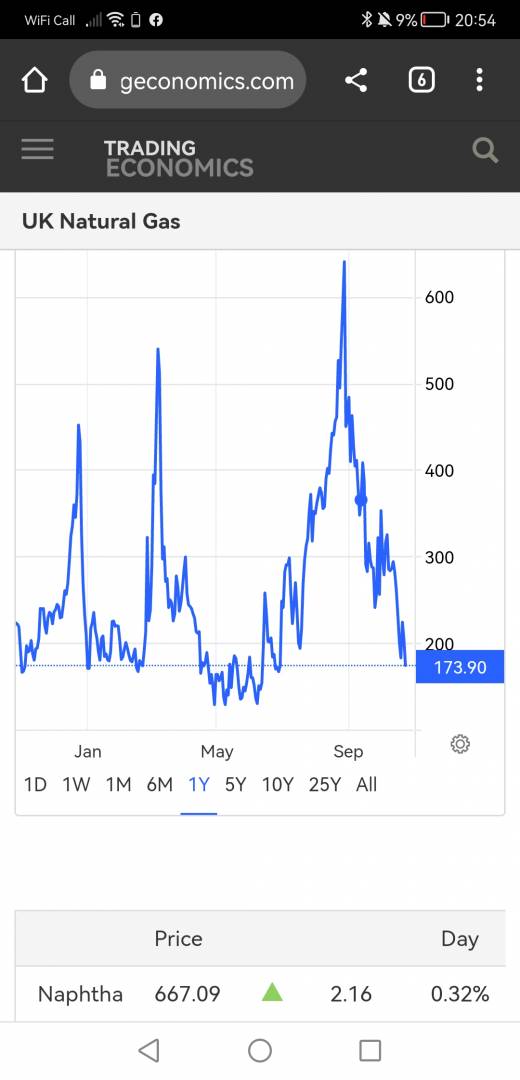
But most electricity is bought in advance so not at the electricity spot price you are looking at. Electricity was bought at a higher price by your supplier.
Then there is the whole process of how the price cap is calculated using historical data over a proceeding 6 month period, the other costs included in the unit rate, including backwardation costs to cover previous costs that were not included in the cap whee the cap was too low. What you are looking at will feed into the cap the next time it is re calculated.
1

25/10/2022 2:41 pm
Any use for heat pump owners with Octopus?
The Equinox trial, which is funded through Ofgem’s Network Innovation Competition, will run every winter from 2022 to 2025 and will test if heat pump owners are willing to reduce the temperature of their homes for short periods of time for modest financial incentives to help balance energy demand. Duration and scale of temperature reductions should mean minimal disruption to daily habits and comfort in the home.
https://octopus.energy/blog/equinox-flexibility-trial/
1

25/10/2022 4:02 pm
@jeff signed up. Let's see what is all about. Not sure how it might work given my battery
25/10/2022 5:39 pm
It is actually one of the things that I was about to suggest to both heat pumps owners and also those with battery storage.
Although we still have a gas boiler, we have been reducing our gas consumption whenever possible, by using energy from our solar PV system to warm our home to up to 23C during the daytime, which shuts down our gas boiler and also delays it restarting until the indoor temperature drops to 21C. At this time of year this normally equates to the gas boiler not operating for 12 to 13 hours each day.
The same method could be employed with a heat pump, with or without any solar PV. Raising the indoor temperature gradually (say 0.5C every 2 hours) should not cause a heat pump to work excessively hard, and doing it during the normally warmer daytime period would be when the heat pump is operating most efficiently. Dropping the set temperature from 23C to 21C at say 4pm, should cause the heat pump to at least reduce operation if not shutdown altogether for an extended period of time. The reduction in energy consumption will of course be dependent upon the thermal mass of your home, and how cold it is outside, but since the outside temperature does not normally fall appreciably until later in the evening, then it may be possible to reduce demand for quite a number of hours during the peak period.
Obviously those with battery storage can either use the energy stored within their batteries during the peak period, or if they have a heat pump and the above method works by raising the indoor temperature, they can use the battery storage at other periods during the day when it may be more beneficial.
25/10/2022 6:14 pm
It is actually one of the things that I was about to suggest to both heat pumps owners and also those with battery storage.
Although we still have a gas boiler, we have been reducing our gas consumption whenever possible, by using energy from our solar PV system to warm our home to up to 23C during the daytime, which shuts down our gas boiler and also delays it restarting until the indoor temperature drops to 21C. At this time of year this normally equates to the gas boiler not operating for 12 to 13 hours each day.
The same method could be employed with a heat pump, with or without any solar PV. Raising the indoor temperature gradually (say 0.5C every 2 hours) should not cause a heat pump to work excessively hard, and doing it during the normally warmer daytime period would be when the heat pump is operating most efficiently. Dropping the set temperature from 23C to 21C at say 4pm, should cause the heat pump to at least reduce operation if not shutdown altogether for an extended period of time. The reduction in energy consumption will of course be dependent upon the thermal mass of your home, and how cold it is outside, but since the outside temperature does not normally fall appreciably until later in the evening, then it may be possible to reduce demand for quite a number of hours during the peak period.
Obviously those with battery storage can either use the energy stored within their batteries during the peak period, or if they have a heat pump and the above method works by raising the indoor temperature, they can use the battery storage at other periods during the day when it may be more beneficial.
There are a lot of similar trails going on. This is another from ovo.
https://www.ovoenergy.com/blog/heat-pump-pro-trial
1

25/10/2022 6:38 pm
My idea is that it may benefit all ASHP owners, rather than just those on any trials or schemes.
Not only should it reduce demand during the peak evening period, but by running the heat pump more during the warmer daytime period, and less during the cooler late evening period, it may improve efficiency and reduce overall consumption. Particularly if it is the normal modus operandi, whether requested to reduce demand or not.

30/11/2022 3:52 pm
At last, I have my Tesla Powerwall installed and am starting to feed it my PV panel’s output [8.1 kWp.] when the sun graces us with its’ presence. I hope to have a Daikin ASHP and a Sunamp Thermino ePV heat battery installed ‘soon’. Now, along with an Eddi diverter, much or maybe all of my PV energy will charge the battery then feed the Thermino; during the summer, I think I’ll still have exportable energy to return via my Octopus Agile Outgoing tariff. During the cooler months, I’ll be using far more energy than at present as am using a gas boiler (on its’ last legs now!). I have written to Octopus Energy as I wish to know which tariffs are available to me as my wife and I are both visually handicapped and are unable to drive and don’t have an EV. I can’t be the only user to not have an EV but have high consumption to service; what are others doing to keep the costs of winter consumption down as far as possible please? I may well look into any schemes to reduce my load on the grid by having reduced heating at peak times; I haven’t heard back from Octopus yet but I feel they are probably ‘a little busy right now’!
Regards, Toodles
Toodles, heats his home with cold draughts and cooks food with magnets.
Topic starter
17/12/2022 9:49 am
I have participated in 3 of the Demand Flexibility tests run through E.On now, two of an hour each and one of two hours. The percentage reduction they calculate for me only makes sense if the average and target are specified in kW rather than kWh as they claim. The amount paid per kWh saved seems quite variable so I don't think I understand how they are done.
17/12/2022 10:06 am
2

Page 1 / 4
Next

SPONSORS
Degrees of Separation

Latest Posts
-

RE: Heat pump branding. Clever, contemporary… or a bit too much?
I think Heat Geek have done an amazing job on their bra...
By Tomtheheatingengineer , 7 hours ago
-
RE: HeatGeek vs Octopus surveys: puzzling disparity - any ideas why?
I have just had 3 heat loss surveys, one by heat geek o...
By David , 8 hours ago
-
RE: Heat Geek Zero Disrupt: Are We Sleepwalking Into Another Race to the Bottom?
I think that's the key question. After all inverter uni...
By Prunus , 9 hours ago
-
RE: battery storage without solar
As of October 1st they need specific qualifications to ...
By EtchedPixels , 10 hours ago
-
RE: How should the Boiler Upgrade Scheme be reformed?
A unit which uses water to transfer the heat/chill from...
By Temperature_Gradient , 10 hours ago
-
RE: Renewables & Heat Pumps in the News
With regards to the BUS grant raid, I gave it more thou...
By ASHP-BOBBA , 11 hours ago
-
RE: Why are ASHP installs so expensive?
The whole system seems to work on the basis of...
By ian33a , 11 hours ago
-
RE: Missing flow temperature in Heat Geek proposal
Good plan. If you can get half hourly meter readings a...
By JamesPa , 16 hours ago
-
RE: Heat Pumps Without Grants: Would You Have Installed One & Will You Now?
@editor Most certainly. The heat pump was an ideal s...
By Abernyte , 16 hours ago
-
Although regulations may well vary from country to coun...
By Majordennisbloodnok , 17 hours ago
-
RE: Does anyone have experience of a smart water meter?
Yep I caught our slow leak from a £100 bill rise 8)
By EtchedPixels , 17 hours ago
-
RE: Do You Need a Buffer Tank or Low Loss Header for Underfloor Heating in a Large Property?
@jamespa in some cases, failing the Turing test might b...
By GrahamF , 20 hours ago
-
RE: Passiv Smart Thermostat - Help & Forum Support
@energystoragetech The heat capacity of some...
By JamesPa , 22 hours ago
-
RE: tepeo ZEB UK Support & Info Thread
Sorry you are correct, I was remembering figures from t...
By JamesPa , 1 day ago




SPONSORS
