
Notifications
Clear all
Joining the Renewable Heating Hub forums is completely free and only takes a minute. By registering you’ll be able to ask questions, join discussions, follow topics you’re interested in, bookmark useful threads and receive notifications when someone replies. Non-registered members also do not have access to our AI features. When choosing your username, please note that it cannot be changed later, so we recommend avoiding brand or product names. Before registering, please take a moment to read the Forum Rules & Terms of Use so we can keep the community helpful, respectful and informative for everyone. Thanks for joining!

Topic starter
15/08/2024 1:04 pm
@derek-m I think my inverter only allows for two strings though because that was my next thought. But perhaps if possible I could add some of the panels into the original string with the others on that other string facing north for later on in the day when the south ones are shaded by the roof. Care not to overload the inverter would be first port of call, or another inverter in the garage feeding into the system.
Topic starter
15/08/2024 1:11 pm
I have octopus out at the minute wiring in the EV charger. They noticed the neutral cable to the main isolator was not tightned. Scottish power contracted it to walker watts to install my three phase and when they left my solar wouldn’t work because they left the main feed detached. Today this neutral was loose but on inspection it’s been found to be that the screws are stripped. I was standing next to both the blokes when the cable fell out so I know they had nothing to do with it. Poor workmanship and they don’t test nothing I’m told where these guys are running all the tests.

15/08/2024 1:28 pm
@derek-m I have looked at some houses where panels are fitted south and north, presumably on separate strings. During winter whats the minimum production on panels before the inverter switches off. Do you actually get anything worthwhile during these months.
Since being installed over 10 years ago, our 4kWp solar PV system has generated electrical energy every day, the maximum was over 25kWh, while the minimum was 30Wh.
I do believe that the open-circuit voltage on our panels is something like 55v to 60v, but this reduces as current is drawn from the panel, until the voltage and current balance at the amount of power being produced by the panel.
We have two strings of 8 panels in series, so a potential maximum voltage of over 400v dc. I seem to remember that the inverter starts to operate once the voltage reaches 100v.
As you are aware, production in Winter is much reduced, one reason is less daylight hours, a second is possibly more cloudy conditions, with the third being the angle of the Sun in relation to the panels. On the shortest day the Sun peaks at 13 degrees above the horizon. To maximise Winter production the panels would need to be mounted almost vertically, be South facing, with no shading.
I recently found there are now double sided panels available, which can be used as a fence or similar, but of course are more expensive.
Topic starter
15/08/2024 2:14 pm
@derek-m I think I will opt for standard panels and I notice quite a few second hand ones, whether that’s a good idea I don’t know. Age probably only reliable indicators they are decent. But I read that mixing isn’t a good idea.


15/08/2024 2:24 pm
notice quite a few second hand ones
You can in most cases buy cheaper new ones, as prices have dipped so much.
Topic starter
15/08/2024 2:32 pm
@johnmo was looking at prices there and some folk are asking daft prices and new ones are the best way to go as you say.
Topic starter
15/08/2024 3:23 pm
A thought and perhaps a daft one. If I fitted panels with micro inverters on my garage roof I could orientate them any way without loss from shading. But could this AC current be wired into the consumer unit in the garage. I have no idea the amperage or ac voltage they output and presuming the micro inverters maintain 240v. The amperage might be an issue though and I believe a target for lightening.
brainstorming my options and staying away from my original system whilst under warranty might be wise.

15/08/2024 4:28 pm
Yes, there are rooftop micro-inverters which will provide output at mains voltage.
And some of those might do what you want...
... but stay away from suppliers who suggest 'just plug it into any convenient 13A socket'.
You'd require a dedicated point for connection of your micro-inverters with a cable-size between it and the consumer unit which has been properly calculated.
You also require the right RCD and MCB in the consumer unit where that cable gets connected.
Why not an RCBO (single-module sized) I hear you ask?
Because there's about to be a new Amendment to the IEC Electrical regulations, which requires the use of a bi-directional RCD.
You can't (yet) buy a bi-directional RCBO.
Further explanation and pretty graphics can be viewed here on this forum.
This is extremely important.
We're discussing the possible connection of live mains to a micro-inverter on the roof.
Having an operational residual-current breaker isn't an optional extra!
You will also require G99 approval from your regional DNO.
That's because you'll then have more than one device in the home which can export to the grid.
They will check what those devices are against a list of approved-inverters held by the Electrical Networks Association.
The G99 Application is free, and you can apply again if you make a mistake.
Regard the DNO as your friend.
They are ensuring that what you're attempting is safe and doesn't compromise the grid, rather than just being 'legal'.
If your existing inverter can already export 3.68kW (16A) and there are no mitigating circumstances as to why the connection to your substation could accept more, then you aren't likely to be given G99 consent.
Please ask if you need to me to elaborate on that.
I enjoy a healthy relationship with the engineers who write these Standards and check the technical specs for applications made to National Grid.
So if we need to find out something in particular, then we can do so.
Save energy... recycle electrons!

Topic starter
19/08/2024 8:56 pm
@transparent may I ask you a question please it’s not relating to these subjects but an educational matter. But feel free to say no and I won’t be offended.
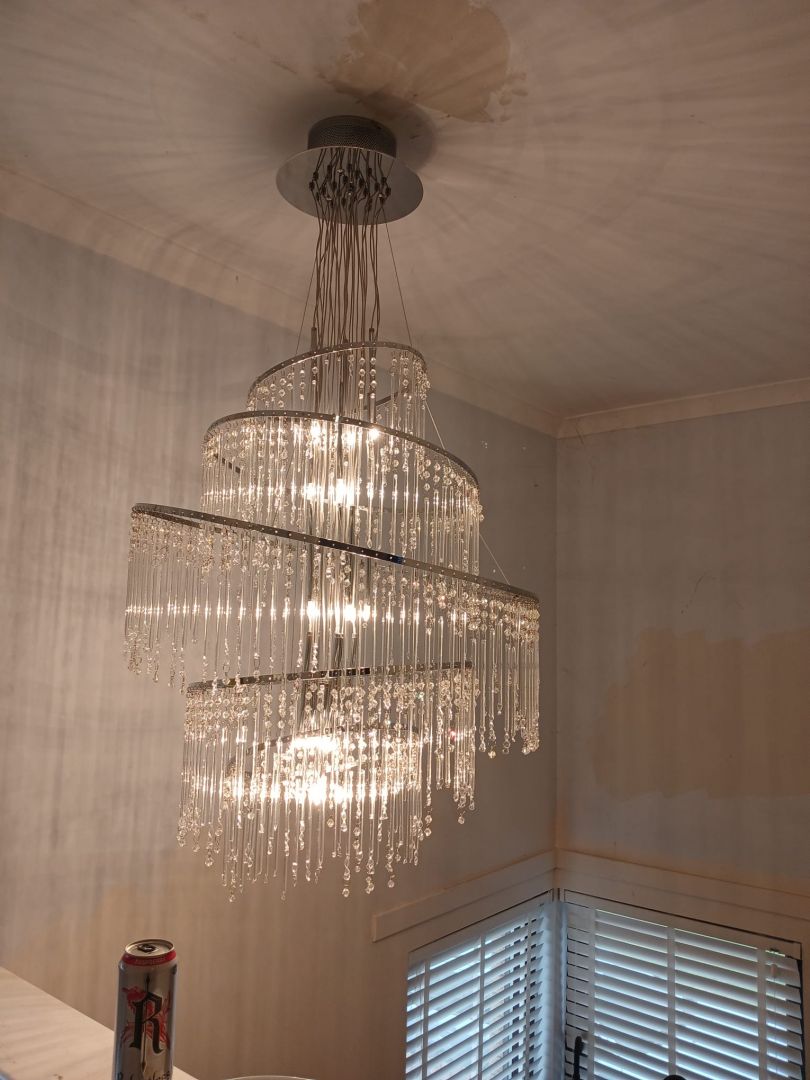
my daughter asked me to fit a chandelier, it’s 240 ac with a built in transformer down to 12volts supplying 24x 10 amp halogen bulbs. Now as concerned as one might be with so many bulbs and halogen I installed it. It gets mad hot and after a while trips the 6 amp fuse, and I expected it might once I felt the heat, heat equals resistance and so on. My electrical knowledge doesn’t give me an understanding how the transformer in the lamp allows these bulbs to overload the circuit without shutting down itself on overload. Or bursting into flames. Currently it’s an ornament until I figure out where she purchased it from.
19/08/2024 9:30 pm
@transparent may I ask you a question please it’s not relating to these subjects but an educational matter. But feel free to say no and I won’t be offended.
my daughter asked me to fit a chandelier, it’s 240 ac with a built in transformer down to 12volts supplying 24x 10 amp halogen bulbs. Now as concerned as one might be with so many bulbs and halogen I installed it. It gets mad hot and after a while trips the 6 amp fuse, and I expected it might once I felt the heat, heat equals resistance and so on. My electrical knowledge doesn’t give me an understanding how the transformer in the lamp allows these bulbs to overload the circuit without shutting down itself on overload. Or bursting into flames. Currently it’s an ornament until I figure out where she purchased it from.
Are you certain the halogen bulbs are 10 Amps and not 10 Watts?
24 bulbs at 10 Watts would draw 240 Watts. Is this a heater and not a lamp?
The current draw on the 240v supply side would be in the region of 1 Amp, so if it is blowing a 6 Amp fuse then something would appear to be wrong.
I would highly recommend that you do not use this item.
Topic starter
19/08/2024 9:38 pm
@derek-m sorry 10 watt bulbs, yes it’s not desirable. Aside from the fuse popping the thing would heat the house.
19/08/2024 10:00 pm
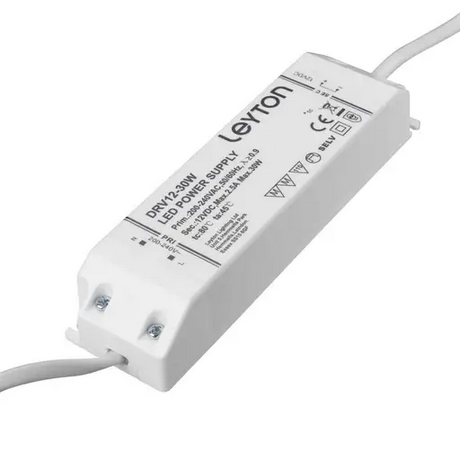
Is the transformer just that?... converting 240v AC to 12v AC?
Or is it an 'electronic transformer'?... a switched-mode power supply in a plastic box, similar to this:
On the plus side, I have experimented widely with using LED lighting within the home.
I don't like LED 'bulbs' because the electronics within the device creates sufficient heat that it reduces the lifetime of the LED emitters themselves.
So I've been using LED strips and plates of all sorts of sizes, and assembling them into a bespoke light...
For example, here's a 'rope light', casually coiled along a suspended chrome rail:

The 'rope' is actually a 30mm diameter hollow silicone tube, into which I've pulled a pair of LED tapes stuck together.
It gives a very even all-around light with no shadow.
It depends if your daughter really wants the vintage appeal of a chandelier,
or is prepared to try a more contemporary approach, based on good science.
Save energy... recycle electrons!
SPONSORS

Degrees of Separation
Latest Posts
-

RE: New Build 3 Phase or 1Phase
Not so. 1: It's now the case that the Service Fuse wi...
By Transparent , 10 hours ago
-
RE: How will removing the standing charge on gas bills benefit heat pumps?
I think it has an enormous impact on air/air users. The...
By EtchedPixels , 17 hours ago
-
@editor Ouch, sorry to re start the tick. I had assume...
By DavidB , 1 day ago
-
RE: Say hello and introduce yourself
@e-a-west as the good Major said, welcome to the forums...
By Mars , 1 day ago
-
RE: How much of your renewable and home setup would still work if the internet went down?
Yes I actually have a copy of a tool that whenever a ce...
By EtchedPixels , 2 days ago
-
RE: Indevolt Batteries UK Support & Info Thread
@editor Hi, To resolve this, please tap on the A...
By Indevolt Tech , 2 days ago
-
RE: Double or Triple Glazed Windows?
Posted by: @singlespeed With 9 years repairing windo...
By Rob of York , 3 days ago
-
@transparent we’re still running a secure version of PH...
By Mars , 3 days ago
-
RE: How quickly would you want/expect heat recovery to take from setback?
Much longer than that here. The heating isn't even on. ...
By bobflux , 4 days ago
-
RE: Passiv Smart Thermostat - Help & Forum Support
Obviously the weather is changeable but there's a defin...
By Singlespeed , 4 days ago
-
RE: The Changing Jet Stream Could Challenge UK Air Source Heat Pumps
@rob-of-york I must admit that when we had a Daikin hea...
By Toodles , 4 days ago
-
RE: Forum updates, announcements & issues
Get the Renewable Heating Hub heads-up on WhatsApp. I...
By Mars , 4 days ago
-
RE: Safety study for plug in batteries out to tender - looks like Q3 2027 at best before legal
@editor I pointed out to the one of the Fuse execs that...
By dansus , 4 days ago
-
RE: 15kw pump for 225m2 1990's house - over kill?
@seaviews As well as loft insulation, there are othe...
By Rob of York , 4 days ago




SPONSORS