

Notifications
Clear all
Joining the Renewable Heating Hub forums is completely free and only takes a minute. By registering you’ll be able to ask questions, join discussions, follow topics you’re interested in, bookmark useful threads and receive notifications when someone replies. Non-registered members also do not have access to our AI features. When choosing your username, please note that it cannot be changed later, so we recommend avoiding brand or product names. Before registering, please take a moment to read the Forum Rules & Terms of Use so we can keep the community helpful, respectful and informative for everyone. Thanks for joining!

Topic starter
24/03/2024 10:10 pm
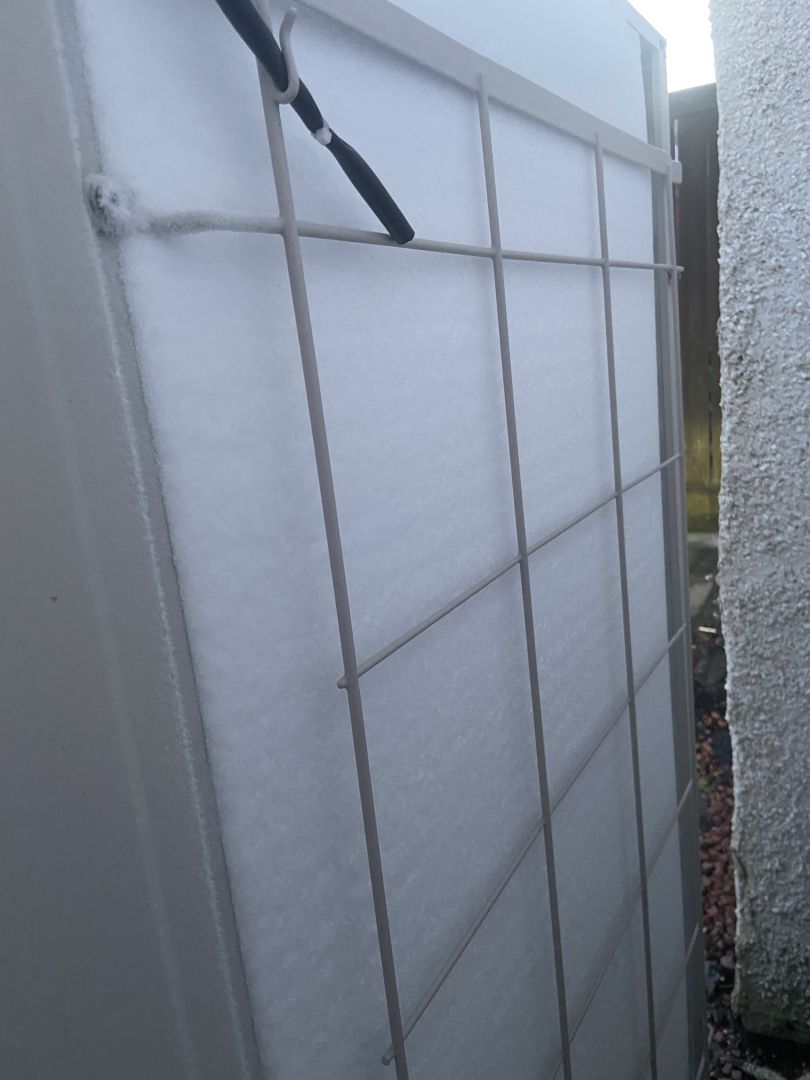
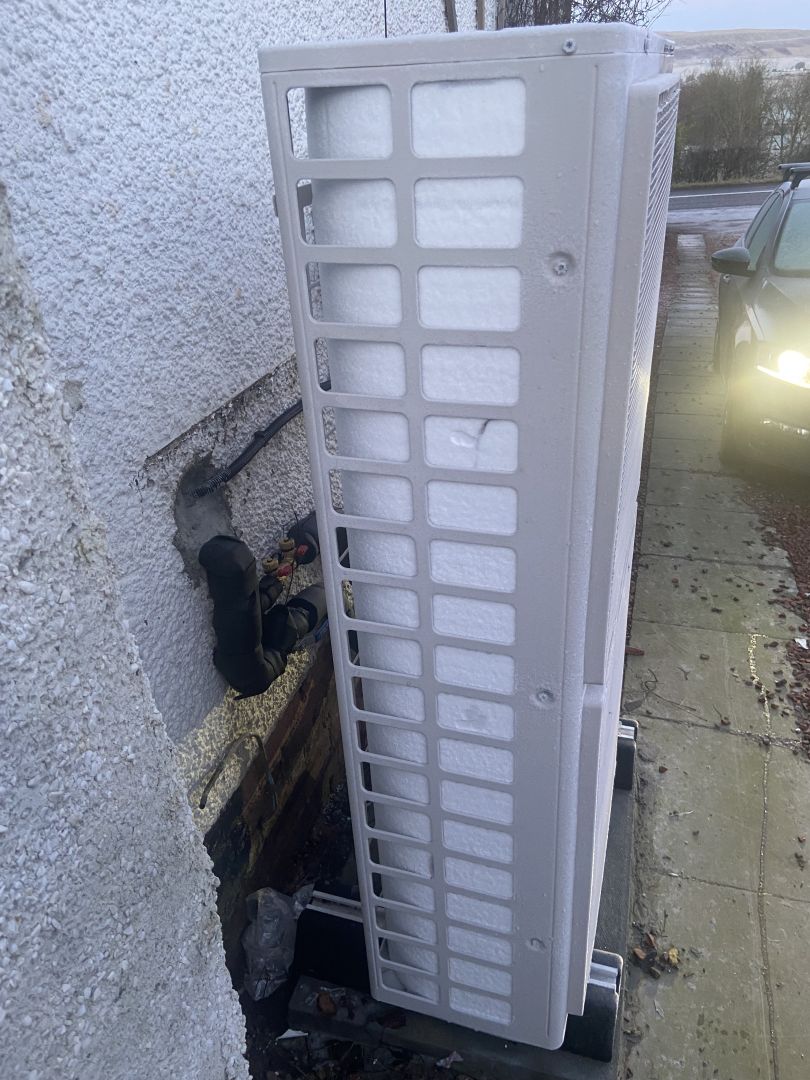
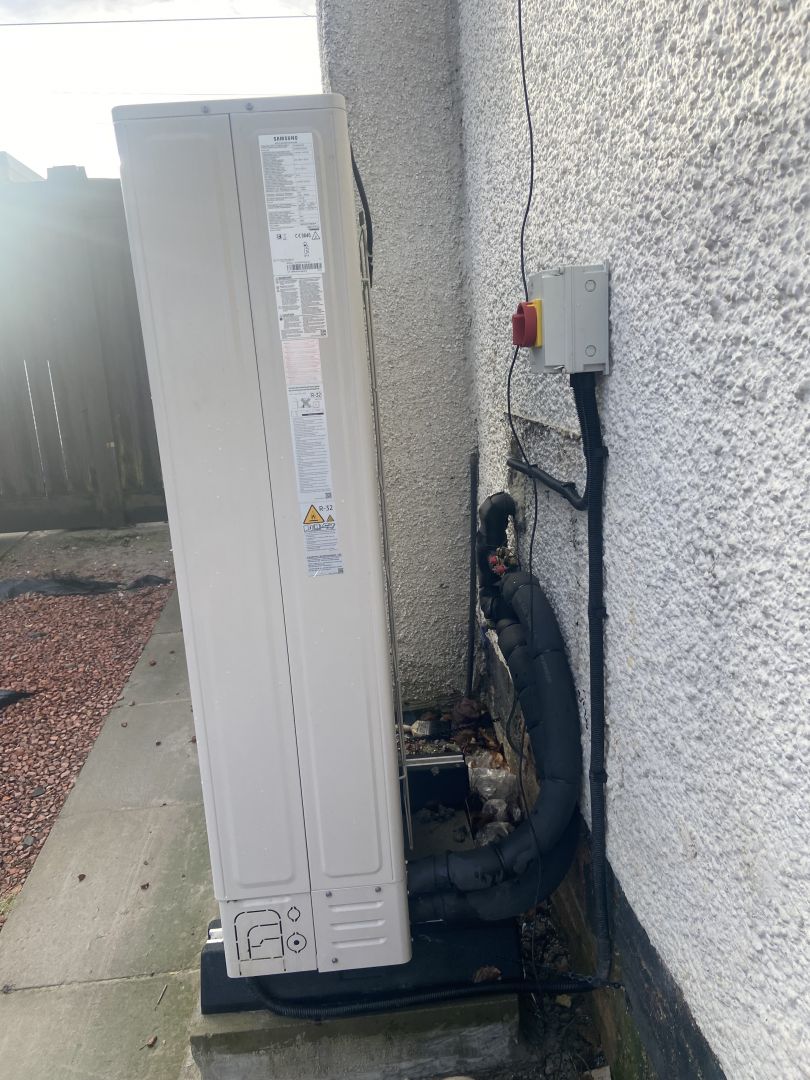
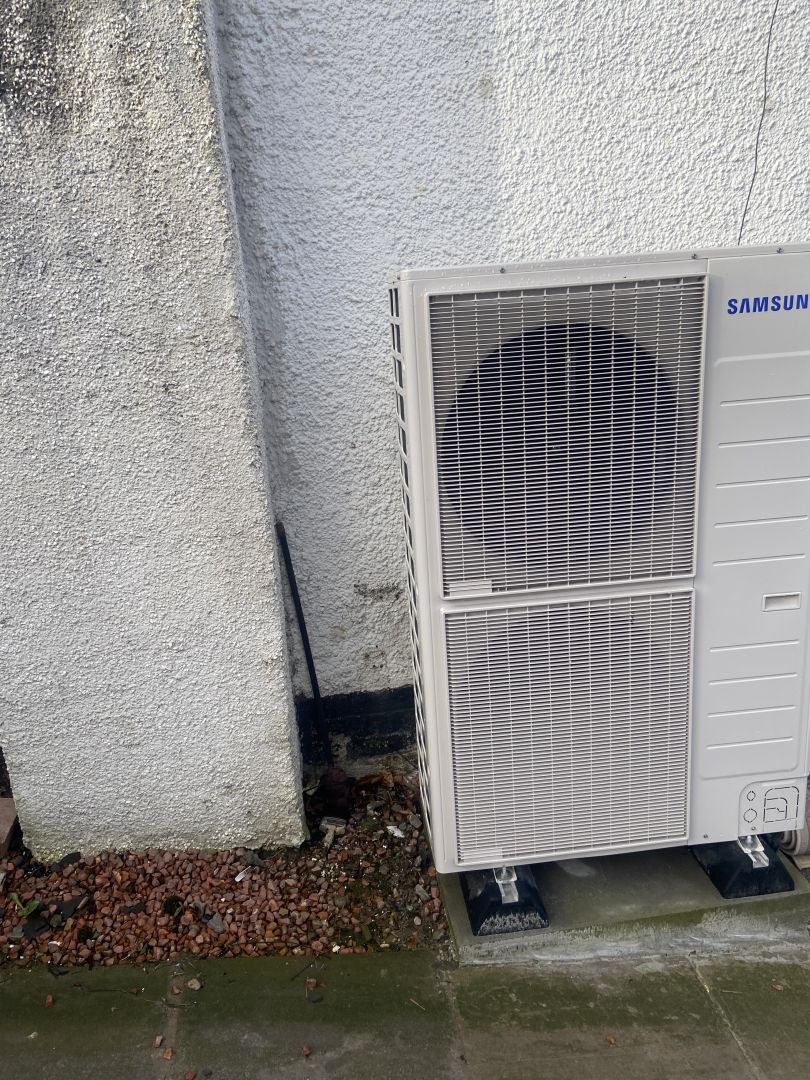
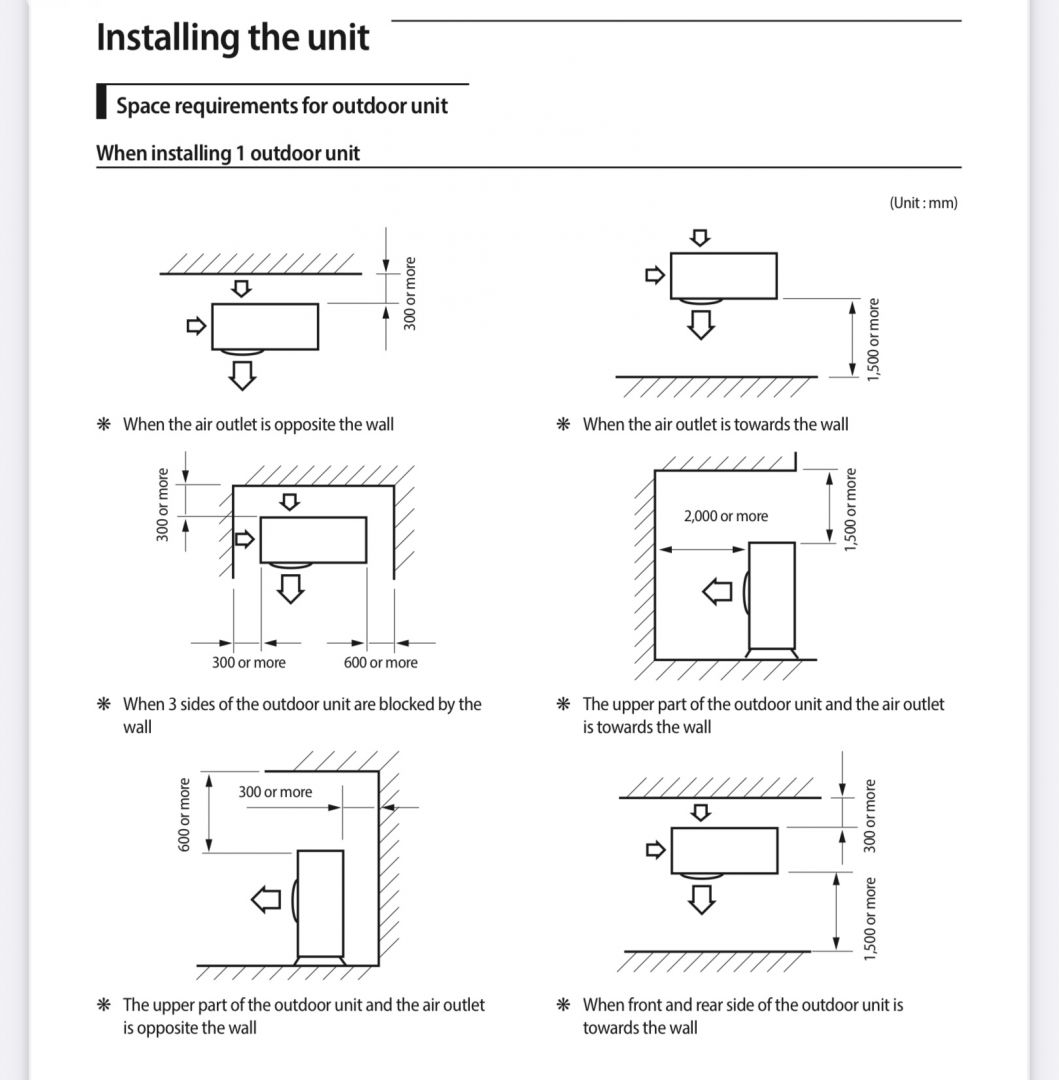
Got a bit of ice and could you say if it’s normal and if this installation is ok so close to the walls

24/03/2024 11:45 pm
I recognise that shape, that's a Samsung. Is it a 12KW like ours?
If it does ice up, it should then defrost, ours has a lot of water run off it when it is icy outside. I'm not actually sure how often it defrosts, probably as often as it needs it, but this keeps the fins free from ice.
If you have permanent ice on it, something is very wrong.
It does look a few inches closer to the wall than ours, but not too close. The installation manual, which may have been left with you, has something about the correct distance from the wall, or someone in the forum will be along shortly and link to an online copy.
1


25/03/2024 9:11 am
Welcome to the forums @david999
The icing shown in the photos is normal when outdoor temperatures drop to around 3°C or below, especially in humid conditions. However, what's not normal is if your heat pump doesn't initiate a defrost cycle to melt this ice. Although we don't have a Samsung unit, our heat pump starts a defrost cycle within 10 minutes of icing over, and the ice disappears within a few minutes.
🔥 Britain’s Heat Pump Shitshow
How Installing a Heating System Became a National Nervous Breakdown
Free UK shipping.
📗 Heat Pumps Explained
A Jargon-Free Guide for Homeowners
Rewritten and updated for 2027
📘 From Zero to Heat Pump Hero
🛠️ Bodge Buster
New to heat pumps?
Take the Heat Pump Fundamentals course and use INTRO50 at checkout for 50% off.
25/03/2024 9:18 am
As for the spacing, here’s what’s the installation manual shows:
🔥 Britain’s Heat Pump Shitshow
How Installing a Heating System Became a National Nervous Breakdown
Free UK shipping.
📗 Heat Pumps Explained
A Jargon-Free Guide for Homeowners
Rewritten and updated for 2027
📘 From Zero to Heat Pump Hero
🛠️ Bodge Buster
New to heat pumps?
Take the Heat Pump Fundamentals course and use INTRO50 at checkout for 50% off.


25/03/2024 11:03 am
@editor Perhaps it is my imagination or the photo angle is tricking my dodgy vision, anyway, to me the pump does not appear to be perpendicular but leaning forward at the front? Regards, Toodles
Toodles, heats his home with cold draughts and cooks food with magnets.
Topic starter
25/03/2024 11:12 am
@toodles it’s just the way the photo is taken. I’m thinking I need an earlier defrost before it gets that bad
25/03/2024 11:23 am
@editor Perhaps it is my imagination or the photo angle is tricking my dodgy vision, anyway, to me the pump does not appear to be perpendicular but leaning forward at the front? Regards, Toodles
If that ice has been there for more than 5 or 10 mins, then yes, you need an earlier or more effective defrost.
1
25/03/2024 11:25 am
@david999 our heat pump can frost over quite heavily too – that isn't the issue. It's whether your system is kicking in to defrost it. Do you know how long it takes for the defrost cycle to kick and how long the defrost takes to complete?
🔥 Britain’s Heat Pump Shitshow
How Installing a Heating System Became a National Nervous Breakdown
Free UK shipping.
📗 Heat Pumps Explained
A Jargon-Free Guide for Homeowners
Rewritten and updated for 2027
📘 From Zero to Heat Pump Hero
🛠️ Bodge Buster
New to heat pumps?
Take the Heat Pump Fundamentals course and use INTRO50 at checkout for 50% off.
Topic starter
25/03/2024 11:32 am
@editor it could remain like that for over an hour at least, unfortunately I don’t know how fast it defrosts

25/03/2024 11:57 am
Whilst everyone else is discussing the ice, may I comment on the pipework?
The standard of the insulation and the way it is routed through the wall is very typical, but not correct.
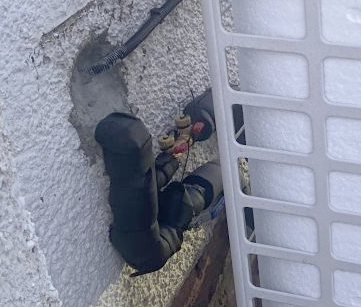
I've adjusted the colour saturation curves in the above snippet.
That allows us to better see the way in which different parts of the insulation are applied and fixed.
1: Pipes routed through a wall should pass through an outer sleeve which bears the mechanical load. Typically this would be sloping down to the exterior, allowing any condensation to drop outside the house.
2: The insulation layer around the heating pipes should extend right through into the house. The photo doesn't allow us to see if this has been done, or if the insulation was applied after the pipes had been surrounded by mortar.
3: The use of flexible polypropylene conduit for the electrical wires is satisfactory. That would not normally require an additional sleeve as it passes through the wall, although I chose to do so on my house.
4: The pipe insulation has been compressed by the nylon cable-ties used to secure it. That reduces its efficiency. Slit-insulation which is supplied without an integral adhesive-strip, should be held together with glue. Each manufacturer will recommend a type appropriate for the material of the insulation layer, but a standard latex-based 'contact' adhesive is common.
5: Joins between lengths of insulation should be weather-tight. Any rain water passing between the insulation and the pipe will extract heat and drop it on the ground!
It looks as if the installer has used an Armorflex-type tape to cover joins, but the ends are no longer stuck down.
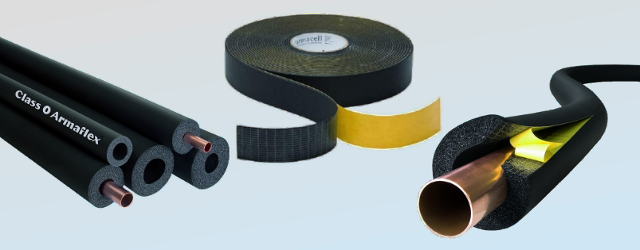
6: External insulation should be UV-resistant. Standard closed-cell elastomeric nitrile rubber will break-down in sunlight, allowing water to enter the cells.
We can't see from the photo which type of Class-O rubber insulation has been used. Have a look for text printed on it.
7: The upper pipe-run appears to have two valves in series (red butterfly-handles) with 3/4" BSP brass screwed caps covering access points.
Is this arrangement intended to be used for adding chemicals such as anti-freeze?
Whatever the case, the valves aren't insulated and water can access the adjoining insulation.
8: The lower pipe run has a blue-handled 1/4-turn ball valve.
This too appears to be inadequately insulated and protected from ingress of rain water.
Regardless of any training and instruction given to heat-pump installers by the manufacturers, the above points fall within Building Regulations.
Your installer will be recognised under the Competent Persons Scheme, allowing them to self-certify relevant aspects of Building Regulations conformance.
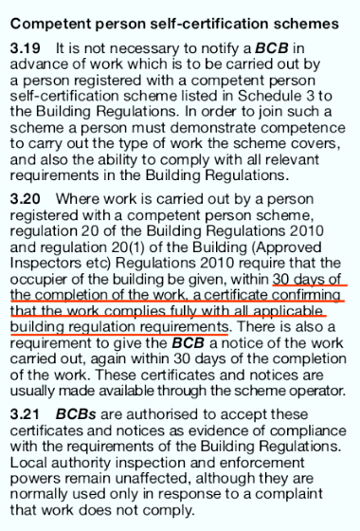
You should receive a Part-P Certificate from the Accredited Organisation who regulate the electrical aspects of the installation.
The Local Planning Authority should provide you with a letter to confirm that your installer has certified all other aspects of the work, such as Part-L.
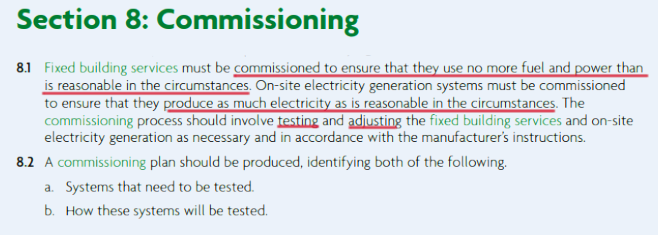
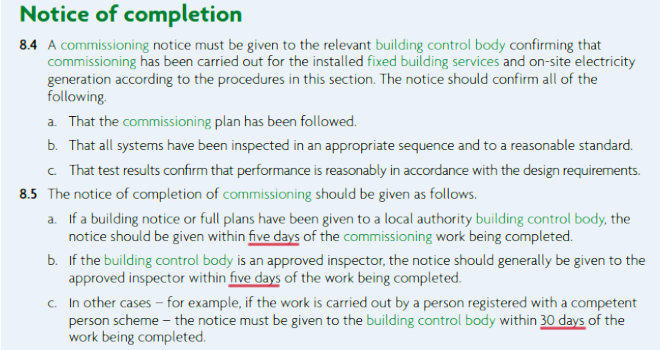
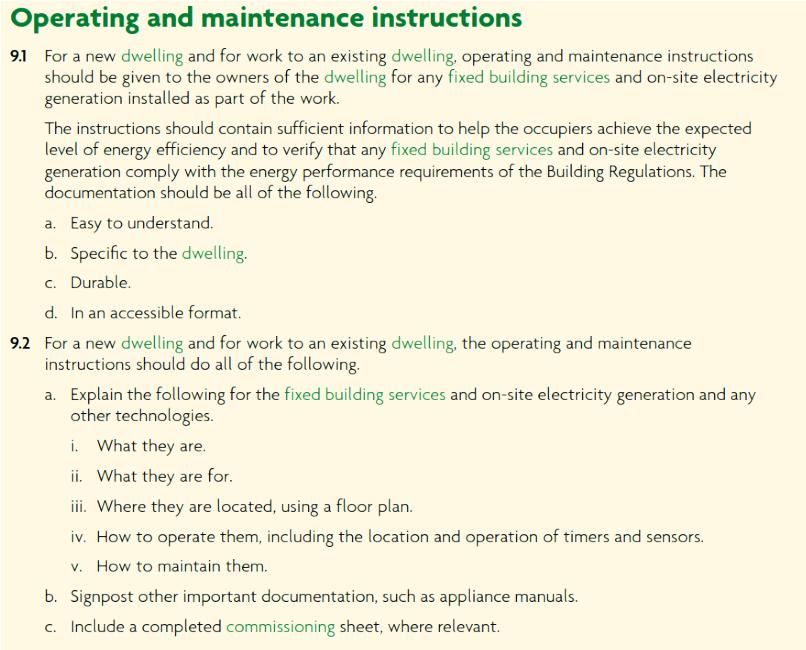
You should also have been provided with documentation describing the component parts of your installation and instruction on how to operate and maintain the system.
Save energy... recycle electrons!
Topic starter
25/03/2024 1:04 pm
The images on the type of insulation and the pipes into the wall, they look like they are inside a plastic pipe but the wall is warm so not good I guess.
25/03/2024 1:54 pm
No, not good, @david999 😣
Your heat pump works by keeping a 5°C differential between the Leaving Water Temperature (LWT) and the Return Water Temperature.
If the first 3m of pipe run throws away 1°C, then what's the point?!
Although I've quoted the regulations, common sense is a pretty good guide in these matters!
I don't know whereabouts you are in Britain, but you also might want to talk to your Councillor representative(s) at the Local Planning Authority level of government.
They are probably unaware that their building administration team are issuing letters of compliance with Part-L (Fuel & Energy) for installations which don't satisfy the regulations.
Just because the Council receives no revenue-stream to inspect and enforce the Building Regulations, doesn't make it acceptable.
Councillors do not need any great depth of technical understanding to appreciate that the present system needs changing.
This matter needs passing onwards to the Local Government Association, DESNZ, MCS and your MP.
Your Council has the necessary clout to do this.
Start by quoting from this Topic here on the Forum, and give Councillors the URL so that they can see what we're discussing.
This Forum has expertise to resolve the technical issues.... which will be welcome news for your Council.
But the regulations are broken.
We're not going to attain Net Zero (CO2 emissions) by 2050 unless the general public sees heat pumps which are installed in an effective manner.
Save energy... recycle electrons!
1

Page 1 / 30
Next

SPONSORS
Degrees of Separation

Latest Posts
-

RE: Heat pump branding. Clever, contemporary… or a bit too much?
I think Heat Geek have done an amazing job on their bra...
By Tomtheheatingengineer , 7 hours ago
-
RE: HeatGeek vs Octopus surveys: puzzling disparity - any ideas why?
I have just had 3 heat loss surveys, one by heat geek o...
By David , 7 hours ago
-
RE: Heat Geek Zero Disrupt: Are We Sleepwalking Into Another Race to the Bottom?
I think that's the key question. After all inverter uni...
By Prunus , 9 hours ago
-
RE: battery storage without solar
As of October 1st they need specific qualifications to ...
By EtchedPixels , 10 hours ago
-
RE: How should the Boiler Upgrade Scheme be reformed?
A unit which uses water to transfer the heat/chill from...
By Temperature_Gradient , 10 hours ago
-
RE: Renewables & Heat Pumps in the News
With regards to the BUS grant raid, I gave it more thou...
By ASHP-BOBBA , 10 hours ago
-
RE: Why are ASHP installs so expensive?
The whole system seems to work on the basis of...
By ian33a , 11 hours ago
-
RE: Missing flow temperature in Heat Geek proposal
Good plan. If you can get half hourly meter readings a...
By JamesPa , 16 hours ago
-
RE: Heat Pumps Without Grants: Would You Have Installed One & Will You Now?
@editor Most certainly. The heat pump was an ideal s...
By Abernyte , 16 hours ago
-
Although regulations may well vary from country to coun...
By Majordennisbloodnok , 17 hours ago
-
RE: Does anyone have experience of a smart water meter?
Yep I caught our slow leak from a £100 bill rise 8)
By EtchedPixels , 17 hours ago
-
RE: Do You Need a Buffer Tank or Low Loss Header for Underfloor Heating in a Large Property?
@jamespa in some cases, failing the Turing test might b...
By GrahamF , 20 hours ago
-
RE: Passiv Smart Thermostat - Help & Forum Support
@energystoragetech The heat capacity of some...
By JamesPa , 21 hours ago
-
RE: tepeo ZEB UK Support & Info Thread
Sorry you are correct, I was remembering figures from t...
By JamesPa , 1 day ago




SPONSORS