

Notifications
Clear all
Joining the Renewable Heating Hub forums is completely free and only takes a minute. By registering you’ll be able to ask questions, join discussions, follow topics you’re interested in, bookmark useful threads and receive notifications when someone replies. Non-registered members also do not have access to our AI features. When choosing your username, please note that it cannot be changed later, so we recommend avoiding brand or product names. Before registering, please take a moment to read the Forum Rules & Terms of Use so we can keep the community helpful, respectful and informative for everyone. Thanks for joining!

Topic starter
21/08/2024 3:12 pm

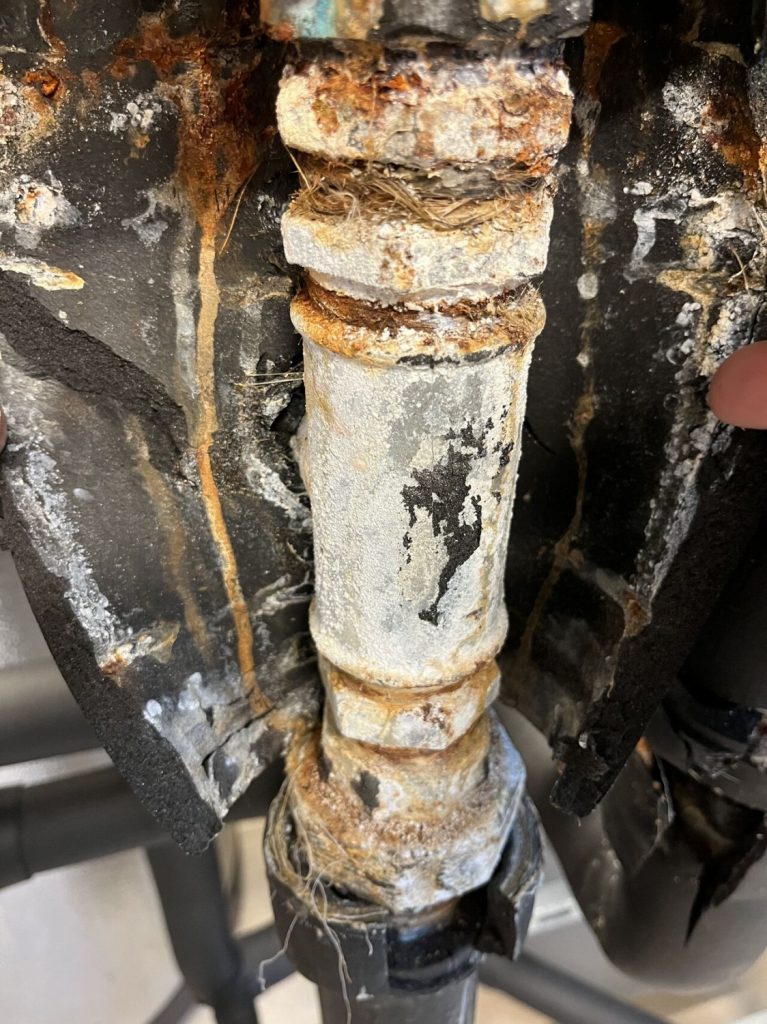
In this article, I want to take highlight the significance of water quality in heat pump systems by sharing some photos of a broken circulation pump. While there are several potential causes of damage, the most common culprit is often the cheapest component of the system: water.
I’m not a chemical engineer, but it’s clear that when dealing with water – the primary medium in an air-to-water heat pump system – and various materials such as copper, plastic and steel, maintaining proper water quality is essential.
The VDI 2035 guideline serves as the main standard for heating water treatment, though, in my experience, few people prioritise it. For a comprehensive guide, I recommend reading “Heating Water Treatment Explained” on the Heat Geek website.
The Role of Water Quality
Water quality is crucial for the longevity and efficiency of a heat pump system. Water with high levels of impurities, such as minerals, oxygen and certain chemicals, can lead to a range of problems:
• Corrosion: High levels of dissolved oxygen or improper pH levels can cause corrosion of the system’s metallic components. Over time, this corrosion can weaken pipes, heat exchangers and pumps, leading to system failures.
• Scale Formation: Hard water, which contains high levels of calcium and magnesium, can lead to scale deposits inside the system. These deposits restrict water flow, reduce heat transfer efficiency and increase the workload on the pump, often resulting in premature failure.
• Debris & Contaminants: Without proper filtration, debris can circulate within the system, leading to blockages and damage to the moving parts of the circulation pump, as shown in the images below.

The Impact on Circulation Pumps
The circulation pump is the heart of a heat pump system, responsible for moving water throughout the system. Poor water quality takes a toll on this critical component, often being the first to show signs of damage. The images provided illustrate several key issues:
• Impeller Wear: Contaminants in the water can erode or clog the impeller, which is vital for water movement.
• Seal Degradation: Poor water quality can degrade the seals within the pump, causing leaks and further mechanical issues.
• Internal Corrosion: Corrosion due to improper water chemistry can severely impact the pump’s efficiency and lead to complete system failure.


The Importance of Material Selection
In addition to maintaining water quality, choosing the right piping materials is equally important. Using incompatible materials can exacerbate system degradation. For example:
• Copper Pipes: While commonly used, copper can suffer from pitting corrosion if the water is too acidic.
• Galvanised Steel Pipes: These are prone to corrosion, especially in systems with poor water quality, leading to rust that can clog and damage pumps and other components. They are generally not recommended for heating systems, particularly when glycol is involved.
• Plastic Pipes: Materials like PEX or CPVC are often preferred in systems with water quality issues, as they are more resistant to corrosion and scaling.
Closing Thoughts
Maintaining proper water quality in your heat pump system is not just about ensuring efficient operation – it’s about protecting your investment. Poor water quality and inappropriate piping materials can cause significant damage to the circulation pump and other vital components, leading to costly repairs or replacements.
Regular water testing, the use of suitable filtration systems, and careful selection of piping materials are all essential steps in preventing these issues. By taking proactive measures, you can extend the life of your heat pump system and ensure it operates at peak efficiency.
Remember, a small investment in water quality maintenance today can save you from substantial costs due to system failure in the future.
1

21/08/2024 3:28 pm
A late friend of ours used to be the chief engineer on the Queen Mary; he regularly checked the quality of the water taken on board for the boilers. He told us that the water collected in New York was some of the best that they used and measured 0.5 on a scale he used. He referred to the local water as ‘Liquid Bricks! Now, we live in a very hard water area in Berkshire and apparently, the water here measured 22 on that same scale. We have a water softener on the main in and all our usage is softened (other than toilet and garden supplies.)
This means the water used to fill our heating system has been softened but in no other way treated. I just hope that this softening has at least taken care of one of the nastiest elements! Regards, Toodles.
Toodles, heats his home with cold draughts and cooks food with magnets.
1

21/08/2024 3:39 pm
My Grant ASHP is running with a gylcol fluid, no water involved.

21/08/2024 4:41 pm
VDI 2035 guideline serves as the main standard for heating water treatment
Not sure it does, most plumbers fill with water and then chemical dose and walk away. If they come back for a service add more. Most people have not actually heard of VDI 2035.
softening
If done with a water softener instead of Ion Exchange resin, the salt content can cause other issues and also stop the natural alkaling of the water as it goes through numerous heat cycles.
So you can end up with corrosion but for other reasons.
Most water on ships is deminerised via a steam generator then condensed.

21/08/2024 5:50 pm
@johnmo We have a Kinetico Minimax softener and the literature tells me that the resin beads in the chambers remove calcium and magnesium and as part of the recharging cycle, the final salt solution is flushed out of the chamber before the valve reconnects the chamber to the house supply. I think this is an ion exchange process. Regards, Toodles.
Toodles, heats his home with cold draughts and cooks food with magnets.

22/08/2024 1:41 pm
@ianmk13 Yeap, we have had this type of water softener for 30 years plus and have always been able to drink the water it passes! 😉 Toodles.
Toodles, heats his home with cold draughts and cooks food with magnets.
22/08/2024 2:06 pm
Mind you, the water softener was not cheap; I seem to remember that this most recent one cost over £1K installed! Gulp, Toodles.
Toodles, heats his home with cold draughts and cooks food with magnets.

22/08/2024 2:27 pm
@toodles Do you use yours for drinking? We do; it doesn't taste salty at all.
Your water will not taste salty the levels are not high enough. But the subject is not is softener water ok to drink - generally is just fine and dandy to drink it. The subject is heating system water.
But the chart on water from a softener,
A domestic Ion Exchange softener - Sodium replaces calcium carbonate, 46 mg/litre of sodium for every 100 mg/litre of calcium carbonate (hardness minerals) taken out of the water. Other mineral will still remain in the water, so the total dissolved solids PPM, could still be quite high. So it requires measurement.
Deminerised water made via a ion exchange resin is a different process. Ion exchange resins can be used to demineralise water by removing dissolved ions and inorganic salts. In this process, the resins exchange non-desirable cations and anions in the water with hydrogen and hydroxyl ions, respectively, to create pure water (H2O).
The water used under VDI2035 is a balancing act between conductivity and total dissolved solids.

04/09/2024 1:33 pm
What to be aware of with water, is that the stability of the water changes with temperature. There is a calculator online at Lenntech for LSI which allows you to determine the Langelier Index of your water from test results, but also change the temperature and see the impact.

09/09/2024 7:06 am
Hi @Graham Brennand, Grant's installers don't seem very consistent on glycol. Grant recommend it, but a lot of their systems, mine include, use water with anti-corrosion/fouling agent such as Sentinel and fit anti-freeze valves instead. You're glycol will be a mix of glycol and water however, usually the glycol is to around 25% concentration maximum in typical domestic systems to provide sufficient frost protection to the outdoor unit. Grant's equipment is already well protected - with the circulating pump energised below 4degC outdoor air temperature. In a location subject to power cuts and very low winter air temperatures, the glycol is a good safeguard against risk of freezing, I've never been totally convinced that anti-frost valves are 100% effective.
SPONSORS

Degrees of Separation
Latest Posts
-

RE: The Changing Jet Stream Could Challenge UK Air Source Heat Pumps
Thanks @susannasaunders for reviving the topic I find i...
By springswood , 23 minutes ago
-
RE: New Build 3 Phase or 1Phase
Not so any more.... 1: It's now the...
By Transparent , 14 hours ago
-
RE: How will removing the standing charge on gas bills benefit heat pumps?
I think it has an enormous impact on air/air users. The...
By EtchedPixels , 21 hours ago
-
@editor Ouch, sorry to re start the tick. I had assume...
By DavidB , 2 days ago
-
RE: Say hello and introduce yourself
@e-a-west as the good Major said, welcome to the forums...
By Mars , 2 days ago
-
RE: How much of your renewable and home setup would still work if the internet went down?
Yes I actually have a copy of a tool that whenever a ce...
By EtchedPixels , 2 days ago
-
RE: Indevolt Batteries UK Support & Info Thread
@editor Hi, To resolve this, please tap on the A...
By Indevolt Tech , 2 days ago
-
RE: Double or Triple Glazed Windows?
Posted by: @singlespeed With 9 years repairing windo...
By Rob of York , 3 days ago
-
@transparent we’re still running a secure version of PH...
By Mars , 3 days ago
-
RE: How quickly would you want/expect heat recovery to take from setback?
Much longer than that here. The heating isn't even on. ...
By bobflux , 4 days ago
-
RE: Passiv Smart Thermostat - Help & Forum Support
Obviously the weather is changeable but there's a defin...
By Singlespeed , 4 days ago
-
RE: Forum updates, announcements & issues
Get the Renewable Heating Hub heads-up on WhatsApp. I...
By Mars , 4 days ago
-
RE: Safety study for plug in batteries out to tender - looks like Q3 2027 at best before legal
@editor I pointed out to the one of the Fuse execs that...
By dansus , 4 days ago
-
RE: 15kw pump for 225m2 1990's house - over kill?
@seaviews As well as loft insulation, there are othe...
By Rob of York , 4 days ago




SPONSORS

