
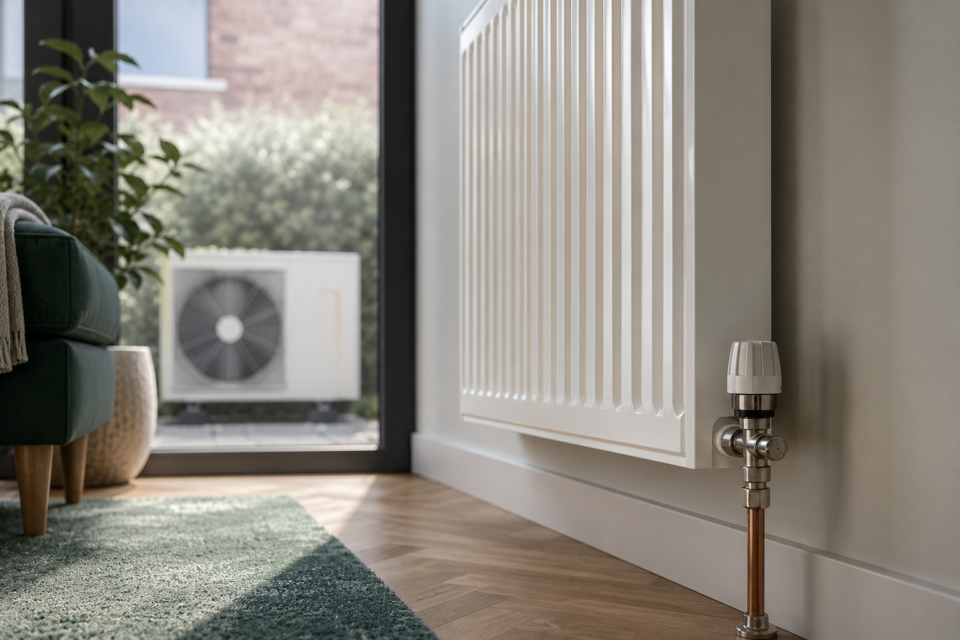
A heat pump doesn’t just need the right outdoor unit. It needs a heating system that can move enough heat around the house at low flow temperatures.
One issue that is often overlooked is system water volume. In simple terms, this is the amount of water held in your radiators, underfloor heating circuits, pipework and any additional buffer or volumiser. For a heat pump, that volume is crucial because low-temperature heating relies on steady circulation, long run times and enough emitter capacity to deliver heat into the rooms.
As a rough sanity check, a low-temperature heating system should often have around 17 to 18 litres of useful water volume per kilowatt of heat loss. For systems aiming to run at very low flow temperatures, closer to 25 to 27 litres per kilowatt may be more appropriate.
The key word is useful. Water sitting in radiators, underfloor heating and active pipework is helping carry heat into the rooms. Water sitting in a buffer or volumiser may help with minimum system volume and compressor run time, but it does not automatically fix undersized emitters or poor hydraulic design.
This calculator is designed to help homeowners ask better questions before or after a heat pump installation. It is not a replacement for a full room-by-room heat loss calculation, pipe sizing exercise, emitter schedule or commissioning test. But it can flag whether the proposed system volume looks broadly sensible or whether you need to ask your installer for more evidence.
If your useful water volume appears low, it does not necessarily mean the installation will fail. It does mean you should ask how the system will deliver the required heat at the proposed flow temperature. That means asking about radiator sizing, underfloor heating design, pipework, flow rates, pump settings and whether any buffer tank or volumiser has been included for the right reason.
A well-designed heat pump system should not depend on guesswork. The more homeowners understand the basics, the easier it becomes to challenge vague claims and demand proper design evidence.
Heat Pump Water Volume Calculator
This calculator gives homeowners a simple sanity check on whether a low-temperature heat pump system has enough water volume in the emitters and active heating circuit. It separates useful heating volume from buffer or volumiser volume because water in radiators and underfloor heating is where heat is actually delivered into the rooms.
Design heat loss
Use the total room-by-room heat loss if you have it. If not, use the proposed heat pump duty at design temperature, not simply the model nameplate output.
Estimate heat loss from real energy use
This is a rough estimate only. Real energy use over time can be a useful sense-check because heat loss is energy divided by time. For gas or oil, this calculator applies an efficiency estimate to approximate delivered heat.
Useful system volume
Radiators, underfloor circuits and active pipework count as useful heating volume. Buffer or volumiser volume is shown separately because it may help minimum volume and runtime, but it does not replace emitter capacity in the rooms.
How to read this
This system sits in the basic sanity-check range. That does not prove the design is correct, but it suggests the system may have enough useful volume to avoid obvious low-volume problems.
As a simple rule of thumb, a bare minimum is around 17 to 18 litres per kilowatt, with 25 to 27 litres per kilowatt being more appropriate when aiming for very low flow temperatures around 30–35°C. The key point is not just total litres. It is where the litres are. Useful volume in emitters helps carry heat into the rooms.
Questions to ask your installer

