

Notifications
Clear all
Joining the Renewable Heating Hub forums is completely free and only takes a minute. By registering you’ll be able to ask questions, join discussions, follow topics you’re interested in, bookmark useful threads and receive notifications when someone replies. Non-registered members also do not have access to our AI features. When choosing your username, please note that it cannot be changed later, so we recommend avoiding brand or product names. Before registering, please take a moment to read the Forum Rules & Terms of Use so we can keep the community helpful, respectful and informative for everyone. Thanks for joining!

Topic starter
18/03/2024 12:17 am
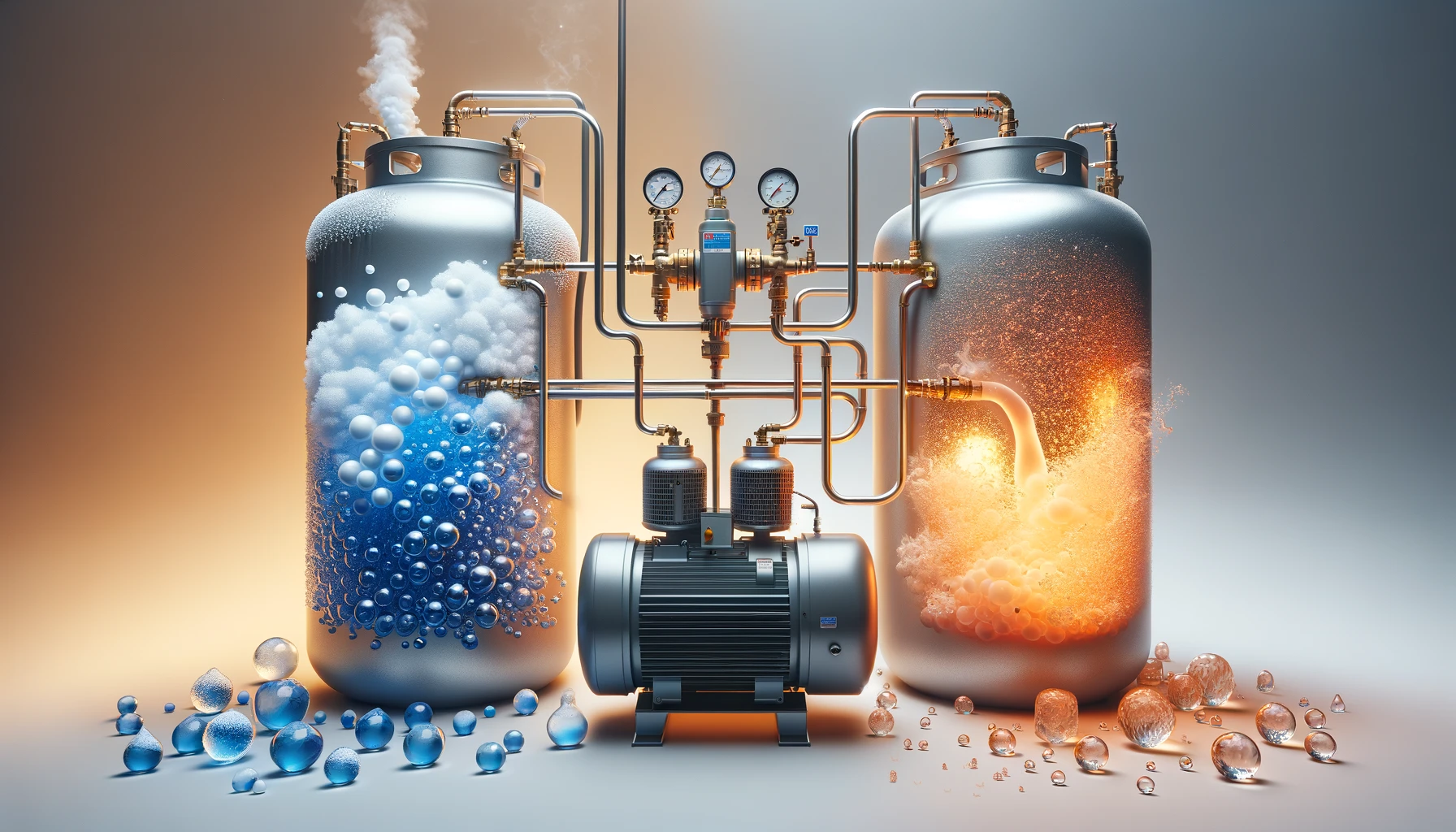
Water boils at 100°C, as everyone knows. Inside the water, there are numerous molecules moving rapidly, similar to ping pong balls in motion. The hotter the water, the faster they move. At the water's surface, air molecules act like a lid, preventing the excited water molecules from escaping. Any overly excited water molecules attempting to escape are forcefully pushed back down by the air molecules, reminiscent of the game whack-a-mole.
As the water heats up, the molecules move faster, constrained by the air above. However, if the water is heated sufficiently, the water molecules will move so quickly that they overpower the air molecules and escape. This point of escape is known as the boiling point, typically 100°C.
At higher altitudes, like the summit of Mount Everest, there is less air, meaning fewer air molecules to contain the water molecules. This makes it easier for the water molecules to escape. While I haven't been there, it's said that at Everest's summit, water boils at 80°C due to the lower pressure, which decreases the containment by air.
To recap, the boiling temperature of water depends on the air pressure above it. We could theoretically adjust the boiling point of water to our liking by altering this pressure. This principle is precisely what we utilize in refrigeration: manipulating pressure to change the boiling point.
Step 2: Instead of water, which is inefficient as a refrigerant, we use propane, or R290. Opening a can of propane causes it to boil vigorously. The propane molecules move so fast that they easily escape the air molecules above, and each escaping molecule carries away a bit of heat, cooling the propane container to -42°C.
However, releasing the propane into the atmosphere is inefficient, so we capture it. We then use a pump to compress it to 300psi and store it in a new container. At this pressure, the propane condenses back into liquid, releasing heat as it transitions from gas to liquid. This process of compression essentially squeezes the heat out of the propane, allowing it to condense at 45°C.
So, in one container, we have propane boiling at -40°C, absorbing heat. In another, we have propane condensing at 45°C, releasing heat, with a compressor between them. We're essentially moving heat from one place to another using a compressor.
Refrigeration engineers now cleverly adjust these pressures to achieve precise temperatures, but it all boils down to pressure manipulation. In your fridge, freezer, or heat pump, this is exactly what's happening. It's not complex or new. It's a beautiful example of science in action.
Heat pump builder, R and D engineer for Haier Europe and head Energy Donkey
2

10/09/2024 3:00 pm
Nice thread!

SPONSORS

Degrees of Separation

Latest Posts
-

The video in the link mentions a direction arrow, which...
By Singlespeed , 3 hours ago
-
RE: Cooling/heating with one unit
@rob-of-york thank you. Hadn't occurred to me that some...
By mrkfm , 6 hours ago
-
RE: Renewables & Heat Pumps in the News
Posted by: @editor I think we should make that approa...
By Rob of York , 12 hours ago
-
RE: Does anyone have experience of a smart water meter?
My neighbour received an email from Anglian Water sayin...
By AndrewJ , 13 hours ago
-
RE: Jokes and fun posts about heat pumps and renewables
Well the military is well known for going green, isn't ...
By Majordennisbloodnok , 14 hours ago
-
RE: Why are ASHP installs so expensive?
I've ripped out over 11kw of storage and panel heaters ...
By Singlespeed , 15 hours ago
-
RE: Safety study for plug in batteries out to tender - looks like Q3 2027 at best before legal
I think it may depend how much of the world is on fire ...
By EtchedPixels , 22 hours ago
-
RE: Air-to-Air Heat Pumps & Air Conditioning: UK Heating and Cooling Q&A
I hope it's not the same people who make the awful TV s...
By EtchedPixels , 22 hours ago
-
RE: Replacing Storage Heaters with a Heat Pump in a Stone Cottage
I found some interesting data about the price of heat p...
By Rob of York , 2 days ago
-
RE: PV and battery long payback - sense check query
Thanks for all the comments. I finally got to the bott...
By DavidB , 2 days ago
-
RE: Indevolt Batteries UK Support & Info Thread
People following this thread who are hoping that plug i...
By JamesPa , 2 days ago
-
RE: Passiv Smart Thermostat - Help & Forum Support
By Singlespeed , 2 days ago
-
RE: Help me keep the faith with my air source heat pump installation
just had Vaillant over to service the HP and asked abou...
By AdamK , 2 days ago
-
RE: tepeo ZEB UK Support & Info Thread
OK so ZEB is basically a variant on a storage heater, b...
By JamesPa , 3 days ago





SPONSORS

