
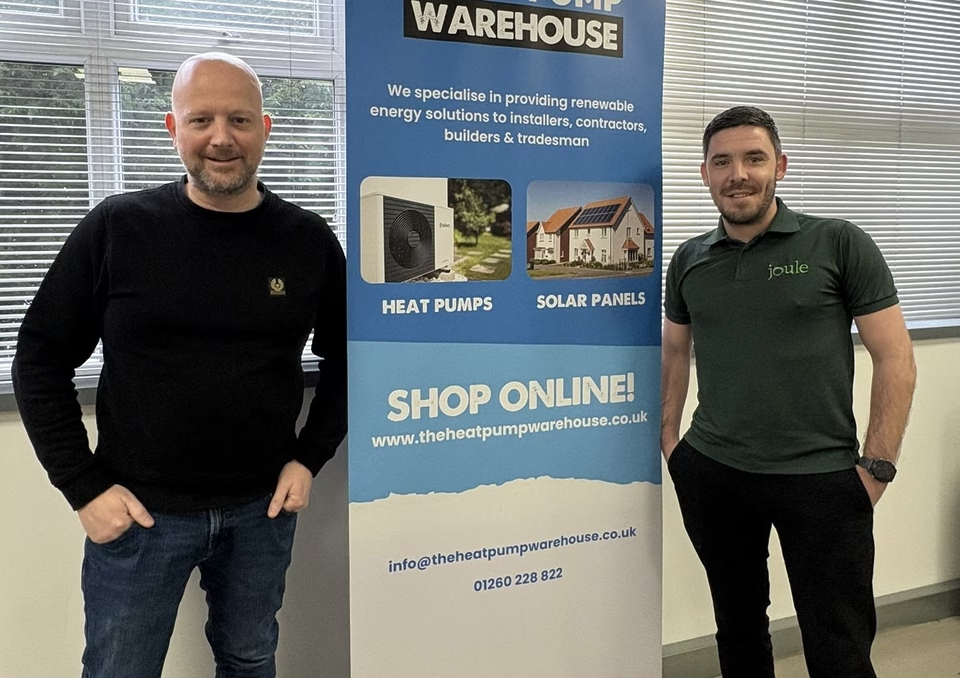
The Heat Pump Warehouse and cylinder manufacturer Joule are marking four years of partnership, a routine commercial milestone on the surface, but one that signals something more relevant to homeowners.
Behind the headlines about installation targets and government ambition, the UK heat pump market is gradually becoming more structured, more systemised and more packaged. For homeowners, that shift could materially affect price, quality and installation experience.
When The Heat Pump Warehouse launched in 2022, the heat pump market was still relatively fragmented. Installers often sourced equipment separately, heat pump from one supplier, cylinder from another, controls elsewhere.
The Joule partnership changed that model. By pairing Samsung air source heat pumps with Joule’s pre-plumbed Kodiak and Zenith cylinders, installers could purchase coordinated, ready-to-fit system packages rather than assembling components themselves.
For homeowners, that affected:
- Reduced installation time
- Lower risk of design mismatch between components
- Greater pricing transparency when systems are sold as packages
Most homeowners never see the supply chain behind their installation quote. But distribution models directly affect pricing and consistency.
The Heat Pump Warehouse positions itself as a competitively priced online distributor, working with brands including Mitsubishi, Daikin, Hitachi, Samsung, CTC, Vaillant and Panasonic. Joule provides not just cylinders, but design support and installer training through its Joule Academy platform.
For homeowners, this signals a broader industry shift: manufacturers are moving beyond selling hardware and into supporting installers with system design and training. As more installers enter the market to meet electrification targets, that technical support becomes increasingly important.
If partnerships like this are to mean anything at scale, the real test will be downstream, in customer experience. As the supply chain matures, homeowners should expect clearer technical guidance, more responsive aftercare and stronger manufacturer-backed support when issues arise.
Equally, training platforms such as Joule Academy carry responsibility. If they are effective, we should see measurable improvements in system design accuracy, installation standards and commissioning quality. Better-trained installers, working with properly matched system packages, ought to translate into fewer performance shortfalls and fewer remedial visits.
The next phase of market growth will not be judged on volume alone. It will be judged on whether the industry can raise consistency, accountability and customer support to match its expansion.
