

Cinergi is a Hampshire-based renewable energy engineering and installation company that has built a reputation for doing things properly. Founded in 2020, the business has grown during a period of rapid change in the UK’s low‑carbon heating landscape, delivering air source heat pump installations, alongside solar PV and battery storage, for domestic and light‑commercial properties across the region. From the outset, the focus has been on sound engineering, careful design and long-term system performance, rather than volume-driven installations or one-size-fits-all solutions.
Since its early days, Cinergi has been installing heat pumps as a core part of its offering. Over that time, the team has delivered everything from straightforward retrofit projects to more complex, bespoke systems that require careful integration with existing buildings and services. What underpins all of this work is a strong emphasis on correct sizing, detailed system design and thorough commissioning. Every installation is completed in line with current MCS standards and manufacturer guidance, but the company’s approach goes well beyond simple compliance. The aim is to ensure each system operates efficiently, reliably and as intended for years to come.
Cinergi operates primarily across Hampshire and the surrounding areas, working with homeowners who are actively looking to move away from fossil fuels or reduce their reliance on grid energy. The company’s work spans a wide range of property types, including typical residential retrofits, larger detached homes and small commercial buildings where heat pumps can deliver meaningful carbon and cost savings when properly designed. While each project brings its own challenges, the team has developed particular strength in adapting systems to suit real-world properties rather than idealised case studies.
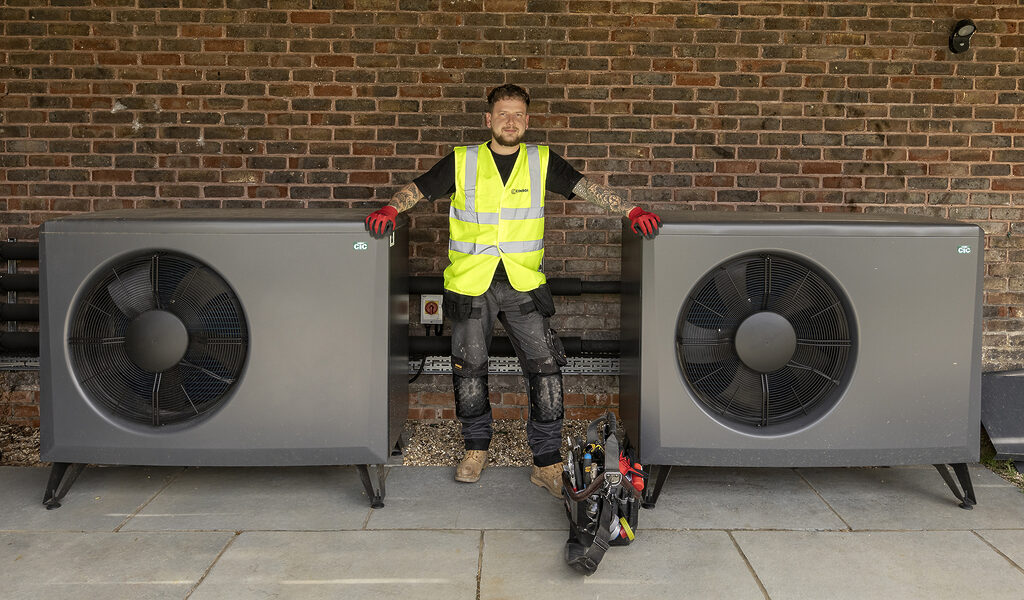
At the heart of Cinergi’s approach is a belief that heat pumps are engineering systems first and consumer products second. Before any equipment is specified, the design process begins with a detailed assessment of the property. This includes room-by-room heat loss calculations, consideration of existing emitters, pipework layouts, insulation levels and hot water demand. These calculations are carried out in-house, allowing the team to maintain full control over the design and make informed decisions at every stage. There is no reliance on generic templates or assumptions and each system is designed to match the building it will serve.
Emitter performance is a key consideration, particularly in retrofit projects. Where radiators are retained, Cinergi assesses whether they can deliver the required output at lower flow temperatures and advises on upgrades where necessary. The aim is always to strike a sensible balance between efficiency and practicality, ensuring systems can operate comfortably without pushing homeowners into unnecessary costs. For properties with underfloor heating, designs are optimised for low flow temperatures from the outset, allowing the heat pump to operate in its most efficient range.
Hot water provision is treated with equal care. Cylinder sizing, recovery times and control strategies are all considered during the design stage, based on how the household actually uses hot water. Rather than oversizing components as a precaution, Cinergi focuses on matching capacity to demand, avoiding inefficiencies and ensuring good user experience. Correct integration of controls and weather compensation is also central to this approach, allowing systems to respond smoothly to changing outdoor conditions.
Installation quality is an area where Cinergi places significant emphasis. Pipework layouts are planned to minimise unnecessary complexity, pressure losses and heat loss, while maintaining ease of access for future servicing. Attention is paid to insulation, bracketry and overall presentation, reflecting the belief that a tidy, well-executed installation is usually a sign of good underlying design. This focus on detail extends to electrical works, controls wiring and system labelling, all of which contribute to reliability and ease of use.
Commissioning is treated as a critical phase rather than a box‑ticking exercise. Systems are filled, flushed, balanced and tested to ensure correct flow rates and temperature differentials. Controls are configured carefully, and weather compensation is set to suit the property rather than default values. Where monitoring tools are available, these are used to verify performance and identify any adjustments required before handover. Homeowners are walked through the system operation so they understand how it works and what to expect, helping to avoid the misunderstandings that can arise when heat pumps are treated like conventional boilers.


Beyond installation, Cinergi offers ongoing servicing and maintenance to support long-term system performance. Regular servicing not only helps maintain manufacturer warranties but also ensures systems continue to operate efficiently as properties and usage patterns evolve. The team’s familiarity with their own installations allows issues to be identified and resolved quickly, often before they develop into more serious problems. This long-term view is central to the company’s philosophy: a successful heat pump installation is one that performs well year after year, not just on commissioning day.
Cinergi is fully MCS certified and operates within recognised consumer protection schemes, providing homeowners with confidence in both technical standards and aftercare. The team stays up to date with changes in regulations, best practice guidance and manufacturer developments, ensuring their designs reflect current thinking rather than outdated rules of thumb. This ongoing professional development is particularly important in a sector that continues to evolve rapidly as heat pump adoption increases.
A recurring theme in Cinergi’s work is addressing common misconceptions around heat pumps. Many homeowners remain unsure whether a heat pump can keep their home warm in winter or deliver adequate hot water. The reality, as the team’s experience consistently shows, is that a properly designed and installed system can do both very effectively. Problems tend to arise not from the technology itself, but from poor design decisions, incorrect sizing or inadequate commissioning. By focusing on these fundamentals, Cinergi regularly delivers systems that exceed expectations and challenge outdated assumptions.
The company’s projects often demonstrate that heat pumps can perform well even in properties that are not perfectly insulated. While fabric improvements are always beneficial, Cinergi takes a pragmatic view, designing systems that work with the building as it exists, rather than insisting on ideal conditions before a project can proceed. This approach opens up low‑carbon heating to a wider range of homes, provided the design is handled with care and realism.
Cinergi’s growing portfolio of installations reflects a steady, considered approach to growth. Rather than chasing rapid expansion, the business has focused on building capability, refining processes and maintaining consistent standards across every project. This has helped establish trust with homeowners who are often navigating the heat pump market for the first time and are looking for clear, honest advice rather than sales-led promises.
For homeowners interested in working with Cinergi, contact details are available via the company’s website or you can email editor@renewableheatinghub.co.uk and we’ll connect you.
Cinergi’s work illustrates what is possible when heat pump installations are approached as engineering projects rather than product swaps. Through careful design, high installation standards and a commitment to long-term performance, the company continues to demonstrate that low‑carbon heating can be both practical and effective when done properly.
